Tata Titiana
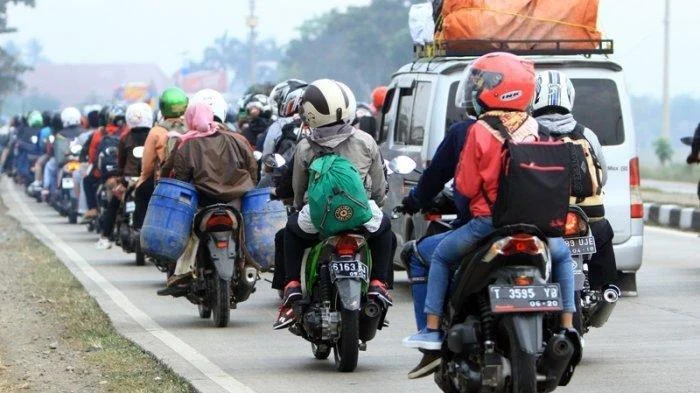
The Indonesian government has announced that citizens will be permitted to travel for the annual Eid al-Fitr pilgrimage, known as "mudik Lebaran," in 2021, a stark contrast to the outright ban implemented in 2020 due to the COVID-19 pandemic. This decision, confirmed by Minister of Transportation Budi Karya Sumadi during a working meeting with Commission V of the House of Representatives on March 16, 2021, signals a cautious shift in policy. However, officials emphasize that this is not an encouragement to travel, as the Ministry of Transportation (Kemenhub) does not possess the authority to mandate such journeys.
The Ministry of Transportation plans to collaborate closely with the COVID-19 Task Force to develop a comprehensive framework for the 2021 Eid travel season. The primary objective is to mitigate the risk of increased COVID-19 transmission, particularly into rural communities, which often have less robust healthcare infrastructure. This collaborative effort aims to ensure that the annual tradition of returning to hometowns can proceed as safely as possible. As reported by Kemenhub’s official Instagram account (@budikaryas), consultations with various stakeholders are underway to foster a conducive travel period. Key measures under consideration include the tightening of travel requirements and enhanced contact tracing protocols.
Historical Context: The Shifting Landscape of Mudik Lebaran
The tradition of "mudik Lebaran" is deeply ingrained in Indonesian culture, representing a significant annual migration where millions of people travel from urban centers to their ancestral villages to celebrate Eid al-Fitr with family. This practice, while cherished, has historically presented logistical and public health challenges. The decision to allow mudik in 2021, after a complete prohibition in 2020, reflects a complex balancing act between public health imperatives and socio-cultural needs.
Interestingly, the concept of restricting mudik is not entirely unprecedented in Indonesia’s history. Records indicate that travel restrictions were also imposed in 1946, shortly after Indonesia’s declaration of independence, due to public health concerns. This historical precedent underscores the recurring tension between societal traditions and the need for public safety during periods of heightened health risks.
Revised Guidelines and Conditions for Eid Travel 2021
Minister Budi Karya Sumadi outlined several key conditions and requirements for individuals intending to participate in the 2021 mudik Lebaran. These measures are designed to create a multi-layered safety net throughout the entire travel process:
- Stringent Health Protocols: The paramount condition is the rigorous adherence to health protocols at every stage of the journey. This includes stringent measures at departure points, throughout the travel period, and upon arrival at the destination. This encompasses, but is not limited to, the mandatory use of face masks, maintaining physical distancing, regular disinfection of transportation facilities and public spaces, limiting passenger capacity in vehicles, and the strategic scheduling of services to prevent overcrowding.
- Enhanced Contact Tracing: To proactively manage potential outbreaks, authorities will implement a more robust system of contact tracing. This is crucial for identifying and isolating individuals who may have come into contact with confirmed COVID-19 cases, thereby breaking chains of transmission.
- Shortened Validity Periods for Screening Tests: The validity period for COVID-19 screening tools, such as rapid antigen tests, will be shortened. This measure aims to ensure that travelers are tested closer to their departure date, providing a more current assessment of their health status and reducing the window for potential infection before travel.
The Ministry of Transportation stressed the importance of public awareness and voluntary compliance with these health protocols. They emphasized that collective adherence is vital for the well-being of the entire community. The exact operational mechanisms for the 2021 mudik Lebaran are still being finalized by the Ministry in conjunction with relevant agencies and stakeholders.
Expert Concerns and Epidemiological Perspectives
Despite the government’s decision to permit mudik Lebaran, several public health experts have voiced cautious pessimism regarding the potential implications for pandemic control. Epidemiologists point out that the decision may be predicated on an assumption that vaccination coverage will be sufficiently high to manage the situation.
Dr. Riris Andono Ahmad, an epidemiologist from Universitas Gadjah Mada (UGM), shared his concerns, as reported by merdeka.com. He articulated that the primary challenge is not solely the protection offered by vaccination but the consistent adherence to health protocols by travelers. Dr. Ahmad emphasized that if travelers fail to observe these protocols, the risk of COVID-19 transmission will persist, regardless of vaccination status or the availability of vaccines.
The choice of transportation mode is deemed critical by experts. The government is facilitating the deployment of COVID-19 screening tools, such as GeNose, at major transportation hubs, including terminals, train stations, and airports. This initiative aims to provide travelers with accessible and rapid testing options.
Mode of Transportation and Transmission Risks
According to Dr. Ahmad, public transportation is generally considered safer due to increased oversight and established protocols. However, a significant concern lies with the use of private vehicles for mudik. The lack of stringent supervision in private travel can inadvertently become a breeding ground for virus transmission, potentially seeding infections in destination communities. Therefore, authorities are urging the public to opt for public transportation for their Eid travels this year. This preference for public transport would enable more effective monitoring by the government in the event of any unforeseen health incidents.
The prevailing sentiment among some public health experts is that even individuals who have received the COVID-19 vaccine must continue to diligently follow health protocols when in public spaces. Vaccination is a crucial tool in mitigating severe illness and death, but it does not confer absolute immunity from transmission, especially in crowded or poorly ventilated environments.
Dr. Ahmad expressed his hope that, at a macro level, large-scale mudik travel for Eid al-Fitr could ideally be postponed. He projected that by the time of Eid al-Fitr in 2021, the pandemic might not have concluded, and vaccination coverage across the population might still be relatively low. This scenario, he warned, could significantly increase the risk of COVID-19 transmission.
Broader Implications and Analysis
The decision to allow mudik Lebaran in 2021 carries significant implications for Indonesia’s ongoing battle against the COVID-19 pandemic. On one hand, it acknowledges the deep-seated cultural importance of this tradition and the potential economic benefits of increased travel and commerce. On the other hand, it introduces substantial public health risks that require meticulous management.
The success of this policy hinges on several critical factors:
- Public Compliance: The willingness and ability of the Indonesian public to strictly adhere to health protocols are paramount. This requires sustained public awareness campaigns and effective enforcement mechanisms.
- Government Capacity: The government’s capacity to implement and monitor stringent screening, tracing, and containment measures across a vast archipelago is a significant challenge. The effective deployment of resources to transportation hubs and potential hotspots will be crucial.
- Vaccination Rollout: The speed and reach of the national vaccination program will play a vital role in determining the overall risk landscape. A higher vaccination rate among the traveling population could offer a degree of protection, though not complete eradication of transmission risks.
- Variant Emergence: The potential emergence of new, more transmissible variants of the virus remains a persistent threat that could quickly alter the pandemic’s trajectory and necessitate a reassessment of travel policies.
The coming weeks will be a critical period for Indonesia, as the government and its citizens navigate the complexities of celebrating a beloved tradition while confronting a persistent global health crisis. The balance struck between cultural observance and public health security will undoubtedly shape the immediate future of the pandemic’s impact on the nation. The experiences and outcomes of this year’s mudik Lebaran will provide valuable lessons for future public health strategies in Indonesia.