Bambang Pamungkas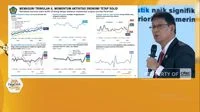
Yogyakarta, Indonesia – The Indonesian government, through its Ministry of Finance, has officially announced the establishment of PT Danantara Sumber Daya Indonesia, a new state-owned enterprise (SOE) specifically tasked with enhancing the governance of strategic commodity exports and combating illicit financial practices. This pivotal announcement was made by Indonesian Minister of Finance, Purbaya Yudhi Sadewa, during a high-profile dialogue with Founder and Chairman of CT Corp, Chairul Tanjung, at the Jogja Financial Festival 2026. The two-day festival, co-hosted by CNBC Indonesia and the Deposit Insurance Corporation (LPS) on May 22-23, 2026, served as a dynamic platform for critical economic discourse, alongside a diverse array of financial education, business talks, exhibitions, and cultural events designed to foster financial literacy and investment awareness among the public.
A New Era for Commodity Export Governance
Minister Sadewa elaborated on the compelling rationale behind the formation of PT Danantara Sumber Daya Indonesia, emphasizing the government’s unwavering commitment to maximizing national revenue from its abundant natural resources. For decades, Indonesia, a global powerhouse in commodities such as coal, palm oil (CPO), and ferro alloys, has grappled with the pervasive challenges of transfer pricing and under-invoicing in its export activities. These fraudulent practices, which involve manipulating the prices of goods traded between related parties or deliberately declaring lower values for exports, have historically led to significant revenue leakage, undermining the nation’s fiscal strength and economic sovereignty.
The new SOE is envisioned as a strategic instrument to directly address these systemic issues. While the precise operational modalities are still being refined, initial indications suggest that PT Danantara Sumber Daya Indonesia will play a multi-faceted role. It is expected to act as a central coordinator or even a single window for the export of designated strategic commodities, ensuring greater transparency, accountability, and fair pricing mechanisms. This could involve direct trading, oversight of existing private exporters, or the implementation of advanced digital tracking and verification systems to monitor export flows from origin to destination. The primary goal is to close loopholes exploited by unscrupulous actors and ensure that the full value of Indonesia’s natural resource exports is accurately reported and contributes to the national coffers.
The decision to form such an entity aligns with Indonesia’s broader economic agenda of resource nationalism and downstream industrialization. For years, the government has pushed for greater domestic processing of raw materials to add value before export, moving away from merely being a supplier of unprocessed goods. PT Danantara Sumber Daya Indonesia could also potentially facilitate the integration of downstream industries by ensuring a stable and transparent supply chain for domestic processing, further boosting local employment and industrial growth. The strategic focus on coal, CPO, and ferro alloy reflects their significant contribution to Indonesia’s export earnings and their susceptibility to the aforementioned illicit practices. For instance, Indonesia is the world’s largest exporter of thermal coal and palm oil, making these sectors particularly vulnerable to large-scale financial manipulations.
Strengthening the Rupiah: The Devisa Hasil Ekspor (DHE) Policy
Complementing the enhanced export governance, Minister Sadewa also underscored the government’s firm stance on the Devisa Hasil Ekspor (DHE) policy for natural resources. This policy mandates that export earnings from strategic natural resources must be repatriated and deposited into state-owned banks, collectively known as Himbara banks. This directive is a crucial component of the government’s macroeconomic stabilization strategy, designed to ensure that foreign exchange (FX) generated from Indonesia’s exports remains within the domestic financial system.
The primary objective of the DHE policy is to bolster Indonesia’s foreign exchange reserves, thereby strengthening the Rupiah’s exchange rate stability. In an increasingly volatile global economic landscape, characterized by inflationary pressures, rising interest rates in major economies, and a persistently strong US dollar, emerging market currencies like the Rupiah often face significant depreciation pressures. By requiring exporters to hold their FX earnings onshore, the policy aims to increase the supply of foreign currency in the domestic market, mitigating speculative attacks and reducing the Rupiah’s susceptibility to external shocks.
Historically, while DHE policies have been in place in various forms, enforcement has often been a challenge, with a significant portion of export proceeds sometimes held offshore. The current iteration, with its explicit requirement for deposits in Himbara banks, signals a more stringent approach. The government believes this measure is essential to build a robust buffer against global economic uncertainties, ensuring that the country has ample foreign exchange to finance imports, service external debt, and maintain investor confidence. This strategic move is intended to reassure the public that the government is proactively managing economic risks, thereby alleviating concerns about a potential sharp decline in the Rupiah’s value. The central bank, Bank Indonesia, has publicly supported such measures, viewing them as vital tools for maintaining external stability and supporting its monetary policy objectives.
Robust Economic Performance Amidst Global Headwinds
Amidst these significant policy announcements, Minister Sadewa also provided an optimistic assessment of Indonesia’s current economic trajectory. He highlighted a robust economic growth rate of 5.61%, a figure that demonstrates the nation’s resilience and strong recovery momentum in the post-pandemic era. This growth, the Minister noted, is predominantly driven by buoyant public consumption and sustained government spending.
Household consumption, which typically accounts for over 50% of Indonesia’s Gross Domestic Product (GDP), has shown remarkable recovery, propelled by rising consumer confidence, stable inflation (which the government has worked diligently to manage), and effective social assistance programs. Government spending has also played a critical counter-cyclical role, with infrastructure development, public service improvements, and targeted stimulus packages contributing significantly to aggregate demand.
Crucially, Minister Sadewa reassured attendees that this growth is being achieved while maintaining fiscal prudence. The state budget (APBN) deficit has been diligently managed and kept below the critical 3% of GDP threshold, a commitment enshrined in Indonesian law to ensure long-term fiscal sustainability. This disciplined fiscal management is paramount for maintaining investor confidence, securing favorable credit ratings, and preventing an unsustainable accumulation of public debt. The government’s ability to balance robust growth with fiscal responsibility positions Indonesia as an attractive destination for foreign direct investment, signaling a stable and well-managed economy.
The Jogja Financial Festival 2026: A Hub for Economic Dialogue and Financial Empowerment
The Jogja Financial Festival 2026 itself was more than just a venue for policy announcements; it was a meticulously curated event designed to bridge the gap between financial institutions, policymakers, and the general public. Co-organized by CNBC Indonesia, a leading business news channel, and the Deposit Insurance Corporation (LPS), a vital institution safeguarding public savings, the festival attracted thousands of participants from across Indonesia.
The choice of Yogyakarta, a vibrant cultural and educational hub, underscored the festival’s mission to make financial knowledge accessible beyond the traditional financial centers. The festival’s agenda was remarkably comprehensive, featuring:
- Financial Festival: Interactive booths and workshops from banks, investment firms, fintech companies, and insurance providers, offering personalized advice and product demonstrations.
- Business Talks: High-level discussions and panels featuring industry leaders, economists, and government officials, delving into topics such as investment opportunities, digital transformation in finance, and sustainable economic development. The dialogue between Minister Sadewa and Chairul Tanjung was a prime example of such high-impact sessions.
- Educational Classes: Tailored sessions on financial literacy, investment basics, retirement planning, and entrepreneurship, catering to diverse age groups and levels of financial sophistication. These classes were particularly popular among students and young professionals seeking to enhance their financial acumen.
- Comedy Live Show & Concerts: Innovative approaches to engage a broader audience, demonstrating that financial education can be entertaining and accessible, breaking down perceptions of finance as an intimidating subject. These cultural elements created a relaxed atmosphere, encouraging wider participation.
- Exhibition: Showcasing the latest innovations in financial technology, sustainable investment products, and opportunities in various economic sectors.
- Career Corner: A dedicated space for job seekers and employers in the financial sector, facilitating talent acquisition and professional networking, further cementing the festival’s role in economic development.
The festival’s overarching objective was to foster a more financially literate and inclusive society, empowering individuals to make informed financial decisions, participate in capital markets, and contribute to national economic growth. The collaboration between CNBC Indonesia, known for its in-depth economic reporting, and LPS, with its mandate to protect depositors, provided a credible and authoritative platform for these critical discussions.
Broader Implications and Future Outlook
The establishment of PT Danantara Sumber Daya Indonesia represents a significant step towards reinforcing state control and oversight over strategic natural resources. While it promises greater transparency and revenue generation, its implementation will require careful navigation to avoid stifling private sector innovation or creating bureaucratic bottlenecks. Industry players, particularly those in the coal, CPO, and ferro alloy sectors, will be closely watching the SOE’s operational framework and its impact on existing supply chains and export mechanisms. There will likely be a period of adjustment for private exporters as they adapt to new regulatory requirements and potentially new trading protocols. However, if successfully implemented, this initiative could significantly boost state revenues, allowing for increased investment in public services, infrastructure, and human capital development.
The strengthened DHE policy, on the other hand, is expected to have a more immediate impact on the domestic financial market. While beneficial for Rupiah stability and national reserves, it could present liquidity challenges for some exporters who prefer to hold foreign currency for their international transactions or investments. The Himbara banks stand to benefit from increased FX deposits, potentially enhancing their capacity for international trade finance. The central bank will likely monitor the policy’s effectiveness closely, adjusting other monetary instruments as needed to ensure optimal market liquidity and exchange rate management. The long-term success of this policy hinges on robust enforcement mechanisms and a balanced approach that supports national economic goals without unduly burdening the private sector.
Indonesia’s reported economic growth of 5.61% is a testament to its strong fundamentals and effective policy responses to global challenges. The government’s commitment to maintaining a prudent fiscal deficit while driving growth through consumption and spending indicates a strategic balance between short-term stimulus and long-term sustainability. However, continued vigilance against global economic slowdowns, geopolitical risks, and commodity price fluctuations will be crucial. Diversifying the economy beyond raw material exports and fostering a robust manufacturing sector will remain key priorities to ensure sustained and inclusive growth.
The Jogja Financial Festival 2026, culminating in these significant announcements, underscores Indonesia’s proactive approach to economic management and its dedication to empowering its citizens through financial education. The dialogue between a key policymaker like Minister Sadewa and an influential business leader like Chairul Tanjung provided a unique confluence of government vision and private sector insight, offering a comprehensive perspective on Indonesia’s economic future. The strategic reforms unveiled at the festival signal Indonesia’s determination to harness its economic potential, strengthen its financial resilience, and ensure equitable prosperity for all its citizens.