Bambang Pamungkas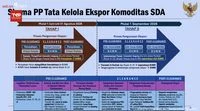
President-elect Prabowo Subianto, during his address at the 19th Plenary Session of the House of Representatives (DPR RI) concerning the Macroeconomic Policy Framework and Fiscal Policy Principles (KEM PPKF) for the 2027 State Budget, held on Wednesday, May 20, 2026, announced a transformative new policy aimed at centralizing the export of key natural resources. This landmark decision involves the issuance of a new Government Regulation (PP) and the establishment of a dedicated State-Owned Enterprise (BUMN), PT Danantara Sumber Daya Indonesia, through which all exports of strategic commodities, including crude palm oil (CPO) and its derivatives, coal, and ferroalloys, will be mandated. The move, articulated by Prabowo, seeks to fortify state oversight, combat illicit trade practices, and optimize national revenue from Indonesia’s vast natural wealth. However, the announcement has already elicited cautious responses from industry stakeholders, most notably from the Indonesian Palm Oil Producers Association (GAPKI), highlighting potential disruptions to established market dynamics and the livelihoods of numerous businesses.
The Rationale: Enhancing State Control and Revenue Optimization
President Prabowo Subianto presented the new export policy as a crucial step towards greater national economic sovereignty and enhanced fiscal health. He emphasized that this measure, while significant, is not unprecedented globally, citing similar models adopted by various countries to manage their strategic resources. The primary objectives, according to Prabowo, are multi-faceted: to strengthen supervision and monitoring mechanisms, eradicate pervasive practices such as under-invoicing and transfer pricing, and prevent the illicit flight of Export Proceeds (DHE) from the country. By channeling all designated commodity exports through a single state entity, the government aims to create a more transparent and accountable system, thereby maximizing tax collection and non-tax state revenue derived from the processing and export of Indonesia’s natural resources.
Prabowo explicitly stated his ambition for Indonesia to emulate nations like Mexico and the Philippines, as well as other regional neighbors, in terms of optimizing resource revenue. He asserted that Indonesia would no longer accept being among the lowest in terms of state revenue from its own resources, underscoring a resolve to actively manage and benefit from the nation’s endowments. This policy aligns with a broader nationalistic economic agenda that prioritizes the value-addition of raw materials within Indonesia and ensures that the economic benefits accrue domestically. The formation of PT Danantara Sumber Daya Indonesia is envisioned as the operational arm to implement this vision, acting as the sole intermediary for specified commodity exports, ensuring compliance, and capturing a larger share of the value chain for the state.
A Closer Look at PT Danantara Sumber Daya Indonesia
PT Danantara Sumber Daya Indonesia, the newly formed BUMN, is positioned to become a pivotal player in Indonesia’s commodity export landscape. Its mandate extends beyond mere logistical coordination; it is expected to serve as a central monitoring hub, ensuring that all transactions comply with national regulations, fair market pricing, and proper tax declarations. The company’s operational framework, which will be detailed in the accompanying Government Regulation, is anticipated to cover the entire export process, from verification of product specifications and quantity to ensuring secure payment channels and the repatriation of DHE.
The establishment of such a centralized entity is a monumental undertaking, requiring robust infrastructure, advanced technological capabilities for tracking and reporting, and a highly skilled workforce capable of managing diverse and complex global commodity markets. The timeline for its full operationalization and the seamless transition of existing export activities remains a critical concern for industry players. While the initial announcement signals the government’s intent, the practicalities of integrating thousands of existing exporters and their unique supply chain configurations into a single BUMN-controlled system will be a formidable challenge. The government will need to swiftly develop clear guidelines, standard operating procedures, and a transparent fee structure to avoid market disruptions and maintain Indonesia’s reliability as a global supplier.
Industry Apprehensions: The Palm Oil Sector’s Perspective
The announcement has been met with immediate and significant concerns from industry leaders, particularly within the palm oil sector. Eddy Martono, Chairman of the Indonesian Palm Oil Producers Association (GAPKI), wasted no time in articulating his reservations, warning that the new regulation could prove to be a "boomerang" for Indonesia, potentially leading to a loss of vital export markets for palm oil and its derivative products. His apprehension stems from the intricate and highly specialized nature of the palm oil industry and its established global supply chains.
Martono highlighted that not all palm oil exporters are integrated plantation companies with downstream processing capabilities. A significant portion of the sector comprises independent trading companies or "traders" that cater to specific niches, serving smaller volumes to particular countries or clients with highly customized product specifications. "Not all exporters are plantation companies that also have downstream industries," Martono told CNBC Indonesia. "There are also many trading companies or traders that serve non-large volumes to certain countries. With the existence of this [state] body, what will be the fate of companies like these?" he questioned, underscoring the potential for marginalizing or eliminating these specialized market players.
Furthermore, Martono pointed out the highly tailored nature of import orders in the palm oil industry. International buyers, particularly those in specialized manufacturing sectors, often require specific compositions and formulations for their palm oil-based inputs. "So, the same industry doesn’t necessarily have the same order. Can something like this be served?" he queried, expressing skepticism about a single BUMN’s ability to replicate the agility, responsiveness, and nuanced understanding of diverse client needs that currently characterize the fragmented export market. He stressed that existing exporters have cultivated their own markets and client relationships over years, and any disruption could lead to these markets shifting to competitors in other palm oil-producing nations. "Exporters usually have their own markets. We must not lose our markets if this cannot be managed well," Martono concluded, emphasizing the delicate balance between state control and market competitiveness.
Economic Landscape of Indonesia’s Key Commodities
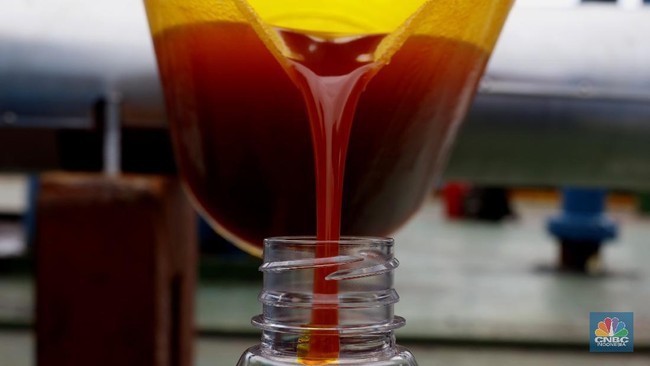
Indonesia is the world’s largest producer and exporter of palm oil, a critical commodity that significantly contributes to its national economy. In recent years, palm oil exports have consistently generated tens of billions of US dollars annually, playing a vital role in balancing the trade surplus and providing livelihoods for millions across the archipelago, from smallholder farmers to large industrial players. The sector’s complexity is amplified by the vast array of derivative products, ranging from refined cooking oil to oleochemicals used in various industries.
Similarly, coal remains a cornerstone of Indonesia’s export earnings, primarily serving energy demands in Asia, particularly in China, India, Japan, and South Korea. Annual coal export values have often exceeded US$30-40 billion, fluctuating with global energy prices. The coal industry also features a diverse ecosystem of mining companies, from large state-owned entities to numerous private players and traders, each with established logistical chains and buyer contracts. Ferroalloys, though smaller in value compared to palm oil and coal, represent an increasingly strategic export, particularly with Indonesia’s push towards downstream processing of nickel ore into high-value products like ferro-nickel and nickel pig iron, crucial for the stainless steel and electric vehicle battery industries. The government has heavily invested in these downstream initiatives, making the efficient and transparent export of these value-added minerals paramount.
The government’s stated aim to combat under-invoicing, transfer pricing, and DHE evasion addresses a long-standing issue in resource-rich economies. Estimates from various economic watchdog organizations and academic studies suggest that illicit financial flows, including those from misinvoicing in trade, cost developing countries hundreds of billions of dollars annually. For Indonesia, these practices in the commodity sector alone are believed to result in annual revenue losses running into billions of dollars, funds that could otherwise be channeled into public services, infrastructure development, and social welfare programs. The new policy, therefore, represents a bold attempt to plug these financial leakages and ensure a fairer share of resource wealth for the state.
Historical Context of Resource Management in Indonesia
Indonesia’s approach to natural resource management has historically swung between periods of open market liberalization and increased state intervention. The concept of "resource nationalism" is deeply embedded in the country’s constitution, which mandates that natural resources be managed for the greatest prosperity of the people. This principle has driven various policies over the decades, including the establishment of domestic market obligations (DMOs) for coal and palm oil, minimum export prices, and the requirement for DHE to be repatriated and held in Indonesian banks.
The current policy can be seen as an escalation of these past efforts, moving beyond mere regulation to direct state participation in the export process. Precedents for state-controlled commodity trade exist in Indonesia’s history, particularly during earlier developmental phases, though usually not encompassing such a broad range of privately produced commodities. The government has often utilized BUMNs in strategic sectors, such as oil and gas (Pertamina), electricity (PLN), and mining (MIND ID), to secure national interests and ensure supply. However, extending this direct control to all exports of major private sector commodities marks a significant departure from recent liberalized trade policies. This move reflects a growing global trend among resource-rich nations to assert greater control over their extractive industries, driven by a desire for increased revenue, local value creation, and environmental stewardship.
Broader Stakeholder Reactions and Potential Impacts
Beyond the palm oil sector, other stakeholders are closely watching the development of this new policy. The Ministry of Finance, the Ministry of Energy and Mineral Resources, and the Ministry of Trade are expected to be key proponents, aligning with the President’s vision for revenue optimization and regulatory compliance. Their collective efforts will be crucial in drafting the detailed Government Regulation and ensuring its smooth implementation.
However, the broader business community, represented by organizations such as the Indonesian Chamber of Commerce and Industry (KADIN), may express concerns regarding the overall investment climate. While appreciating the goal of increased transparency, KADIN might emphasize the importance of maintaining a competitive and predictable business environment to attract continued foreign and domestic investment. Potential issues include bureaucratic red tape, potential for inefficiencies in a monopolistic export entity, and the impact on the ease of doing business.
Economists are likely to offer a mixed analysis. On one hand, the policy holds the promise of significantly boosting state coffers, reducing illicit financial flows, and strengthening Indonesia’s fiscal position. On the other hand, concerns will be raised about potential market distortions, reduced efficiency, and the risk of stifling innovation and competitiveness within the private sector. A single BUMN handling diverse commodities could struggle with the specialized demands of each market, potentially leading to delays, increased costs, and a loss of market agility.
Internationally, major importing countries for Indonesian palm oil (e.g., India, China), coal (e.g., China, Japan, South Korea), and ferroalloys will be closely monitoring the policy’s implementation. Any disruptions to supply chains, changes in pricing mechanisms, or perceived lack of reliability could prompt these countries to diversify their sourcing, impacting Indonesia’s long-term market share and international trade relations. Clarity, consistency, and transparent communication from the Indonesian government will be essential to mitigate these potential international repercussions.
Navigating the Challenges: Implementation and Mitigation
The success of Prabowo’s ambitious commodity export overhaul hinges on meticulous planning and effective implementation. The government will need to craft a Government Regulation that is not only robust in its objectives but also pragmatic in its execution. Key considerations for mitigating the risks highlighted by industry include:
- Clear and Transparent Guidelines: The PP must provide unambiguous rules for how PT Danantara Sumber Daya Indonesia will operate, including its fee structure, service level agreements, and dispute resolution mechanisms.
- Operational Efficiency: The BUMN must demonstrate exceptional efficiency, speed, and responsiveness to match the demands of global commodity markets. Investing in advanced digital platforms for seamless transaction processing, tracking, and communication will be critical.
- Market-Sensitive Pricing: The BUMN must ensure that its pricing strategies remain competitive and do not artificially inflate costs for international buyers, which could drive them to alternative suppliers.
- Transition Period: A well-structured transition period will be vital to allow existing exporters to adapt to the new framework, fulfill ongoing contracts, and integrate their operations with PT Danantara Sumber Daya Indonesia.
- Addressing Niche Markets: Specific provisions or specialized units within the BUMN might be necessary to cater to the unique requirements of niche markets and specialized orders, as highlighted by GAPKI.
- Stakeholder Engagement: Continuous dialogue and collaboration with industry associations, exporters, and international buyers will be crucial to address concerns, refine processes, and build trust.
- Anti-Corruption Measures: Robust internal controls and external audits within PT Danantara Sumber Daya Indonesia will be essential to prevent the very illicit practices it is designed to combat, ensuring transparency and accountability.
Conclusion: A Pivotal Shift in Indonesia’s Commodity Export Strategy
President Prabowo Subianto’s announcement marks a pivotal moment in Indonesia’s economic policy, signaling a profound shift towards greater state control over its strategic natural resource exports. The policy, driven by the dual objectives of optimizing state revenue and combating illicit financial flows, carries significant potential benefits for the national treasury and overall economic sovereignty. However, it also introduces substantial challenges and risks, particularly concerning market disruption, competitiveness, and the complex dynamics of established global supply chains.
The coming months will be critical as the government finalizes the new Government Regulation and outlines the operational specifics of PT Danantara Sumber Daya Indonesia. The ability of the state to implement this sweeping change efficiently, transparently, and with adequate consideration for the diverse needs of the private sector will ultimately determine whether this ambitious overhaul successfully fortifies Indonesia’s economic standing or inadvertently creates unintended consequences for its vital export industries. The world will be watching to see how this resource-rich nation navigates the intricate balance between national interest and global market realities.