Nasution Nanang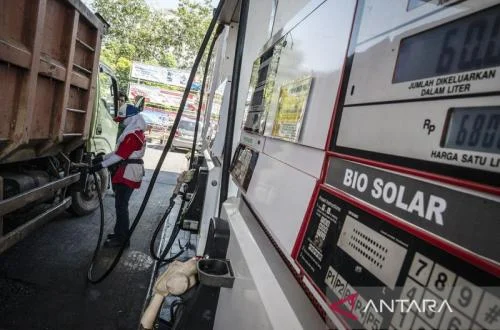
JAKARTA – The Ministry of Energy and Mineral Resources (ESDM) has officially declared that the implementation of the mandatory B50 biodiesel program, requiring a 50 percent blend of palm oil-based biodiesel with petroleum diesel, is set to deliver profound and tangible economic benefits for Indonesia. This ambitious policy is lauded as a pivotal strategic move designed to significantly enhance national energy self-sufficiency and reduce reliance on volatile global fossil fuel markets.
Dwi Anggia, Spokesperson for the Ministry of ESDM, underscored the transformative nature of this initiative, highlighting it as a new era where Indonesia’s energy sovereignty is propelled by abundant domestic commodities rather than external imports. With the B50 mandate, a substantial half of every liter of diesel consumed across the archipelago will originate from crops cultivated and harvested by Indonesian farmers. This direct link between agricultural output and national energy supply not only fortifies the domestic economy but also positions Indonesia as a global leader in sustainable biofuel integration. Anggia stated, "The B50 program is poised to deliver real economic advantages to the nation. Projections indicate a potential foreign exchange saving of approximately Rp170 trillion (around USD 10.8 billion) throughout the year 2026 alone." This substantial saving is deemed crucial for funding national development priorities and shielding the economy from the inherent instability of international oil price fluctuations.
Understanding B50: A Strategic Evolution in Energy Policy
The B50 program represents a significant escalation in Indonesia’s long-standing commitment to diversifying its energy mix and reducing dependence on imported fossil fuels. Biodiesel, a renewable fuel derived from vegetable oils, primarily palm oil in Indonesia’s case, is blended with conventional diesel. The "B50" designation signifies that the fuel comprises 50% biodiesel and 50% petroleum diesel. This policy is not merely an environmental measure; it is deeply intertwined with Indonesia’s broader economic strategy, aiming to leverage its vast agricultural resources, particularly palm oil, to secure energy supply and stimulate domestic industries. The transition to B50 underscores a strategic shift towards leveraging indigenous resources for national energy security, minimizing exposure to geopolitical tensions affecting global oil supplies, and stabilizing the domestic economy against external shocks.
Indonesia, as the world’s largest producer of palm oil, possesses a unique advantage in scaling up biodiesel production. The continuous expansion of its biodiesel program is a testament to its commitment to utilizing this abundant resource not just for food and industrial applications but also as a cornerstone of its energy future. The Ministry of ESDM emphasizes that this strategic pivot aligns perfectly with the nation’s long-term vision for a resilient and sustainable energy sector, one that prioritizes domestic content and reduces the carbon footprint of its transportation sector.
A Decade of Biodiesel: Indonesia’s Progressive Mandate Timeline
Indonesia’s journey towards widespread biodiesel adoption has been a gradual yet determined one, marked by progressive increases in the mandatory blending ratio. This methodical approach allowed industries and consumers time to adapt, while also enabling the government to refine its policies and infrastructure.
The initial mandates began modestly, with B7 (7% biodiesel blend) introduced in 2008 for specific sectors, gradually expanding. The significant acceleration began in 2016 with the B20 program, making a 20% biodiesel blend mandatory for all diesel vehicles and industries. This move was primarily driven by the dual objectives of reducing fuel imports and stabilizing crude palm oil (CPO) prices, which had a direct impact on millions of palm oil farmers.
Building on the success and lessons learned from B20, Indonesia boldly escalated its commitment in January 2020 by implementing the B30 program, mandating a 30% biodiesel blend. This was a monumental step, making Indonesia the first country globally to implement such a high mandatory blend ratio nationwide. The transition to B30 involved extensive testing, infrastructure upgrades, and close collaboration with automotive manufacturers to ensure engine compatibility and optimal performance. The B30 program further solidified Indonesia’s energy independence and provided a significant boost to the domestic palm oil industry, ensuring consistent demand for its primary agricultural export.
The pathway to B50 was initially envisioned through an intermediate step, B40, which underwent extensive trials and research. While B40 was anticipated to be the next logical progression, the government’s current emphasis on B50 signifies an accelerated push, likely driven by a combination of favorable CPO prices, improved technological readiness, and an intensified focus on achieving economic and environmental targets more rapidly. The timeline reflects a clear, unwavering commitment from the Indonesian government to fully harness its bioenergy potential, with each successive mandate building upon the experiences and successes of its predecessors, setting the stage for the transformative B50 program.
Economic Dividend: Billions in Savings and Millions of Jobs
The macroeconomic benefits of the B50 program are multi-faceted and far-reaching, extending beyond just the direct energy sector. The projected Rp170 trillion (USD 10.8 billion) in foreign exchange savings by 2026 is a critical financial injection for the Indonesian economy. This substantial sum, equivalent to a significant portion of the national budget, would otherwise be spent on importing crude oil and refined petroleum products. By reducing these imports, Indonesia strengthens its current account balance, stabilizes its currency (Rupiah), and builds up its foreign exchange reserves, thereby enhancing its economic resilience against global financial volatility. This insulation from fluctuating global oil prices allows the government greater fiscal space to allocate resources towards essential public services, infrastructure development, and social welfare programs, directly contributing to long-term national growth.
Beyond national finances, the B50 program is poised to be a powerful engine for job creation. The Ministry of ESDM estimates that the program will generate up to 2.1 million new jobs across Indonesia. These jobs are not confined to a single sector but span the entire biodiesel value chain: from palm oil plantations (farmers, harvesters), processing plants (crude palm oil mills, biodiesel refineries), logistics and transportation (truck drivers, port workers), to research and development. This extensive job creation has a profound positive domino effect, particularly in rural areas where palm oil cultivation is a primary livelihood. It stimulates local economies, reduces unemployment, and improves the living standards of millions of Indonesians, aligning with the government’s inclusive growth agenda.
Furthermore, the increased demand for crude palm oil resulting from the B50 mandate provides crucial price stability for palm oil farmers. This stability protects them from the volatile swings of international commodity markets, ensuring a more predictable and sustainable income. For smallholder farmers, who constitute a significant portion of Indonesia’s palm oil producers, this translates into improved economic security, better access to education and healthcare, and overall rural development. The program also encourages further investment in the palm oil industry, promoting efficiency, technological upgrades, and sustainable practices, thereby enhancing the sector’s global competitiveness and contribution to the national Gross Domestic Product (GDP).
Environmental Imperative: Cutting Emissions and Meeting Climate Targets
In addition to its significant economic advantages, the B50 mandate is a cornerstone of Indonesia’s commitment to combating climate change and achieving its ambitious environmental targets. The Ministry of ESDM projects that the widespread adoption of B50 will lead to a substantial reduction in greenhouse gas (GHG) emissions, estimated at 44.46 million tons of CO2 equivalent by 2026. This figure represents a significant contribution towards decarbonizing the transportation sector, which is one of the major sources of carbon emissions globally.
This emission reduction is directly aligned with Indonesia’s Nationally Determined Contribution (NDC) under the Paris Agreement. Indonesia has pledged to reduce its GHG emissions by 29% independently by 2030, and up to 41% with international support. The B50 program provides a concrete and measurable pathway to achieve these targets, demonstrating the nation’s proactive stance on climate action. By replacing a portion of fossil fuels with a renewable alternative, the program actively contributes to mitigating the impacts of climate change, improving air quality, and fostering a greener economy.
However, the environmental benefits of palm oil-based biodiesel are often debated, particularly concerning land use change and potential deforestation. The Indonesian government is acutely aware of these concerns and has taken steps to ensure the sustainability of its palm oil industry. Initiatives such as the Indonesian Sustainable Palm Oil (ISPO) certification scheme, designed to ensure palm oil is produced legally and sustainably, are being rigorously implemented. Additionally, a moratorium on new palm oil plantation permits and the promotion of replanting programs for existing smallholder plantations aim to increase productivity without expanding into sensitive forest areas. These efforts underscore a balanced approach, seeking to maximize the environmental gains from biofuels while minimizing potential negative impacts associated with land use. The B50 program, therefore, not only represents a pathway to reduced emissions but also serves as a catalyst for advancing sustainable agricultural practices within the palm oil sector.
Operationalizing B50: Technical Readiness and Industry Collaboration
The successful implementation of a high-blend biodiesel program like B50 requires meticulous planning, extensive technical readiness, and robust collaboration across multiple sectors. One of the primary technical challenges revolves around engine compatibility. While modern diesel engines are generally designed to handle higher biodiesel blends, extensive testing is crucial to ensure optimal performance, durability, and compliance with warranty conditions for a wide range of vehicles, from heavy-duty trucks to passenger cars and industrial machinery. The Ministry of ESDM has been working closely with automotive manufacturers, both domestic and international, to facilitate necessary adjustments and provide technical guidance. This collaboration includes sharing test results, developing updated standards, and ensuring that new vehicle models are B50-ready.
Infrastructure adaptation is another critical aspect. The blending, storage, and distribution networks for diesel fuel must be equipped to handle B50. This involves upgrading blending facilities at refineries and depots, ensuring the compatibility of storage tanks and pipelines with higher biodiesel content, and optimizing logistics to maintain fuel quality throughout the supply chain. Pertamina, the state-owned oil and gas company, plays a central role in this, investing in necessary infrastructure enhancements and ensuring a seamless transition across its extensive distribution network. Quality control mechanisms are also paramount to guarantee that the distributed B50 fuel meets stringent national and international standards, preventing issues such as filter clogging or engine damage.
Dwi Anggia emphasized that the transition to B50 is not merely an exercise in energy diversification but a carefully orchestrated and thoroughly tested roadmap. The government’s strategy involves continuous monitoring of technical and operational execution in the field, coupled with intensive coordination among various stakeholders. This includes not only automotive producers and fuel distributors but also research institutions, agricultural bodies, and environmental organizations. This holistic approach ensures that potential challenges are identified and addressed proactively, paving the way for a smooth and effective nationwide rollout. The comprehensive preparation and multi-stakeholder engagement underscore the government’s commitment to making B50 a sustainable and successful long-term solution for Indonesia’s energy future.
Stakeholder Perspectives on B50
The B50 program garners a range of perspectives from various stakeholders, reflecting its broad impact across the Indonesian economy and society.
From the Government’s perspective, particularly the Ministry of Energy and Mineral Resources (ESDM), the Ministry of Finance, and the Ministry of Agriculture, the B50 mandate is viewed as a strategic imperative. The ESDM champions the energy independence and emissions reduction aspects. The Ministry of Finance enthusiastically supports the program for its significant contribution to foreign exchange savings and macroeconomic stability. The Ministry of Agriculture sees it as a vital mechanism to ensure stable demand and prices for palm oil, thereby uplifting the livelihoods of millions of farmers. They collectively emphasize the national strategic importance and long-term benefits.
Palm oil farmers, especially smallholders, largely view the B50 program with optimism. Increased domestic demand for crude palm oil (CPO) translates into more stable and potentially higher prices, insulating them from the volatility of international commodity markets. This provides greater income security, encourages sustainable farming practices through various government support schemes, and fosters rural economic development. Farmer cooperatives are often vocal proponents, highlighting the direct economic benefits to their communities.
The Automotive Industry faces both opportunities and challenges. While supporting national energy policies, manufacturers are primarily concerned with engine compatibility, warranty implications, and the need for clear, consistent fuel standards. They typically engage in extensive research and development to ensure their diesel engines can reliably operate with higher biodiesel blends. Their statements often emphasize the importance of government support for R&D, infrastructure upgrades, and a phased approach to implementation to allow for proper adaptation and testing.
Environmental Groups generally acknowledge the climate benefits of reducing fossil fuel consumption and cutting greenhouse gas emissions. However, they maintain a vigilant stance on the sustainability aspects of palm oil production. Their reactions often include calls for stricter enforcement of sustainable palm oil certification (like ISPO), robust measures against deforestation and peatland conversion, and transparent monitoring of the environmental impact of plantation expansion. They advocate for a holistic approach to bioenergy that prioritizes both emissions reduction and ecological preservation.
Energy Sector Players, including state-owned Pertamina and private fuel distributors, are instrumental in the operationalization of B50. Their perspective focuses on the logistical complexities and investment required for blending facilities, storage, and distribution networks. While acknowledging the capital expenditure, they also recognize the strategic importance of the program for national energy security and often express readiness to support government initiatives through infrastructure development and technological adaptation.
Broader Strategic Implications
The B50 program extends beyond domestic economic and environmental benefits, carrying significant broader strategic implications for Indonesia on the global stage.
Firstly, it dramatically enhances Energy Security. By replacing a substantial portion of imported petroleum diesel with domestically produced palm oil-based biodiesel, Indonesia significantly reduces its vulnerability to geopolitical disruptions in global oil supply chains and the inherent volatility of international oil prices. This self-sufficiency strengthens national resilience, allowing Indonesia to pursue its foreign policy objectives with greater independence and reducing the drain on its foreign exchange reserves caused by energy imports.
Secondly, Indonesia’s position as the world’s largest palm oil producer means that the B50 mandate has considerable influence on Global Commodity Markets. The increased domestic demand for crude palm oil helps stabilize global CPO prices, benefiting palm oil-producing nations and influencing international trade dynamics. This consolidates Indonesia’s leverage in global agricultural commodity discussions and its role in shaping sustainable palm oil practices worldwide.
Thirdly, the program serves as a powerful catalyst for Technological Advancement and Innovation within Indonesia. The need for engine compatibility, efficient refining processes, and advanced blending technologies stimulates research and development in both the automotive and bioenergy sectors. This fosters a culture of innovation, potentially leading to the development of new patents, specialized expertise, and an advanced domestic bio-industry capable of exporting its knowledge and technology.
Finally, the B50 initiative bolsters Indonesia’s Climate Leadership credentials. By demonstrating a concrete, large-scale national effort to decarbonize its transportation sector using a renewable resource, Indonesia sets an example for other developing nations seeking to balance economic growth with environmental responsibility. This strengthens its voice in international climate negotiations and reinforces its commitment to global sustainability goals. The carefully designed roadmap, emphasizing gradual and tested transitions, positions B50 as a blueprint for other countries looking to harness their bio-resources for energy independence and climate action.
The Road Ahead: Towards B100 and a Sustainable Bioenergy Future
The B50 program, while a monumental step, is often viewed by the Indonesian government as part of a larger, long-term vision for a fully sustainable bioenergy future. The ultimate aspiration lies in the development and widespread adoption of B100, or pure biodiesel, which would completely replace petroleum diesel in suitable applications. This ambitious goal requires continued breakthroughs in engine technology, refining processes, and feedstock optimization.
Ongoing research and development efforts are not limited to palm oil. Indonesia is actively exploring other potential feedstocks for advanced biofuels, including waste biomass, microalgae, and other non-food crops, to diversify its bioenergy sources and further enhance sustainability. These initiatives aim to address concerns about land use for food versus fuel and to create a more resilient and diversified bioenergy portfolio.
Dwi Anggia’s emphasis on a "gradual and thoroughly tested roadmap" underscores the government’s pragmatic approach. Each step, from B20 to B30 and now B50, has been meticulously planned, piloted, and evaluated to ensure technical viability, economic benefit, and environmental integrity. This cautious yet determined progression ensures that the transition is smooth, minimizes disruption, and maximizes positive outcomes for all stakeholders.
The B50 program stands as a powerful testament to Indonesia’s commitment to leveraging its domestic resources for national prosperity and global sustainability. It is more than just an energy policy; it is a strategic instrument designed with the primary objective of maximizing the welfare of its people, enhancing economic prosperity, and securing a greener, more independent future for the archipelago. As Indonesia continues to navigate the complexities of global energy transitions and climate change, its bioenergy strategy, spearheaded by the B50 mandate, will remain a cornerstone of its journey towards a resilient and sustainable nation.
This content has been processed with the assistance of AI.
Source: Antara