Lusiana Hamidun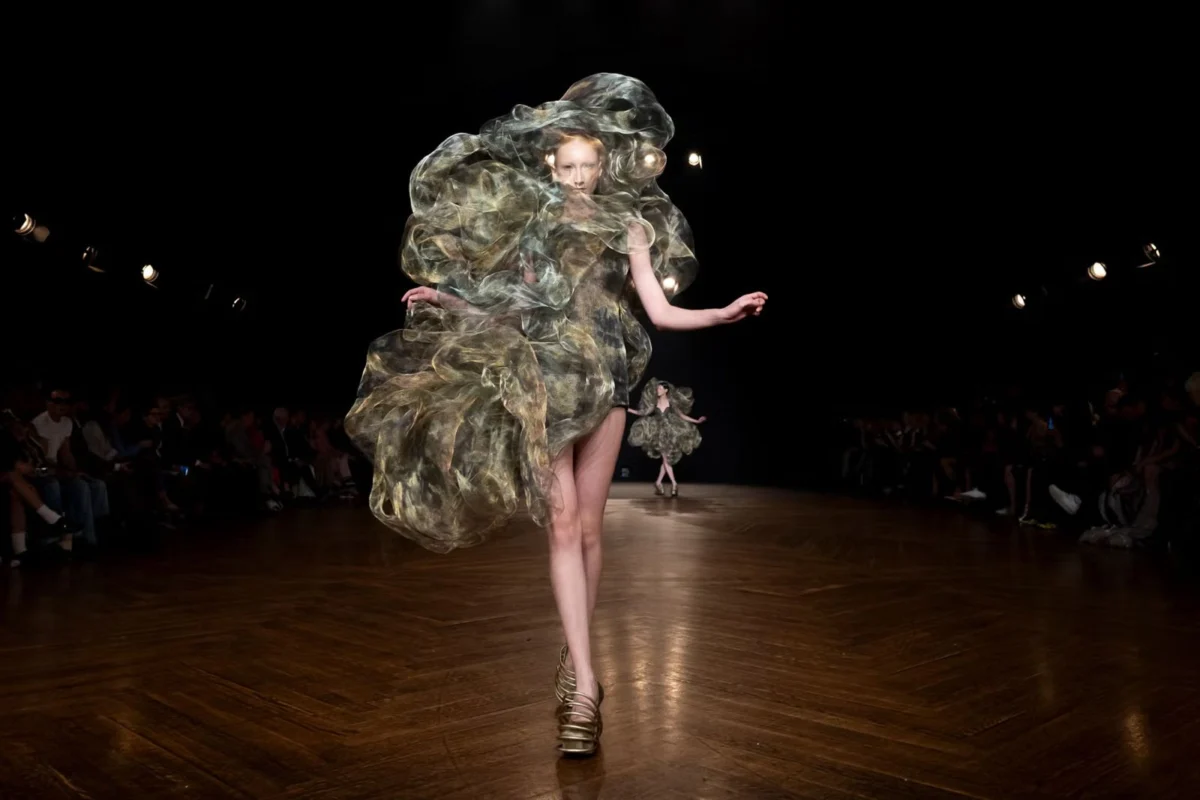
The revolutionary spirit of Iris van Herpen, a couturier renowned for pushing the boundaries of fashion through groundbreaking technological integration, is now on full display in the expansive exhibition "Sculpting the Senses." This ambitious showcase, which has captivated audiences across the globe, has made its North American debut at the Brooklyn Museum in New York City, offering an unparalleled deep dive into the Dutch designer’s visionary approach to haute couture. Originally opening in 2023 at the Musée des Arts Décoratifs in Paris, the exhibition has since toured internationally, gracing venues in Australia, Singapore, and the Netherlands before its current, and largest, iteration in the United States.
From Technological Skepticism to Digital Vanguard
What makes van Herpen’s trajectory particularly compelling is her personal evolution from a technophobe to a pioneer of digital fabrication in fashion. In a candid revelation to Harper’s Bazaar, the designer admitted to a childhood devoid of television and a late introduction to personal technology, receiving her first mobile phone at 19 and her first laptop at 22. This background stands in stark contrast to her current reputation. "I actually grew up without a television at home," van Herpen shared, reflecting on the inherent irony of her technological embrace. During her studies in fashion design at the ArtEZ Institute of the Arts in Arnhem, Netherlands, her focus was firmly rooted in historical haute couture techniques. "I remember having Illustrator and Photoshop lessons and arguing with my teacher because I felt I would never need those programs," she confessed. This early skepticism underscores the profound transformation that has led her to become a leading figure in merging traditional craftsmanship with cutting-edge innovation.
A Retrospective of Unparalleled Vision
Nineteen years after establishing her eponymous label, Iris van Herpen has amassed a formidable collection of accolades and a significant international following, largely attributed to her distinctive fusion of traditional couture craftsmanship and high-tech innovation. The "Sculpting the Senses" exhibition, curated by Matthew Yokobosky, senior curator of Fashion and Material Culture, alongside Imani Williford, curatorial assistant for Photography, Fashion, and Material Culture, serves as a comprehensive exploration of her creative process and diverse inspirations. "For me, fashion is very connected to art, architecture, science, even dance. I don’t see boundaries between those disciplines," the couturier stated, emphasizing the interconnectedness of her creative universe. "It feels very important to bring that vision to life and the collaborative spirit that exists in my work."
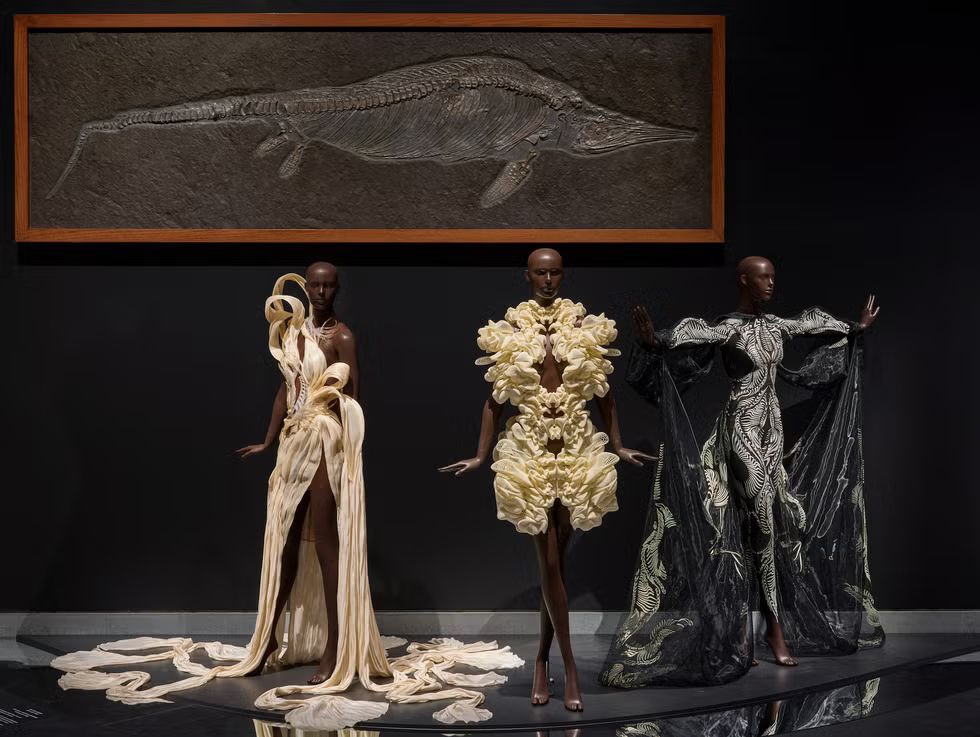
The Brooklyn Museum iteration of "Sculpting the Senses" is the most extensive to date, featuring over 140 haute couture ensembles. These are meticulously displayed alongside fine art, decorative arts, and, notably, historical natural history specimens, creating a dialogue between human creativity and the natural world. The exhibition is scheduled to run until December 6, 2026, providing ample opportunity for the public to engage with van Herpen’s extraordinary creations.
Thematic Explorations and Unveiling New Masterpieces
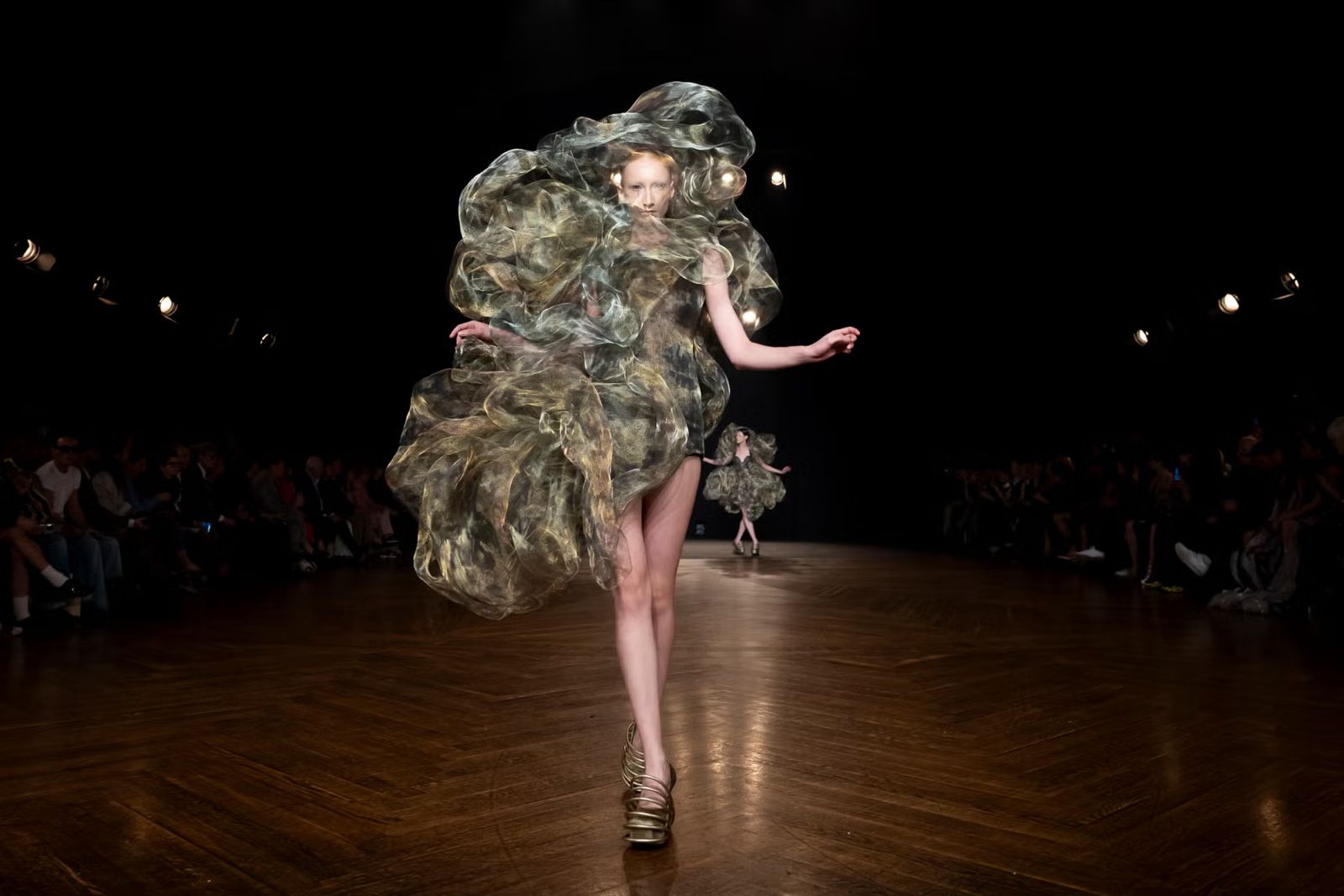
While the thematic core of the exhibition remains consistent across its various locations—ranging from "Sensory Sea Life," which delves into the wonders of marine organisms, to "Forces Behind the Forms," exploring natural structures like bird and beehives—the Brooklyn Museum’s presentation introduces a reordered sequence and premieres several new garments. A standout addition is the "Living Algae" ensemble, a collaborative effort with biodesigner Chris Bellamy for van Herpen’s Sympoiesis 2025 collection. This captivating piece is inhabited by 125 million bioluminescent algae that emit light in response to the wearer’s movements, offering a glimpse into a future where fashion is alive and interactive.
Another significant debut is a fire-inspired gown designed by Iris for Anne Hathaway’s character in the film Mother Mary. Although the film depicts the creation of this intricate garment in a single night, its real-world production was a demanding three-month endeavor involving a considerable team. The exhibition also showcases van Herpen’s keen curatorial eye, as she selected pieces from the Brooklyn Museum’s own collection that resonate with her artistic practice, particularly her exploration of perception and light. These include a 19th-century Gothic Revival wooden chair paired with her 2012 "Cathedral" dress and Tara Donovan’s biomorphic sculptures crafted from Mylar and hot glue, displayed alongside her 2017 "Aeriform" dress, a creation of laser-cut stainless steel and tulle.
A Dialogue with Nature and Science
Van Herpen’s fascination with scientific institutions is evident in the exhibition’s inclusion of specimens borrowed from prominent museums. Her preference for locations like CERN in Switzerland, a hub for thousands of scientists, highlights her intellectual curiosity. For the Brooklyn Museum show, she secured loans from the American Museum of Natural History, including a 50-million-year-old fossilized stingray, an 80-million-year-old herbivorous dinosaur, and a 180-million-year-old marine reptile measuring over 11 feet long and weighing nearly 1,100 pounds. Additionally, the exhibition features metallic butterflies and beetles from the Yale Peabody Museum, and weevils and cicadas from the Staten Island Museum, further enriching the exhibition’s interdisciplinary narrative.
The Alchemical Atelier: A Personal Sanctuary Brought to Life
A significant expansion in the Brooklyn Museum’s rendition of "Sculpting the Senses" is the "Alchemical Atelier." This immersive section transforms the museum’s 72-foot-high Rotunda into a representation of van Herpen’s Amsterdam studio. Surrounded by displays of fabric samples and models, visitors can view new video installations showcasing hours of footage detailing three handcrafted techniques from her atelier. These visuals are projected onto a 25-foot-tall fabric expanse draped over mannequins, offering an intimate look into the meticulous handwork that defines her creations. For the first time, one of van Herpen’s aerial sculptures from 2024, titled Weightlessness of the Unknown, is also on display. This painted fabric artwork is described by the designer as "a self-portrait of my inner world."
Experiential Artistry: The Participatory Pleating Sessions
Adding a unique interactive dimension to the exhibition, van Herpen has introduced a participatory performance element. On select days, exhibition visitors are invited to engage in 20-minute personal sessions with the designer. During these sessions, participants will learn to fold metal-based fabric, a material developed specifically for her work, using a pleating technique that has become a signature of her brand.
"I want visitors to experience real couture handwork and the meditative state that comes with it," Iris explained. "For many, that process feels both mysterious and magical." She further elaborated on her philosophy of creativity: "People often tell me they are very inspired by my work, but they feel they are not creative. I believe creativity is within all of us, and it all starts with our hands. As an artist, I never start with a big idea. It all starts with my hands, and the handwork itself teaches me where to go." This emphasis on the tactile and the personal is central to her belief that creativity is an inherent human capability, unlocked through direct engagement with materials. The pleating technique, based on the width of each individual’s fingers, ensures that every creation is unique, "like a handwriting," as the couturier aptly put it.
A Generous Exchange of Art and Conversation
While the opportunity to spend intimate time with one of the era’s most visionary designers is an unprecedented offering, van Herpen views these sessions as a personal gift. "Handwork is definitely my starting point, but now often I don’t have enough time to do it myself," she admitted, referencing the essential role of her studio assistants in producing her garments. "For me, these moments are precious, and they reflect the collaborative spirit of our atelier in Amsterdam."
Van Herpen also highly values the intimate conversations that naturally arise during the handwork process. Consequently, each discussion with visitors will be recorded. Following the exhibition’s conclusion, the pleated fabrics will be draped into a dress, with the inner lining embroidered with inspirational snippets from these conversations. This unique creation, functioning as both a material "time capsule" and a "gesamtkunstwerk" (total work of art), will be featured in future iterations of "Sculpting the Senses."
Ultimately, Iris van Herpen’s capacity to create gravity-defying and unparalleled haute couture is matched only by her boundless generosity, extending her artistic vision and collaborative spirit beyond the confines of the runway and into a deeply personal engagement with her audience. The "Sculpting the Senses" exhibition at the Brooklyn Museum is not merely a display of fashion; it is an invitation to explore the intricate interplay of art, science, technology, and the profound potential of human creativity.