Nila Kartika Wati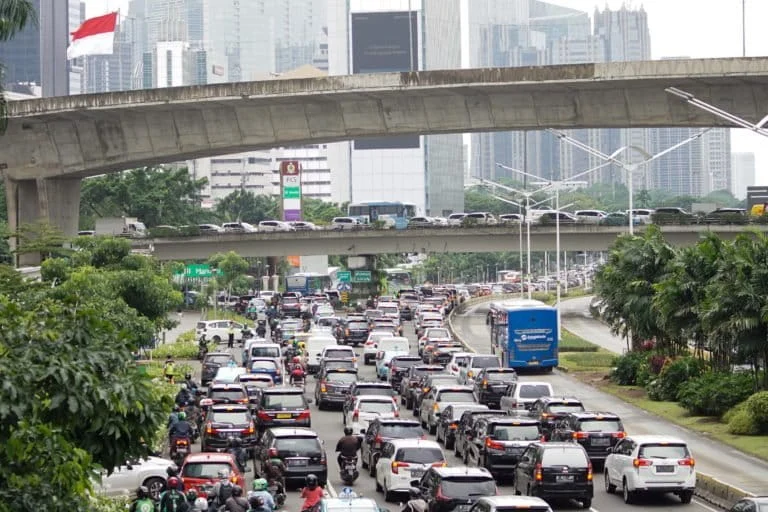
Every day, Junaedi begins his shift as a street sweeper in the bustling corridors of East Jakarta, armed with nothing more than a bamboo broom, a traditional conical hat, cloth gloves, and a simple fabric mask. These modest layers of protection are his only defense against a relentless onslaught of dust and heavy vehicle emissions that define the atmosphere of Indonesia’s capital. Junaedi is a living representative of Jakarta’s most vulnerable demographic—outdoor workers whose livelihoods require constant exposure to some of the most toxic air on the planet. For Junaedi, the health consequences of his profession are no longer a risk but a routine reality. Speaking during a work shift on Saturday, June 6, 2026, he noted that a persistent cough has become his constant companion, one he manages not through professional medical consultation, but with cheap, over-the-counter medication from local kiosks.
The plight of Junaedi is echoed by Yatno, a member of the city’s Public Infrastructure and Facilities Handling (PPSU) unit, colloquially known as the "Orange Troops." Yatno frequently experiences acute respiratory distress while maintaining the city’s streets. Both men report that their symptoms intensify significantly during the dry season, yet neither has access to routine health screenings or specialized respiratory care. With salaries primarily allocated to basic daily necessities, professional healthcare remains a luxury they cannot afford. Their stories serve as a microcosm of a much larger systemic crisis. As Jakarta grapples with a protracted environmental emergency, the looming threat of the "El Niño Godzilla" phenomenon—a period of extreme heat and extended drought—threatens to push the city’s air quality from habitually poor to historically catastrophic.
The Statistical Reality of a Choking Capital
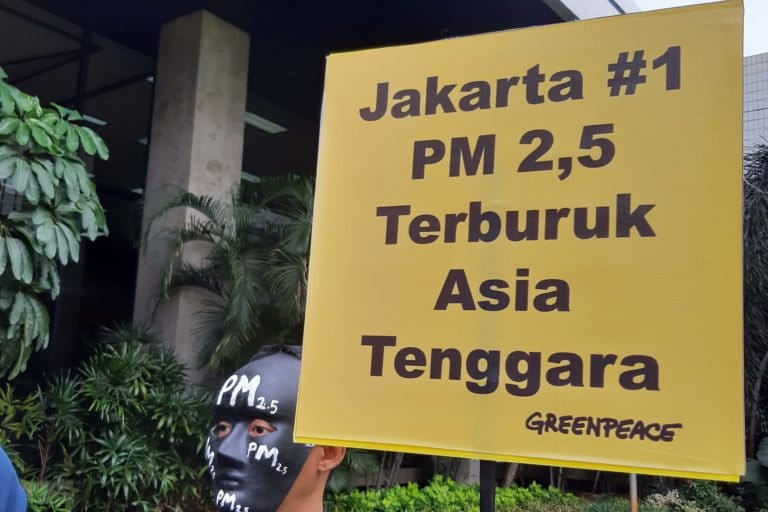
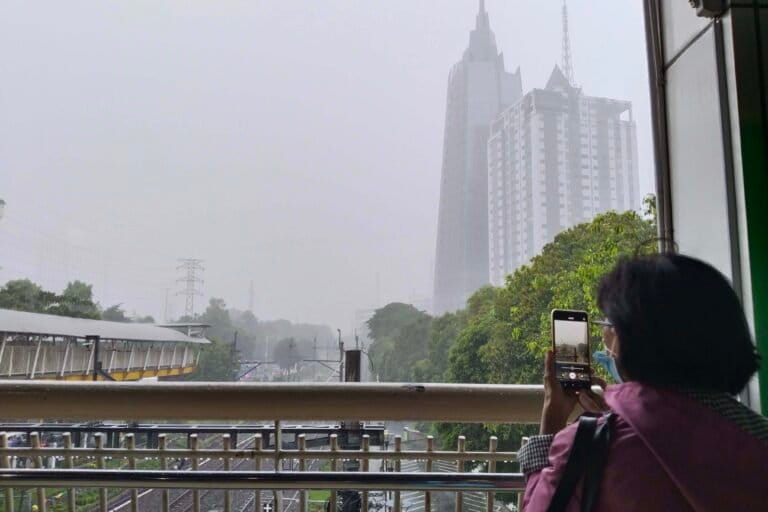
The scale of Jakarta’s atmospheric degradation is documented with alarming precision by the city’s monitoring networks. According to data from the DKI04 Lubang Buaya Air Quality Monitoring Station in East Jakarta, the average PM2.5 concentration on June 6, 2026, reached 125.25 µg/m³, a level classified as "unhealthy." PM2.5 refers to fine particulate matter less than 2.5 micrometers in diameter, which is small enough to enter the bloodstream and lodge deep within lung tissue. Since the beginning of June 2026, analysis from IQAir has consistently placed Jakarta among the top five most polluted cities globally.
A retrospective analysis of 2025 data from the Jakarta Environment Agency (DLH) reveals a grim pattern of exposure. At the Lubang Buaya station alone, the city recorded 201 days of "moderate" air quality and 40 days of "unhealthy" air, with only 96 days categorized as "good." Across the entire capital region throughout the year, the air was considered "moderate" for 72% of the time (259 days) and "unhealthy" for 26% (93 days). Only a negligible 2% of the year—roughly six days—offered air quality that met the "good" threshold.
The disconnect between public health safety and national regulation is stark. Under Government Regulation No. 22/2021 on the Implementation of Environmental Protection and Management, Indonesia sets the national ambient air quality standard for PM2.5 at a daily average of 55 µg/m³ and an annual average of 15 µg/m³. However, the World Health Organization (WHO) maintains much more stringent guidelines, recommending a daily limit of just 5 µg/m³ and an annual average of 15 µg/m³. According to the 2025 IQAir report, Indonesia’s national average stood at 31.4 µg/m³, more than six times the WHO’s safety standard. This data ranks Indonesia 17th out of 134 countries with the worst air quality globally, highlighting a failure to align national policy with international health benchmarks.
The "El Niño Godzilla" and the Seasonal Surge
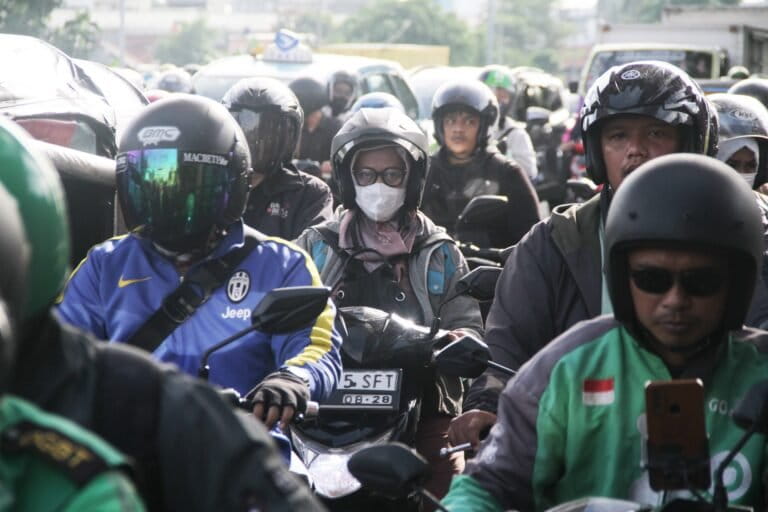
Environmental experts and government officials are particularly concerned about the cyclical nature of Jakarta’s pollution, which peaks during the dry months. Dedi Gardesi Asikin, Head of the Jakarta Environment Agency, explained that the lack of precipitation during the dry season prevents the "washout" effect, where rain typically clears particulate matter from the atmosphere. Instead, dry conditions allow pollutants to accumulate in a stagnant layer over the city.
The year 2026 has been marked by a chilling warning from the National Research and Innovation Agency (BRIN) regarding the "El Niño Godzilla." This term describes a particularly intense El Niño cycle characterized by extreme sea surface temperatures that lead to severe, prolonged droughts across Southeast Asia. Predicted to last from April to October 2026, this climatic event is expected to hit Java, Bali, and East Nusa Tenggara with unprecedented force. For Jakarta, this means a "perfect storm" of high temperatures and stagnant air that will likely trap vehicle and industrial emissions at ground level for months on end.
In response, the Jakarta Provincial Government has pledged to strengthen mitigation efforts. These include an enhanced early warning system for air quality, stricter supervision of industrial activities, and mandatory vehicle emission testing. Furthermore, the administration is in the process of revising its Air Pollution Control Strategy (SPPU) and drafting a comprehensive Air Quality Protection and Management Plan (RPPMU). Despite these administrative steps, critics argue that the pace of implementation remains sluggish compared to the speed of environmental decline.
Sectoral Sources and the Regional Spread
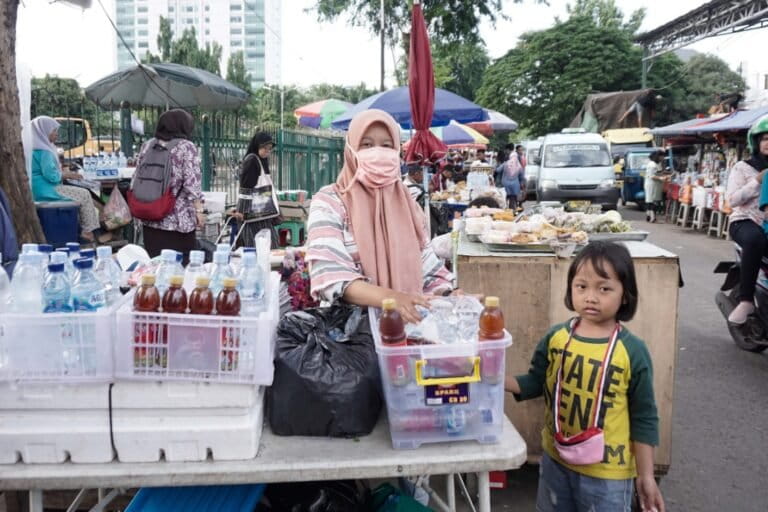
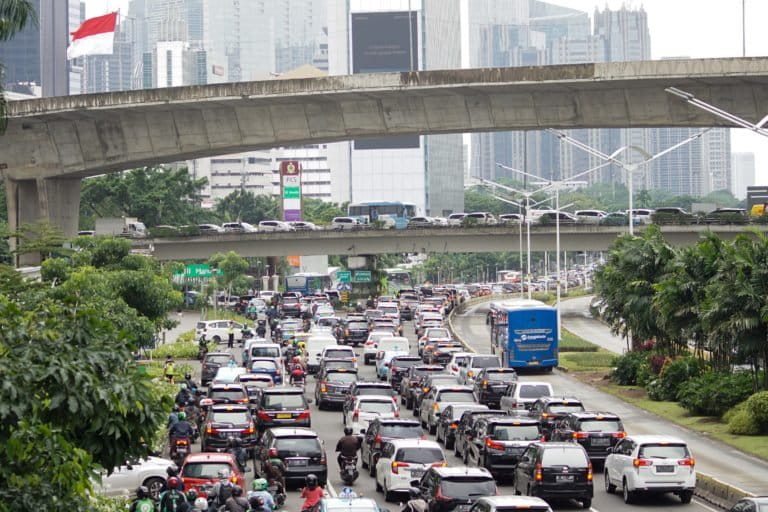
Identifying the culprits behind the haze is essential for any long-term solution. Data from the 2024 DLH emission inventory identifies the transportation sector as the primary contributor to nitrogen oxides (NOx), carbon monoxide (CO), PM10, and PM2.5. Specifically, heavy-duty diesel vehicles are cited as significant contributors to fine particulate matter. Meanwhile, the industrial sector remains the dominant source of sulfur dioxide (SO₂) emissions.
A 2025 study titled Better Air, Better Indonesia provides a more granular breakdown of PM2.5 sources:
- Land Transportation: 61.4%
- Industry: 20.3%
- Waste Burning, Construction, and Others: 18.3%
The crisis is not confined to Jakarta’s administrative borders. Research by the Centre for Research on Energy and Clean Air (CREA) indicates that the entire Greater Jakarta area (Jabodetabek) is suffering. While Bogor recorded the lowest PM2.5 levels at 31.2 µg/m³, cities like Bekasi and Jakarta averaged around 40 µg/m³. The situation is even more dire in Depok, Tangerang, and South Tangerang, where annual averages exceeded 55.4 µg/m³—levels deemed unhealthy for 24-hour exposure even by Indonesia’s own air quality index (ISPU).
The Legal Battle for Clean Air
The ongoing environmental crisis has sparked a historic legal confrontation between citizens and the state. In July 2019, a group of 32 citizens and civil society organizations, known as the Capital City Clean Air Initiative Coalition (Ibukota), filed a citizen lawsuit against the President of Indonesia, the Minister of Environment and Forestry, the Minister of Health, and the Governors of Jakarta, West Java, and Banten. The plaintiffs argued that the government had been negligent in its duty to provide healthy air.
The legal journey was long and hard-fought. The Central Jakarta District Court ruled in favor of the citizens in 2021, a decision later upheld by the High Court. The government eventually appealed to the Supreme Court, but on November 13, 2023, the Supreme Court rejected the government’s cassation (Case No. 2560 K/Pdt/2023), finalizing the victory for the citizens.
However, three years after the initial victory and months after the final ruling, the coalition reports that the government has failed to take concrete action. Alif Fauzi Nurwidiastomo from the Jakarta Legal Aid Institute (LBH Jakarta) emphasized that the delay in implementing the court’s mandate is a direct violation of the public’s right to health. The coalition is demanding immediate supervision of emission standards for both mobile and stationary sources, as well as a cross-provincial emission inventory. Yuyun Ismawati, one of the plaintiffs, noted that without enforcement, a court victory is merely a "paper win" that offers no relief to the millions of people breathing toxic air.
The Escalating Cost of Public Health
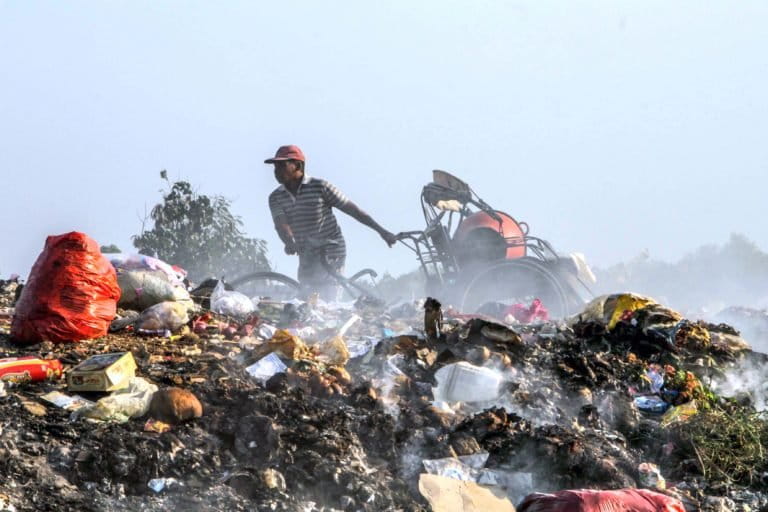
The medical consequences of the pollution crisis are staggering. From January to October 2025, the Jakarta Health Office recorded 1.9 million cases of Upper Respiratory Tract Infections (ISPA). This surge is attributed to the combination of high pollution levels and a "wet dry season" phenomenon that creates a breeding ground for respiratory pathogens.
Research conducted by the Climate Change Research Center at the University of Indonesia (RCCC UI) in 2025 established a direct correlation between PM2.5 levels and disease prevalence. The study found that an increase of just 15 µg/m³ in PM2.5 concentration leads to:
- An 18% increase in ISPA cases.
- A 27% increase in Chronic Obstructive Pulmonary Disease (COPD).
- A 37% increase in ischemic heart disease.
- A 20% increase in pneumonia.
The economic burden is equally severe. BPJS Kesehatan, the national health insurance provider, reported that the cost of claims for air-pollution-related diseases in Jakarta alone reached IDR 1.2 trillion in 2023. Budi Haryanto, a professor of environmental health at UI, warned that children are particularly at risk, with high PM2.5 levels directly linked to increased asthma and pneumonia rates in the Jabodetabek region. He stressed that while symptoms like coughing are common, the long-term, "invisible" damage to the heart and lungs is what eventually leads to premature death.
Potential Solutions and the Path Forward
Despite the grim outlook, scientific institutions have mapped out potential pathways to recovery. A collaborative study by the Bandung Institute of Technology (ITB) and SYSTEMIQ suggests that Jakarta could slash its PM2.5 emissions by 92% by 2030 through aggressive interventions. These include:
- Fuel Quality Standards: Transitioning all vehicles to EURO 4 or higher standards to reduce sulfur content.
- Industrial Transition: Replacing coal-fired boilers in factories with cleaner energy technologies.
- Public Transport: Rapidly expanding integrated, zero-emission public transportation networks.
- Waste Management: Enforcing a total ban on open waste burning.
The study estimates that such measures could prevent over 32,000 premature deaths and generate health-related economic benefits worth IDR 432 trillion. RCCC UI research further suggests that upgrading fuel standards alone could save IDR 609 billion in annual healthcare costs.
However, environmental advocates like Wahyu Eka Putra from Walhi National argue that technical fixes are insufficient without addressing the root causes. He points out that as long as the government continues to prioritize industrial expansion and remains dependent on private motorized vehicles, the air will remain hazardous. For street sweepers like Junaedi and Yatno, and for the millions of residents in the Greater Jakarta area, the time for administrative planning has passed. The "El Niño Godzilla" is no longer a distant threat—it is a countdown to a public health catastrophe that requires immediate, high-stakes intervention.