Nila Kartika Wati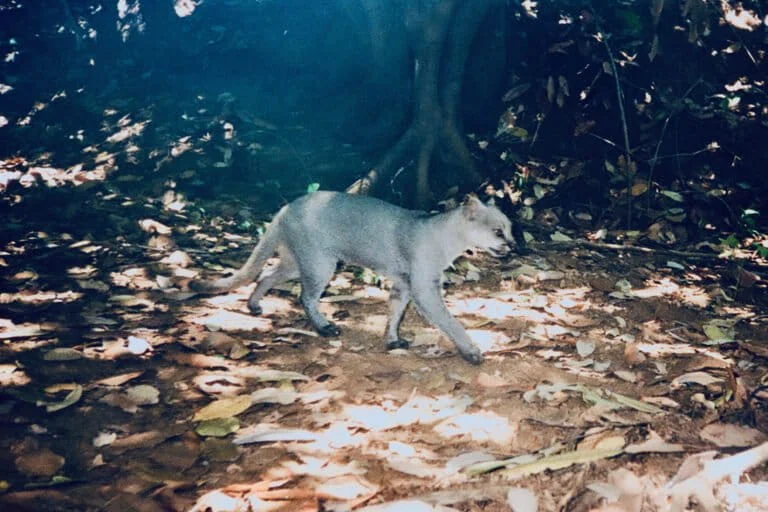
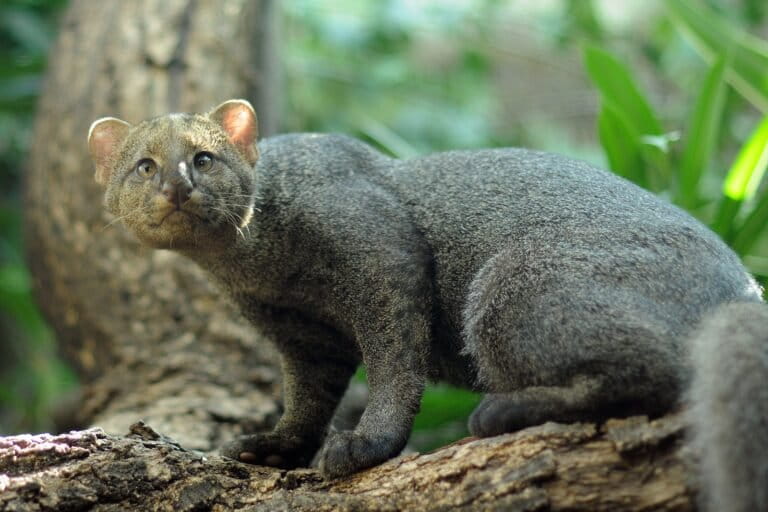
Among the hundreds of wild cat species that have been documented across the globe, the jaguarundi remains one of the most enigmatic and frequently misidentified, even by seasoned wildlife experts. Unlike the ocelot, it lacks the striking rosettes and spots that define many Neotropical cats; unlike the margay, it does not navigate the forest canopy with acrobatic grace; and unlike the tiger or the jaguar, it rarely appears on the glossy posters of global conservation campaigns. With an elongated body, a flattened head, small rounded ears, and a short-legged gait, the jaguarundi possesses a silhouette that many observers describe as more closely resembling a weasel or an otter than a feline. This physical ambiguity is paired with a vocal repertoire that is unparalleled within the Felidae family; the jaguarundi is known to produce at least 13 distinct sounds, ranging from bird-like chirps and sharp whistles to rhythmic purrs, a complexity of communication that continues to baffle biologists.
Despite its name, the jaguarundi (Herpailurus yagouaroundi) is not a close relative of the jaguar. Genetic sequencing reveals that its closest living relatives are the puma and the cheetah, with the jaguarundi lineage estimated to have diverged from the puma approximately 4 to 7 million years ago. Its behavioral patterns are equally distinct; while most wild cats are nocturnal or crepuscular, the jaguarundi is primarily diurnal, active during the heat of the day. It also holds the distinction of being the most widely distributed small felid in the Western Hemisphere, with a range that stretches from northern Mexico to central Argentina, surpassed in geographic reach only by the puma among American carnivores. Yet, despite this vast footprint, the species remains a "ghost" in the scientific community—poorly understood, underfunded, and quietly disappearing from the northernmost reaches of its habitat.
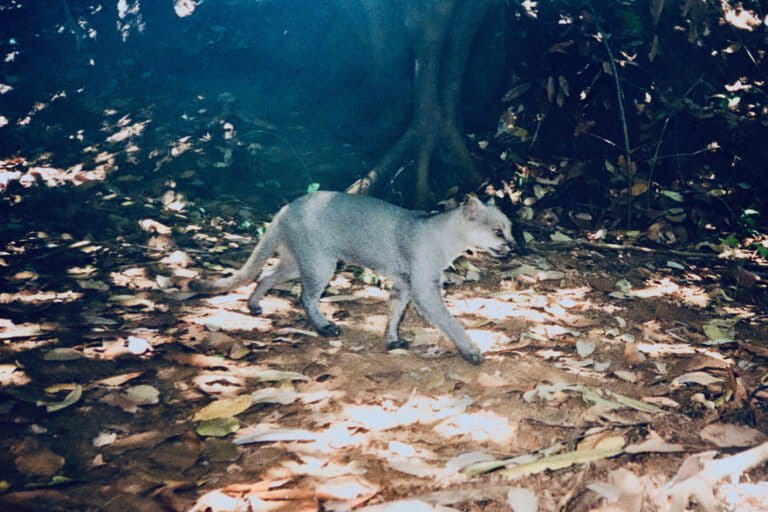
The year 2025 marks a somber milestone for North American biodiversity, as the jaguarundi is officially declared extinct in the state of Texas, and by extension, the United States. The path to this extirpation has been a slow, documented decline spanning nearly four decades. The last confirmed evidence of a living jaguarundi in the U.S. dates back to 1986, when an individual was found dead after being struck by a vehicle near Brownsville, Texas. Since that roadside tragedy, there has not been a single scientifically verified sighting or photograph of the species within American borders.
The declaration of extinction was not made lightly. Researchers from the Caesar Kleberg Wildlife Research Institute at Texas A&M University conducted one of the most exhaustive carnivore surveys in regional history. Over a period of 18 years, the team deployed camera traps at 685 strategic locations across the jaguarundi’s historical range in the Rio Grande Valley. While the effort yielded 126 photographs of jaguarundis, every single one was captured south of the border in Tamaulipas, Mexico. The cameras on the American side remained empty of the elusive "otter-cat." The primary drivers for this local extinction are clear: the relentless expansion of industrial agriculture and the systematic clearing of dense, thorny brushland—known locally as chaparral—which the jaguarundi requires for cover and hunting.
The loss of the jaguarundi in Texas is more than a local tragedy; it serves as a warning signal for the species’ status across the continent. While the International Union for Conservation of Nature (IUCN) currently classifies the jaguarundi as a species of "Least Concern" on a global scale, this broad categorization masks a much grimmer reality at the national level. In Brazil, the species is listed as Vulnerable. Dipping further south into Mexico and Guatemala, it is officially categorized as Threatened or Endangered due to fragmented populations and shrinking habitats. Even the experts who contribute to the IUCN assessments acknowledge that the "Least Concern" label is a product of data deficiency rather than a reflection of true population stability.
One of the most insidious threats facing the jaguarundi is what scientists call the "invisible threat." While habitat loss and fragmentation are the traditional enemies of wildlife, recent studies in South America have identified domestic and feral dogs as a primary factor in the decline of small felids. Dr. Tadeu de Oliveira, a professor at the State University of Maranhão in Brazil and a leading expert on Neotropical cats, has documented how dogs interact with jaguarundi populations. In the Amazon and the semi-arid Caatinga regions, vast numbers of domestic and stray dogs occupy the exact same ecological niches as the jaguarundi. This overlap leads to direct competition for prey, but more lethally, it facilitates the transmission of zoonotic diseases. Pathogens such as Canine Parvovirus and Canine Distemper Virus, which are common in unvaccinated dog populations, are now recognized as a leading cause of mortality for jaguarundis, who have little to no natural immunity to these domestic ailments.
The lack of scientific attention toward the jaguarundi is partly due to the cat’s own biology. Unlike the jaguar or the ocelot, whose unique spot patterns allow researchers to identify and track individual animals via camera traps, the jaguarundi’s coat is solid and uniform. This lack of "fingerprint" markings makes it nearly impossible to estimate population density or track the movements of specific individuals without invasive radio-collaring. However, the jaguarundi is notoriously difficult to trap; its high intelligence and cautious nature mean that many research projects end in frustration and empty cages.
This difficulty in data collection creates a self-perpetuating cycle of neglect. Anthony Giordano, executive director of the non-profit conservation group S.P.E.C.I.E.S., notes that the "Least Concern" status is a "funding killer." Conservation grants and government resources are almost exclusively funneled toward species that are either "charismatic megafauna" or listed as "Endangered." Because the jaguarundi is neither a household name nor technically "at risk" on a global spreadsheet, researchers struggle to secure the capital needed for long-term monitoring. "It is incredibly difficult to convince donors to invest in a cat that people can’t see and that the world says is doing fine, even when we know it’s not," Giordano stated in a recent analysis of carnivore conservation trends.
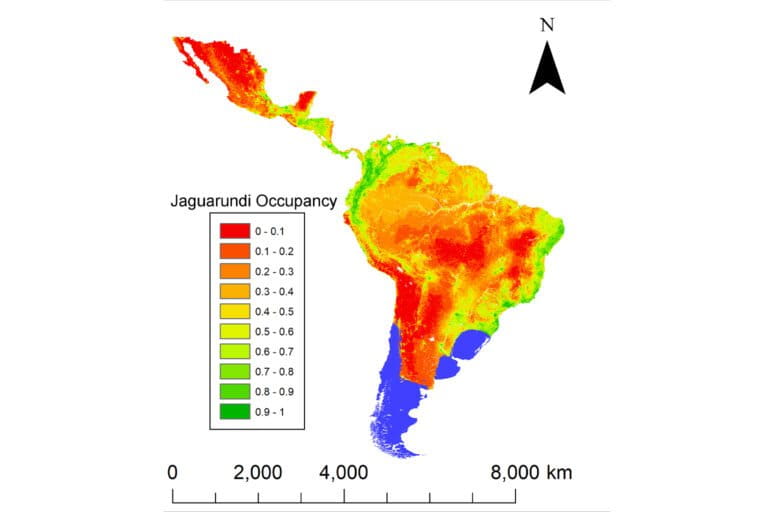
To circumvent the lack of traditional funding, a massive international collaboration was formed to synthesize existing data. A landmark study published in the journal Diversity and Distributions in 2024 represented a turning point in jaguarundi research. The project involved scientists from 17 different institutions across 13 countries, pooling together 884 confirmed jaguarundi records from nearly 4,000 camera trap locations. The result was the creation of the first comprehensive predictive map of the species’ probable distribution.
The data revealed that the jaguarundi is a creature of the "edge." It thrives in hilly terrain with thick scrub vegetation and is often found near rural agricultural areas where it hunts birds, small mammals, and reptiles. Unlike the jaguar, which is a creature of the deep forest, the jaguarundi prefers the transition zones between dense cover and open space. However, the study also produced a sobering estimate regarding population density. The researchers found that jaguarundi populations are incredibly sparse, with an estimated 1 to 5 individuals per 100 square kilometers. In many parts of its range, the density is even lower. These findings suggest that while the cat’s range is wide, its total numbers are significantly lower than previously assumed, making the species far more susceptible to local extinctions from disease or habitat loss.
The implications of the jaguarundi’s decline are profound. As a mid-sized predator, the jaguarundi plays a critical role in regulating the populations of rodents and small reptiles. Its removal from an ecosystem can trigger a "trophic cascade," leading to an overabundance of certain prey species that may then impact local vegetation or human agriculture. Furthermore, the jaguarundi serves as a "sentinel species" for the health of the American scrublands—a biome that is frequently overlooked in favor of more iconic landscapes like the Amazon rainforest.
The extinction of the jaguarundi in the United States should serve as a catalyst for a paradigm shift in how we approach conservation. It highlights the danger of relying on global status reports to manage local populations. If a species as adaptable and wide-ranging as the jaguarundi can vanish from a state as large as Texas, it suggests that our current conservation corridors and protected areas are insufficient for the long-term survival of mobile carnivores.
Moving forward, the survival of the jaguarundi will depend on three critical pillars: the reclassification of its conservation status to reflect regional realities, the management of domestic and feral animal populations in wild spaces, and the protection of "marginal" habitats like scrublands and thickets. The 2024 study has provided the map; now, the international community must provide the will to ensure that the "otter-cat" does not become a ghost across the rest of its ancestral home. Without intervention, the unique whistles and bird-like chirps of the jaguarundi may soon fall silent, leaving the Americas a little less wild and a lot more hollow.