Nasution Nanang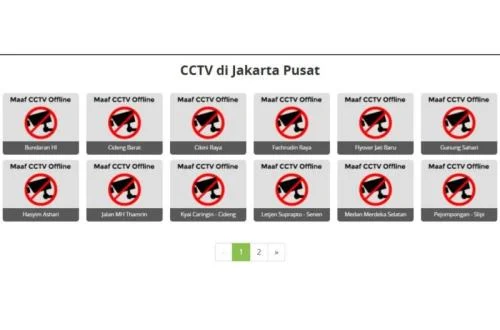
The Jakarta Provincial Government has unequivocally confirmed the full operational status and pristine condition of its extensive closed-circuit television (CCTV) infrastructure at the strategically vital Bundaran Hotel Indonesia (HI) area. This assurance, delivered by Marulina Dewi, Head of the Jakarta Communication, Informatics, and Statistics Agency (Diskominfotik), on Saturday, June 14, directly addressed public concerns stemming from reports of inaccessible camera feeds on various digital platforms a day prior. The provincial administration clarified that any observed disruptions were isolated to third-party digital platforms, not the official system managed by the DKI Jakarta government, emphasizing that the official network continues to actively support public security, order, traffic management, and crucial coordination with law enforcement agencies.
Official Reassurance Amidst Public Inquiry
Marulina Dewi’s statement served as a direct and authoritative response to recent media reports and public discussions regarding the alleged malfunction of CCTVs in one of Jakarta’s most prominent public spaces. Her remarks were designed to quell any potential anxiety among the city’s residents and stakeholders about the reliability of a critical component of Jakarta’s urban surveillance and safety apparatus. "We guarantee that the operation of the DKI Jakarta Provincial Government’s CCTVs remains normal and actively utilized to bolster community security, order, and safety, as well as for comprehensive area monitoring, including through close coordination with the police," Marulina Dewi asserted in her official statement released to the press in Jakarta. This proactive communication from Diskominfotik highlights the government’s commitment to transparency and its dedication to maintaining a secure urban environment through advanced technological solutions. The agency underlined that despite external reports, the integrity and operational capability of the government-owned surveillance system at Bundaran HI were never compromised, ensuring continuous oversight of this bustling urban hub.
Chronology of the Incident and Clarification
The sequence of events began on Friday, June 12, when various media outlets and social media platforms reported that a number of CCTV feeds from the Bundaran HI area appeared to be inaccessible or displaying errors. These reports quickly propagated, raising questions among the public, particularly those who frequently rely on these publicly available feeds for real-time traffic updates, monitoring public events, or simply staying informed about the city’s pulse. Given Bundaran HI’s status as a major landmark and frequent site for public gatherings, any perceived lapse in its surveillance system could naturally lead to heightened concern about security and urban management efficiency.
In response to these burgeoning reports, the DKI Jakarta Provincial Government, through Diskominfotik, moved swiftly to investigate and issue a clarification. By Saturday, June 14, Marulina Dewi’s statement had been released, decisively addressing the root cause of the reported inaccessibility. The clarification pinpointed the issue not to a failure within the government’s own CCTV infrastructure, but rather to problems experienced by "platform digital milik pihak ketiga" – third-party digital platforms that may have been aggregating or re-streaming the official feeds. This prompt and precise response was critical in mitigating potential misinformation and reassuring the public that the city’s core surveillance capabilities remained robust and fully operational. The incident underscored the importance of distinguishing between official government-managed systems and external, often unofficial, data aggregators.
Distinguishing Official Systems from Third-Party Platforms
A core aspect of Marulina Dewi’s clarification centered on drawing a clear distinction between the official CCTV network managed by the DKI Jakarta Provincial Government and the external platforms where the access issues were observed. "Regarding the access difficulties encountered on certain CCTV broadcasts circulating on specific platforms or websites, we firmly state that these platforms are neither official channels nor part of the CCTV system managed by the DKI Jakarta Provincial Government," she explained. This distinction is paramount for public understanding. The official CCTV system operates on a secure, dedicated network, feeding into government-controlled monitoring centers, often with restricted access to raw footage.
Third-party platforms, on the other hand, may acquire public feeds through various means, sometimes with formal agreements, but often through publicly available streams that they then re-broadcast. The reliability, latency, and overall quality of these re-broadcasted feeds are contingent upon the third-party’s own infrastructure, bandwidth, and agreements. Marulina Dewi further elaborated on this, stating, "the availability of data, the smoothness of streaming, or any broadcast disruptions occurring on such platforms are entirely outside the management and responsibility of the DKI Jakarta Provincial Government." This means that technical glitches, server overloads, or bandwidth limitations experienced by these external platforms would not, in any way, affect the operational status or recording capabilities of the actual government-owned CCTVs. The cameras themselves continued to record and transmit data within the official government network, irrespective of whether their feeds were successfully disseminated by external entities. This distinction serves as an important reminder for the public to verify the source of their information, especially concerning critical urban infrastructure.
The Strategic Significance of Bundaran HI
Bundaran HI, or the Hotel Indonesia Roundabout, is far more than just a traffic intersection; it is a profound symbol of Jakarta’s identity and vitality. At its center stands the iconic Selamat Datang Monument (Welcome Monument), a historical landmark that has greeted visitors to the capital for decades. Strategically located at the convergence of major thoroughfares like Jalan MH Thamrin and Jalan Jenderal Sudirman, it represents the heart of Jakarta’s central business district, surrounded by towering skyscrapers, luxury hotels, and prominent commercial establishments.
This area is consistently a focal point for a myriad of activities: from large-scale public demonstrations and political rallies to vibrant cultural festivals and celebratory events. Consequently, the continuous and reliable surveillance of Bundaran HI is absolutely paramount for maintaining public safety, ensuring civic order, and facilitating efficient urban management. Given its high profile and frequent use for public gatherings, it is a critical node for security monitoring, particularly in a city that has experienced its share of significant events. Any perceived vulnerability or lapse in its surveillance capabilities could have far-reaching implications, not only for immediate incident response but also for public confidence in the city’s overall security infrastructure. The government’s unwavering commitment to the functionality of CCTVs in this specific location underscores its indispensable role in the capital’s daily rhythm and strategic operations.
Jakarta’s Smart City Initiative and Comprehensive CCTV Network
The robust CCTV network at Bundaran HI is an integral component of Jakarta’s ambitious "Smart City" initiative. This comprehensive program, launched several years ago, aims to transform Jakarta into a more efficient, sustainable, and livable metropolis through the strategic integration of advanced technology into urban governance and public services. The city’s surveillance system is not a standalone feature but rather a sophisticated, interconnected network managed by the Jakarta Smart City (JSC) program, operating under the purview of Diskominfotik.
This extensive network reportedly comprises thousands of cameras strategically deployed across the capital, forming a dense web of visual monitoring. The cameras themselves are diverse, ranging from standard fixed cameras providing broad coverage to advanced Pan-Tilt-Zoom (PTZ) cameras capable of detailed, dynamic observation, and specialized License Plate Recognition (LPR) systems for traffic enforcement and vehicle tracking. While specific numbers and advanced features like facial recognition are subject to ongoing development and privacy considerations, the overall investment in this technology reflects Jakarta’s aspiration to be a leading smart city in Southeast Asia.
These cameras feed real-time visual data into centralized command centers, most notably the Jakarta Smart City command center and the Traffic Management Center (TMC) of Polda Metro Jaya. This integrated approach allows for real-time monitoring of traffic flow, rapid detection and response to incidents such as accidents or crimes, and informed decision-making for urban planning and emergency management. The continuous expansion and upgrade of this infrastructure signify the provincial government’s dedication to leveraging technology for enhanced urban resilience and public well-being, solidifying the role of CCTVs as the "eyes" of the city.
Data Security, Privacy, and the Role of Official Channels
The incident involving third-party platform access issues inadvertently highlights broader, critical concerns surrounding data security and privacy in the context of public surveillance. When public CCTV feeds are re-streamed or aggregated by unofficial sources, several questions arise regarding the integrity of the data, the potential for manipulation, and the privacy implications for individuals captured on camera. While the deployment of CCTVs in public spaces is generally accepted for security purposes, the manner in which these feeds are distributed and consumed by various entities can introduce different levels of risk.
The DKI Jakarta Provincial Government, through Diskominfotik, bears the responsibility of implementing stringent protocols to protect its official data streams. This includes robust cybersecurity measures such as data encryption, secure network infrastructure, and strictly controlled access to raw footage to prevent unauthorized access, cyber threats, and misuse. The government’s clarification in this incident serves as an important reminder to the public about the critical importance of relying on official channels for verified information and live feeds. This practice is essential for mitigating risks associated with potentially compromised, manipulated, or inaccurately presented data from unofficial sources. Ensuring robust cybersecurity measures for such critical infrastructure is paramount, not only for maintaining operational continuity and data integrity but also for fostering and preserving public trust in the government’s ability to safeguard citizen data and maintain urban security.
Interagency Coordination and Law Enforcement Integration
A fundamental aspect of Jakarta’s comprehensive security strategy, as highlighted by Marulina Dewi, is the explicit coordination between the city’s CCTV infrastructure and its law enforcement agencies. The statement underscoring "berkoordinasi dengan pihak kepolisian" (coordinating with the police) reveals the vital symbiotic relationship that underpins public safety in the capital. The high-resolution footage captured by CCTVs at Bundaran HI and across Jakarta serves as invaluable evidence in a wide spectrum of criminal investigations, ranging from minor infractions like petty theft to more serious offenses.
Beyond crime fighting, these cameras play an indispensable role in managing large public events, identifying potential security threats in real-time, and facilitating rapid response to various emergencies, including traffic accidents, natural disasters, or public disturbances. The Traffic Management Center (TMC) of Polda Metro Jaya, for example, is a primary beneficiary of these live feeds. TMC officers heavily rely on real-time CCTV monitoring to assess traffic conditions, identify congestion hotspots, dispatch traffic police, and manage diversions, significantly improving the efficiency of traffic flow in Jakarta, a city notoriously challenged by congestion. This seamless integration of advanced surveillance technology with human oversight and intervention by law enforcement is a cornerstone of Jakarta’s proactive public safety strategy. The continuous and reliable operation of these cameras ensures that law enforcement agencies consistently have an "eye" on critical urban areas, enabling quicker response times and more informed decision-making during both routine operations and crisis situations.
Fostering Public Trust Through Transparent Communication
In an era characterized by the rapid dissemination of information, often accompanied by misinformation, transparent and timely communication from government bodies is absolutely essential for maintaining public trust. The incident concerning the Bundaran HI CCTVs, even though ultimately attributable to issues with third-party platforms, had the potential to sow seeds of doubt among the populace regarding the city’s capacity to ensure safety and effectively manage its critical infrastructure. Diskominfotik’s prompt, clear, and unequivocal statement was therefore crucial in preempting widespread public anxiety and ensuring accurate information reached citizens.
By clearly delineating responsibilities and meticulously differentiating between official, government-managed platforms and unofficial, external aggregators, the agency demonstrated a high degree of accountability and transparency. This proactive communication strategy helps to reinforce citizen confidence in the government’s unwavering commitment to public safety and its demonstrated capability to manage sophisticated urban systems effectively. Furthermore, it serves an important educational function, guiding the public on where to seek reliable and verified information. In today’s complex digital landscape, encouraging citizens to verify sources before accepting information from unverified channels is a critical lesson, and the government’s handling of this incident reinforced that message effectively.
Future Outlook and Continuous System Enhancement
The commitment to maintaining the "prima" condition of the CCTV network is an ongoing and dynamic endeavor for the DKI Jakarta Provincial Government. The city continuously evaluates its technological infrastructure, planning for systematic upgrades, strategic expansions, and deeper integration with newer smart city components. This forward-looking approach includes exploring the implementation of advanced analytics, potentially incorporating artificial intelligence (AI)-powered threat detection capabilities, and developing improved data storage and retrieval solutions to further enhance the efficiency and effectiveness of the surveillance system.
Despite these ambitions, significant challenges remain. These include the sheer scale of maintaining thousands of cameras across a vast and densely populated metropolitan area, ensuring a consistent and reliable power supply, establishing robust network connectivity across diverse terrains, and protecting the infrastructure against vandalism, technical failures, or cyber threats. However, the government’s steadfast assurance regarding the Bundaran HI CCTVs signals a broader, overarching dedication to leveraging technology for urban resilience, security, and smart governance. Incidents like the recent third-party access issues, even if external to the official system, can serve as valuable lessons. They prompt internal reviews of public communication strategies and may encourage closer scrutiny of how third parties access and disseminate public data, ultimately ensuring that the city’s digital backbone remains strong, trusted, and fully capable of serving its citizens.
In conclusion, the Jakarta Provincial Government has successfully addressed concerns surrounding the functionality of its critical CCTV infrastructure at Bundaran HI. By clearly distinguishing between its fully operational official system and the reported issues on third-party digital platforms, the administration, led by Diskominfotik, has reaffirmed its unwavering commitment to public safety, efficient urban management, and the advancement of its Smart City vision. The continuous monitoring capabilities of these CCTVs remain a cornerstone of Jakarta’s security apparatus, supporting law enforcement and ensuring the smooth functioning of one of the capital’s most important landmarks. This incident underscores the ongoing challenge of digital information management but ultimately reinforces the government’s resolve to provide a secure and well-monitored environment for all its citizens.