Nila Kartika Wati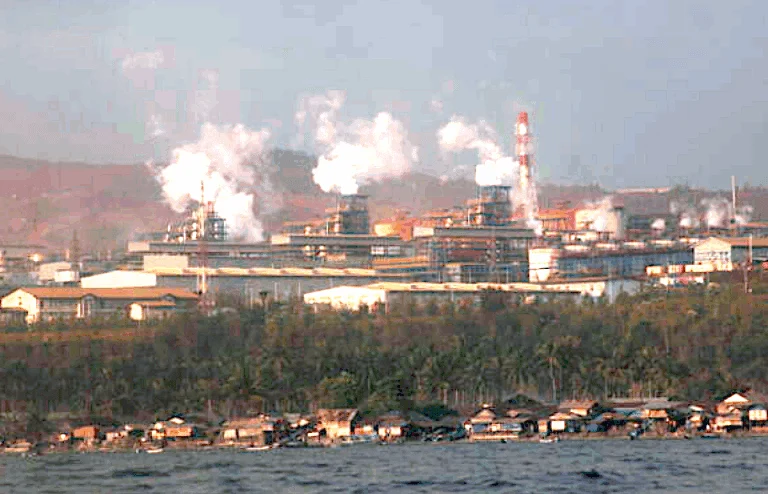
Global K-pop enthusiasts have intensified their environmental advocacy by targeting one of South Korea’s largest financial institutions, Hana Bank, over its continued involvement in coal-fired power projects. Under the campaign banner “Hana, Bring K-pop Not Coal,” a coalition of 12 major K-pop fanbases, alongside the climate organization Kpop4Planet, has issued a formal demand for the bank to cease funding new coal power infrastructure in Indonesia. Specifically, the activists are highlighting a captive coal-fired power plant (PLTU) located within a nickel industrial zone on Obi Island, South Halmahera, North Maluku. The campaign argues that the bank’s financial support for "dirty energy" contradicts its public marketing efforts, which frequently leverage the popularity of K-pop icons like G-Dragon of Bigbang and An Yujin of IVE to attract younger, environmentally conscious consumers.
The movement gained significant momentum following the release of a petition on April 9, 2026, which has already garnered over 2,000 signatures from fans across the globe. These supporters are urging Hana Bank to immediately withdraw from financing captive coal plants—facilities built specifically to power industrial operations rather than the public grid. The fans express deep concern over the bank’s role in funding projects that cause irreversible environmental degradation and contribute to the global climate crisis, particularly in regions where the local population bears the brunt of industrial pollution.
The Genesis of the "Hana, Bring K-pop Not Coal" Campaign
Kpop4Planet, an international climate organization founded in 2021 by and for K-pop fans, has been at the forefront of this movement. The group operates on the premise that the massive, highly organized nature of K-pop fandoms can be a powerful force for social and environmental change. In February 2024, the organization, supported by a dozen Indonesian fanbases—including groups dedicated to artists like Day6 and eaJ—sent an open letter directly to Hana Bank’s headquarters in Seoul. The letter demanded that the bank stop providing credit to companies that remain heavily dependent on coal.
The response from Hana Bank, however, has been criticized by activists as inadequate and evasive. While the bank claimed it is developing policies to support carbon reduction and strengthening risk management regarding coal, it stopped short of committing to a total exit from existing coal-related investments. Nurul Sarifah, the Indonesia-based lead campaigner for Kpop4Planet, described the bank’s stance as "naive" and lacking in concrete action. "The impact of these nickel projects on the environment and the people of Obi Island is well-documented," Sarifah stated. "Hana Bank’s response suggests they are not genuinely seeking a solution or showing real commitment to stopping this funding."
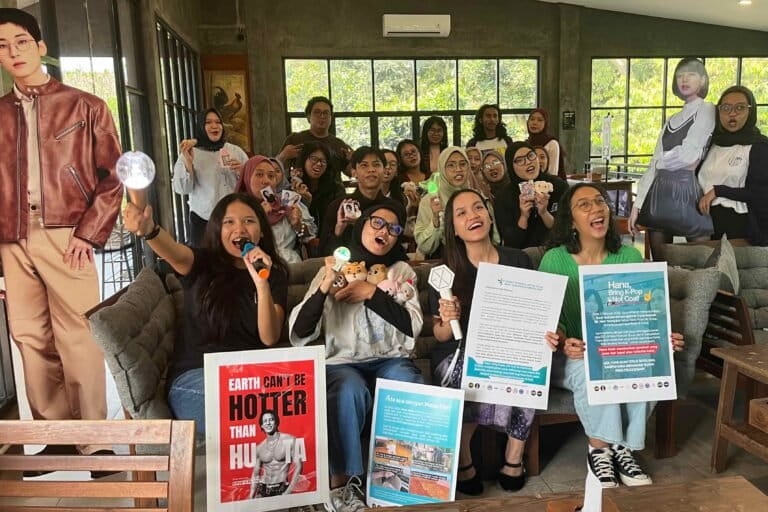
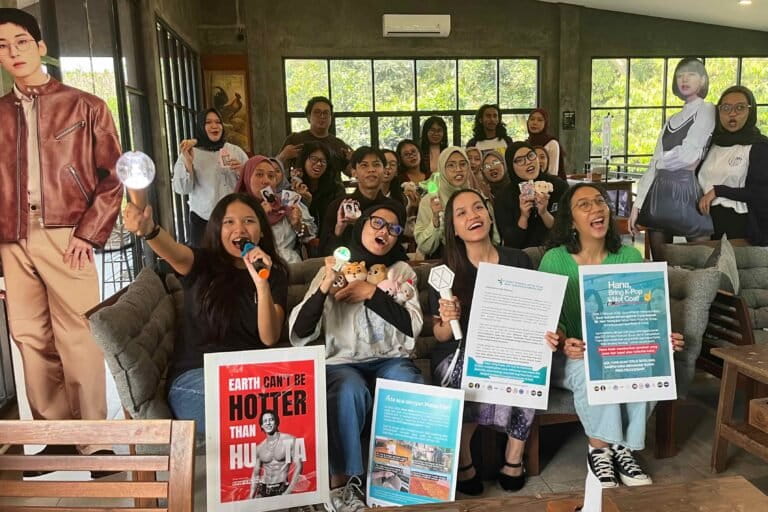
For many fans, the issue is personal. Nunik, a representative of the My Day and Jars Social Project (a fanbase for Day6 and eaJ), expressed a sense of betrayal. She noted that fans have historically supported Hana Bank because of its associations with their idols—purchasing products, participating in bank-led campaigns, and promoting the institution on social media. "When we discovered that this bank is actually involved in financing dirty energy, it felt like a betrayal," Nunik said. She urged the bank to prove its climate commitments and stop using K-pop idols as a "greenwashing" tool to mask its environmental footprint.
Industrial Context: The Obi Island Nickel Project
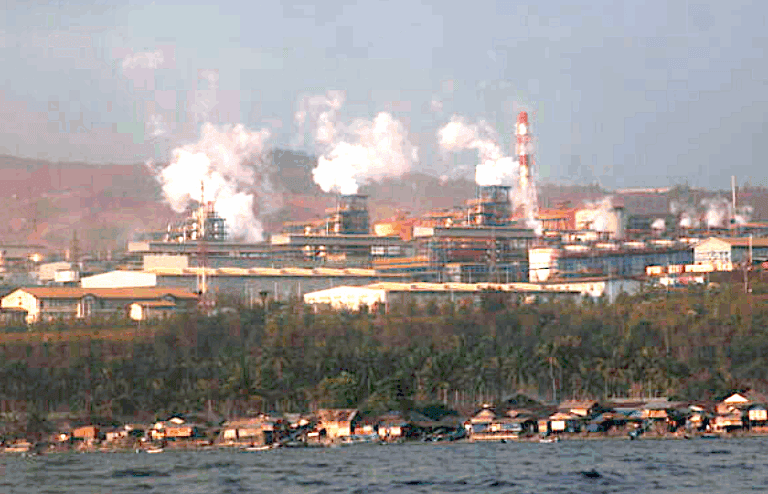
The focal point of the protest is a 4×380 MW captive coal-fired power plant on Obi Island. This facility was designed to provide the massive amounts of energy required for the smelting of laterite nickel ore. This industrial process is a critical link in the global supply chain for electric vehicle (EV) batteries, as nickel is a primary component in high-performance battery cathodes.
In 2022, Hana Bank reportedly provided approximately $84 million in funding for the Harita Group’s nickel operations on the island. This investment has drawn sharp criticism because it appears to directly contradict a 2021 pledge made by Hana Financial Group. At that time, the group announced it would cease all new financing for coal power projects, both domestically in South Korea and internationally. Activists argue that by labeling these projects as part of the "green" EV supply chain, the bank is exploiting a loophole to continue supporting coal under the guise of supporting the energy transition.
Binbin Mariana, a Senior Asia Energy Finance Campaigner at Market Forces, highlighted the staggering environmental cost of these operations. According to data provided by the organization, the carbon emissions from Harita’s operations on Obi Island have nearly tripled in a short span, rising from 3.74 megatons of CO2 in 2022 to an estimated 10.87 megatons in 2024. "This amount is equivalent to nearly 1% of Indonesia’s total annual emissions," Mariana explained during a talk titled "No K-pop on a Dead Planet" in Jakarta. "To put it in perspective, that is the same as driving 2.5 million fossil-fuel-powered cars for an entire year."
Local Impact: Pollution and Health Crisis in Kawasi and Soligi
While the global community focuses on carbon statistics, the residents of Obi Island are facing immediate and localized disasters. The dependence on captive coal plants has led to severe air pollution in nearby villages such as Kawasi and Soligi. Residents report constant exposure to coal dust and hazardous emissions, which have led to a spike in health problems.
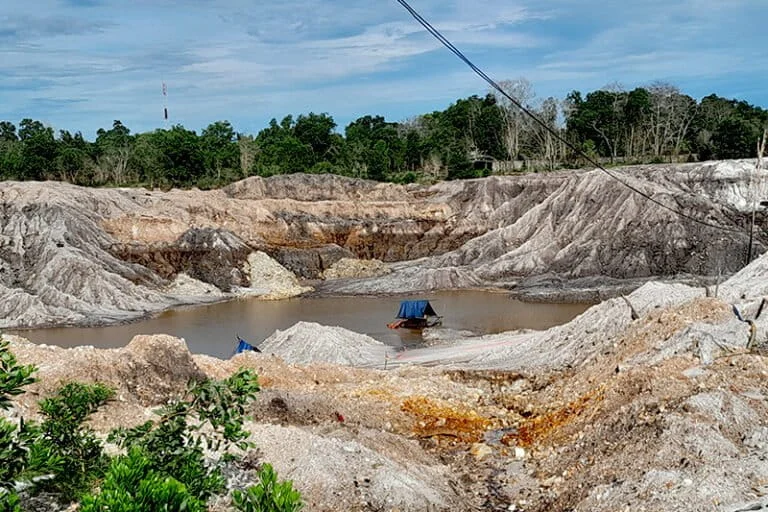
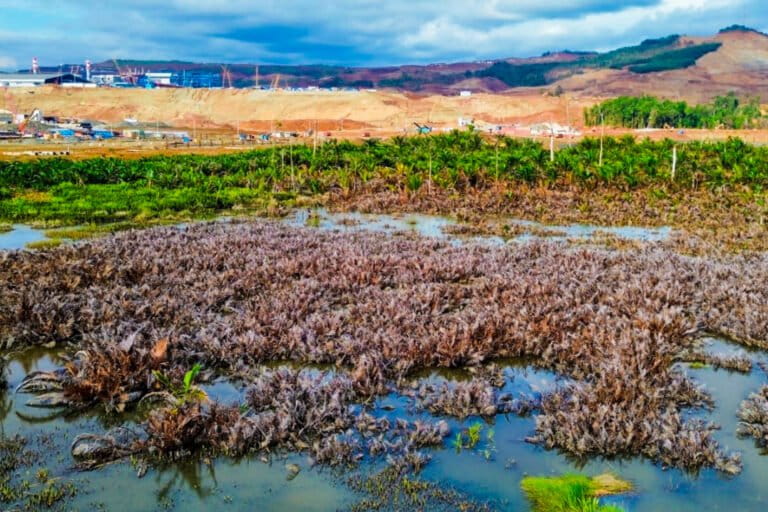
Medical records and community reports indicate a significant rise in Acute Respiratory Infections (ISPA) among the local population. Furthermore, the industrial expansion has decimated local ecosystems that the community relies on for survival. Photographs and field reports show vast stretches of sago palm groves—a primary food source and cultural staple for the people of Kawasi—that have been destroyed to make way for the Harita Nickel industrial complex. Water quality in the area has also plummeted, affecting both drinking supplies and local fishing grounds.
Financial Accountability and the Role of International Banks
The controversy surrounding Hana Bank has sparked a broader debate about the responsibility of international financial institutions in the Global South. Linda Rosalina, Executive Director of Transformasi untuk Keadilan (TuK) Indonesia, argues that Hana Bank’s involvement in the Obi Island project reflects a systemic failure in the governance of high-risk sector financing.
Rosalina emphasized that transparency is the most significant hurdle. Without clear, publicly accessible data on who is funding these projects, it is nearly impossible for affected communities or civil society organizations to hold actors accountable. She pointed out that international banks are bound by global standards, such as the OECD Due Diligence Guidance for Responsible Business Conduct and the UN Guiding Principles on Business and Human Rights (UNGPs). These frameworks mandate that banks perform rigorous due diligence to identify, prevent, and mitigate the negative impacts of their investments.
"This responsibility does not end when the loan is signed," Rosalina said in a statement. "It must continue throughout the life of the project." She also criticized the implementation of Indonesia’s own sustainable finance regulations. While the Financial Services Authority (OJK) issued Regulation No. 51/POJK.03/2017 to promote sustainable finance, Rosalina believes the lack of a strict "exclusion list" for high-risk extractive sectors allows coal and mineral downstreaming projects to continue receiving funds.
Data from TuK Indonesia shows that approximately 70% of credit for the transitional mineral mining sector in Indonesia comes from international banks, with the remaining 30% sourced from domestic institutions. This highlights the critical role that foreign capital plays in sustaining coal-dependent industrial models in Southeast Asia.
Fandom as a Catalyst for Corporate Change
The "Hana, Bring K-pop Not Coal" campaign is not an isolated incident but part of a growing trend of "fandom activism." K-pop fans have a proven track record of influencing corporate policy through coordinated digital and physical pressure. A notable precedent occurred in March 2024, when the South Korean automotive giant Hyundai announced it would withdraw from a Memorandum of Understanding (MoU) to purchase aluminum from Adaro, Indonesia’s second-largest coal miner.
The Hyundai victory was the result of a sustained campaign by K-pop fans in both Indonesia and South Korea, who argued that Hyundai’s "green" branding was incompatible with sourcing materials from coal-heavy producers. This success has emboldened Kpop4Planet to take on larger financial targets like Hana Bank.
"We do all of this in the spirit of fandom solidarity," said Nurul Sarifah. "We want our idols to be associated with brands that actually care about the future of the planet we all share."
Broader Implications and the Path Forward
The clash between Hana Bank and K-pop fans underscores the complexities of the global energy transition. Indonesia’s strategy of "hilirisasi" or downstreaming—forcing the domestic processing of raw minerals like nickel—is intended to boost the economy and position the country as a leader in the EV battery market. However, without a rapid shift toward renewable energy to power these smelters, the "green" transition risks being built on a foundation of coal.
Environmental experts and NGOs are calling for a multi-stakeholder forum involving the government, private sector, and civil society to address these gaps. They urge the Indonesian government to strengthen ESG (Environmental, Social, and Governance) regulations and publish a list of high-risk entities to guide investors.
For Hana Bank, the pressure from K-pop fans represents a significant reputational risk. As the demographic that consumes K-pop is the same demographic that will be most affected by climate change, the bank faces a choice: align its investment portfolio with its marketing image or risk a permanent rift with one of the most organized and vocal consumer bases in the world. The campaign continues to grow, with fans promising further actions if their demands for transparency and a total coal exit are not met.
The situation on Obi Island remains a stark reminder that the path to a sustainable future is fraught with contradictions. As the "Hana, Bring K-pop Not Coal" movement shows, the power to demand a cleaner world may very well lie in the hands of those who find inspiration in music and the collective strength of their community.