Nila Kartika Wati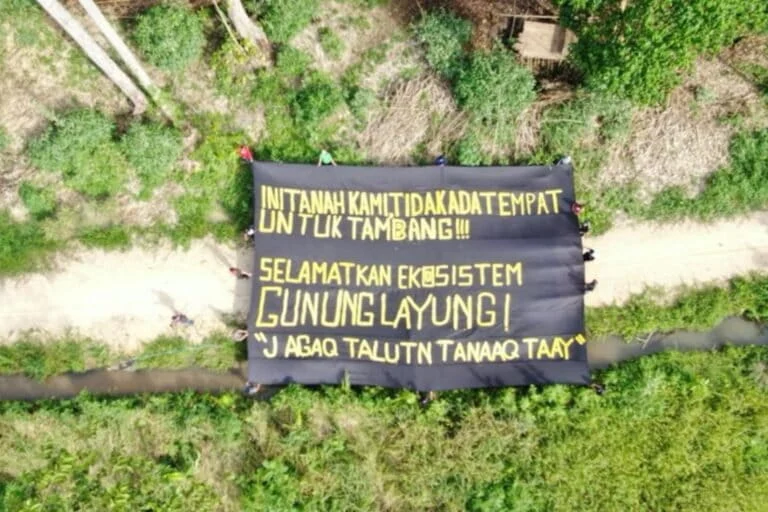
The break of dawn in Kampung Geleo Asa, Kutai Barat, usually signals the beginning of a productive day for Albed, a local rubber tapper whose livelihood depends on the 1.6 hectares of land he inherited from his ancestors. On a typical morning, Albed would prepare his tapping knife and a stack of buckets, mounting his motorcycle for the five-kilometer journey to his plantation. However, in mid-2024, this routine was abruptly shattered. As he approached the vicinity of a new jetty construction site belonging to PT Pari Coal—a subsidiary of the Indonesian coal giant PT Adaro Energy Indonesia (now rebranded as PT Alamtri Resources Indonesia)—Albed found his path blocked. He was confronted by a group of twelve men, consisting of three Indonesian National Armed Forces (TNI) members, three police officers, and six private security guards. This encounter was not merely a temporary inconvenience; it marked the beginning of a profound displacement that has severed Albed’s access to his primary source of income and highlighted the escalating tensions between extractive industries and indigenous communities in East Kalimantan.
The Genesis of the Geleo Asa Land Conflict
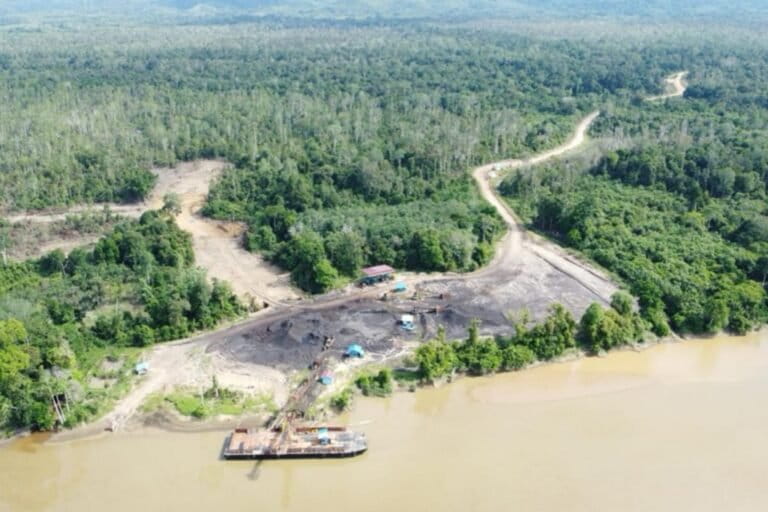
The conflict in Geleo Asa is rooted in the rapid infrastructure development initiated by PT Pari Coal to support its massive coal mining operations. The company is currently constructing a 100-kilometer hauling road designed to transport coal from its mining sites in Mahakam Ulu Regency to a specialized port facility, or jetty, located in the Geleo Asa and Muara Benangaq areas. According to data from the Ministry of Environment and Forestry’s Amdalnet portal, PT Pari Coal holds an operation production permit valid from January 2, 2024, until April 9, 2054, with a targeted production capacity of 3.5 million metric tons per year.
For the residents of Geleo Asa, the construction of this jetty at Sungai Waliwai is a direct threat to their "ruang hidup" or living space. The river has traditionally served as a vital fishing ground for local fishermen, while the surrounding land provides the community with water, food, and economic stability. Albed’s experience is emblematic of a broader trend: the securitization of corporate assets at the expense of civilian mobility. "They told me I couldn’t pass because it was a company area," Albed told Mongabay. "But the community has used that road to reach our gardens and the river for generations."
The economic stakes for families like Albed’s are high. From his 1.6-hectare rubber plantation, Albed earns between IDR 2 million and IDR 4 million (approximately USD 125 to USD 250) per month. These funds cover essential household needs and his children’s education. With the access road now under heavy guard by security forces, Albed is unable to work, and his family’s financial security has evaporated. This situation has led to widespread anxiety among the Dayak Geleo Asa community, who fear that the coal project will not only strip them of their land but also destroy the ecological foundations of their culture.
The ESG Paradox: High Scores vs. Ground Realities
The struggle in Kutai Barat presents a jarring contrast to the corporate narrative of PT Adaro Energy Indonesia. According to the 2024 Katadata ESG Index (KESGI), Adaro ranks first among the top ten coal mining companies in Indonesia, boasting an overall Environmental, Social, and Governance (ESG) score of 62.1. Specifically, the company scored 59.9 in environmental metrics, 56.7 in social responsibility, and a high 72.7 in corporate governance. Such scores are intended to signal to investors that the company manages its business risks responsibly and sustainably.
However, advocacy groups argue that these metrics often fail to capture the lived experiences of those residing in the shadow of the mines. Windy Pranata, a researcher with the Mining Advocacy Network (Jatam) in East Kalimantan, suggests that ESG assessments are frequently "on-paper" exercises. "ESG scores are often built solely from company reports, administrative documents, and CSR programs," Pranata explained. "The experiences of residents like Albed are rarely reflected in these indicators. When a citizen cannot access their own garden due to armed guards, it is a fundamental violation of the right to movement and economic freedom."
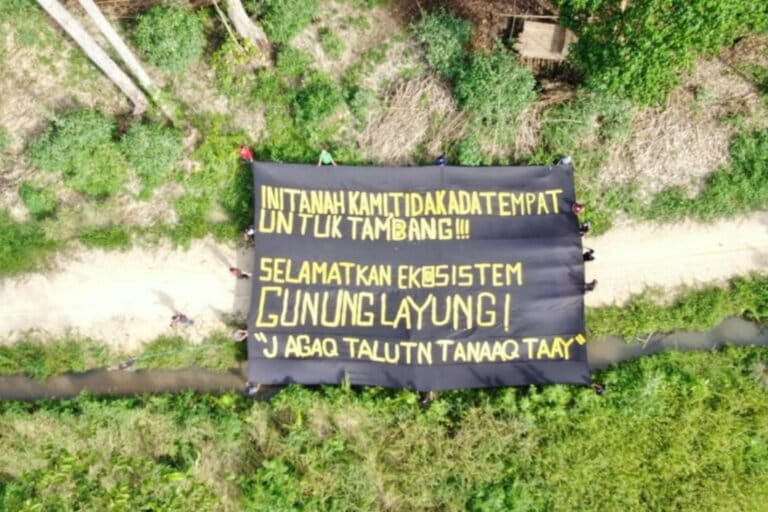
Jatam’s 2025 report, titled "Limbung di Gunung Layung" (Unsteady at Mount Layung), details how the Pari-Adaro project threatens the Gunung Layung forest. This area is a critical watershed for several villages, feeding the rivers used for irrigation, drinking water, and fishing. Furthermore, the forest is home to the famous Melak durian trees, a cultural and economic staple for the region. The transformation of this ecological sanctuary into an industrial hauling zone represents a permanent loss of biodiversity and indigenous heritage that high ESG scores do not account for.
Corporate Response and the Role of Security Forces
When questioned regarding the restrictions on community access and the involvement of security forces, Adaro’s corporate communications team issued a brief statement. Ray Aryaputra, Corporate Secretary & Chief Corporate Communication of Adaro, claimed that PT Pari Coal is a joint venture that has not yet begun full operations. The company denied that the hauling road construction or the access restrictions were being carried out by PT Pari Coal or for its specific interests.
This denial, however, conflicts with observations on the ground and reports from Jatam, which indicate that the infrastructure is explicitly linked to the Pari-Adaro supply chain. The presence of TNI and police personnel in a civilian land dispute is another point of significant concern for human rights advocates. In Indonesia, the use of state security forces to protect "National Strategic Projects" or high-value corporate assets often leads to an imbalance of power, where local residents feel intimidated and unable to negotiate their rights. Windy Pranata emphasized that land conflicts should be resolved through dialogue and the restoration of rights, rather than through a "security approach" that shrinks the democratic space for local communities.
Financial Accountability and the "Greenwashing" Concern
The expansion of PT Pari Coal is supported by a syndicate of major national and international financial institutions. Banks such as Bank Mandiri, Bank Permata, Sumitomo Mitsui Banking Corporation (SMBC), and DBS Bank have provided the capital necessary for Adaro’s operations. Linda Rosalina, Executive Director of TuK Indonesia (Transformasi untuk Keadilan), argues that these financial institutions bear a "secondary responsibility" for the social and environmental impacts of their loans.
Under the Indonesian Sustainable Finance Taxonomy (TKBI), social aspects are a mandatory criterion for sustainable business activities. "If a project is mired in conflict with indigenous peoples or involves human rights violations, it should be flagged as problematic and ineligible for sustainable financing," Rosalina stated. She noted that many banks still treat social and environmental risks as "non-material," allowing funding to continue despite clear evidence of community displacement and deforestation.
This gap between financial policy and ground reality is what many critics label as "greenwashing." By maintaining high ESG ratings while simultaneously engaging in activities that marginalize indigenous groups, corporations can maintain their attractiveness on the stock market without fundamentally changing their extractive practices. TuK Indonesia is currently pushing for stricter human rights due diligence and more transparent grievance mechanisms that are accessible to impacted communities.
Broader Implications for Indonesia’s Energy Transition
The conflict in Geleo Asa is a microcosm of the challenges facing Indonesia as it navigates a global shift toward renewable energy. While the government discusses "Just Transition" frameworks, the reality for coal-producing regions like East Kalimantan remains dominated by expansion and extraction. Experts warn that the social and economic costs of coal will linger long after the mines are exhausted.
Jessica Hanafi, a member of the KESGI Life Cycle Expert Panel, points out that companies often ignore the "downstream" social impacts of their operations. "We must think about what happens to the workers and the communities when the industry eventually stops. We cannot allow these areas to become ‘ghost towns,’" she said during a workshop in Jakarta. The precedent for this already exists; Jatam points to the case of Desa Wonorejo in South Kalimantan, where Adaro’s mining activities led to massive deforestation and the eventual abandonment of an entire village, leaving behind a "dead village" with no inhabitants.
Conclusion: The Need for Verified Sustainability
The plight of Albed and the Dayak Geleo Asa community serves as a reminder that the true measure of a company’s sustainability cannot be found in a spreadsheet or a glossy CSR brochure. It is found in the health of the rivers, the integrity of the forests, and the ability of local residents to live without fear of displacement.
As PT Pari Coal continues its development toward its 2054 expiration date, the call for independent verification of ESG claims is growing louder. Civil society organizations, including Jatam and TuK Indonesia, are demanding that ESG scores be based on field-verified data rather than self-reported corporate narratives. For Albed, the solution is simple: he wants his access restored and his land protected. "If the access to the garden is closed, how are we supposed to work?" he asks. For the indigenous people of East Kalimantan, the answer to that question will determine whether the "energy transition" is truly just, or merely a new chapter in a long history of extraction.