Nasution Nanang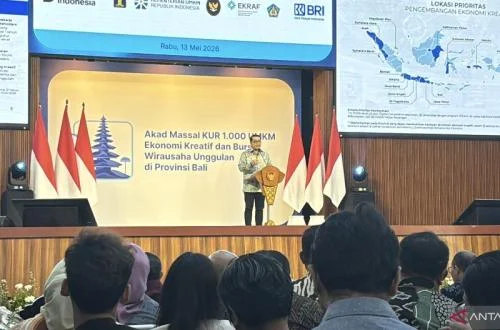
BADUNG, BALI – In a groundbreaking move set to revolutionize the creative economy landscape in Indonesia, Minister of Creative Economy, Teuku Riefky Harsya, officially inaugurated 64 certified intellectual property (IP) appraisers. This pivotal ceremony, held during the "Akad 1000 UMKM Ekonomi Kreatif" event in Bali, marks a significant milestone in enabling owners of Intellectual Property Rights (HKI) to leverage their creative assets as a basis for accessing financial support through the government’s Kredit Usaha Rakyat (KUR) program. The initiative, a collaborative effort between the Ministry of Creative Economy and the Ministry of Law and Human Rights, is poised to unlock substantial capital for micro, small, and medium enterprises (MSMEs) within the creative sector, previously hindered by the absence of a standardized and recognized valuation mechanism for intangible assets.
The Genesis of a Landmark Initiative: Bridging the Valuation Gap
The "Akad 1000 UMKM Ekonomi Kreatif" event served as the perfect platform for this monumental announcement, symbolizing the government’s comprehensive approach to fostering growth within the creative sector. For years, one of the most formidable challenges faced by creative entrepreneurs and HKI owners in Indonesia has been the inherent difficulty in securing conventional financing. Traditional banking institutions, accustomed to tangible collateral such as land, buildings, or physical inventory, struggled to assess the monetary value of intangible assets like copyrights, patents, trademarks, and industrial designs. This valuation dilemma often left creators with valuable HKI certificates unable to translate their intellectual property into tangible financial leverage, effectively stifling innovation and expansion within the sector.
The inauguration of these 64 IP appraisers directly addresses this critical gap. Prior to this initiative, banks faced an insurmountable hurdle: a lack of professional expertise and a universally accepted framework to accurately determine the market value of a creative work or invention protected by an HKI certificate. This uncertainty translated into reluctance from lenders, limiting access to much-needed capital for creative MSMEs (UMKM in Indonesian context). By establishing a cadre of professionally trained and certified appraisers, the government has provided the banking sector with the necessary tools and confidence to evaluate creative assets, thereby paving the way for HKI certificates to serve as a credible supporting instrument in loan applications, particularly for the KUR program. This historical development positions Indonesia at the forefront of countries actively integrating intellectual property into mainstream financial ecosystems.
World-Class Training: Ensuring Professionalism and Global Standards
A cornerstone of this initiative is the rigorous training regimen undertaken by the newly appointed IP appraisers. Minister Riefky Harsya underscored that these professionals have received specialized training from the World Intellectual Property Organization (WIPO), a distinguished agency of the United Nations. This endorsement by WIPO signifies adherence to international best practices and standards in intellectual property valuation, ensuring that the appraisals conducted in Indonesia are robust, credible, and globally recognized. WIPO’s involvement not only lends immense credibility to the appraisers’ qualifications but also integrates Indonesia’s IP valuation framework into a global network of expertise.
WIPO, established in 1967, is dedicated to promoting the protection of intellectual property throughout the world and facilitating international cooperation on IP matters. Its extensive experience in developing valuation methodologies, fostering IP awareness, and building capacity in member states makes it an ideal partner for this Indonesian endeavor. The training modules likely covered various aspects of IP valuation, including market-based approaches, income-based approaches, cost-based approaches, and considerations unique to different types of intellectual property (e.g., the economic lifespan of a patent, the market appeal of a trademark, or the potential royalties from a copyrighted work). This comprehensive training ensures that the appraisers possess not only technical valuation skills but also a deep understanding of IP law, market dynamics, and the specific nuances of the creative industries. This commitment to professional development elevates the standard of IP valuation in Indonesia, fostering trust among creators, financial institutions, and potential investors.
Minister Riefky Harsya’s Vision for a Dynamic Creative Economy
Minister Teuku Riefky Harsya articulated a clear vision for Indonesia’s creative economy, emphasizing that while creativity is paramount, access to capital and robust intellectual property protection remain critical challenges. He highlighted that supporting initiatives like the "Akad 1000 UMKM Ekonomi Kreatif," which facilitates access to capital for a thousand creative MSMEs, is crucial for fostering sustainable growth. The integration of HKI certificates as a viable basis for KUR applications serves a dual purpose: it directly addresses the capital access issue and simultaneously incentivizes more individuals and businesses to formally register and protect their creative works and products.
The Minister’s statement reflects a broader governmental understanding that IP is not merely a legal concept but a powerful economic asset. In a rapidly evolving global economy, where intangible assets increasingly drive value, fostering an environment where creative output can be formally recognized, valued, and leveraged is essential. Indonesia’s creative economy has been a significant contributor to the national GDP, consistently growing above the national average. In recent years, its contribution has hovered around 7-8% of the total GDP, employing millions of people across various sub-sectors such as fashion, culinary arts, crafts, software, music, film, and design. However, a persistent challenge has been the informal nature of much of this economic activity and the underutilization of IP as a financial instrument. This new initiative is designed to formalize and professionalize the sector, ensuring that creative endeavors translate into tangible economic benefits for their creators.
The Mechanics of KUR and the Rp10 Trillion Allocation for HKI-Based MSMEs
The Kredit Usaha Rakyat (KUR) program is a flagship government initiative designed to provide financing to MSMEs that have viable business prospects but lack sufficient collateral or access to conventional bank loans. It is characterized by subsidized interest rates and simplified application procedures, making it a crucial lifeline for millions of small businesses across Indonesia. The government’s target for KUR disbursement this year stands at an ambitious Rp295 trillion (approximately USD 19.5 billion).
Within this substantial target, a dedicated allocation of Rp10 trillion (approximately USD 660 million) has been earmarked specifically for the financing of HKI-based creative MSMEs. This special allocation underscores the government’s strong commitment to nurturing the creative sector and recognizing the intrinsic value of intellectual property. By allowing HKI certificates to be used as a supporting guarantee or a basis for valuation, the program fundamentally alters the lending landscape for creators. Instead of solely relying on physical assets, a creator’s registered design, patented invention, or copyrighted musical composition can now contribute significantly to their creditworthiness.
This strategic allocation and policy shift are expected to have several profound effects. Firstly, it will significantly boost financial inclusion for creative entrepreneurs who were previously excluded from formal credit channels. Secondly, it will create a powerful incentive for creators to formally register their intellectual property, leading to a more robust and transparent IP ecosystem. Thirdly, it will encourage banks to develop specialized lending products and expertise tailored to the unique characteristics of the creative industries, fostering a more dynamic and responsive financial sector. The Rp10 trillion allocation is not just a figure; it represents a tangible commitment to transforming Indonesia’s creative potential into economic prosperity.
Broader Implications for Indonesia’s Creative Ecosystem and Economic Growth
The inauguration of IP appraisers and the integration of HKI into the KUR program carry far-reaching implications for Indonesia’s creative economy, national economic growth, and global standing.
1. Enhanced Financial Inclusion and Empowerment: Millions of Indonesian MSMEs, particularly in the creative sector, have long struggled with access to capital. This initiative directly addresses this barrier, empowering creators to leverage their intangible assets. It democratizes access to finance, moving beyond traditional collateral requirements and recognizing the value of innovation and creativity. This will undoubtedly lead to a more vibrant and equitable creative ecosystem.
2. Bolstering IP Protection and Registration: By making HKI certificates economically valuable, the government is creating a strong incentive for creators to register their intellectual property. A more comprehensive and robust IP registration system not only protects creators from infringement but also provides clear legal frameworks for commercialization, licensing, and investment. This will contribute to a culture of innovation where creators are motivated to formalize their ideas. Data from the Directorate General of Intellectual Property (DGIP) in Indonesia has shown a steady increase in IP registrations over the past decade, and this initiative is expected to accelerate that trend, particularly for smaller enterprises.
3. Fueling Innovation and Economic Diversification: Valuing IP as a business asset will spur innovation across various creative sub-sectors. Entrepreneurs will be more inclined to invest time and resources in developing novel ideas, knowing that their intellectual property can be financially leveraged. This diversification away from traditional resource-based economies towards knowledge and creativity-based industries is crucial for Indonesia’s long-term economic resilience and competitiveness in the global arena. The government’s view of intellectual property as a "big business" to be dominated by Generation Z and millennials highlights a forward-thinking approach to future economic drivers.
4. Positioning Indonesia on the Global Stage: By adopting international best practices in IP valuation and collaborating with WIPO, Indonesia is strengthening its position as a serious player in the global creative economy. This move signals to international investors and partners that Indonesia is committed to protecting and valuing intellectual property, fostering a more attractive environment for foreign direct investment in creative industries. The ambition to scale "IP from local to national and national to global" is now supported by concrete financial mechanisms.
5. Strengthening the Banking Sector’s Capacity: While initially challenging, this initiative will ultimately enhance the banking sector’s capacity to assess and manage risks associated with intangible assets. It will encourage financial institutions to develop specialized knowledge and products for the creative economy, fostering a more sophisticated and responsive financial market that can cater to diverse asset classes.
Perspectives from Key Stakeholders (Inferred)
-
Ministry of Law and Human Rights: As the custodian of intellectual property rights, the Ministry of Law and Human Rights (Kemenkumham) would likely express strong support for this initiative. It aligns perfectly with their mandate to protect and promote IP. A representative might emphasize how this collaboration strengthens the legal framework for IP and encourages greater compliance and registration among creators, ultimately enhancing the overall IP ecosystem. They would see it as a validation of the importance of HKI certificates beyond mere legal protection, transforming them into economic tools.
-
Banking Sector Representatives: While initially cautious due to the novelty of IP-based lending, major banks involved in the KUR program would likely welcome the clarity and risk mitigation provided by professional IP appraisers. A banking executive might state that "the presence of certified IP appraisers provides our institutions with the necessary confidence and a standardized methodology to evaluate intangible assets, significantly reducing the perceived risk associated with lending to creative businesses. This will enable us to expand our lending portfolio to a vital, high-growth sector of the economy."
-
UMKM Representatives and Creative Entrepreneurs: The primary beneficiaries, creative MSMEs, would undoubtedly express immense enthusiasm and relief. An MSME owner attending the Bali event might comment, "For too long, our creativity and hard work, protected by HKI, felt like an invisible asset to banks. This initiative changes everything. It means our ideas now have a recognized value, opening doors to the capital we desperately need to grow, innovate, and compete." They would see this as a direct answer to their long-standing call for more accessible financing.
-
World Intellectual Property Organization (WIPO): WIPO would likely issue a statement commending Indonesia’s progressive approach. A WIPO official might highlight Indonesia as a leading example of how developing nations can effectively integrate intellectual property into their national development strategies, particularly in fostering economic growth through innovation and creativity. They would underscore the success of their capacity-building efforts and the positive impact on global IP awareness.
Challenges and Future Outlook
While transformative, the implementation of this initiative will not be without its challenges. Scaling up the capacity of IP appraisers to meet the demand across Indonesia’s vast archipelago, ensuring consistent valuation standards, and continuously updating methodologies in a rapidly evolving creative landscape will be critical. Public awareness campaigns will also be necessary to educate both creators and financial institutions about the new possibilities. Furthermore, the legal framework surrounding the use of HKI as collateral may require further refinement and clarification as the program matures.
Despite these potential hurdles, the long-term vision is clear: to establish a self-sustaining ecosystem where creativity is recognized, protected, valued, and ultimately serves as a powerful engine for national development. This initiative is a bold step towards realizing Indonesia’s immense potential as a global creative powerhouse, driven by the ingenuity and innovation of its people. By investing in the valuation of intellectual property, Indonesia is not just funding businesses; it is investing in its future, ensuring that the generations to come, particularly Gen Z and millennials, have the tools and opportunities to turn their creative ideas into impactful economic realities, propelling the nation’s creative economy from local prominence to global leadership. The inauguration of these 64 IP appraisers is more than a ceremonial act; it is the cornerstone of a new era for Indonesia’s creative and economic landscape.