Nila Kartika Wati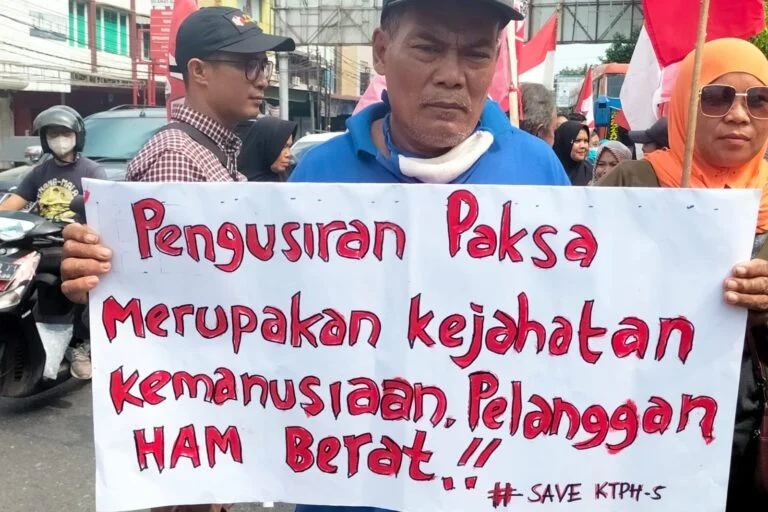
The long-standing struggle for land rights in Padang Halaban, Aek Kuo District, Labuhanbatu Utara (Labura), North Sumatra, has reached a critical turning point following a decisive administrative intervention by the Ministry of Agrarian Affairs and Spatial Planning/National Land Agency (ATR/BPN). In a move that signals a potential victory for local communities, the Ministry has officially enclaved 83.26 hectares of land from the Right to Cultivate (HGU) concession held by PT Sinar Mas Agro Resources and Technology (SMART). This decision follows decades of legal uncertainty and social friction between the agribusiness giant and local farming collectives who claim the land as their ancestral heritage.
The decision to enclave the land—essentially carving it out from the corporate concession to return it to state control for redistribution—was formalized during a high-level coordination meeting between the Director General of Human Rights at the Ministry of Law and Human Rights and the Ministry of ATR/BPN on May 12, 2024, in Jakarta. According to the Director of Land Rights Determination and Registration, the specific plot, previously identified under Number Identification Field (NIB) 01881, has been separated and assigned a new designation, NIB 01883, covering exactly 83.2627 hectares. This specific area is now classified as an object of execution and is explicitly excluded from the HGU concession Number 1419/Labuhan Batu held by PT SMART.
Despite this legal breakthrough, the situation on the ground remains volatile and unchanged for the residents of Padang Halaban. The administrative victory in Jakarta has yet to translate into physical security for the farmers, as reports of corporate resistance and physical intimidation continue to emerge from the field.
The Legal Framework and the Transition to Agrarian Reform
The technicalities of the enclave were further clarified during a multi-stakeholder meeting held at the North Sumatra Governor’s Office on June 4, 2024. This meeting brought together a wide array of influential bodies, including representatives from Commission XIII of the House of Representatives (DPR), the Director General of Human Rights, the Governor of North Sumatra, the National Commission on Human Rights (Komnas HAM), the Indonesian Ombudsman, and the local government of Labura.
Bambang Irjanto, the Assistant Director of HGU Determination at the Ministry of ATR/BPN, joined the meeting virtually to confirm that PT SMART’s HGU concession in the disputed area had officially expired in early 2024. Consequently, the company no longer possesses the legal authority or "right of use" to control the contested land. The Ministry intends to resolve the dispute through the mechanism of Agrarian Reform, designating the enclaved 83.26 hectares as Land Objects for Agrarian Reform (Tora). This process is mandated by Presidential Regulation (Perpres) No. 62 of 2023 regarding the Acceleration of Agrarian Reform Implementation, which seeks to provide land tenure security to smallholders and indigenous communities.
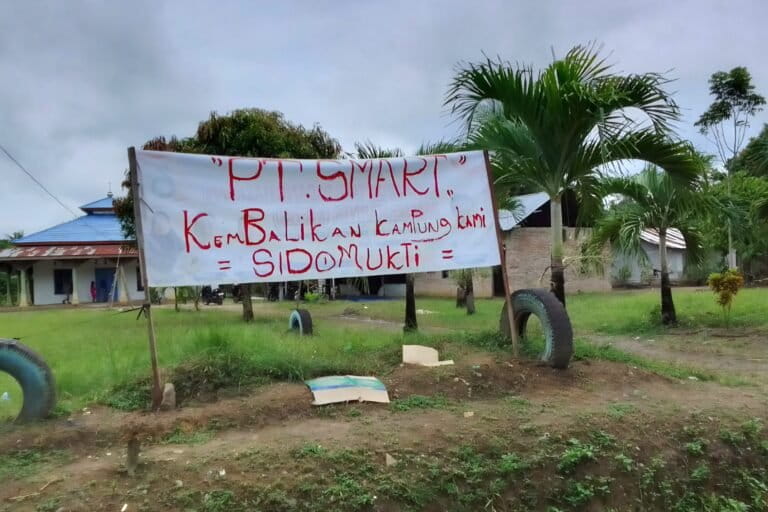
Saurlin Siagian, a Commissioner at Komnas HAM who participated in the June 4 meeting, emphasized the legal weight of the new NIB designation. He described the document as the "Ace Card" that the villagers have sought for years. Juridically, the issuance of NIB 01883 proves that the land is no longer part of PT SMART’s corporate estate. However, Siagian noted that the company’s representatives continue to stall, claiming they have not received official written notification regarding the revocation of their management rights, despite being informed verbally and presented with the facts by high-ranking authorities.
Corporate Resistance and the Argument of Legal Expiration
The conflict is complicated by PT SMART’s reliance on a previous Supreme Court (MA) ruling. The company argues that the court’s final and binding decision (inkracht) affirmed that the disputed area fell within their HGU boundaries. However, human rights advocates and government officials argue that this legal standing is no longer relevant. Because the HGU expired in 2024, the "object of the case" in the previous litigation has effectively vanished.
"The legal status of the land management has become a vacuum, and it automatically reverts entirely to the Ministry of ATR/BPN," Siagian stated. He argued that the company’s insistence on holding the land based on an expired concession is a maneuver to delay the inevitable transfer of rights to the farmers. To ensure a peaceful transition, a joint task force comprising the DPR, the Ministry of Human Rights, Komnas HAM, and the Ombudsman has been formed to oversee the handover process. These institutions aim to provide absolute transparency and prevent land corruption or repressive actions by security personnel or "hired individuals" during the transition.
Systemic Failures in Land Licensing
The Padang Halaban case highlights a broader systemic issue within Indonesia’s land management system. Herdensi Adnin, Head of the North Sumatra Representative Office of the Ombudsman, pointed out that the root of these conflicts often lies in the initial issuance of HGU permits. He criticized the government’s historical tendency to grant expansive land rights to corporations while ignoring the presence of local residents who have inhabited and managed the land for generations but lack formal, written titles.
"Residents often do not hold official documents, yet they state firmly that the land is ancestral heritage, where their forefathers lived and worked long before the company arrived," Adnin explained. This "administrative blindness" to customary land use creates a stalemate where the law recognizes a piece of paper (the HGU) while the reality on the ground recognizes a blood-bond with the soil.
The Ombudsman has called on the Ministry of ATR/BPN to conduct comprehensive social and cultural audits before granting or renewing land management rights. The government is urged to ensure that no community groups have deep-seated cultural, social, or historical ties to the land that would be displaced by corporate activity. In the case of the Padang Halaban Farmers Group, the Provincial Government of North Sumatra is expected to take moral responsibility for verifying the situation on the ground and protecting the rights of those with long historical ties to the region.
Escalating Tensions and Physical Violence on the Ground
While the bureaucratic machinery in Jakarta and Medan moves toward a resolution, the daily reality for farmers in Padang Halaban is one of fear. Just one day after the multi-stakeholder meeting at the Governor’s office, violence erupted in the fields. On June 5, 2024, as farmers attempted to plant crops on the enclaved land, they were confronted by a group of individuals claiming to be representatives of the company.
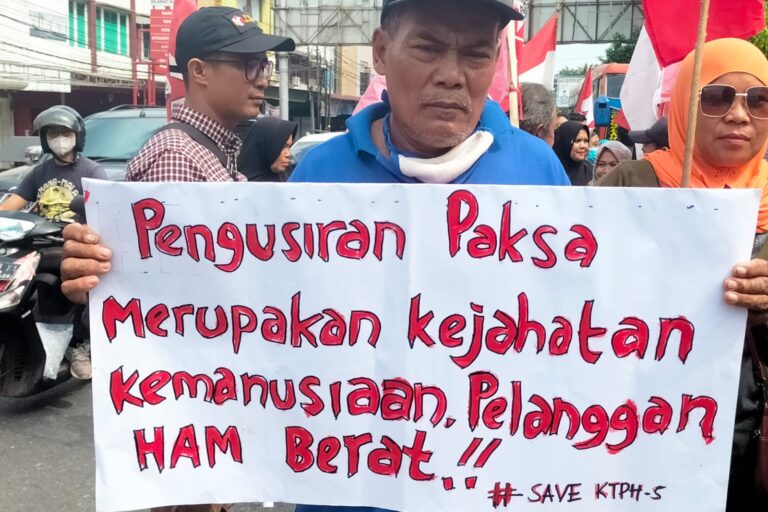
The confrontation turned physical when these individuals attempted to block the farmers’ activities. Reports indicate that at least one farmer suffered physical injuries, including a wound to the mouth, after being struck during the scuffle. This incident follows a pattern of repression; in January 2024, residents faced similar violence during a forced eviction. The recurring nature of these incidents has led to a deep distrust of law enforcement, with many residents opting not to report the latest assault to the police, citing a perceived lack of justice in previous cases.
The silence from official channels has further exacerbated the tension. Efforts by journalists to obtain comments from Nugraha, the Head of the North Sumatra BPN Regional Office, were unsuccessful after multiple attempts in June. Similarly, Labuhanbatu Utara Regent Hendri Yanto Sitorus avoided reporters following an event at the Governor’s office, and calls to the Minister of ATR/BPN, Nusron Wahid, went unanswered. PT SMART’s Corporate Communications department also failed to respond to multiple inquiries regarding the violence and the enclave decision.
Analysis of Implications for National Agrarian Policy
The Padang Halaban dispute serves as a litmus test for the Indonesian government’s commitment to its Agrarian Reform agenda. If the Ministry of ATR/BPN fails to enforce the enclave and the Tora designation in the face of corporate resistance, it risks undermining the credibility of Perpres 62/2023.
Several key implications arise from this conflict:
- Legal Precedent of HGU Expiration: The case reinforces the principle that an expired HGU cannot be used as a basis for land control, even if a prior court ruling favored the corporation. This could empower other communities across Indonesia currently embroiled in disputes with plantation companies whose concessions are nearing their end dates.
- The Role of Oversight Bodies: The involvement of the Ombudsman and Komnas HAM highlights the necessity of a multi-dimensional approach to land conflicts. Land is not merely a commodity or an administrative entry; it is a human rights issue involving livelihoods and cultural identity.
- The Need for Field Enforcement: The discrepancy between the Jakarta decision and the violence in North Sumatra underscores a "policy-implementation gap." Without a physical presence from the state—such as the "joint task force" mentioned by the DPR—corporate entities may continue to use private security to maintain the status quo regardless of legal changes.
- Economic Transition: As the 83.26 hectares transition to the farmers, there will be a need for agricultural support and infrastructure to ensure the land remains productive. The shift from corporate palm oil to smallholder farming is a core goal of the Tora program, aimed at improving local economic resilience.
As the situation in Padang Halaban remains tense, the eyes of the nation are on the Ministry of ATR/BPN and the North Sumatra provincial authorities. The resolution of this conflict will determine whether the "fresh air" felt by the farmers is a fleeting moment or the beginning of a new era of land justice in North Sumatra. For now, the farmers of Padang Halaban continue to stand their ground, waiting for the law of the land to finally match the reality of the soil they have tilled for generations.