Nasution Nanang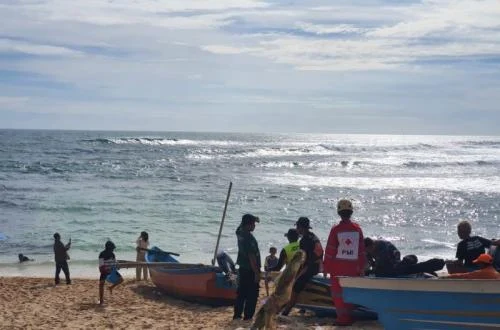
A mother and her toddler were successfully rescued from a perilous rip current at Drini Beach, located in Kalurahan Banjarejo, Kapanewon Tanjungsari, Gunungkidul Regency, on Wednesday, June 17, underscoring the ever-present dangers of the region’s captivating southern coastlines. The prompt and professional intervention by the Satlinmas Rescue Istimewa (SRI) Wilayah Operasi II Pantai Baron prevented what could have been a tragic outcome, though the young child required further medical attention due to the ordeal.
A Close Call on Gunungkidul’s Coastline
The incident involved a four-year-old boy identified as MR and his 34-year-old mother, Z, both visiting from Solo. According to Marjono, the Coordinator of SRI Wilayah II Baron, both victims were safely evacuated, but MR experienced significant weakness and shock, suspected to be from ingesting a considerable amount of seawater. The rapid response from the dedicated rescue team stationed at Drini Beach proved critical in mitigating the severity of the situation. Drini Beach, known for its picturesque white sands and a small island accessible by a pedestrian bridge, is a popular destination for families seeking a relatively calmer swimming experience compared to some of the more turbulent stretches of the southern coast. However, even in seemingly tranquil areas, the powerful and unpredictable nature of the Indian Ocean currents poses a constant threat, necessitating unwavering vigilance from both visitors and safety personnel.
The Incident Unfolds: A Sudden Turn of Events
The serene morning at Drini Beach took a sudden and alarming turn around 10:00 AM local time. The mother and child were reportedly enjoying the water on the western side of the beach, a common spot for tourists to wade and play. Without warning, a formidable wave, significantly larger than the preceding ones, crashed onto the shore. The sheer force of the wave overwhelmed both Z and MR, sweeping them off their feet and dragging them rapidly into the deeper, more turbulent waters. The powerful undertow, characteristic of rip currents, then began to pull them further offshore, creating a terrifying struggle against the relentless ocean. The suddenness of such events often leaves victims disoriented and panicking, greatly increasing the risk of drowning.
Satlinmas Rescue Istimewa: Guardians of the Southern Shores
Fortunately, the incident did not go unnoticed. petugas (officers) from the Satlinmas Rescue Istimewa (SRI) who were on active duty at the Drini Beach guard post witnessed the unfolding emergency. Their training and strategic positioning allowed for immediate recognition of the distress. Without a moment’s hesitation, the rescue team sprang into action. Marjono highlighted the efficiency of the response, noting that nine officers were on standby in the beach area at the time. This robust presence enabled a swift and coordinated rescue effort. The SRI, an integral part of the regional disaster management and safety apparatus, is renowned for its specialized training in water rescue, first aid, and beach surveillance. Their ‘Istimewa’ (Special) designation reflects their crucial role within the Special Region of Yogyakarta’s unique governance structure, often collaborating closely with local government bodies like the Satuan Polisi Pamong Praja (Satpol PP) and the Regional Disaster Management Agency (BPBD).
Upon reaching the struggling mother and child, the rescuers expertly navigated the challenging surf to bring them safely back to shore. Once on land, both victims received immediate preliminary treatment at the guard post. While the mother, Z, quickly recovered from the shock, the young child, MR, remained weak and visibly traumatized, likely having swallowed a significant amount of seawater during the ordeal. Given his fragile condition, medical professionals deemed it necessary for MR to receive more comprehensive care. He was subsequently referred to RSUD Saptosari, the nearest public hospital, for further medical assessment and treatment to ensure his full recovery. The hospital later confirmed that MR was in stable condition, undergoing observation for any lingering effects of seawater ingestion, such as respiratory distress or electrolyte imbalance, common complications in such incidents.
Understanding the Threat: The Peril of Rip Currents
The incident at Drini Beach serves as a stark reminder of the hidden dangers lurking beneath the beautiful surfaces of many coastal areas, particularly the prevalence of rip currents. Head of Satpol PP DIY, Bagas Senoadji, reiterated the critical hazard posed by these powerful, narrow channels of water moving rapidly away from the shore. Rip currents, often mistakenly perceived as undertows, are responsible for the vast majority of lifeguard rescues and many drownings worldwide. They form when waves break on the shore, pushing water towards the land. This water then seeks the path of least resistance to flow back out to sea, often through gaps in sandbars or alongside structures like piers or jetties, creating a strong, localized current that can quickly drag even strong swimmers away from the shore.
Several beaches along the southern coast of DIY are notoriously susceptible to rip currents. Bagas specifically named Pantai Parangtritis and Pantai Depok in Bantul Regency, alongside Pantai Drini in Gunungkidul, as high-risk areas. The geological and oceanographic characteristics of these beaches, including their seabed topography and exposure to large swells from the Indian Ocean, contribute to the frequent formation of these dangerous currents. Tourists, especially those unfamiliar with the local marine environment, often underestimate the power of these currents, particularly when the sea appears calm or waves are not overtly large. Panic is a major factor in rip current drownings; swimmers often exhaust themselves trying to swim directly against the current, rather than swimming parallel to the shore to escape it.
Beyond Drini: A Look at DIY’s Coastal Safety Landscape
The southern coastline of the Special Region of Yogyakarta, stretching across Bantul, Gunungkidul, and Kulon Progo regencies, is a major tourism draw. In 2023, DIY recorded over 7.5 million domestic and international tourist arrivals, with a significant portion visiting its famous beaches. Destinations like Parangtritis, Indrayanti, Kukup, and Drini are economic mainstays for local communities, supporting countless businesses from small warungs to accommodation providers. However, this popularity comes with an increased responsibility for safety. According to data from the local disaster management agency, dozens of beach-related incidents, ranging from minor injuries to fatal drownings, occur annually across the region. These incidents tend to spike during peak holiday seasons, long weekends, and school breaks, when beaches are at their most crowded.
The Satlinmas Rescue Istimewa plays a pivotal role in this broader coastal safety landscape. Comprising highly trained volunteers and professional rescuers, SRI personnel are strategically deployed across the most popular and hazardous beaches. Their responsibilities extend beyond direct rescue to include proactive measures such as patrolling, educating tourists on beach safety, monitoring weather conditions, and erecting warning signs. Their presence is a visible deterrent to risky behavior and a rapid response mechanism when incidents occur. The "Istimewa" status also signifies a unique level of support and integration with the provincial government’s safety initiatives, ensuring better coordination and resource allocation.
Official Voices: Emphasizing Vigilance and Adherence
In the wake of the Drini Beach rescue, officials were quick to re-emphasize the critical importance of tourist vigilance. Bagas Senoadji, Head of Satpol PP DIY, underscored the vital role of SRI personnel in both preventing and responding swiftly to incidents in coastal areas. "For tourists, it is imperative to exercise extreme caution when engaging in water activities on DIY’s southern beaches," Bagas stressed. "Always supervise children and family members, and strictly adhere to the instructions and warnings issued by SRI officers. Only swim or play in designated safe areas that have been clearly marked and approved by the rescue teams." This statement reflects a broader strategy to foster a culture of safety among visitors, acknowledging that while rescue efforts are crucial, prevention remains the first line of defense.
Marjono of SRI Wilayah II Baron echoed these sentiments, highlighting that despite ongoing public awareness campaigns, many tourists still disregard safety warnings. He suggested that enhanced, multi-lingual signage, perhaps coupled with real-time digital alerts accessible via QR codes at beach entrances, could further improve communication of risks. Representatives from the Gunungkidul Tourism Office also commented, expressing gratitude for the SRI’s swift action and affirming their commitment to collaborating on initiatives to enhance beach safety infrastructure, including clearer demarcation of swimming zones and potentially increasing the number of permanent lifeguard posts during peak seasons. They also hinted at plans to integrate safety briefings into promotional materials for coastal tourism, ensuring visitors are informed before they even arrive.
Implications and Future Outlook: Reinforcing Safety for Sustainable Tourism
The successful rescue at Drini Beach, while a testament to the effectiveness of the SRI, serves as a poignant reminder that coastal safety is an ongoing challenge requiring continuous effort and adaptation. The incident’s implications extend beyond the immediate well-being of the victims, touching upon the broader aspects of tourism sustainability, public awareness, and inter-agency cooperation in the Special Region of Yogyakarta.
For Gunungkidul, a regency heavily reliant on its burgeoning tourism sector, maintaining a reputation for safety is paramount. A string of negative incidents could deter visitors, impacting the livelihoods of thousands. Therefore, investing in robust safety measures is not just about saving lives, but also about protecting the economic vitality of the region. This could involve exploring advanced surveillance technologies, such as drone patrols, which can provide a wider, real-time view of the water and help identify potential hazards or swimmers in distress more quickly than ground-based observations alone. Furthermore, the integration of weather forecasting and oceanographic data into daily operational briefings for SRI teams could allow for more precise predictions of rip current formations and other hazardous conditions, enabling proactive closures of specific beach sections or heightened warnings.
Educational campaigns must also evolve to reach a wider and more diverse audience. Beyond traditional signboards, leveraging social media, local radio, and partnerships with tour operators to disseminate safety information in multiple languages could prove highly effective. Educating visitors, particularly families with young children, on how to identify rip currents (e.g., a channel of churning, choppy water, a line of foam, seaweed, or debris steadily moving seaward) and what to do if caught in one (stay calm, float, signal for help, swim parallel to the shore) is crucial.
The collaborative framework between Satpol PP DIY, SRI, local tourism offices, and health services like RSUD Saptosari has proven its worth. However, continuous training, regular equipment upgrades, and sufficient funding for rescue operations are essential to maintain and enhance this high level of preparedness. The "Istimewa" status of Yogyakarta provides a unique opportunity to lead in integrated coastal safety management, setting a benchmark for other tourist-heavy regions.
Conclusion: A Call for Collective Responsibility
The Drini Beach rescue, culminating in the safe recovery of a mother and child, stands as a powerful testament to the dedication and expertise of the Satlinmas Rescue Istimewa. It simultaneously serves as a critical call to action for all stakeholders: government agencies to continue investing in and refining safety protocols, local communities to support and empower their rescue teams, and most importantly, tourists to embrace a heightened sense of personal responsibility. The allure of Yogyakarta’s southern beaches is undeniable, but their beauty comes with inherent risks that demand respect and vigilance. By fostering a collective commitment to safety, the region can ensure that its stunning coastlines remain a source of joy and wonder, rather than a site of preventable tragedy. The message is clear: enjoy the natural splendor, but always prioritize safety, heed warnings, and stay within designated safe zones.