Nasution Nanang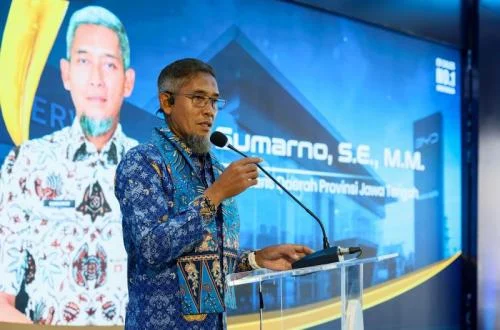
The provincial government of Central Java has officially reaffirmed its commitment to promoting sustainable transportation by continuing to provide significant fiscal incentives for battery-electric vehicles (BEVs). These incentives include the exemption of Motor Vehicle Tax (PKB) and Vehicle Transfer Fee (BBNKB) for all battery-powered electric vehicles. The policy, a crucial component of the province’s strategy to accelerate EV adoption, was explicitly stated by the Regional Secretary of Central Java Province, Sumarno, during the inauguration of a new BYD official dealership in Semarang on Wednesday, June 17.
Sumarno elucidated that these fiscal incentives are a direct implementation of Central Java Governor Ahmad Luthfi’s Decree, Number 100.3.3.1/161 Year 2026. This decree, established on May 29, 2026, specifically outlines the comprehensive exemption of PKB and BBNKB for battery-electric motor vehicles. This reaffirmation signals the province’s unwavering dedication to fostering an eco-friendly mobility ecosystem and attracting further investment in the burgeoning electric vehicle sector. "We are still implementing the BBNKB and PKB exemption for electric vehicles," Sumarno affirmed, emphasizing the multifaceted benefits of electric vehicles. He highlighted that EVs possess numerous positive attributes contributing to sustainable energy efforts, not only due to their superior efficiency but also because of their inherently environmentally friendly nature. The policy, therefore, aligns with broader national and global agendas concerning climate change mitigation and the transition to cleaner energy sources.
Strategic Imperative: Indonesia’s National Electric Vehicle Roadmap
The Central Java provincial government’s initiative must be understood within the larger context of Indonesia’s ambitious national electric vehicle roadmap. The Indonesian government has set aggressive targets to become a significant player in the global EV supply chain and manufacturing hub. Driven by the twin objectives of reducing reliance on fossil fuel imports and achieving net-zero emissions targets by 2060, the nation aims to have 2 million electric cars and 13 million electric motorcycles on its roads by 2030. This vision is supported by a range of national policies, including VAT subsidies for locally produced EVs, import duty exemptions for certain EV components, and the development of a robust charging infrastructure network.
President Joko Widodo’s administration has consistently championed the electrification of the automotive sector, viewing it as a cornerstone for future economic growth and environmental stewardship. The government has actively courted global automotive giants, including Hyundai, Wuling, and more recently, BYD, to establish manufacturing bases in Indonesia. These investments are critical for job creation, technology transfer, and positioning Indonesia as a key player in the ASEAN EV market. The continuation of provincial-level incentives like those in Central Java acts as a powerful complement to these national strategies, providing tangible financial benefits that directly influence consumer purchasing decisions and accelerate market penetration.
Central Java’s Pivotal Role in the EV Ecosystem
The remarks made by Eagle Zhao, President Director of PT BYD Motor Indonesia, during the same event underscored the strategic significance of Central Java. Zhao identified the province as a vital economic corridor within Java, asserting its critical role in Indonesia’s future development. "We believe that this province can also become an important driver for electric vehicle development in the coming years," Zhao stated, highlighting Central Java’s potential to lead the charge in EV adoption and related industrial growth.
Central Java boasts a significant population, a growing middle class, and an increasingly sophisticated industrial base. Its strategic location, bridging West and East Java, makes it a crucial logistical hub and a burgeoning consumer market. The presence of several industrial estates and a developing infrastructure network positions the province favorably for both manufacturing and distribution activities related to electric vehicles. For automotive manufacturers like BYD, establishing a strong presence in Central Java is not merely about market access but also about tapping into the province’s long-term growth potential and its commitment to sustainable development.
The Financial Impact of Tax Exemptions: PKB and BBNKB
Understanding the specific tax exemptions is key to appreciating their impact on EV adoption.
- Pajak Kendaraan Bermotor (PKB): This is an annual motor vehicle tax levied by provincial governments. The amount varies based on factors such as vehicle type, engine capacity, and age. For conventional internal combustion engine (ICE) vehicles, PKB can represent a substantial annual expense. Its exemption for BEVs significantly reduces the long-term cost of ownership, making EVs more attractive financially.
- Bea Balik Nama Kendaraan Bermotor (BBNKB): This is a one-time vehicle transfer fee paid when a vehicle is registered for the first time or when ownership is transferred. It typically amounts to a percentage of the vehicle’s selling price. Given the generally higher upfront cost of EVs compared to their ICE counterparts, the BBNKB exemption provides a substantial saving at the point of purchase, directly addressing one of the primary barriers to EV adoption.
Collectively, these exemptions can translate into savings of several tens of millions of Rupiah over the lifespan of an EV, depending on the vehicle’s value. This makes the total cost of ownership (TCO) for electric vehicles increasingly competitive, especially when factoring in lower fuel costs (electricity vs. gasoline) and reduced maintenance requirements.
Chronology and Evolution of EV Incentives in Indonesia
The journey towards EV incentives in Indonesia has been gradual yet consistent.
- 2019: Presidential Regulation No. 55 of 2019 on the Acceleration of the Battery Electric Vehicle Program for Road Transportation marked a significant turning point, providing the legal framework for various incentives and regulations.
- 2020-2022: Initial regulations focused on import duty exemptions for completely knocked down (CKD) and incompletely knocked down (IKD) EV kits, aiming to stimulate local assembly. Tax incentives for EV manufacturers, such as tax holidays and super deduction tax facilities, were also introduced.
- 2Early 2023: The central government introduced VAT subsidies for electric cars produced in Indonesia with a minimum local content level (TKDN) of 40%. This immediately reduced the purchase price of eligible EVs by 11%.
- Mid-2023: Subsidies for electric motorcycles were rolled out, offering a direct rebate to consumers purchasing new electric motorcycles or converting conventional ones.
- Late 2023 – Early 2024: Further adjustments to import duties and luxury goods tax (PPnBM) were implemented to support the growth of the domestic EV market, including temporary reductions for completely built-up (CBU) EVs to diversify options and accelerate market supply.
- May 29, 2026 (as per decree, likely a typo for 2024 or 202X): Governor’s Decree No. 100.3.3.1/161 Year 2026 is cited, solidifying Central Java’s provincial-level PKB and BBNKB exemptions. While the year 2026 in the decree number might be a forward-looking date or a typographical error in the source material, its affirmation in June suggests an existing, active policy. It effectively extends or reaffirms a crucial financial incentive for EV buyers in the province.
These layered incentives, from national-level manufacturing support to provincial-level consumer benefits, demonstrate a holistic approach by the Indonesian government to foster a vibrant EV ecosystem.
Driving Towards Sustainability: Environmental and Economic Dividends
Sumarno’s emphasis on EVs’ "sustainable energy" and "environmentally friendly" attributes highlights the core motivations behind these policies. From an environmental perspective, BEVs produce zero tailpipe emissions, directly contributing to improved urban air quality and reducing the carbon footprint associated with transportation. As Indonesia transitions to a cleaner energy mix, the environmental benefits of EVs will only amplify. Furthermore, the quieter operation of electric vehicles contributes to reducing noise pollution in urban centers, enhancing overall liveability.
Economically, the shift to EVs offers several advantages. For consumers, the lower operating costs, primarily due to cheaper electricity compared to gasoline and reduced maintenance (fewer moving parts), result in significant long-term savings. On a macro level, increased EV adoption can lessen Indonesia’s dependence on imported fossil fuels, bolstering energy security and potentially freeing up government subsidies that can be reallocated to other development priorities. The growth of the EV industry also promises job creation across the value chain, from manufacturing and assembly to battery production, charging infrastructure development, and after-sales service.
Industry Confidence and Collaborative Growth
Eagle Zhao’s call for strong collaboration among government, industry, infrastructure companies, and local communities underscores the complex, multi-stakeholder nature of EV ecosystem development. No single entity can drive this transition alone. Government policies provide the framework and incentives; industry brings the technology, manufacturing capability, and products; infrastructure companies build the charging networks; and local communities embrace and adapt to the new technology.
BYD’s decision to expand its dealership network into Semarang is a testament to its confidence in the Indonesian market and Central Java’s potential. As a global leader in EV manufacturing, BYD’s investment signifies a strategic commitment to serving the growing demand in the region. Their presence not only offers more choices for consumers but also stimulates competition, which can lead to better products and services across the industry. Zhao expressed pride in BYD’s ability to serve more customers from Central Java, reinforcing the company’s commitment to fostering a more sustainable and innovative future for mobility in Indonesia.
Challenges and Future Outlook
Despite the robust policy support and growing industry interest, the path to widespread EV adoption in Central Java and Indonesia is not without its challenges.
- Charging Infrastructure: While expanding, the density and reliability of public charging stations remain a key concern for potential buyers, especially for inter-city travel.
- Upfront Cost: Despite tax exemptions, the initial purchase price of many EVs can still be higher than comparable ICE vehicles, particularly for lower-income segments. Continuous innovation and economies of scale are needed to bring prices down.
- Consumer Awareness and Education: Bridging the knowledge gap about EV technology, benefits, and charging logistics is crucial for overcoming misconceptions and driving demand.
- Grid Stability and Renewable Energy Integration: As EV numbers grow, ensuring the electricity grid can handle increased demand and that the electricity itself is generated from renewable sources will be paramount to maximizing environmental benefits.
However, the outlook remains positive. The continued commitment from provincial governments like Central Java, coupled with national incentives and significant private sector investment, creates a fertile ground for the EV market to flourish. The reaffirmation of PKB and BBNKB exemptions is a clear signal that Central Java is not just passively observing the global EV revolution but actively shaping its trajectory within its borders, positioning itself as a key player in Indonesia’s sustainable mobility future. This proactive stance is expected to further catalyze investment, enhance environmental quality, and ultimately benefit the province’s economy and its citizens.