Nasution Nanang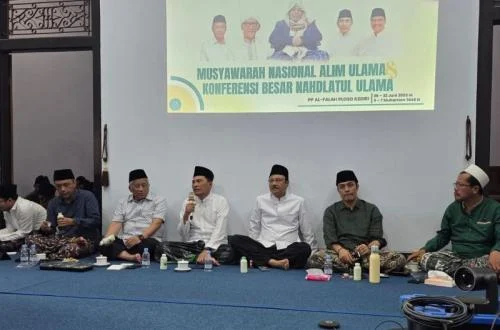
MAGELANG, Indonesia – The regional leadership of Nahdlatul Ulama (NU), comprising the Provincial Board (Pengurus Wilayah Nahdlatul Ulama or PWNU) and the Branch Boards (Pengurus Cabang Nahdlatul Ulama or PCNU) across Central Java and the Special Region of Yogyakarta (DIY), has collectively and officially declared its unwavering support for Pondok Pesantren Lirboyo in Kediri, East Java, to host the forthcoming 35th NU Muktamar. This significant endorsement emerged from a strategic consultative meeting, known as a mujalasah, held at Pondok Pesantren Raudlatu Thullab in Tempuran, Magelang, on a recent Wednesday. The consensus from this pivotal gathering not only solidified Lirboyo’s position as a preferred venue but also established a firm stance on several critical internal organizational issues, signalling a unified regional voice ahead of the national deliberative assembly.
The mujalasah served as a vital forum for consolidating regional aspirations and directives. It brought together a formidable contingent of NU leadership, including representatives from 35 PCNU chapters spanning Central Java and DIY. The meeting was further elevated by the presence of top national NU figures, notably the General Chairman of the PBNU (Pengurus Besar Nahdlatul Ulama, the national executive board), Kyai Haji Yahya Cholil Staquf, and the Deputy General Chairman, Lora K. H. Amin Said Husni. Regional leadership was robustly represented by the Syuriyah and Tanfidziyah (spiritual and executive councils) of PWNU Central Java, led by Kyai Haji Ubaidullah Shodaqoh, and the Rais Syuriyah (head of the spiritual council) of PWNU DIY, Kyai Haji Mas’ud Masduqi. The collective presence of such influential figures underscored the gravity and strategic importance of the resolutions adopted during the meeting.
Understanding the Nahdlatul Ulama and the Muktamar
To fully appreciate the weight of this regional endorsement, it is essential to understand the institutional fabric of Nahdlatul Ulama and the paramount significance of its Muktamar. Nahdlatul Ulama, or the "Awakening of Islamic Scholars," stands as Indonesia’s largest Islamic organization and arguably the world’s largest independent Islamic body, boasting an estimated membership of over 90 million adherents. Founded in 1926, NU’s mission extends far beyond religious instruction, encompassing a vast network of social, educational, and economic initiatives. It operates thousands of Islamic boarding schools (pesantren), universities, hospitals, and community centres across the archipelago, playing a crucial role in shaping Indonesian society, promoting moderate Islam, and fostering national unity and pluralism.
The Muktamar is the highest deliberative body within Nahdlatul Ulama, convened typically every five years. It is an event of immense national and international significance, serving as a platform to:
- Elect the Rais Aam Syuriyah: The supreme spiritual leader who provides guidance and oversight.
- Elect the General Chairman of the PBNU: The chief executive who manages the organization’s day-to-day operations.
- Formulate and ratify organizational policies: These policies guide NU’s direction for the next five years, influencing its stance on religious affairs, education, social welfare, and national issues.
- Review and amend the organization’s statutes and regulations.
- Consolidate internal unity and address challenges.
Given the immense influence of NU in Indonesia’s social and political landscape, the Muktamar is not merely an internal organizational event but a national barometer for the direction of moderate Islam and civil society. The selection of its leadership and the articulation of its agenda often have ripple effects throughout the country.
The Strategic Significance of Pondok Pesantren Lirboyo
The choice of Pondok Pesantren Lirboyo as the preferred venue is deeply symbolic and strategically insightful. Located in Kediri, East Java, Lirboyo is one of Indonesia’s oldest and most respected traditional Islamic boarding schools, founded in 1910 by KH. Abdul Karim. It is renowned for its rigorous curriculum focusing on classical Islamic texts, producing generations of influential ulama (Islamic scholars) who have gone on to lead pesantren and NU branches across the nation.
Lirboyo embodies the traditionalist stream of NU, emphasizing adherence to the four Sunni schools of thought (madhhabs) and upholding the values of Ahlussunnah wal Jama’ah (the People of the Sunnah and the Community), which forms the ideological bedrock of NU. Hosting the Muktamar at such a venerable institution carries several implications:
- Legitimacy and Sanctity: A Muktamar held in a traditional pesantren like Lirboyo is often perceived as having greater spiritual legitimacy and an atmosphere conducive to scholarly deliberation, free from overt political influence.
- Accessibility and Infrastructure: Large pesantren often possess the infrastructure (dormitories, assembly halls, dining facilities) to accommodate thousands of delegates, albeit requiring significant logistical coordination.
- Symbolic Return to Roots: For many traditionalists within NU, holding the Muktamar at a major pesantren signifies a return to the organization’s roots and core identity as a scholars’ movement.
- Historical Precedent: Major pesantren have historically been venues for significant NU gatherings, reinforcing a sense of continuity and tradition.
The endorsement of Lirboyo by the influential Central Java and Yogyakarta regions therefore carries substantial weight in the national debate over the Muktamar’s final venue, indicating a strong preference for a traditional, scholarly environment.
Key Resolutions and Their Far-Reaching Implications
Beyond the venue selection, the Magelang mujalasah produced several critical resolutions that reflect internal debates and the desire to safeguard NU’s organizational integrity and traditional values. These points were unanimously agreed upon by the 35 PCNU chapters and the PWNU leadership present:
-
Rejection of Restrictions on Syuriyah Elements:
- Context: The Syuriyah council is the spiritual and legislative authority within NU, responsible for religious guidance and upholding organizational principles. Its members are highly respected scholars. Debates sometimes arise regarding the criteria for Syuriyah membership or attempts to limit its composition, potentially to streamline decision-making or to favour certain groups.
- Implication: The rejection of such restrictions signifies a strong commitment to maintaining the broad representation and spiritual authority of the Syuriyah. It suggests resistance to any moves perceived as diluting the scholarly and spiritual backbone of the organization or centralizing power away from traditional religious leadership. This stance aims to preserve the integrity of NU’s spiritual guidance and ensure that the voice of its most revered scholars remains unhindered.
-
Rejection of AHWA Zoning:
- Context: The Ahlul Halli wal Aqdi (AHWA) is a special committee of highly respected scholars and elders responsible for electing the Rais Aam Syuriyah during the Muktamar. This system was introduced to minimize political maneuvering and ensure the election of a truly spiritual leader. "Zoning" in this context would likely refer to geographical or other arbitrary limitations on the selection or composition of AHWA members, potentially to influence the outcome of the Rais Aam election.
- Implication: The rejection of AHWA zoning is a powerful statement against any attempts to manipulate the electoral process for the supreme spiritual leader. It underscores the regional leaders’ commitment to a fair, transparent, and uncompromised selection of the Rais Aam, ensuring that the AHWA remains truly representative of NU’s scholarly elite without undue external or internal pressures. This resolution aims to safeguard the democratic (within NU’s specific framework) and spiritual legitimacy of the Rais Aam’s appointment.
-
Commitment to Maintaining the Original Organizational Structure:
- Context: Like any large organization, NU periodically faces discussions about structural reforms to adapt to changing times, improve efficiency, or modernize its governance. However, radical structural changes can sometimes be seen as undermining the historical identity and foundational principles of the organization.
- Implication: This commitment signals a preference for continuity and stability over drastic, potentially disruptive, structural overhauls. It reflects a desire to preserve NU’s unique character and operational framework, which has been honed over nearly a century, while still allowing for organic evolution. It suggests that any reforms should be incremental and respectful of the organization’s established traditions and values.
-
Promotion of Accountable Management of Strategic NU Assets:
- Context: NU possesses a vast array of strategic assets, including thousands of educational institutions (pesantren, schools, universities), healthcare facilities (hospitals, clinics), and various economic enterprises. The management of these assets, which are crucial for the organization’s sustainability and public service, requires robust governance and transparency.
- Implication: This resolution highlights a forward-looking approach to institutional management, emphasizing transparency, good governance, and accountability. It reflects a desire to ensure that NU’s extensive resources are managed efficiently, ethically, and for the maximum benefit of the community and the organization’s mission. This point addresses modern governance standards and aims to prevent mismanagement or corruption, thereby strengthening public trust in NU.
-
Emphasis on a Dignified Muktamar:
- Context: Past Muktamars have sometimes been marred by intense political rivalries or public disputes, detracting from the spiritual and scholarly essence of the event.
- Implication: This emphasis serves as an overarching call for unity, mutual respect, and adherence to ethical conduct throughout the Muktamar process. It aims to ensure that the event remains focused on its primary objectives of spiritual guidance, organizational development, and policy formulation, rather than being overshadowed by internal politicking. A dignified Muktamar enhances NU’s image and reinforces its role as a unifying force in Indonesian society.
Statements and Reactions from Related Parties
While specific immediate reactions to these resolutions from all national figures were not detailed, their presence at the Magelang meeting allows for logical inference:
- KH Yahya Cholil Staquf (PBNU General Chairman): His attendance at the mujalasah indicates his recognition of the importance of regional consensus. While the PBNU ultimately makes the final decisions regarding the Muktamar, his presence suggests an openness to absorbing regional aspirations. He would likely emphasize the importance of unity, the democratic process within NU, and the collective responsibility to ensure a successful and dignified Muktamar that strengthens the organization’s role in society. He would probably acknowledge the significance of the Central Java and DIY input without necessarily pre-empting the PBNU’s final decision on the venue.
- Regional Leaders (KH Ubaidullah Shodaqoh and KH. Mas’ud Masduqi): They would naturally underscore the solidarity demonstrated by the Central Java and DIY chapters. Their statements would likely highlight the robust consensus achieved, emphasizing that the resolutions reflect the genuine aspirations of the regional NU membership. They would present these resolutions as a constructive contribution to the Muktamar preparations, aimed at strengthening NU’s core values and operational integrity.
- Pondok Pesantren Lirboyo (Hypothetical): While not present at the Magelang meeting, the leadership of Lirboyo would likely express gratitude for the trust placed in them by such a significant regional bloc. They would convey their readiness to facilitate a successful and dignified Muktamar, if ultimately chosen, upholding the tradition of scholarly excellence and hospitality that defines their institution.
Broader Impact and Future Outlook
The unified stance of the Central Java and Yogyakarta PWNU and PCNU chapters holds considerable sway within Nahdlatul Ulama. These two regions represent a substantial portion of NU’s membership and are historically significant strongholds of the organization. Their collective voice, particularly on issues as fundamental as the Muktamar venue and core organizational principles, cannot be easily overlooked by the PBNU.
This regional endorsement for Lirboyo is likely to bolster its position as a frontrunner for the 35th Muktamar venue. It also signals to the national leadership the strong sentiment within these regions regarding the preservation of NU’s traditional identity, the integrity of its leadership selection processes, and sound asset management. The rejection of Syuriyah restrictions and AHWA zoning, in particular, suggests a robust internal debate within NU about potential reforms or changes to its governance mechanisms, with a clear preference from these regions for maintaining established structures and avoiding perceived manipulation.
The path to the 35th Muktamar will involve further deliberations at the national level, including consultations with other regional NU bodies. However, the resolutions from the Magelang mujalasah have clearly articulated a powerful regional perspective that will undoubtedly shape the discussions and decisions leading up to the grand assembly. The outcome of the Muktamar will not only determine NU’s leadership for the next five years but also its strategic direction, its engagement with national issues, and its continued role as a pillar of moderate Islam and national unity in Indonesia. The clarity and unity demonstrated by the Central Java and Yogyakarta chapters mark a significant step in the ongoing preparations for this crucial national event.