
 Nila Kartika Wati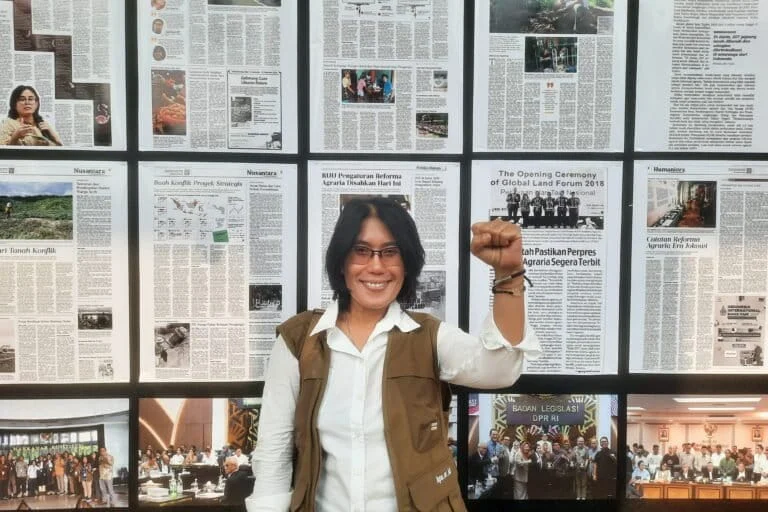
On September 24, 2026, coinciding with the annual National Farmers’ Day commemoration in Jakarta, the Consortium for Agrarian Reform (KPA) officially launched two pivotal wings of its organization: the Young Fighters for Agrarian Reform Movement (Gemara) and the Preparatory Committee for the Confederation of Women Agrarian Reform Fighters (SPPRA). This strategic expansion marks a critical shift in the landscape of land justice in Indonesia, aiming to bridge the generational and gender gaps that have historically hindered the full implementation of true agrarian reform.
The emergence of these organizations comes at a defining moment for the country. Earlier in 2026, Indonesia finally enacted a comprehensive Law on Agrarian Reform, the result of years of advocacy by farmers’ unions, legal activists, and rural communities. However, the KPA leadership and its grassroots members emphasize that the passage of legislation is merely the beginning of a long-term struggle. The new movements are tasked with the daunting responsibility of ensuring that the state remains accountable to the spirit of the law and that the benefits of land redistribution reach the most vulnerable, particularly women and rural youth.
Historical Context and the Gender Dimension
The formation of the SPPRA is not a sudden development but the culmination of a mandate established during the KPA’s Eighth National Congress in 2021. Yani Srimulyani, the KPA Regional Coordinator for West Java and the current chair of the regional Women Agrarian Reform Fighters (PPRA), explains that while women have always been at the epicenter of rural production and land defense, their voices have been systematically sidelined.
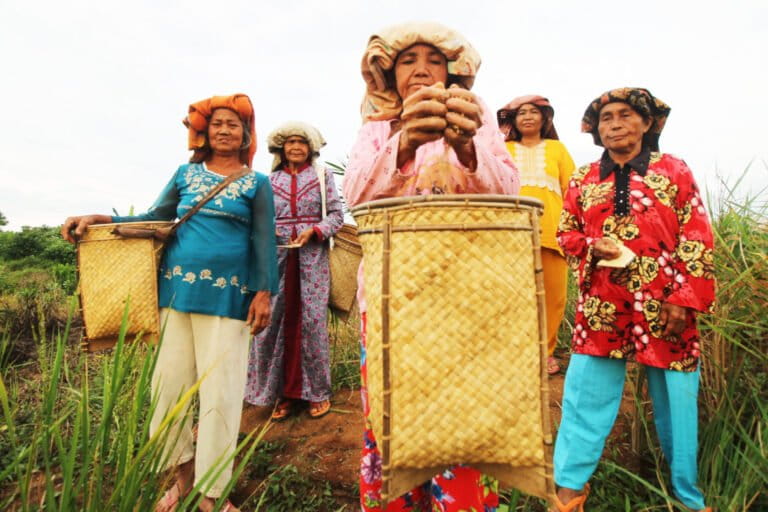
Historically, women have been relegated to the domestic sphere—a narrative often described as the "well, mattress, and kitchen" trap. Yet, in the context of agrarian conflict, women have consistently served as the first line of defense against land encroachment. Currently, the PPRA has successfully established seven federations across diverse provinces, including West Java, Central Java, East Java, Bali, Banten, Jambi, North Sumatra, and East Nusa Tenggara, representing 34 district-level unions.
The data supports the effectiveness of this women-led approach. In West Java, under the Pasundan Farmers’ Union, strategic efforts have resulted in 59% of redistributed land titles being registered in the names of women. Furthermore, these women have taken the lead in social infrastructure, managing 13 self-funded schools—from early childhood education (PAUD) to vocational high schools (SMK)—within conflict-affected villages. The establishment of the Siti Halimah ARAS (True Agrarian Reform Academy) building serves as a testament to this progress, providing a dedicated space for training, cross-regional collaboration, and strategic planning.
The Human Cost of Agrarian Conflict
The urgency of these new movements is underscored by the sobering reality of agrarian violence in Indonesia. Data compiled by the KPA for the period between 2004 and 2025 paints a grim picture: 5,071 individuals have been identified as victims of agrarian conflict. This includes 165 deaths, 2,053 instances of physical assault, 219 documented cases of shooting, and 4,832 individuals facing criminalization for protecting their ancestral or community lands.
Rosina, a 26-year-old activist from East Alam, East Aceh, represents the new generation of victims-turned-advocates. Her story highlights the generational trauma caused by corporate land grabbing. During the 1990s, when large-scale rubber plantations expanded into local farmlands, her community faced displacement and intimidation by armed security forces. Her father, who had been forced to work for the encroaching company, lost his life during the height of these conflicts. The intimidation was so severe that her mother burned all family photographs to protect their identity. For Rosina, joining Gemara is not an act of political opportunism; it is a necessity for justice that has been denied for over two decades.
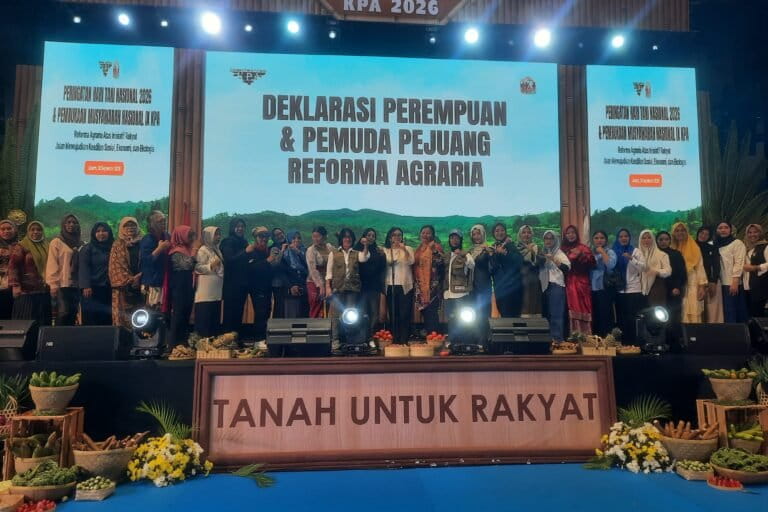
Gemara and the Reclaiming of Urban Agrarian Discourse
The Young Fighters for Agrarian Reform Movement (Gemara) faces the unique challenge of redefining the term "agrarian" for an urbanized generation. According to Dewa Jagat Satria, the Chair of the Gemara Preparatory Committee, 80% of the organization’s members are young people directly involved in rural land defense, while the remaining 20% are urban-based activists, students, and researchers.
A primary obstacle for Gemara is the persistent legacy of New Order-era propaganda. For decades, the regime of President Soeharto successfully associated "agrarian reform" with communist ideology, effectively stigmatizing land justice movements and excluding them from mainstream political discourse. This misinformation campaign created a psychological barrier for many young urbanites, who often view agrarian issues as strictly "rural" or "peasant-specific."
Dewa argues that this is a dangerous misconception. Modern agrarian conflicts are not limited to agricultural land; they include the displacement of urban communities for shopping malls, office complexes, and industrial infrastructure. By broadening the definition of agrarian reform to encompass the right to "living space" in all its forms, Gemara aims to build a coalition between urban youth—who have access to digital tools and legal networks—and rural farmers, who possess the direct experience of conflict.
Digital Literacy as a Tool for Sovereignty
The role of youth in this movement is fundamentally linked to technological literacy. Unlike previous generations, the youth of Gemara are leveraging digital mapping and spatial databases to document land ownership and indigenous boundaries. In the absence of transparent state records, the ability of local communities to independently measure and map their own land is a revolutionary tool for legal defense.
"The youth are the most interested in how to use mobile technology, how to drop coordinates, and how to maintain a digital record of their territory," says Dewa. This technical capability ensures that when legal disputes reach the courts, communities possess the empirical evidence required to challenge corporate claims.
The Path Forward: Accountability and Implementation
The passage of the Agrarian Reform Law in 2026 provides a new legal framework, but the KPA remains cautious. The movement is now transitioning from the phase of legislative advocacy to the phase of "oversight and implementation." The newly formed SPPRA and Gemara will function as watchdogs, monitoring how the government executes the redistribution of land and whether the rights of women and youth are prioritized.
The implications of this move are significant. By institutionalizing the roles of women and youth within the national structure of the KPA, the organization is ensuring that the struggle for land justice is not merely a transient protest movement but a sustainable, intergenerational endeavor. As Yani Srimulyani noted during the declaration, "We will not stop." The commitment of these movements suggests that the fight for equitable land distribution in Indonesia has entered a more sophisticated, technologically empowered, and socially inclusive era.
Ultimately, the success of these movements will be measured by their ability to translate legal victories into tangible land security. With thousands of conflict cases still pending resolution and the specter of criminalization still looming over rural defenders, the work of SPPRA and Gemara serves as a critical buffer against the further marginalization of Indonesia’s agrarian communities. The integration of young, digitally-savvy activists with the battle-tested resilience of women-led rural unions creates a formidable force capable of holding the state accountable to its promise of true agrarian reform.









