
 Nila Kartika Wati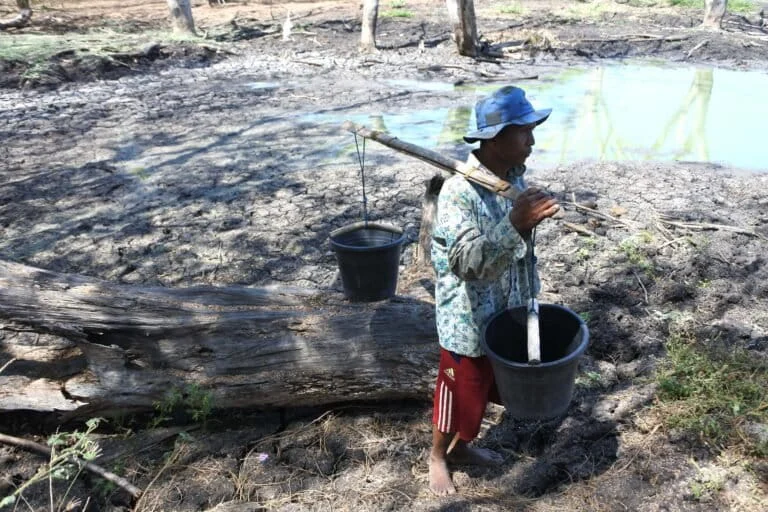
The province of Nusa Tenggara Barat (NTB), Indonesia, is currently grappling with a severe environmental crisis as an extended dry season—exacerbated by the El Niño climate phenomenon—has left nine out of its ten regencies and cities in a state of critical water scarcity. As of mid-September 2026, the provincial disaster management agency (BPBD) has confirmed that over 263,000 residents are struggling to access basic water supplies, while agricultural sectors face mounting fears of widespread crop failure. The situation has prompted local governments to elevate their status to emergency response levels, highlighting a recurring vulnerability in the region’s infrastructure and environmental management.
The Scale of the Crisis and Geographic Impact
The current drought is not isolated to a single region but has permeated the entirety of the NTB archipelago. According to the latest data provided by the Head of BPBD NTB, Sadimin, the crisis has affected approximately 84,837 families across 227 villages. The human toll is significant, with 263,310 individuals currently identified as being in urgent need of assistance.
Lombok Timur stands as the epicenter of the crisis, recording the highest number of affected residents with 92,999 people across 41 villages facing acute water shortages. Sumbawa follows with 42,728 affected individuals, while Kabupaten Bima reports 28,894 residents struggling to meet their daily water needs. The administrative response has been swift but strained; as of September 10, 2026, the BPBD has distributed approximately 3.3 million liters of clean water to the most affected areas, a logistical undertaking that barely keeps pace with the surging demand.
Meteorological Context: The El Niño Factor
The severity of this year’s dry season is largely attributed to the El Niño Southern Oscillation (ENSO), which has significantly altered precipitation patterns across the Indonesian archipelago. Bastian Andarino, a representative from the Meteorology, Climatology, and Geophysics Agency (BMKG) in NTB, noted that the current cycle has induced an abnormally long dry season.
Data from the BMKG indicates that the arrival of the wet season has been delayed, with rainfall levels across most of the province falling significantly below historical averages. The severity is further underscored by the "days without rain" (HTH) index. Specifically, the weather monitoring stations in Belo and Bolo, located in Kabupaten Bima, recorded an unprecedented 63 consecutive days without measurable rainfall. This duration places these areas within the category of "extreme drought," a threshold that poses severe risks to both human health and regional food security.
Chronology of Escalation and Emergency Responses
The escalation of the crisis followed a predictable but devastating trajectory. By late August 2026, the accumulation of dry days began to deplete local water reservoirs and groundwater levels. Recognizing the impending disaster, the regencies of Bima, Sumbawa, and Lombok Timur officially declared a "State of Emergency" (Tanggap Darurat). Simultaneously, six other regions—Lombok Barat, Lombok Tengah, Lombok Utara, Dompu, Kota Bima, and Kota Mataram—have been placed under an "Emergency Alert" status.
The logistics of providing aid have proven difficult. In Lombok Barat, for instance, local authorities reported that the distribution of clean water to five critical sub-districts is being hindered by a lack of available water tanker trucks. This shortfall highlights a broader systemic issue: while the provincial government has the supplies, the mechanical capacity to transport water to remote, rugged, or drought-stricken terrain remains insufficient.
In response to the mounting pressure, the National Disaster Management Agency (BNPB) has intervened with a support package valued at over Rp1.8 billion. This assistance includes essential hardware such as water pumps, storage tanks (tandon), high-capacity pipes, and specialized faucets to streamline water distribution. BNPB Head Suharyanto has urged local governments to maximize the use of existing infrastructure, such as embungs (small reservoirs), dams, and communal water collection points, to stretch available resources as thin as possible.
Agricultural Implications and Economic Fallout
The agricultural sector is arguably the most vulnerable to this prolonged dry spell. With many farmers in NTB relying on rain-fed agriculture, the lack of irrigation has forced many to witness the withering of their harvests. In Lombok Timur, the local government has initiated plans to construct deep-well bores in ten sub-districts, a desperate measure to secure water for both households and essential agriculture.
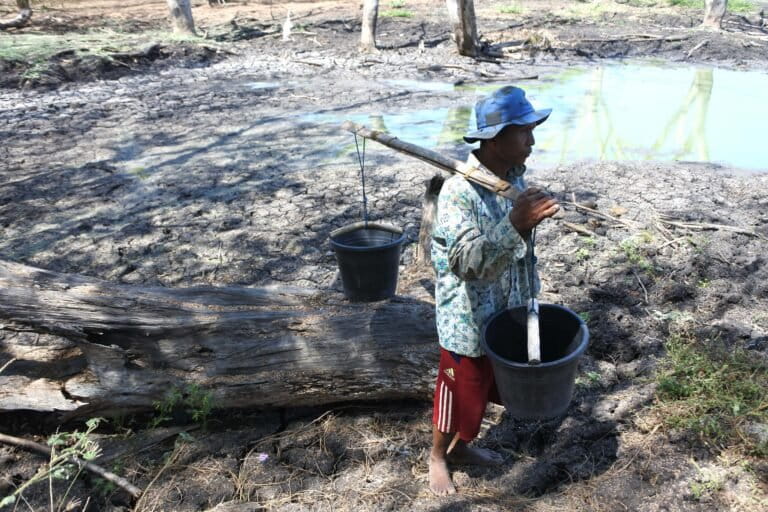
The economic implications of this drought are profound. When crops fail, the regional economy—which is heavily dependent on smallholder farming—suffers a contraction. The loss of income for thousands of farmers risks creating a ripple effect, increasing poverty rates and creating a dependency on state aid that the local budget may not be equipped to sustain long-term.
Long-Term Mitigation vs. Emergency Relief
The recurring nature of these droughts has sparked a debate among policymakers regarding the efficacy of current disaster management strategies. NTB Governor Lalu Muhammad Iqbal has publicly addressed the limitations of the "emergency response" model, arguing that merely delivering water tankers is a temporary solution to a chronic, systemic problem.
"We cannot rely on emergency responses forever," Governor Iqbal remarked during a recent strategy meeting. "The focus must shift toward structural protection: safeguarding water springs, regular maintenance of clean water infrastructure, and the systematic management of irrigation systems."
Governor Iqbal’s critique touches upon a sensitive environmental issue: the degradation of the province’s forests. He observed that many of the regions currently suffering from drought are the same areas that experienced severe flooding during previous rainy seasons. This dual-threat phenomenon is often a hallmark of deforestation. When forests in the highlands are cleared, the soil loses its capacity to absorb rainwater, leading to flash floods during the monsoon and a lack of groundwater recharge during the dry season.
"The root cause is the damaged state of our forests," Iqbal stated. "We need to formulate a collective plan to address environmental conservation, including reforestation in the upper reaches of our watersheds."
Future Outlook and Structural Reform
The current drought in NTB serves as a stark reminder of the challenges posed by climate change in tropical, developing regions. As the world faces more erratic weather patterns, the reliance on short-term disaster relief is becoming increasingly untenable.
Experts suggest that for NTB to achieve resilience, it must adopt a multi-pronged approach:
- Infrastructure Diversification: Investing in a mix of large-scale dam construction and small-scale, decentralized water-harvesting technologies that are easier to maintain at the village level.
- Reforestation and Watershed Management: Implementing strict land-use policies to prevent further encroachment into protected forest areas. The restoration of vegetation in the highlands is critical for ensuring that water is retained in the ecosystem rather than lost to runoff.
- Climate-Resilient Agriculture: Transitioning to drought-resistant crop varieties and implementing more efficient irrigation techniques, such as drip irrigation, to reduce the agricultural sector’s water footprint.
- Improved Data Integration: Strengthening the link between early warning systems provided by the BMKG and the operational readiness of local disaster response teams.
As of late September 2026, the outlook for NTB remains challenging. While the government continues to provide life-saving water aid, the long-term viability of these communities depends on their ability to adapt to a climate that is becoming increasingly unpredictable. The current drought is not merely a seasonal hardship; it is an urgent call for environmental reform that addresses the intersection of forest preservation, water infrastructure, and climate adaptation.
For the residents of Bima, Sumbawa, and Lombok Timur, the next few weeks are critical. With the onset of the rainy season still uncertain, the effectiveness of the current aid distribution and the speed at which long-term mitigation projects are initiated will determine whether the province can avoid a humanitarian catastrophe. The crisis in NTB serves as a microcosmic example of the broader challenges facing Indonesia—and indeed the world—as the impacts of climate change continue to test the limits of infrastructure and the resilience of rural populations.









