Nasution Nanang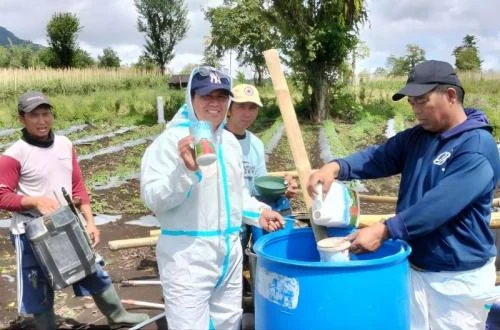
JAKARTA – In a significant stride towards integrating sustainable energy with agricultural innovation, PT Pertamina Geothermal Energy Tbk (PGE), a leading player in Indonesia’s geothermal sector, has officially partnered with the Faculty of Engineering at Gadjah Mada University (UGM) and PT Agrotekno Estetika Laboratoris. This landmark collaboration, formalized through the signing of a Joint Study Development Agreement for "Project Beyond-Katrili," aims to pioneer the development and application of a geothermal-based agricultural booster, marking a pivotal moment for environmentally friendly farming practices and national food security in Indonesia. The initiative underscores a strategic commitment to leveraging Indonesia’s abundant geothermal resources beyond electricity generation, extending their utility into high-impact agricultural solutions designed to enhance crop productivity, soil health, and overall agricultural resilience while embracing circular economy principles.
The formal agreement brings together the robust industrial capacity of PGE, the profound academic and research excellence of UGM, and the specialized agricultural technology expertise of PT Agrotekno Estetika Laboratoris. This tripartite alliance is poised to accelerate the research, development, and eventual commercialization of the "Katrili" booster, a novel product derived from geothermal silica and biocomponents from waste. The collaboration is not merely an academic exercise but a practical implementation of a vision that seeks to maximize Indonesia’s indigenous resources, creating a sustainable synergy between energy and food production.
Strategic Vision: Energy Downstream and National Food Security
Andi Joko Nugroho, Director of Operations at Pertamina Geothermal Energy, articulated the strategic importance of this collaboration, emphasizing that the downstream utilization of energy resources is fundamental to unlocking Indonesia’s full economic potential. "This collaboration is a critical accelerator for innovation and a direct implementation of our vision to foster sustainable development and strengthen national food security," Nugroho stated. He further elaborated that Project Beyond-Katrili is envisioned as a cornerstone strategy for PGE, not only to significantly elevate agricultural productivity across the archipelago but also to expand the spectrum of geothermal energy applications beyond its traditional role in power generation. "Our commitment to this endeavor will be continuously reinforced through sustained collaboration and rigorous, ongoing research," he added, highlighting PGE’s long-term dedication to the project’s success and broader impact.
Indonesia, with its vast agricultural lands and significant reliance on the sector for employment and GDP contribution, faces ongoing challenges related to soil degradation, climate change impacts, and the escalating costs of conventional fertilizers. Simultaneously, as the world’s second-largest geothermal energy producer with an immense untapped potential estimated at over 28 GW, Indonesia is uniquely positioned to explore innovative applications for this clean, baseload energy source. PGE, as a state-owned enterprise, plays a crucial role in realizing the government’s ambitions for renewable energy deployment and its broader commitment to achieving Net Zero Emissions by 2060. This project exemplifies a holistic approach, intertwining energy sustainability with the urgent need for resilient and productive agricultural systems.
The Role of Academia and Industrial Application
Prof. Selo, Dean of the Faculty of Engineering at UGM, underscored the indispensable role of academic institutions in bridging the gap between cutting-edge research and its practical, impactful implementation within society. "The development of Katrili serves as a tangible example of how energy and food systems can be innovatively integrated for mutual benefit," Prof. Selo remarked. UGM, renowned for its multidisciplinary research capabilities and commitment to national development, brings to the table a wealth of scientific expertise, particularly in geological engineering, chemical engineering, and agricultural sciences, which are critical for the success of Project Beyond-Katrili. The university’s research teams are instrumental in understanding the complex properties of geothermal fluids and their potential derivatives for agricultural applications.
Complementing the academic rigor, Alexander H. Soeriyadi, CEO of PT Agrotekno Estetika Laboratoris, highlighted the significant potential inherent in silica compounds for enhancing plant resilience and improving the overall quality of agricultural yields. His company’s involvement underscores the commercial viability and scalability aspects of the innovation. PT Agrotekno Estetika Laboratoris specializes in agricultural technology and product development, providing the crucial link between scientific discovery and market-ready solutions. Meanwhile, the UGM Research Team, under the expert leadership of Pri Utami, emphasized that this innovation is founded on a robust, cross-disciplinary scientific approach, integrating insights from geology, material science, agronomy, and environmental engineering to ensure both efficacy and sustainability.
Beyond-Katrili: An Innovation Rooted in Circular Economy
At the heart of Project Beyond-Katrili is the innovative integration of geothermal energy research with advanced agricultural technology to formulate a unique agricultural booster. This groundbreaking product is primarily based on geothermal silica, a byproduct traditionally requiring careful management in geothermal operations, combined with chitosan. Crucially, the chitosan component is derived from waste materials, specifically shrimp and crab shells, which are abundant byproducts of Indonesia’s vibrant fisheries industry. This dual-component formula is designed to significantly improve soil quality, enhance nutrient uptake, and stimulate robust plant growth, thereby contributing to higher crop yields and healthier produce.
The application of Katrili is straightforward: it is mixed with water and then irrigated into the soil at calibrated dosages. This ease of use makes it highly accessible for a wide range of farmers. Initial trials have demonstrated promising results across various staple commodities vital to Indonesia’s food supply, including tomatoes, beans, shallots, and rice. These early successes validate the scientific premise and practical applicability of the booster, paving the way for broader adoption. The utilization of waste products like shrimp and crab shells to extract chitosan aligns perfectly with the principles of the circular economy, transforming what would typically be discarded into a valuable agricultural input. This not only reduces waste but also provides an economically viable and environmentally sound alternative to synthetic fertilizers.
Indonesia’s Agricultural Imperatives and Geothermal Potential
Indonesia’s agricultural sector is a cornerstone of its economy, contributing approximately 13-14% to the national GDP and employing over a quarter of the country’s workforce. Despite its significance, the sector faces numerous headwinds. Issues such as decreasing soil fertility due to intensive farming practices, the environmental impact of synthetic fertilizers and pesticides, and the vulnerability of crops to climate variability necessitate urgent and innovative solutions. The cost of imported fertilizers also places a significant burden on farmers, impacting their profitability and overall food production costs. Project Beyond-Katrili directly addresses these challenges by offering a sustainable, locally sourced alternative that can enhance soil health, reduce reliance on chemical inputs, and improve crop resilience.
Concurrently, Indonesia is a global powerhouse in geothermal energy, boasting an estimated 40% of the world’s total geothermal reserves. While much of this potential is harnessed for electricity generation, PGE’s initiative to explore downstream applications like agricultural boosters signifies a paradigm shift. This expansion of geothermal utility aligns with the government’s broader strategy to diversify renewable energy applications and maximize the value derived from its natural resources. The development of geothermal-based products also supports the national agenda for energy independence and the transition towards a low-carbon economy.
Broader Implications: Towards a Sustainable Future
The implications of Project Beyond-Katrili extend far beyond agricultural fields and geothermal power plants.
-
Economic Impact: The widespread adoption of Katrili could lead to substantial cost savings for farmers by reducing their reliance on expensive imported chemical fertilizers. It could also create new economic opportunities through the valorization of agricultural and fisheries waste, fostering local industries for chitosan production. Furthermore, increased crop yields and improved quality can enhance farmer incomes and contribute to rural economic development. The project could also position Indonesia as a leader in sustainable agricultural technology, potentially opening doors for export markets for the geothermal-based booster.
-
Environmental Benefits: This initiative offers significant environmental advantages. By promoting the use of bio-based boosters, it can reduce the application of synthetic chemical fertilizers, which are often associated with soil degradation, water pollution (eutrophication), and greenhouse gas emissions. The utilization of shrimp and crab shell waste reduces landfill burden and transforms a disposal challenge into a valuable resource, embodying principles of industrial ecology and waste-to-wealth. Geothermal energy, being a clean and renewable source, ensures that the production process for the booster also has a minimal carbon footprint.
-
Social Impact and Food Security: Enhancing agricultural productivity and resilience directly contributes to national food security. By making farming more sustainable and productive, Katrili can help ensure a stable supply of essential food commodities, which is crucial for a growing population like Indonesia’s. The project also empowers farmers with new, eco-friendly technologies, potentially leading to better health outcomes for both farmers and consumers through reduced chemical exposure.
-
Technological Advancement and Innovation Ecosystem: The collaboration fosters a robust innovation ecosystem in Indonesia, bringing together academia, industry, and state-owned enterprises. It demonstrates Indonesia’s capacity for developing advanced, multidisciplinary solutions to complex challenges. The insights gained from Project Beyond-Katrili could pave the way for further research into other geothermal byproducts and their applications, unlocking new avenues for sustainable development.
Future Outlook and Scaling Up
The initial success of Katrili in various crop trials provides a strong foundation for scaling up the project. The next phases will likely involve more extensive field trials across different geographical regions and soil types, optimizing application protocols, and developing robust production facilities. Pertamina Geothermal Energy, UGM, and PT Agrotekno Estetika Laboratoris are committed to continuous research and development to refine the booster’s formula and expand its utility to an even wider range of crops. The long-term vision includes making Katrili widely accessible to Indonesian farmers, potentially through partnerships with agricultural cooperatives and government extension programs.
This pioneering collaboration exemplifies how Indonesia is strategically harnessing its unique combination of natural resources and intellectual capital to address pressing national challenges. By integrating geothermal energy downstream applications with sustainable agricultural practices and circular economy principles, Project Beyond-Katrili is not just developing a product; it is cultivating a sustainable future for Indonesia’s energy landscape, agricultural sector, and its people. The success of this project will undoubtedly serve as a beacon for other nations grappling with similar challenges, demonstrating a powerful model for sustainable development.