Bambang Pamungkas
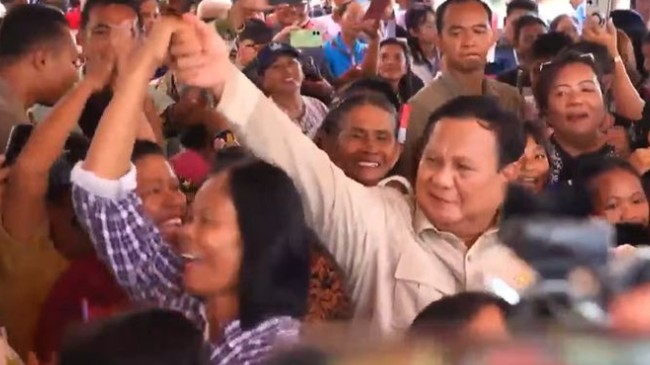
Gorontalo, Indonesia – President Prabowo Subianto on Saturday, May 9, 2026, delivered a powerful and unequivocal commitment to the nation’s often-overlooked fishermen and farmers, pledging his administration’s full attention to their welfare and the modernization of their livelihoods. Speaking with fervent conviction during a visit to the aptly named Kampung Nelayan Merah Putih (Red and White Fishermen’s Village) in Leato Selatan, Gorontalo, President Subianto expressed profound indignation over what he described as historical neglect, declaring an end to an era where the struggles of these vital communities were forgotten by policymakers in the nation’s capital. His visit underscores a foundational promise of his presidency: to champion the forgotten and empower the backbone of Indonesia’s food security.
The President’s address was more than a mere political statement; it was a deeply personal reflection on the arduous lives led by those who brave the elements to feed the nation. He drew a parallel between his military background and the inherent risks faced by fishermen, stating, "I understand, I am a former soldier, I understand that fishermen face great risks. The sea is no joke; the weather can change, currents can shift at any time." This connection resonated deeply with the local community, highlighting a shared understanding of danger and resilience. His words painted a vivid picture of the daily struggles—the unpredictable weather, the treacherous currents, and the constant gamble with nature—that define the lives of millions of Indonesian fishermen. For too long, he asserted, these realities have been dismissed by those in positions of power, a sentiment he vowed to reverse through concrete action and unwavering support. The promise to "change now" signifies a pivot from perceived bureaucratic indifference to an active, empathetic engagement with the grassroots realities of rural and coastal Indonesia.
A Maritime Nation’s Overlooked Heroes: Background Context
Indonesia, an archipelago nation boasting the world’s second-longest coastline and vast marine resources, is intrinsically linked to the sea. Its identity is shaped by its oceans, which are not only a source of immense biodiversity but also a primary livelihood for millions of its citizens. The fisheries sector, alongside agriculture, forms the bedrock of Indonesia’s food security and contributes significantly to its national economy. Yet, despite this strategic importance, the welfare of small-scale fishermen and traditional farmers has historically lagged behind other sectors.
For generations, these communities have faced a myriad of systemic challenges. Poverty rates in coastal and rural areas often exceed the national average. Fishermen frequently operate with outdated equipment, lacking access to modern fishing gear, adequate cold storage facilities, and efficient market distribution channels. This reliance on traditional methods, while culturally rich, often limits their catch volume, reduces their income, and exposes them to greater financial precarity. Furthermore, they grapple with issues such as illegal, unreported, and unregulated (IUU) fishing by larger, often foreign, vessels that deplete fish stocks and directly threaten their livelihoods. Climate change, with its manifestations of rising sea levels, ocean acidification, and increasingly erratic weather patterns, adds another layer of vulnerability, impacting fish migration and increasing the dangers of venturing out to sea.
President Prabowo Subianto’s presidential campaign prominently featured pledges to enhance food security, uplift the welfare of farmers and fishermen, and bolster the maritime economy. His vision articulated a need for a holistic approach that integrates technological advancement, infrastructure development, and social safety nets. His current visit to Gorontalo is seen as a tangible step towards fulfilling these ambitious promises, signaling a departure from previous administrations’ perceived inability to adequately address the deep-seated issues plaguing these essential communities. The criticism of "smart people in Jakarta" implicitly refers to a disconnect between central government policymaking and the practical, often harsh, realities experienced by those on the front lines of food production.
The Gorontalo Visit: A Symbolic Commitment to Change
The presidential visit to Kampung Nelayan Merah Putih in Leato Selatan, Gorontalo, was carefully choreographed to highlight his administration’s renewed focus. Arriving on Saturday, May 9, 2026, President Subianto was greeted by local dignitaries and community members eager to voice their concerns and hopes. The choice of Kampung Nelayan Merah Putih, literally "Red and White Fishermen’s Village," carries significant nationalistic symbolism, evoking the colors of the Indonesian flag and reinforcing the idea that these communities are integral to the nation’s identity and future.
During his engagement with the local fishermen, President Subianto took the time to observe their daily operations, inspect their boats, and listen to their stories. He acknowledged the immense personal sacrifice involved in their profession, emphasizing that they "stake their lives to find food for your families, for your communities, for your nation." This direct recognition of their contribution to national food security and well-being resonated deeply. He expressed gratitude for their unwavering dedication and pledged his determination "to improve and respect our fishermen throughout Indonesia." This promise extends beyond mere rhetoric, aiming to translate into concrete policy interventions.
The President’s candid remarks about the "smart people in Jakarta" who have historically overlooked fishermen underscore a frustration with bureaucratic inertia and a perceived elitism that has detached policymakers from the grassroots. This statement can be interpreted as a commitment to decentralize decision-making or, at the very least, ensure that central policies are informed by local realities and needs. He challenged the status quo, promising a governmental shift from passive oversight to active advocacy and support for these foundational sectors. The visit concluded with a forward-looking promise: "Thank you, until we meet again. Later, if next year your boats are better, then invite me here, I want to see." This invitation serves as a powerful incentive for progress and an implicit mechanism for accountability, setting a tangible benchmark for future development.
Supporting Data: The Stark Realities of Indonesia’s Fisheries
The context of President Prabowo’s commitment is amplified by sobering statistics that underscore the urgent need for intervention. Indonesia’s fisheries sector directly employs approximately 2.7 million people, with many more involved in related processing, distribution, and aquaculture activities. While contributing around 2.5-3% to the national GDP, this figure often belies the sector’s critical role in providing protein for over 280 million Indonesians, making fish a vital component of the national diet.
Despite this crucial role, a significant portion of these communities lives below or just above the national poverty line. Data from the Ministry of Maritime Affairs and Fisheries and the Central Statistics Agency (BPS) consistently show that poverty rates in coastal regions can be several percentage points higher than the national average, especially among small-scale and traditional fishermen. This disparity is often attributed to low productivity, limited access to capital, vulnerability to market price fluctuations, and the impacts of environmental degradation.
The vast majority of Indonesia’s fishing fleet consists of traditional boats, often less than 10 gross tonnage (GT), lacking modern navigation, communication, and preservation technologies. These vessels are highly susceptible to adverse weather conditions and are limited in their operational range, impacting catch efficiency and safety. The lack of proper cold chain infrastructure, from fishing vessels to landing sites and distribution networks, leads to significant post-harvest losses, further reducing fishermen’s income. Moreover, IUU fishing remains a persistent threat, with estimated annual losses running into billions of dollars, directly impacting the sustainability of fish stocks and the livelihoods of legitimate fishermen. Climate change projections indicate increasing frequency of extreme weather events, which not only endanger fishermen but also disrupt marine ecosystems, threatening long-term fish availability.
Government’s Vision and Proposed Interventions
In light of these challenges, President Subianto’s administration is expected to translate his Gorontalo commitments into a series of comprehensive policy interventions. While specific detailed programs are still being formulated, the broad direction points towards:
- Fleet Modernization and Technology Adoption: A key focus will be on providing access to modern, safer, and more efficient fishing vessels. This could involve subsidized credit schemes for boat upgrades, distribution of advanced fishing gear (e.g., GPS, fish finders, improved nets), and promotion of sustainable aquaculture technologies.
- Infrastructure Development: Investment in critical infrastructure such as modern fishing ports, cold storage facilities, ice factories, and processing units at landing sites will be crucial to reduce post-harvest losses and add value to catches.
- Enhanced Access to Capital and Markets: Facilitating access to affordable microcredit and insurance schemes for fishermen and farmers, along with developing stronger market linkages to ensure fair prices for their produce, will be prioritized. This might include digital platforms for market access.
- Skills Training and Capacity Building: Programs focused on modern fishing techniques, sustainable aquaculture practices, financial literacy, and basic entrepreneurship will empower communities to adapt and thrive.
- Social Security and Welfare Programs: Extending social security coverage, including health insurance and pension schemes, to informal workers like fishermen and farmers, will provide a much-needed safety net.
- Combating IUU Fishing: Continued vigilance and enforcement against illegal fishing activities, possibly through enhanced maritime surveillance and international cooperation, will be essential to protect national fish stocks and legitimate livelihoods.
The Ministry of Maritime Affairs and Fisheries (KKP) and the Ministry of Agriculture are expected to play central roles in executing these initiatives, coordinating efforts with local governments and other relevant agencies.
Reactions and Stakeholder Perspectives
President Subianto’s strong statements have undoubtedly generated a mix of hope and cautious optimism among the affected communities. Local fishermen in Gorontalo, many of whom face daily struggles, would likely welcome the presidential commitment as a sign that their plight is finally being heard at the highest level. They would hope for tangible benefits such as access to affordable fuel, better fishing equipment, and improved safety measures at sea. However, past experiences with unfulfilled promises from previous administrations may also lead to a degree of skepticism, emphasizing the need for swift and transparent implementation.
Local government officials in Gorontalo would likely express strong support and gratitude for the President’s visit, viewing it as an opportunity to attract central government funding and development programs to their region. They would likely highlight Gorontalo’s unique maritime potential and its specific needs for infrastructure development and community empowerment.
Economic analysts and academics, while acknowledging the strategic importance of the fisheries and agriculture sectors, would likely emphasize the significant challenges in implementing such broad-ranging reforms. Questions surrounding funding sources, the efficiency of bureaucratic processes, and the equitable distribution of benefits would be prominent. They might also stress the importance of balancing economic development with environmental sustainability, warning against policies that could lead to overfishing or habitat destruction in the pursuit of modernization. Non-governmental organizations (NGOs) focused on marine conservation and sustainable livelihoods would likely advocate for the integration of ecological considerations into all development plans, ensuring that modernization does not compromise the long-term health of Indonesia’s marine ecosystems.
Broader Implications: Economic, Social, and Political Trajectories
The successful implementation of President Subianto’s vision could have far-reaching implications across Indonesia. Economically, modernized fleets and improved infrastructure could lead to increased fish catches, higher quality produce, and greater value-added processing, potentially boosting national food exports and reducing reliance on imports. This could contribute to overall economic growth and diversify the rural economy.
Socially, enhanced welfare for fishermen and farmers would directly translate into poverty reduction, improved household incomes, and better access to education and healthcare for their families. Empowering these communities through training and access to resources could foster greater self-reliance and community resilience.
Politically, fulfilling these promises would significantly strengthen President Subianto’s mandate and public trust, especially among rural and coastal populations who represent a substantial voting bloc. It would demonstrate his administration’s commitment to inclusive development and its ability to address the needs of historically marginalized groups.
However, significant challenges remain. Securing adequate and sustainable funding for these ambitious programs will be a major hurdle. Overcoming bureaucratic inertia, ensuring transparent allocation of resources, and preventing corruption will be critical. There is also the delicate balance between rapid modernization and the imperative of environmental sustainability. Any push for increased catches must be carefully managed to prevent overfishing and depletion of marine resources, which would ultimately harm the very communities it seeks to uplift. Climate resilience measures must also be integrated into all development plans to protect communities from future environmental shocks.
The Path Forward: A Promise of Return and Progress
President Prabowo Subianto’s visit to Kampung Nelayan Merah Putih in Gorontalo marks a pivotal moment, signaling a clear shift in governmental priority towards the welfare and modernization of Indonesia’s fishermen and farmers. His direct engagement, coupled with his strong condemnation of past neglect and a personal promise to revisit, sets a high bar for accountability and future action. The road ahead is undoubtedly complex, requiring integrated policy frameworks, substantial investment, and effective coordination across multiple government levels and stakeholders.
Yet, the President’s commitment offers a renewed sense of hope for millions who toil in the nation’s waters and fields. It is a promise to transform their arduous lives, to equip them with better tools, and to ensure they receive the respect and support they deserve as the vital providers of Indonesia’s food security. The coming years will reveal how effectively this powerful rhetoric translates into tangible improvements, ultimately determining whether the nation’s crucial fishermen and farmers can finally navigate towards a future of prosperity and dignity.