Bambang Pamungkas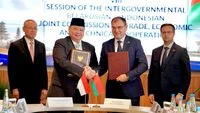
The Republic of Indonesia has successfully secured significant investment commitments and forged comprehensive trade cooperation agreements with several enterprises in the Eastern European region, particularly with the Republic of Belarus, a strategic move aimed at bolstering national economic resilience and expanding the global market footprint for domestic businesses. This pivotal development underscores Indonesia’s proactive approach to diversifying its economic partnerships and tapping into new, high-potential markets beyond traditional spheres. The strengthened strategic partnership with Belarus was formally solidified through the signing of official bilateral documents and a series of substantial business agreements in Minsk, the capital of Belarus, on Friday, May 15, 2026, marking a historic milestone in the economic relations between the two nations.
A Strategic Pivot Towards Eastern Europe
Indonesia’s engagement with Belarus is a key component of its broader strategy to foster economic resilience and expand its international trade and investment network. In an increasingly complex global economic landscape, characterized by supply chain disruptions and geopolitical shifts, Jakarta is actively seeking to forge alliances with diverse partners. This proactive stance aims to mitigate risks associated with over-reliance on a limited number of markets and to unlock new avenues for growth, technology transfer, and resource security. Eastern Europe, with its strategic geographical position and robust industrial capabilities, presents a promising frontier for Indonesian businesses seeking to expand their reach into the Eurasian Economic Union (EAEU) and beyond. The pursuit of deeper ties with Belarus, a key member of the EAEU, aligns perfectly with this forward-looking economic diplomacy.
The Indonesian government’s commitment to exploring non-traditional markets has been a consistent theme in its foreign economic policy. This strategy is driven by the ambition to elevate Indonesia’s position in global value chains, attract foreign direct investment, and ensure the stability of critical supply lines, particularly in sectors vital for national development such as food security, manufacturing, and technology. By engaging with nations like Belarus, Indonesia aims to leverage their respective strengths—Belarus’s advanced industrial base and agricultural prowess, and Indonesia’s burgeoning domestic market and rich natural resources—to create mutually beneficial economic ecosystems.
The Eighth Joint Commission Meeting: A Foundation for Growth
The recent breakthrough in Minsk was primarily anchored by the formal endorsement of the Agreed Minutes of the 8th Indonesia-Belarus Joint Commission (SKB) on Economic Cooperation. This crucial document serves as a robust framework for guiding and facilitating future economic engagements between Jakarta and Minsk. The signing ceremony, a highlight of the diplomatic visit, saw Coordinating Minister for Economic Affairs of the Republic of Indonesia, Airlangga Hartarto, and Deputy Prime Minister of the Republic of Belarus, Viktor Karankevich, affixing their signatures to the agreement. Their participation at such a high level underscores the strategic importance both nations place on this burgeoning partnership.
The SKB delineates a comprehensive agenda for economic collaboration, spanning several vital sectors. These include trade, investment, industry, banking, food security, and agriculture. The breadth of these sectors reflects a shared vision for multifaceted cooperation designed to yield tangible benefits for both economies. For Indonesia, the agreement opens doors to advanced Belarusian technologies and industrial expertise, while for Belarus, it provides enhanced access to the dynamic Southeast Asian market and Indonesia’s vast pool of resources.
In his statement following the signing, Minister Hartarto emphasized the imperative of translating these high-level agreements into concrete actions. "The understanding reached within this SKB must be translated into concrete steps that directly impact the enhancement of economic relations between Indonesia and Belarus," he asserted. This highlights Indonesia’s focus on practical outcomes and measurable progress from its diplomatic endeavors. The sentiment was reciprocated by Deputy Prime Minister Karankevich, who affirmed Belarus’s full commitment to fostering deeper collaboration across various sectors. "Each country is committed to further deepening cooperation with Indonesia, particularly in the industrial, agricultural, and technology sectors, and opening wider collaboration opportunities for businesses in both countries," Karankevich stated, signaling Belarus’s readiness to serve as a strong economic partner for Indonesia.
Substantial Business-to-Business Deals Cement the Partnership
The diplomatic achievements were immediately followed by concrete commercial outcomes, demonstrating the immediate impact of the strengthened bilateral ties. A total of five Memoranda of Understanding (MoUs) were signed between private sector entities from both countries, signaling a vibrant business-to-business (B2B) engagement. These corporate collaborations collectively represent a substantial capitalization of approximately Rp7 trillion (equivalent to roughly USD 450 million, based on prevailing exchange rates), illustrating the significant financial commitment underpinning the new partnership.
Among the notable agreements was a strategic cooperation pact between PT Pupuk Indonesia (Persero), Indonesia’s state-owned fertilizer giant, and Nedra Nezhin, a Belarusian company. This partnership is particularly significant for Indonesia’s food security agenda, as Belarus is a major global producer of potash, a critical ingredient in agricultural fertilizers. Securing a reliable supply of potash through direct cooperation can significantly bolster Indonesia’s agricultural output and reduce its vulnerability to global commodity price fluctuations.
In addition to this flagship agreement, PT Indonesia Belarus Jaya, a company focused on facilitating bilateral trade and investment, inked four separate MoUs. These include partnerships with OJSC Minsk Dairy Plant No. 1, indicating potential collaboration in the dairy sector; Energi Complekt, suggesting ventures in energy-related projects; OJSC Dolomite, likely focusing on mineral resources or construction materials; and Belindo Trade, a broad agreement aimed at enhancing general trade flows between the two nations. These diverse agreements underscore the wide array of economic opportunities identified and pursued by the private sectors of both countries. The involvement of such varied enterprises signals a comprehensive approach to fostering economic ties, moving beyond traditional commodity trade to encompass industrial, agricultural processing, and potentially even energy sectors.
High-Level Diplomatic Engagements and Future Roadmap
Beyond the economic agreements, the Indonesian delegation, led by Minister Hartarto, engaged in high-level diplomatic discussions aimed at shaping the future trajectory of Indonesia-Belarus relations. On the same Friday, Minister Hartarto held a pivotal bilateral meeting with the Minister of Foreign Affairs of the Republic of Belarus, Maxim Ryzhenkov. This meeting primarily focused on meticulously preparing for a forthcoming state visit by Belarusian President Alexander Lukashenko to Indonesia, an event anticipated to further elevate the strategic partnership.
The two ministers engaged in intensive discussions to craft a comprehensive "Roadmap for Indonesia-Belarus Cooperation." This roadmap is envisioned as a meticulously structured document that will outline specific initiatives and timelines, not only for facilitating capital flows and economic exchanges but also for strengthening human-to-human connections and cultural understanding. Such a detailed roadmap is essential for ensuring that the renewed impetus in bilateral relations translates into sustained, long-term collaboration across various domains.
A forward-thinking aspect of these strategic discussions revolved around enhancing connectivity and facilitating people-to-people exchanges. Both sides explored the revolutionary idea of establishing direct flight routes between Indonesia and Belarus. This initiative, if realized, would significantly reduce travel time and costs, thereby boosting tourism, facilitating business travel, and strengthening cultural ties. Complementing this, discussions also covered the relaxation of visa policies for travelers and business professionals from both countries, a move that would further streamline cross-border interactions and stimulate economic activity. Improved connectivity and easier travel are recognized as crucial enablers for deepening bilateral relations in the modern era.
Furthermore, in a move that underscores Indonesia’s commitment to long-term engagement, both leaders advanced plans for the establishment of an Indonesian Embassy (KBRI) in Minsk. A resident diplomatic mission is vital for providing consistent support to Indonesian citizens and businesses in Belarus, facilitating diplomatic communications, and actively promoting bilateral interests on an ongoing basis. This institutional strengthening reflects Indonesia’s strategic foresight and dedication to building enduring partnerships.
Future-Oriented Industrial and Trade Cooperation
The discussions also delved into areas of cutting-edge industrial cooperation, signaling a commitment to embracing future-oriented technologies. Both ministers actively encouraged collaborative ventures in the burgeoning ecosystem of electric vehicles (EVs), recognizing the global shift towards sustainable transportation. They also explored partnerships in the critical semiconductor industry, an area where global supply chain vulnerabilities have become acutely apparent. For Indonesia, cooperation in these advanced manufacturing sectors could mean technology transfer, capacity building, and integration into global high-tech value chains.
A particularly crucial aspect for Indonesia’s national resilience was the discussion on securing a reliable and abundant supply of potash fertilizers from Belarus. As an agricultural nation, Indonesia’s food security is heavily reliant on effective crop fertilization, and potash is a key component. This potential partnership aims to ensure a stable supply, protecting Indonesian farmers from market volatility and contributing directly to national food self-sufficiency goals.
On the international trade front, the progress of the ratification of the Indonesia-Eurasian Economic Union Free Trade Agreement (I-EAEU FTA) was a central topic. The EAEU, comprising Russia, Belarus, Kazakhstan, Kyrgyzstan, and Armenia, represents a significant market bloc. The ratification of this FTA would provide Indonesian products with preferential access to a vast consumer base across these five nations. The Belarusian side confirmed that their parliament had fully ratified the free trade agreement, with the document awaiting presidential assent. In response, Minister Hartarto conveyed Indonesia’s target to complete its own ratification process for the I-EAEU FTA during the second half of 2026, highlighting the mutual enthusiasm to operationalize this landmark trade pact. The I-EAEU FTA is poised to be a game-changer, significantly boosting bilateral trade volumes and facilitating greater economic integration between Indonesia and the Eurasian region.
Investing in Human Capital and Continued Growth
Capping off the comprehensive diplomatic and economic agenda, the two high-ranking officials also agreed on fostering cooperation in human resource development. This initiative involves sending Indonesian students and professionals to Belarusian health institutions, leveraging Belarus’s established expertise in medical education and training. Minister Hartarto warmly welcomed this golden opportunity and provided strategic directives, emphasizing that such scholarship and training programs should be strategically focused on fields prioritized by the current Indonesian President.
"This program can be expanded to areas that are the focus of the President of Indonesia, namely Science, Technology, Engineering, and Mathematics (STEM)," Minister Hartarto underscored. This focus on STEM fields reflects Indonesia’s national agenda to develop a highly skilled workforce capable of driving innovation, supporting advanced industries, and contributing to the nation’s economic transformation. By investing in human capital through international partnerships, Indonesia aims to cultivate a generation of experts equipped to tackle future challenges and seize new opportunities.
Background of Growing Economic Ties
The recent surge in cooperation builds upon an existing foundation of growing economic ties between Indonesia and Belarus. Over the years, both countries have witnessed a significant upward trend in their trade and investment figures. Notably, bilateral trade between Indonesia and Belarus recorded approximately USD 221 million, marking a substantial increase of 72.6% compared to the previous year. While this figure, when juxtaposed against Indonesia’s total global trade (which often exceeds USD 500 billion annually), may seem modest, the impressive year-on-year growth rate signifies a rapidly expanding economic relationship with considerable untapped potential.
Historically, Indonesia’s main exports to Belarus have included palm oil, rubber, coffee, tea, and textiles, while imports from Belarus typically comprise potash fertilizers, machinery, and industrial equipment. The new agreements, particularly in areas like electric vehicles, semiconductors, and dairy products, indicate a conscious effort to diversify the trade basket and move towards higher-value manufactured goods and advanced technologies. This diversification is crucial for both nations to build more resilient and sophisticated trade relationships.
The increased engagement reflects not just economic pragmatism but also a deeper understanding of each other’s strategic importance. For Indonesia, Belarus offers a gateway to the broader EAEU market, a bloc with a combined GDP of over USD 2 trillion and a population exceeding 180 million. For Belarus, Indonesia represents a significant market in Southeast Asia, a region characterized by robust economic growth and a large consumer base. The ongoing diplomatic efforts and the robust business engagements are poised to propel this bilateral relationship to unprecedented levels, positioning Indonesia as a key player in the Eastern European economic landscape and further solidifying its presence on the global stage.