Nasution Nanang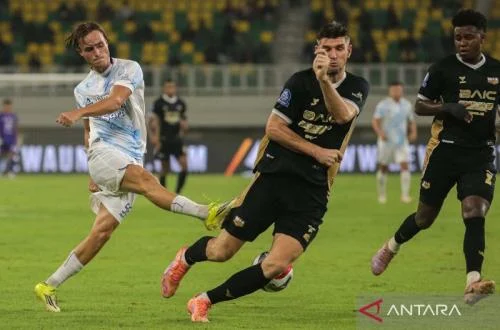
YOGYAKARTA – PSIM Yogyakarta, a prominent club in the Indonesian football league system, has officially announced the departure of its foreign midfielder, Donny Warmerdam. The Dutch national is set to return to his home country to join De Graafschap, a club competing in the Eerste Divisie, the second tier of Dutch professional football. The announcement, made via the club’s official channels on Saturday, marks the end of a challenging tenure for Warmerdam with Laskar Mataram, a period significantly hampered by a prolonged injury.
General Manager of PSIM Yogyakarta, Steven Sunny, conveyed the club’s decision, acknowledging the unfortunate circumstances that defined Warmerdam’s time in Indonesia. "This season was not easy for him, as he had to go through a fairly long recovery period from an injury, right from the start of the official competition," Sunny stated, underscoring the physical hurdles the player faced throughout his stint with the club. The departure comes during the summer transfer window, allowing Warmerdam to seek new opportunities and a fresh start back in familiar territory.
A Season Marred by Injury and Unfulfilled Potential
Donny Warmerdam’s arrival at PSIM Yogyakarta was met with considerable anticipation. Foreign players, particularly those from European leagues, are often seen as key components to elevate the quality and competitive edge of Indonesian clubs. Warmerdam, born on January 2, 2002, was expected to bring tactical intelligence, technical prowess, and a robust midfield presence to PSIM, a club with a passionate fanbase and a storied history in Indonesian football, consistently aiming for promotion to the top-tier Liga 1.
However, fate had a different plan. Warmerdam joined PSIM during a period when the league season was already underway, though the transfer window remained open. Shortly after his arrival, or perhaps even before making his official debut, he suffered a severe setback: a ‘fracture weber’ of the foot, a specific type of ankle fracture that requires significant time for healing and rehabilitation. This injury effectively sidelined him for the crucial initial phase of the competition, denying him the opportunity to integrate fully with the squad and showcase his abilities. The severity of the injury meant that his recovery process was extensive, pushing his potential debut deep into the latter half of the season.
The Road to Recovery and Eventual Comeback
The arduous journey of recovery was a testament to Warmerdam’s resilience and determination. Professional athletes face immense pressure to return to peak physical condition, and a prolonged injury can be mentally taxing. PSIM Yogyakarta, understanding the investment made in a foreign player, would have provided comprehensive medical and rehabilitation support. Despite the club’s best efforts and Warmerdam’s dedication, the nature of a fracture weber meant that a swift return was simply not possible without risking further damage.
It was only in the second half of what the club referred to as the "Super League 2025/2026" season (likely referring to the recently concluded Liga 2 season where PSIM competed) that Warmerdam finally made his long-awaited appearance on the pitch. His debut marked a significant milestone in his recovery, a moment of triumph after months of painstaking rehabilitation.
Recalling his return, Warmerdam shared poignant memories that highlighted the unique atmosphere of Indonesian football. "My first appearance, the comeback match against Bali [likely a local opponent], that was the first time I felt the atmosphere in the stadium. Besides that, the away game against Persib was also very exciting," he recounted. These statements underscore the impact of the passionate Indonesian football crowd, known for their unwavering support and vibrant matchday experiences, even for a player who had limited opportunities to interact with them.
A Brief Glimpse of Potential and Heartfelt Farewell
Despite the significant time lost to injury, Warmerdam managed to accumulate 11 appearances for PSIM Yogyakarta during the second half of the season. While this number is respectable given his recovery timeline, it falls short of the expectations typically associated with a foreign midfield signing, who are often central figures in a team’s tactical setup. In these limited outings, Warmerdam demonstrated flashes of the quality that initially attracted PSIM, showcasing his vision, passing range, and ability to control the tempo of the game. However, regaining full match fitness and rhythm after a severe injury takes time, and he was still in the process of rebuilding his peak performance levels.
Reflecting on his time in Yogyakarta, Warmerdam expressed a deep appreciation for the club and its supporters, despite the personal challenges. "For a season at PSIM, I really enjoyed my time there. If only I could have played more, because the support from the fans was truly extraordinary," he added, conveying a sense of regret mixed with gratitude. His words painted a picture of a player who, despite adversity, found a connection with the club’s spirit and its dedicated fanbase. He extended his gratitude to PSIM Yogyakarta for the season of togetherness and offered his best wishes for the club’s future success, a testament to his professional demeanor and positive outlook.
PSIM Yogyakarta’s Strategic Landscape and Foreign Player Policy
The departure of Donny Warmerdam prompts a re-evaluation of PSIM Yogyakarta’s squad composition and transfer strategy for the upcoming season. In Indonesian Liga 2, clubs are typically allowed to register a limited number of foreign players, often two or three, depending on league regulations for a given season. These slots are highly valuable, as foreign talent is expected to provide a significant qualitative leap for the team. When a foreign player’s contribution is curtailed by injury, it impacts not only the on-field performance but also the strategic planning and financial outlay of the club.
For PSIM, a club with a clear ambition to return to Liga 1, optimizing every aspect of squad building is crucial. The club’s General Manager, Steven Sunny, and the coaching staff will now be tasked with identifying a suitable replacement for Warmerdam. This replacement must not only possess the necessary technical and tactical attributes but also a strong injury record to ensure consistent availability. The scouting process will be rigorous, considering factors such as playing style, adaptability to Indonesian football, and potential impact on team dynamics. The financial implications of Warmerdam’s departure, while not explicitly stated, would also be a factor, potentially freeing up salary cap space for a new acquisition.
PSIM Yogyakarta, known as "Laskar Mataram," boasts one of the most fervent fan bases in Indonesia. The club was founded in 1929 and has a rich tradition, including winning the Perserikatan championship in 1932. Their passionate supporters, known as Brajamusti and The Maident, consistently pack the Mandala Krida Stadium, creating an intimidating atmosphere for visiting teams. The club’s ambition to return to the top flight is a constant driving force, and every transfer decision is scrutinized by these dedicated followers. While Warmerdam’s departure is understood given his injury history, fans will be eager to see how the club moves forward to strengthen the squad.
De Graafschap: A Return Home and New Chapter
For Donny Warmerdam, the move to De Graafschap signifies a return to familiar surroundings and an opportunity to reignite his career in his native Netherlands. De Graafschap, based in Doetinchem, has a long history in Dutch football, often fluctuating between the Eredivisie (top tier) and Eerste Divisie. Known affectionately as "De Superboeren" (The Super Farmers), they have a loyal following and a reputation for resilient, hard-working football.
Joining a club in the Eerste Divisie will provide Warmerdam with a platform to regain full fitness, consistent playing time, and rediscover his best form. The tactical environment and playing style in the Netherlands are also likely to be more aligned with his developmental background, potentially easing his transition back into competitive football after a challenging year abroad. This move represents a strategic choice for Warmerdam, prioritizing stability and rehabilitation in a known environment, rather than taking a risk in another foreign league immediately. His experience in Indonesia, though difficult, will undoubtedly add a unique dimension to his professional journey.
Broader Implications for Foreign Players in Indonesian Football
Warmerdam’s case highlights a recurring challenge for Indonesian clubs: the integration and management of foreign players, especially concerning injuries. While foreign players often bring higher quality, they also come with higher expectations and financial commitments. When injuries prevent them from performing, it can be a significant drain on resources and a setback for team aspirations. The strict foreign player quotas in Liga 2 mean that each slot must be utilized effectively. Clubs must balance the potential rewards of signing international talent with the inherent risks, including adaptability to a new culture, climate, and the ever-present threat of injury.
The Indonesian football league system, encompassing Liga 1 and Liga 2, has continuously evolved, with increased professionalism and global exposure. The presence of players from various European, South American, and African nations adds diversity and raises the overall standard of play. However, incidents like Warmerdam’s serve as a reminder of the fragility of football careers and the critical importance of robust medical support, diligent scouting, and clear contractual agreements to mitigate risks for both players and clubs.
In conclusion, Donny Warmerdam’s departure from PSIM Yogyakarta closes a chapter marked by unfulfilled promise due to unfortunate circumstances. While his time in Indonesia was brief and challenging, his positive outlook and appreciation for the club and its fans leave a lasting impression. For PSIM Yogyakarta, the focus immediately shifts to the future, as they embark on the crucial task of reinforcing their squad for the upcoming season, determined to pursue their ambition of promotion to Liga 1. For Warmerdam, the return to De Graafschap represents a fresh start, a chance to rebuild his career and leave his injury woes behind, with the hope of contributing significantly to his new-old club.