Nasution Nanang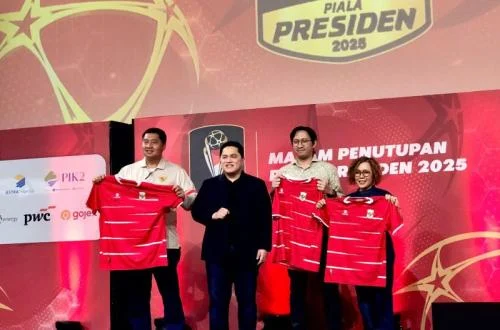
JAKARTA – The landscape of Indonesian football is poised for a significant evolution, as Erick Thohir, the Chairman of the Indonesian Football Association (PSSI), has indicated a strong likelihood of a new, potentially revolutionary format for the Piala Presiden 2026. This pivotal announcement was made following the conclusion of the Piala Presiden 2025 tournament in Jakarta, signaling PSSI’s commitment to continuous innovation and enhancement of the domestic football ecosystem. The proposed changes aim to elevate the prestige and competitive quality of the tournament, aligning it with global standards and further integrating it into Indonesia’s ambitious football development agenda.
Thohir, a prominent figure known for his dynamic leadership in sports, confirmed that PSSI, in close collaboration with Maruarar Sirait, the esteemed Chairman of the Piala Presiden 2025 Steering Committee, is actively engaged in developing this revised structure for what will be the eighth iteration of the tournament. The discussions are extensive, encompassing various aspects from participant selection to scheduling, all with the overarching goal of creating a more impactful and sustainable competition. A critical element emphasized by Thohir is the indispensable contribution of local government entities, including governors and regents (bupati), whose support is deemed vital for the successful execution and regional reach of the tournament. Their involvement would not only facilitate logistical aspects but also foster a deeper connection between the competition and local communities across the archipelago.
The 2025 edition, which served as a precursor to these impending changes, concluded with Thailand’s Port FC emerging victorious, triumphing over England’s Oxford United in a compelling final. This particular tournament, notable for its streamlined participation of just six teams, marked a significant moment with its international flavor. Past editions have seen a broader range of participants, from as few as six to as many as 20 clubs, sometimes including international teams. The success and positive reception of foreign club involvement, exemplified by Oxford United and Port FC in 2025, have fueled PSSI’s desire to maintain and potentially expand this international dimension. However, Thohir underscored the necessity for further, in-depth deliberations to crystallize the optimal format, particularly in light of the significant advancements and growing professionalism observed within Indonesia’s Liga 1 and Liga 2. The scheduling of the Piala Presiden 2026 is also a key concern, with potential adjustments being considered to avoid conflicts with the FIFA World Cup 2026, which is slated to take place from June to July of that year.
The Genesis and Evolution of Piala Presiden
To fully appreciate the significance of these proposed changes, it is crucial to understand the historical context and evolution of the Piala Presiden. The tournament was initially inaugurated in 2015, born out of a period of crisis for Indonesian football when the domestic league was suspended due to sanctions from FIFA. It served as a vital pre-season competition, providing much-needed match practice for clubs and entertainment for fans during a tumultuous time. Organized by Mahaka Sports and Entertainment under the guidance of then-PSSI President La Nyalla Mattalitti, the inaugural tournament saw Persib Bandung lift the trophy, setting a precedent for its importance in the national football calendar.
Since its inception, the Piala Presiden has evolved, transitioning from an emergency measure to a regular pre-season fixture, traditionally held before the commencement of the Liga 1 season. Its primary objectives have consistently included preparing clubs for the rigorous league campaign, offering a platform for new player acquisitions to integrate, and generating fan excitement. Over the years, the tournament has experimented with various formats, participant numbers, and host cities, reflecting PSSI’s ongoing efforts to refine its structure and maximize its impact. The number of participating teams has fluctuated, sometimes featuring exclusively Liga 1 clubs, and at other times including select Liga 2 teams or, as seen recently, international invitees. This adaptability underscores its role as a flexible platform for testing new ideas and fostering competition. The inclusion of foreign clubs in recent editions, particularly in 2025, represents a conscious effort to inject higher levels of competition and international exposure, giving Indonesian clubs valuable experience against diverse playing styles and tactical approaches.
The 2025 Edition: A Glimpse into the Future
The Piala Presiden 2025, while smaller in scale with only six participating teams, offered a compelling preview of the potential future direction of the tournament. The decision to invite international clubs like Port FC from Thailand and Oxford United from England was a deliberate strategic move to enhance the quality and global appeal of the competition. Port FC, a prominent club from the Thai League 1, brought a high level of technical prowess and tactical discipline, while Oxford United, representing English football, showcased a different brand of competitive play. Their presence not only elevated the standard of matches but also provided invaluable learning opportunities for Indonesian clubs and players.
The final match, where Port FC defeated Oxford United, was a testament to the competitive spirit and quality that international participation can bring. It generated significant interest among fans and media, both domestically and internationally. For the participating Indonesian clubs, competing against such formidable opponents served as an excellent benchmark for their pre-season preparations, highlighting areas for improvement and bolstering their confidence. Beyond the sporting aspect, the involvement of foreign teams also presented commercial benefits, attracting broader sponsorship interest and potentially increasing media rights value due to expanded viewership. This success story from 2025 has clearly influenced Erick Thohir’s vision for 2026, reinforcing the idea that strategic international engagement can significantly benefit the domestic football landscape.
Rationale Behind Format Overhaul
Erick Thohir’s initiative to introduce a new format for Piala Presiden 2026 is rooted in a comprehensive strategy to strengthen Indonesian football from various angles. The PSSI Chairman’s vision extends beyond merely organizing a tournament; it aims to integrate the Piala Presiden into a broader framework of national football development. The core rationale behind the overhaul includes:
- Elevating Competitive Standards: By refining the format, PSSI seeks to ensure that the tournament consistently features high-quality matches, providing optimal preparation for Liga 1 clubs ahead of their domestic and potential Asian club competitions.
- Enhancing International Exposure: Continued or expanded foreign club participation is seen as a key driver for exposing Indonesian players to diverse footballing philosophies and improving their tactical acumen and physical conditioning.
- Maximizing Commercial Value: A more attractive and well-structured tournament has the potential to draw increased sponsorship, higher media rights revenues, and greater fan engagement, contributing to the financial health of participating clubs and the overall football ecosystem.
- Strengthening Governance and Collaboration: The emphasis on local government involvement and the acknowledgment of broad stakeholder contributions (clubs, managers, players, media, sponsors, TNI, Polri) highlight PSSI’s commitment to collaborative governance and fostering a unified approach to football development.
- Strategic Alignment with Global Calendar: Adjusting the schedule to accommodate major international events like the FIFA World Cup 2026 demonstrates PSSI’s foresight in managing the national calendar effectively, preventing conflicts, and potentially leveraging global football events for local benefit.
Maruarar Sirait, as the Steering Committee Chairman, reiterated the profound importance of collaborative efforts across all facets of the national football ecosystem. He underscored that the consistency and success of the Piala Presiden over the years are a direct result of the concerted efforts of clubs, managers, players, media partners, sponsors, local governments, the Indonesian National Armed Forces (TNI), and the Indonesian National Police (Polri). This holistic approach, he argued, is fundamental to sustaining and enhancing the tournament’s impact.
Key Considerations for the New Format
The discussions surrounding the new format for Piala Presiden 2026 are multifaceted, addressing several critical areas that will shape the tournament’s future.
Engaging Local Governments:
The active participation of local governments, specifically governors and regents (bupati), is paramount to the success of the envisioned new format. Their contributions extend beyond mere hosting; they encompass providing state-of-the-art stadium facilities, ensuring robust security measures, facilitating local promotions, and potentially offering financial incentives or logistical support. Host cities stand to gain significantly from the tournament, benefiting from increased tourism, local economic activity, and enhanced national visibility. PSSI aims to foster stronger partnerships with regional authorities to create a sustainable model where the tournament mutually benefits both the host communities and the participating clubs. This localized approach could also lead to a more equitable distribution of football development resources across different regions of Indonesia.
Navigating International Calendars:
The FIFA World Cup 2026, co-hosted by the United States, Canada, and Mexico, presents a significant scheduling challenge. Set to take place in June and July 2026, it overlaps with the traditional pre-season window for many leagues, including potentially the Piala Presiden. PSSI is meticulously analyzing various options to ensure the Piala Presiden does not conflict with the global spectacle, which could dilute viewership and player availability. Potential adjustments might include shifting the tournament to an earlier or later slot in the calendar, perhaps even experimenting with a different timing altogether to optimize player rest and preparation for the domestic league, while also allowing fans to fully engage with the World Cup. This strategic scheduling demonstrates PSSI’s commitment to a globally aware approach to football administration.
The Dynamic Landscape of Liga 1 and Liga 2:
The significant developments and growing professionalism within Indonesia’s Liga 1 and Liga 2 also play a crucial role in shaping the Piala Presiden’s new format. Both leagues have seen increased investment, improved infrastructure, and a rise in competitive standards. This growth necessitates a pre-season tournament that adequately prepares clubs for the heightened demands of league play. The new format must consider factors such as player welfare, competitive balance, and the integration of youth talent. For instance, if the new format emphasizes international participation, it must ensure that Indonesian clubs are sufficiently prepared to compete without overburdening their players or compromising their league preparations. The tournament could also serve as a platform for scouting new talent from both domestic and international pools, further enriching the league ecosystem.
Stakeholder Perspectives and Collaborative Success
Maruarar Sirait’s reiteration of the collective effort required for the Piala Presiden’s consistent success underscores a fundamental principle of modern sports management: the importance of a unified ecosystem. The involvement of various stakeholders, from the grassroots to the highest levels, is crucial. Clubs and their managers are central to providing competitive teams and ensuring player readiness. Players are the lifeblood of the game, and their welfare and performance are paramount. Media partners play a vital role in disseminating information, generating hype, and bringing the action to fans nationwide. Sponsors provide the necessary financial backing, enabling the tournament’s operational capabilities and prize money. The logistical and security support from the TNI and Polri ensures a safe and orderly environment for matches.
From the perspective of club representatives, a new format could bring both opportunities and challenges. While the prospect of higher quality competition and increased exposure is appealing, concerns might arise regarding scheduling density, player fatigue, and financial implications. Sponsors, on the other hand, might view a revamped, more appealing tournament with international flair as an attractive platform for brand visibility and engagement with a broader audience. Fan reactions are anticipated to be largely positive, especially if the new format promises more exciting matches, international stars, and enhanced spectator experiences. The PSSI’s challenge lies in balancing these diverse interests to create a format that garners widespread support and delivers tangible benefits to all parties involved.
Anticipated Impact and Broader Implications
The proposed changes to the Piala Presiden 2026 are expected to have far-reaching implications across various facets of Indonesian football.
Elevating Sporting Standards:
A key anticipated outcome is a significant uplift in the sporting quality of the tournament. By potentially increasing foreign club participation or refining the competitive structure, Indonesian clubs will be consistently challenged against diverse playing styles and higher tactical acumen. This exposure is invaluable for player development, tactical innovation, and raising the overall standard of play in Liga 1 and Liga 2. It provides a crucial testing ground for new strategies, formations, and player combinations before the intensity of the league season. Moreover, the enhanced competition could serve as a powerful motivator for players to improve their performance, aspiring to compete at an international level within their own pre-season.
Economic and Commercial Opportunities:
The new format is also poised to unlock substantial economic and commercial opportunities. A more attractive tournament, especially one with a strong international presence, will likely draw greater interest from both domestic and international sponsors. Increased media rights value, driven by higher viewership and broader appeal, could provide additional revenue streams for PSSI and participating clubs. For host cities, the tournament offers a significant boost to local economies through tourism, hospitality, and related service industries. The influx of fans, teams, and media personnel translates into increased spending on accommodation, food, transportation, and entertainment, creating a ripple effect across local businesses.
Strengthening National Football Infrastructure:
Strategically, the Piala Presiden, under its new format, can play a pivotal role in strengthening Indonesia’s national football infrastructure. By emphasizing local government collaboration, PSSI can encourage investment in stadium upgrades, training facilities, and youth development programs across different regions. This decentralized approach helps spread the benefits of professional football beyond traditional hubs, fostering a more robust and equitable national football ecosystem. Furthermore, the tournament can serve as a platform for PSSI to test new operational protocols, security measures, and fan engagement strategies, which can then be applied to other domestic competitions.
In conclusion, Erick Thohir’s announcement regarding a new format for Piala Presiden 2026 signals a period of dynamic transformation for Indonesian football. By meticulously considering lessons from past editions, embracing international collaboration, and leveraging the support of diverse stakeholders, PSSI aims to forge a tournament that not only serves as an excellent pre-season warm-up but also stands as a beacon of progress and ambition for football in the archipelago. The coming months will be crucial as PSSI, in conjunction with Maruarar Sirait and other key figures, refines the details of this exciting new chapter, promising a more competitive, engaging, and globally aligned Piala Presiden for years to come.