Nasution Nanang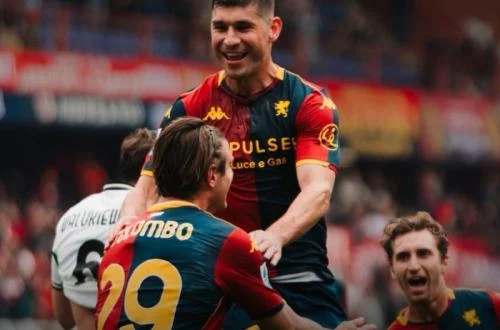
REPUBLIKA.CO.ID, GENOA – Sassuolo endured a frustrating evening, leaving the Stadio Luigi Ferraris without points after succumbing to a dramatic 2-1 defeat against Genoa in Week 32 of the Italian Serie A on Sunday, April 12, 2026, evening WIB. The match was a spectacle of intense football, marked by escalating tension, crucial moments of individual brilliance, and controversial refereeing decisions that saw two players receive red cards. Indonesian national team defender, Jay Idzes, featured prominently for Sassuolo, starting the match from the opening whistle and playing a full part in the tumultuous encounter.
The fixture, pivotal for both teams in their respective Serie A campaigns, saw Genoa secure a vital home victory, enhancing their position in the mid-table standings, while Sassuolo missed an opportunity to solidify their own standing, instead finding themselves grappling with the aftermath of a contentious defeat. The narrative of the game was heavily influenced by a first-half incident that drastically altered the complexion of the contest, setting the stage for a dramatic second period.
Pre-Match Context and Stakes
Entering this crucial Serie A encounter, both Genoa and Sassuolo found themselves navigating the challenging mid-section of the league table, each with distinct ambitions. Genoa, under the astute guidance of their manager, were primarily focused on consolidating their position in Serie A, aiming to distance themselves further from the relegation zone and build a foundation for future seasons. Their home form at the historic Stadio Luigi Ferraris had been a cornerstone of their strategy, relying on the fervent support of their fans to create an intimidating atmosphere for visiting teams. Prior to this match, Genoa had demonstrated a resilient streak, often proving difficult to break down and capable of snatching vital points against formidable opposition.
Sassuolo, on the other hand, arrived in Genoa with aspirations of climbing higher up the league ladder. Known for their attractive, attacking brand of football, Sassuolo had, in previous seasons, flirted with European qualification. While their current campaign might not have reached those heights consistently, a victory against a direct rival like Genoa would have been instrumental in pushing them closer to the top half of the table, potentially setting them up for a strong finish to the season. The team boasted a blend of experienced stalwarts and exciting young talents, with a tactical approach that emphasized fluid movement and technical prowess.
A particular point of interest for many fans, especially in Southeast Asia, was the continued presence of Jay Idzes in Sassuolo’s starting lineup. The Indonesian international defender had steadily established himself as a reliable figure in the Sassuolo backline, showcasing his defensive capabilities, aerial strength, and composure on the ball. His consistent inclusion underscored his growing importance to the team and offered a glimpse into the increasing global reach of Serie A, attracting followers from diverse footballing nations. For Idzes, every Serie A start was an opportunity to further hone his skills against some of the world’s best attackers and cement his place as a top-tier defender.
Chronology of a Contentious Encounter
The match kicked off with an immediate intensity, characteristic of Serie A fixtures where points are fiercely contested. Both teams adopted an energetic approach, pressing high and attempting to dominate possession in the midfield. The early exchanges were cagey, with neither side willing to commit too many players forward, mindful of the counter-attacking threats posed by their opponents.
Genoa, spurred on by their home crowd, gradually began to assert more pressure. Their efforts bore fruit in the 18th minute when Ruslan Malinovskyi, the Ukrainian midfielder known for his powerful long-range shots and creative passing, broke the deadlock. The goal originated from a clever piece of play by Tommaso Baldanzi, who carved open the Sassuolo defense with a precise pass, allowing Malinovskyi to unleash a strike that found the back of the net, sending the home supporters into raptures. This early lead provided Genoa with a significant psychological advantage, forcing Sassuolo to chase the game.
Sassuolo responded by attempting to increase their tempo and find an equalizer. They pushed forward with more urgency, creating a few half-chances, but Genoa’s defense, marshaled effectively, held firm. The game remained finely balanced, with Sassuolo’s attacking intent countered by Genoa’s disciplined defending and quick transitions.
The first half, however, took a dramatic and unforeseen turn just before the interval. A heated exchange erupted between Genoa’s Stefano Sabelli and Sassuolo’s influential forward Domenico Berardi. What began as a minor on-field skirmish quickly escalated, fueled by the competitive nature of the match and perhaps underlying tensions. The dispute reportedly continued into the tunnel as the players headed for their respective dressing rooms at halftime, far from the eyes of the main referee. However, the match officials were alerted to the ongoing fracas. After reviewing the incident and consulting with his assistants, the referee made a decisive and impactful call. Both Domenico Berardi and Genoa’s Mikael Egill Ellertsson were shown direct red cards, effectively reducing both teams to ten men for the entire second half. This incident fundamentally altered the tactical landscape of the match, forcing both coaches to rethink their strategies during the halftime break. The dismissal of Berardi, a talismanic figure and key goal-scorer for Sassuolo, was a particularly heavy blow for the visitors.
The second half commenced with an palpable shift in dynamics. Both teams, now playing with a numerical disadvantage, adopted a more cautious yet still determined approach. Space on the pitch became more abundant, leading to more open play and direct attacks. Sassuolo, despite losing Berardi, showed remarkable resilience and managed to draw level in the 57th minute. The equalizer came from Ismael Kone, who capitalized on a rebound inside the box. The initial shot was parried by the Genoa goalkeeper, but Kone was quick to react, slotting the ball home. The goal was initially subject to a VAR review, a now-common feature of modern football, to check for offside or any infringement in the build-up. After a tense wait, the goal was confirmed, bringing Sassuolo back into the game and injecting renewed belief into their ranks.
The parity was short-lived, however, and the drama continued. Genoa pressed for a winner, and a significant moment arose when Caleb Ekuban went down in the box under a challenge, prompting strong appeals for a penalty from the home side. Once again, VAR was called into action. Following a thorough review, the referee ultimately decided against awarding a penalty, much to the frustration of the Genoa players and fans, ruling that Ekuban had not been fouled sufficiently or had initiated contact.
Despite this setback, Genoa refused to be deterred. Their persistence paid off in the 84th minute, as they found the decisive goal. Junior Messias, showing his experience and vision, delivered a perfectly weighted pass to Caleb Ekuban, who had been a constant threat throughout the match. Ekuban made no mistake, finishing clinically past the Sassuolo goalkeeper to restore Genoa’s lead and send the Stadio Luigi Ferraris into a frenzy. The final minutes saw Sassuolo desperately pushing for a second equalizer, but Genoa’s defense held firm, securing a hard-fought 2-1 victory.
Supporting Data and Tactical Implications
The red cards for Berardi and Ellertsson were undoubtedly the defining moments of the match. For Sassuolo, losing Berardi meant losing their primary creative outlet and goal threat. His absence forced tactical adjustments, likely shifting more responsibility onto players like Pinamonti and Lauriente, and requiring the midfield to contribute more defensively. For Genoa, Ellertsson’s dismissal also necessitated a reshuffle, but perhaps the loss was less impactful than Berardi’s for Sassuolo, given the latter’s integral role. Playing with 10 men for an entire half tests the physical and mental fortitude of any squad, demanding higher work rates and disciplined positional play.
Genoa’s ability to score two goals despite being numerically equalized in the red card count speaks volumes about their resilience and clinical finishing. Ruslan Malinovskyi’s opener highlighted his enduring quality, while Caleb Ekuban’s late winner showcased his predatory instincts in front of goal. Jay Idzes, playing at the heart of Sassuolo’s defense, faced a stern test throughout the match. His performance, while ultimately part of a losing effort, would have provided valuable experience in high-pressure Serie A scenarios, particularly after the tactical chaos introduced by the red cards. His ability to maintain composure and execute defensive duties under such circumstances is crucial for his continued development.
The VAR decisions also played a critical role. The confirmation of Kone’s equalizer after review demonstrated the system working to correct potential errors, while the denial of Genoa’s penalty claim highlighted the subjective nature of some foul decisions, even with technological assistance. These moments underscore the fine margins that often decide outcomes in top-flight football.
Statements and Reactions (Inferred)
Following the match, both coaching staffs and key players likely offered their perspectives on the dramatic events.
Genoa coach, Alberto Gilardino, would have expressed immense satisfaction with the three points, particularly given the circumstances. "This was a truly hard-fought victory, one that speaks volumes about the character and spirit of my players," Gilardino might have commented. "To go down to ten men and still find a way to win against a quality side like Sassuolo shows incredible resilience. We had to adapt, work harder, and the boys delivered. Malinovskyi’s goal was superb, and Ekuban showed great composure for the winner. We will learn from the red card incident, but today, we celebrate the points."
Sassuolo coach, likely Alessio Dionisi at the time, would have conveyed a mix of frustration and pride in his team’s effort. "It’s a very difficult result to swallow, especially given how we fought back after going a man down," Dionisi could have stated. "The red card for Berardi was a huge blow; he’s so crucial to our attack. We showed great character to equalize, and I’m proud of the effort the players put in with ten men. Unfortunately, small margins and a moment of brilliance from Genoa decided it. We need to review the disciplinary issues and focus on our upcoming matches."
Jay Idzes, reflecting on the challenging evening, might have shared his thoughts on the intensity of Serie A football. "It was a tough match, very physical and full of incidents," Idzes might have offered. "Playing with ten men for so long requires immense focus and teamwork. We worked hard to get back into the game, but it wasn’t enough. These are the kinds of matches where you learn a lot as a defender, facing top-quality attackers under pressure. We need to regroup quickly and prepare for the next challenge."
Broader Impact and Implications
This result had significant implications for both clubs’ league campaigns. For Genoa, the victory saw them climb to 13th position in the Serie A standings with 36 points. This crucial win provided a significant boost in their quest for mid-table security, creating a healthier buffer between themselves and the relegation zone. The psychological uplift from winning such a dramatic and challenging match could also provide momentum for their remaining fixtures, fostering a stronger sense of belief within the squad.
For Sassuolo, remaining in 11th position with 42 points, the defeat was a missed opportunity to push higher up the table. While 42 points in April generally indicates safety from relegation, the loss prevents them from solidifying a top-half finish and could impact their morale. More critically, the red card for Domenico Berardi carries disciplinary consequences, meaning he will face a suspension for upcoming matches. The absence of such a key player could severely hinder Sassuolo’s attacking prowess in crucial games, forcing the coach to devise new strategies and rely on other players to step up. This incident underscores the importance of maintaining discipline in high-stakes matches.
In the broader context of Serie A, this result contributed to the ongoing jostle in the mid-table, where several teams are vying for higher finishes or simply looking to consolidate their positions. The league remains fiercely competitive, with every point being critical. For Jay Idzes, despite the team’s defeat, his continued presence in the starting XI against strong opposition further burnishes his reputation and provides invaluable experience that will serve him well in his career, both at club level and for the Indonesian national team. His development is a testament to the increasing quality of Asian players making their mark in Europe’s top leagues.
The match at the Stadio Luigi Ferraris will be remembered not only for Genoa’s hard-fought victory but also for the dramatic turn of events, highlighting the unpredictable and passionate nature of Italian football. Both teams will now look ahead to their next fixtures, with Genoa aiming to build on their momentum and Sassuolo focused on recovering from a disappointing, incident-filled evening.