
 Paryono Ramadhan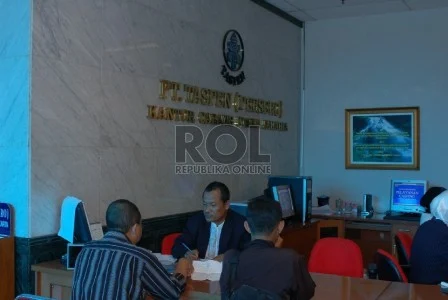
PT Taspen (Persero), the state-owned enterprise responsible for managing civil servant pensions and old-age savings, announced that it will commence the repayment of Tabungan Perumahan Pegawai Negeri Sipil (Taperum PNS) funds starting June 1. This significant move is aimed at fulfilling the housing savings entitlements for eligible civil servants as they transition into retirement. The repayment initiative will cover all civil servants who are scheduled to retire on or after June 1, with the notable exception of personnel from the Ministry of Defense, the Indonesian National Armed Forces (TNI), and the Indonesian National Police (Polri), who are covered under separate, specialized benefit schemes.
Understanding Taperum PNS: A Historical Overview
Taperum PNS, established under Presidential Decree No. 46 of 1994, was a mandatory housing savings program designed to assist Indonesian civil servants in acquiring or improving their housing. The program was managed by the Agency for the Consideration of Civil Servant Housing Savings (Badan Pertimbangan Tabungan Perumahan Pegawai Negeri Sipil, or Bapertarum PNS). For decades, Bapertarum PNS served as the primary institution overseeing these contributions, providing various forms of housing assistance, including down payment subsidies, low-interest housing loans, and housing development support for civil servants. The underlying philosophy of Taperum PNS was rooted in the government’s commitment to improving the welfare of its public sector employees, recognizing housing as a fundamental need and a significant financial burden for many.
Under the initial framework, civil servants contributed a fixed amount from their monthly salaries, categorized by their respective employment groups (golongan). Specifically, civil servants in Golongan I contributed Rp 3,000 per month, Golongan II contributed Rp 5,000, Golongan III contributed Rp 7,000, and Golongan IV contributed Rp 10,000. These contributions, while seemingly modest by today’s standards, were accumulated over a civil servant’s career, with the expectation that they would provide a substantial sum upon retirement or be utilized for housing assistance during their active service. The program underscored a long-term strategy by the Indonesian government to ensure housing accessibility for its vast civil service workforce, which at its peak numbered in the millions across various ministries, agencies, and regional administrations.
The Transition and Dissolution of Bapertarum
The decision to initiate repayments of Taperum PNS funds stems from a broader reform in Indonesia’s public housing finance sector. In 2016, the Indonesian government enacted Law No. 4 of 2016 concerning the Savings for Public Housing (Tabungan Perumahan Rakyat, or Tapera), which led to the establishment of the Public Housing Savings Management Agency (Badan Pengelola Tabungan Perumahan Rakyat, or BP Tapera). This new legal framework effectively superseded the mandate of Bapertarum PNS. Consequently, Bapertarum PNS was officially dissolved, and its assets, liabilities, and functions related to managing civil servant housing savings were transferred to BP Tapera.
The dissolution of Bapertarum PNS and the establishment of BP Tapera marked a significant paradigm shift. BP Tapera was envisioned as a more comprehensive and inclusive public housing savings scheme, extending its reach beyond just civil servants to encompass private sector employees and independent workers. The primary objective of BP Tapera is to accumulate long-term funds to finance affordable housing for all Indonesian citizens, particularly those in the low-income bracket. This transition necessitated a clear mechanism for handling the existing Taperum PNS funds accumulated under the old system. While BP Tapera assumed the overall mandate for future housing savings, the responsibility for repaying the accumulated Taperum PNS funds to retiring civil servants was strategically entrusted to PT Taspen, leveraging Taspen’s established infrastructure for managing civil servant benefits.
Taspen’s Mandate and the Repayment Mechanism
Iwan Soeroto, Corporate Secretary of PT Taspen, elaborated on the details of the repayment process in a recent press statement. He affirmed that the repayment of Taperum PNS funds is being conducted in accordance with a cooperation agreement established between PT Taspen and the former Bapertarum PNS. This agreement outlines the operational procedures for ensuring a smooth and efficient disbursement of funds to eligible retirees.
A key aspect of this repayment strategy is the integrated disbursement approach. To streamline the process and enhance convenience for beneficiaries, the Taperum PNS repayment will be bundled together with the first pension payment and the Old Age Savings (Tabungan Hari Tua, or THT) payment. All these entitlements will be disbursed as a single package at PT Taspen’s various branch offices located across Indonesia. "The payment is made as a single package for the convenience of civil servants in receiving their entitlements," Iwan Soeroto stated, as quoted by Antara, emphasizing the user-centric design of the disbursement method. This integrated approach minimizes the administrative burden on retirees, allowing them to collect all their due benefits from a single point of contact, rather than navigating multiple agencies or separate processes.
PT Taspen boasts an extensive network of branch offices nationwide, ensuring accessibility for civil servants residing in diverse geographical areas. The established infrastructure for pension and THT payments provides a robust platform for the efficient handling of Taperum PNS repayments, leveraging existing systems and experienced personnel. This operational readiness is crucial, given the large volume of civil servants who retire annually and are thus eligible for these repayments.
Scope and Exclusions: Who Benefits and Who Doesn’t
The repayment program specifically targets civil servants who begin their retirement period on or after June 1. This clear cut-off date helps define the beneficiary group and ensures a systematic rollout of the program. The eligibility extends to all non-military and non-police civil servants, encompassing personnel from various civilian ministries, non-ministerial government agencies, and regional administrations at both provincial and district/city levels. The number of civil servants in Indonesia is substantial, with official figures often exceeding 4 million, and a significant portion of this workforce retires each year. For instance, statistical data often shows tens of thousands of civil servants reaching retirement age annually, indicating the broad reach and impact of this repayment initiative.

As noted, the program explicitly excludes civil servants within the Ministry of Defense, as well as active members of the TNI and Polri. This exclusion is standard practice in Indonesia’s social security system, where military and police personnel are typically covered by distinct pension and housing benefit schemes managed by institutions such as ASABRI (Asuransi Sosial Angkatan Bersenjata Republik Indonesia – Social Insurance for the Indonesian Armed Forces). These separate systems are tailored to the unique career structures and service conditions of defense and security forces, ensuring that their specific needs are met through specialized programs. This differentiation prevents overlap and ensures that each group receives benefits appropriate to their employment category.
Evolution of Contributions: From Fixed Rates to Percentage-Based
While the current announcement focuses on the repayment of historical Taperum PNS funds, it is important to contextualize this within the broader evolution of civil servant housing contributions. As Iwan Soeroto further explained, the fixed monthly contributions for Taperum PNS, based on Kepres No. 46 of 1994, were set at Rp 3,000 for Golongan I, Rp 5,000 for Golongan II, Rp 7,000 for Golongan III, and Rp 10,000 for Golongan IV. These fixed amounts, while simple to administer, did not account for inflation or the significant increases in civil servant salaries over the years. Consequently, the relative value of these contributions diminished over time, and the accumulated savings might not have kept pace with rising housing costs.
Recognizing this disparity and aligning with modern social security principles, PT Taspen, in collaboration with relevant government bodies, has been actively advocating for a more equitable and sustainable contribution model. Taspen is currently pushing for a revised contribution structure where civil servants contribute a percentage of their total salary, specifically proposing a rate of 2.5 percent. This shift from fixed nominal amounts to a percentage-based contribution is a crucial reform. It ensures that contributions automatically adjust with salary increases, maintaining the relative value of the savings and promoting greater fairness across different salary levels. A percentage-based system also provides a more robust and predictable funding mechanism for future housing programs, better reflecting the economic realities of housing markets. This proposed change aligns with the principles underpinning BP Tapera, which typically mandates contributions as a percentage of income.
Statements and Assurances from Taspen
The clarity and transparency provided by PT Taspen through its Corporate Secretary, Iwan Soeroto, are vital for reassuring retiring civil servants about their entitlements. The official statements emphasize the commitment to fulfilling these long-standing obligations promptly and conveniently. The explicit mention of the cooperation agreement with the former Bapertarum PNS provides a legal and procedural backbone to the repayment process, ensuring that it is executed systematically and according to established protocols.
The bundling of Taperum PNS repayments with first pension and THT payments is a practical demonstration of Taspen’s commitment to efficiency and beneficiary welfare. This approach minimizes bureaucratic hurdles and ensures that retirees can access their funds with ease. Such assurances are particularly important for retirees, who often face complex administrative processes during their transition from active service. The proactive communication from Taspen helps manage expectations and build trust among the civil servant community.
Broader Implications for Civil Servant Welfare
The repayment of Taperum PNS funds carries several important implications for the welfare of Indonesian civil servants. For the retirees themselves, receiving these accumulated savings can provide a welcome financial boost as they embark on a new chapter of life. While the individual amounts may vary based on years of service and contribution levels, the lump sum payment can be utilized for various purposes, including covering immediate post-retirement expenses, investing, or further contributing to housing-related needs. It represents the fulfillment of a long-term savings commitment made throughout their careers.
From a broader governmental perspective, this initiative reflects a commitment to resolving historical financial obligations and streamlining public sector benefit management. By systematically repaying the old Taperum PNS funds, the government is clearing the slate for the full implementation of the newer, more comprehensive BP Tapera scheme. This transition is crucial for modernizing Indonesia’s social security landscape and ensuring that housing assistance programs are sustainable, equitable, and adaptable to changing economic conditions. The efficient handling of this repayment also reinforces the trust between the government and its civil servants, demonstrating accountability in managing their contributions.
The Future Landscape of Civil Servant Housing: Enter BP Tapera
Looking ahead, the future of civil servant housing assistance will largely be managed under the umbrella of BP Tapera. With the dissolution of Bapertarum PNS, BP Tapera has taken on the central role in facilitating housing ownership for public sector employees, alongside other segments of the workforce. Under the BP Tapera scheme, contributions are typically a percentage of income, collected from both employees and employers (or the government in the case of civil servants). These funds are then utilized to provide various housing finance solutions, including down payment assistance, construction loans, and low-interest mortgages, tailored to different income brackets.
The transition to BP Tapera represents an effort to create a more robust, transparent, and sustainable housing finance ecosystem. It aims to address the persistent housing backlog in Indonesia and ensure that a wider segment of the population, including civil servants, has access to affordable and decent housing. While the Taperum PNS repayment marks the conclusion of an older chapter, it simultaneously ushers in a new era where civil servants will continue to benefit from structured housing savings programs under the modern framework of BP Tapera, designed to be more responsive to contemporary housing challenges and economic realities.
In conclusion, PT Taspen’s announcement regarding the Taperum PNS repayment is a significant development for retiring Indonesian civil servants. Beginning June 1, eligible retirees, excluding those from the defense and security sectors, will receive their accumulated housing savings bundled with their first pension and THT payments. This initiative, rooted in the transition from Bapertarum PNS to BP Tapera, underscores the government’s commitment to fulfilling its financial obligations and modernizing its public housing welfare programs. It marks a crucial step in ensuring that civil servants receive their due entitlements efficiently, while paving the way for a more comprehensive and sustainable housing finance future under BP Tapera.








