Nila Kartika Wati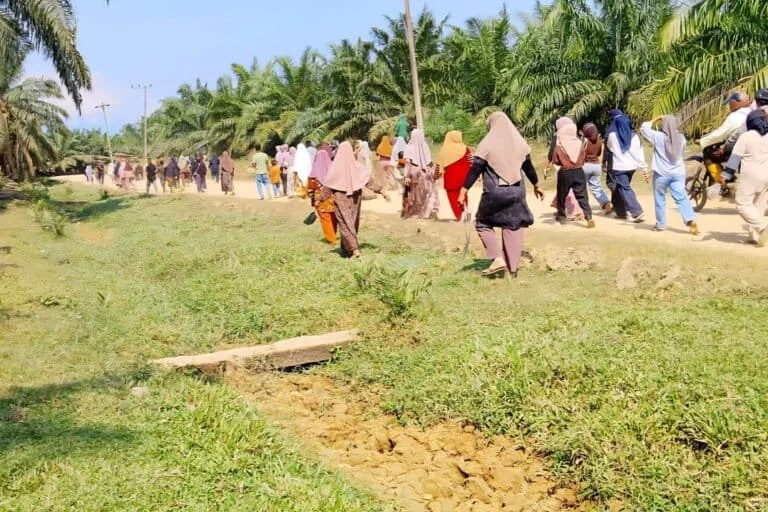
The plight of the farmers in Cot Girek, North Aceh, is often described by the local community through the Indonesian proverb "falling down and being hit by a ladder." For decades, these smallholders have been embroiled in a bitter land dispute with the state-owned plantation company PT Perkebunan Nusantara (PTPN) IV Regional 6. Instead of seeing their ancestral land rights recognized, they have faced a relentless cycle of criminalization, physical intimidation, and ecological disaster. The situation reached a boiling point on April 4, 2026, when five farmers were arrested by a joint task force of regional police, an act that civil society organizations have labeled as a blatant display of state power used against the interests of the common people.
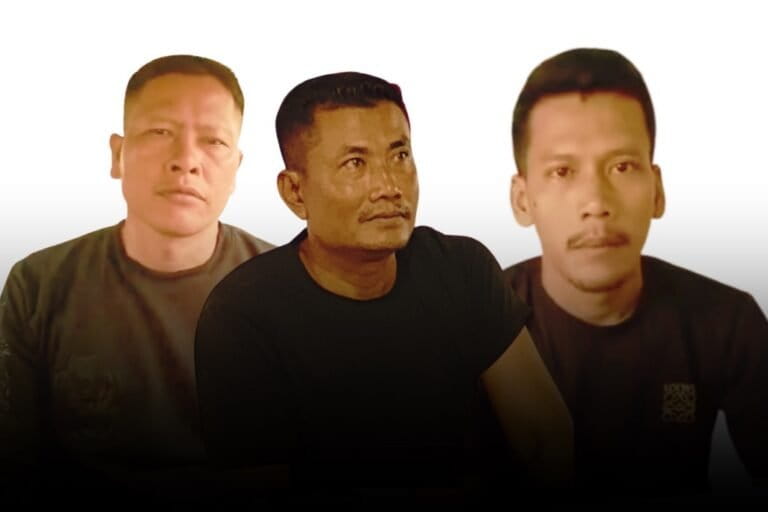
The arrests took place as the farmers—identified as Dwijo Warsito, Abdullah, Adi Darma, Iwan Riski, and Suwanto—were traveling to Jakarta. As members of the Aceh Farmers Union (Setia), they intended to seek legal consultation and advocate for their cause before national institutions. However, their journey was intercepted at the Bakauheni Port in Lampung by officers from the Aceh, Lampung, and South Sumatra Regional Police. Following their apprehension, they were transported to the South Sumatra Regional Police Headquarters (Mapolda Sumsel) for interrogation.
Dewi Sartika, the Secretary-General of the Consortium for Agrarian Reform (KPA), characterized the police action as "reckless" and harmful to the agrarian reform movement. She noted that such high-handed tactics are often employed to coerce victims into admitting to crimes they did not commit. Although the five farmers were eventually released in stages following intense pressure from a coalition of civil society groups, the legal shadow over them remains. Three of the farmers—Dwijo, Abdullah, and Adi Darma—retain their status as suspects, leaving them in a state of legal limbo and vulnerability.
A Chronology of Suppression and Resistance
The roots of the current tension can be traced back to a protest held on October 1, 2025, in Kampung Tempel. During this demonstration, farmers blockaded roads to demand that PTPN IV halt its activities until the long-standing land conflict was resolved. The company responded not by engaging in dialogue, but by reporting the farmers to the North Aceh Resort Police (Polres) on charges of assaulting security personnel.
Dwijo Warsito, the chairman of Setia, recounted the intimidation he faced during his 65-hour detention. According to Dwijo, investigators attempted to frame him as the mastermind behind the destruction of oil palm trees. He denied the allegations, stating that the protest was a spontaneous reaction to the company’s provocative actions, including attempts to physically drag him away from the site. This sequence of events fits the pattern of what legal experts call a Strategic Lawsuit Against Public Participation (SLAPP)—a legal tactic used by corporations to silence dissent and exhaust the resources of grassroots activists.
The pressure on the community has not let up. On April 6, 2026, while the community was protesting the arrests of their leaders, the company reportedly deployed dozens of Brimob (Mobile Brigade) officers to the plantation area. While no physical clash occurred, the presence of paramilitary police in a civilian dispute served as a powerful tool of intimidation, further traumatizing a community that was already reeling from devastating floods that hit the region in late 2025.
Three Decades of Territorial Encroachment
The conflict in Cot Girek is not a recent phenomenon but a legacy of colonial-era land management and post-independence administrative failures. The disputed land was originally seized by the Dutch colonial government in 1930, covering approximately 7,890 hectares for pineapple and sugarcane plantations. Following Indonesia’s independence, the assets were nationalized in 1952.
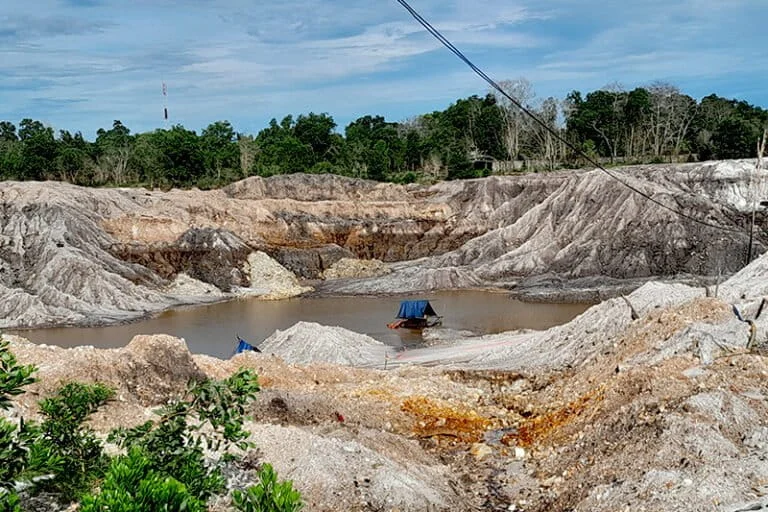
The modern conflict began in earnest in 1996 when PTPN I (the predecessor to PTPN IV Regional 6) was granted a Right to Cultivate (HGU) permit for 7,506 hectares. Since then, the company has been accused of systematically expanding its operations beyond its legal boundaries, encroaching upon community farmlands, residential areas, and even local cemeteries and schools.
Bustami, a local farmer, explained that the community has repeatedly asked the company to provide proof of its land claims. "They refuse to show the HGU certificates, claiming it is private corporate information," Bustami said. He noted that the lack of transparency has allowed the company to displace villagers without compensation. As the HGU is set to expire in 2026, there is growing fear that the company will use the renewal process to legitimize its previous encroachments without involving local village heads or residents.
The Human and Environmental Cost
The impact of PTPN IV’s operations extends beyond land ownership; it has fundamentally altered the local ecosystem and social fabric. Residents claim that the company has ignored environmental regulations by planting oil palms right up to the banks of local rivers. This practice has led to severe sedimentation and narrowing of waterways, which many believe is the primary cause of the annual floods that now plague the region.
"In 2014, we had a massive flood, and now it happens every year. Houses in Lhoksukon are submerged under four meters of water," Dwijo Warsito noted. The ecological crisis is compounded by a history of physical violence. In June 2025, a farmer named Adi was reportedly shocked with an electric device by company security after being accused of stealing loose palm fruit.
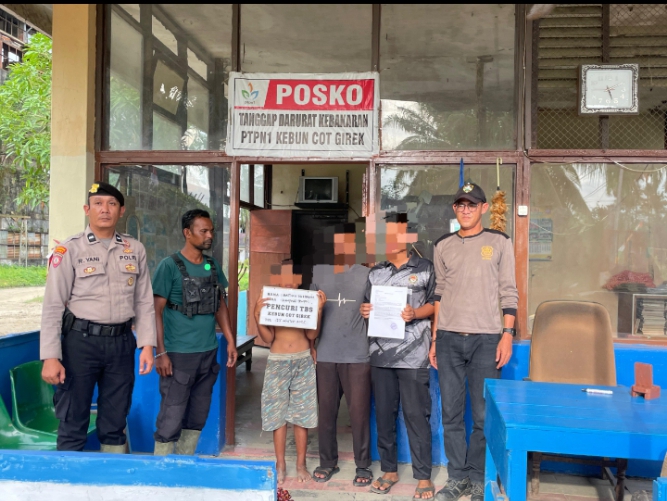
Perhaps the most harrowing account involves Dwijo’s 12-year-old son. In August 2025, the boy and his friends were caught by security while looking for birds near the plantation. They were accused of theft, detained at a security post, and allegedly forced to carry 25-kilogram sacks of palm fruit around the perimeter as punishment. The children were then photographed holding signs that labeled them as thieves. Despite a formal report to the North Aceh Police and a medical examination showing bruising, the community feels that justice remains elusive.
Institutional Gridlock and the Path to Reform
The Cot Girek case has reached the highest levels of government, yet a resolution remains stalled. The conflict is currently being discussed by the Special Committee (Pansus) for Agrarian Conflict Resolution within the Indonesian House of Representatives (DPR). However, the slow pace of the legislative process contrasts sharply with the rapid escalation of tensions on the ground.
Dewi Sartika of the KPA emphasized that the government’s approach is contradictory. While President Prabowo Subianto’s "Asta Cita" program promises a commitment to agrarian reform and poverty alleviation, the actions of state-owned enterprises like PTPN and the police suggest a continuation of old repressive habits. "When a case is being handled by a parliamentary special committee, there should be a moratorium on all legal actions against the farmers involved," Dewi argued.
The Ministry of Agrarian Affairs and Spatial Planning (ATR/BPN) has acknowledged the complexity of the situation. Rudi Rubijaya, a senior official at the ministry, noted that the Cot Girek case is a "portrait of the chaotic management of land in Indonesia." He suggested that one possible solution is the "Enclave" scheme, where community lands are officially removed from the company’s HGU maps. Another potential path is the implementation of a "People’s Plantation" program, where the company facilitates community use of 20% of the HGU area for local welfare.
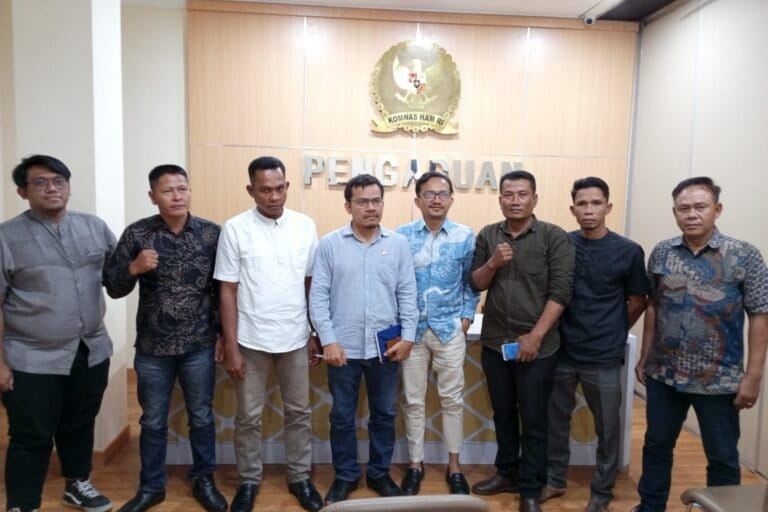
However, the KPA and the North Aceh Farmers Union argue that such compromises are insufficient if they do not address the underlying issue of land ownership and the cessation of criminalization. They are demanding a total halt to the legal proceedings (SP3) against the farmers and a refusal to renew PTPN IV’s HGU until the community’s rights are fully restored.
Broader Implications for Agrarian Justice
The struggle in North Aceh is a microcosm of a larger national crisis. According to KPA data, there are currently 149 priority locations for agrarian reform (LPRA) involving conflicts between communities and PTPN across various provinces. These disputes cover over 1.7 million hectares of land. The persistence of these conflicts highlights a systemic failure to reconcile state-led industrial agriculture with the rights of smallholder farmers and indigenous groups.
The use of security forces to settle land disputes remains a significant hurdle to genuine reform. Civil society groups argue that as long as the police and military are deployed to protect corporate interests over civilian rights, the promise of agrarian reform will remain unfulfilled. For the farmers of Cot Girek, the fight is not just about soil and crops; it is about the right to live without fear in the land they have called home for generations.
As the 2026 HGU expiration date approaches, the eyes of human rights observers and agrarian activists are fixed on North Aceh. The government’s handling of this case will serve as a litmus test for its commitment to justice, environmental sustainability, and the protection of its most vulnerable citizens against the overwhelming power of state-backed industry. Without a decisive shift toward a rights-based approach, the "ladder" will continue to fall on the farmers of Cot Girek, burying their hopes for a peaceful and prosperous future.