Paryono Ramadhan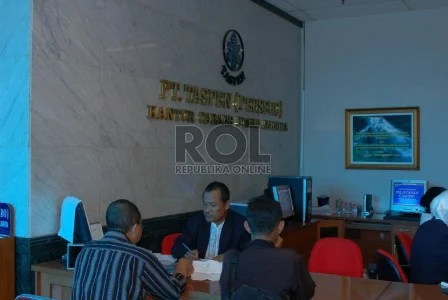
PT Taspen, the state-owned enterprise responsible for managing civil servant pensions and old-age savings in Indonesia, has announced that it will begin processing the reimbursement of Civil Servant Housing Savings (Taperum PNS) starting June 1. This significant development will affect all civil servants who reach retirement age from that date onwards, with the notable exception of personnel within the Ministry of Defense, the Indonesian National Armed Forces (TNI), and the Indonesian National Police (Polri), who operate under distinct housing and welfare provisions. The move marks a pivotal moment in the administration of civil servant benefits, particularly as the nation transitions its housing welfare strategy towards a more consolidated and equitable system.
A Legacy of Civil Servant Housing Support: Understanding Taperum PNS
The Tabungan Perumahan Pegawai Negeri Sipil (Taperum PNS) program was established with the noble intention of assisting Indonesian civil servants in acquiring suitable housing. Its legal foundation was laid out in Presidential Decree (Kepres) No. 46 of 1994, which mandated contributions from active civil servants to a collective fund aimed at providing access to housing finance or direct housing assistance. This program was managed by the Civil Servant Housing Savings Deliberation Agency (Badan Pertimbangan Tabungan Perumahan Pegawai Negeri Sipil, or Bapertarum PNS), an entity specifically created to oversee the collection, management, and disbursement of these funds. For decades, Taperum PNS served as a crucial component of the comprehensive welfare package offered to state apparatus, providing a sense of security regarding one of life’s most fundamental needs.
The underlying principle of Taperum was to pool resources, enabling civil servants, particularly those in lower salary brackets, to overcome the often-insurmountable financial barriers to homeownership. The mandatory contributions, though seemingly modest, accumulated over a civil servant’s career, theoretically providing a substantial sum upon retirement or eligibility for housing loans. This mechanism was vital in a country where housing affordability remains a persistent challenge for a large segment of the population, including those dedicated to public service. The program also underscored the government’s commitment to the well-being of its civil servants, recognizing their invaluable contribution to national development.
The Mechanism of Reimbursement: Ensuring Seamless Transitions for Retirees
According to Taspen Corporate Secretary Iwan Soeroto, the commencement of Taperum PNS reimbursements is a direct outcome of a formalized cooperation agreement between PT Taspen and Bapertarum PNS. This agreement delineates the procedures and responsibilities for facilitating the payment of accumulated housing savings to eligible civil servants. The operational strategy designed by Taspen aims for maximum convenience and efficiency for the beneficiaries. Rather than requiring separate claims or processes, the Taperum refunds will be disbursed concurrently with a retiring civil servant’s first pension payment and their Old Age Savings (Tabungan Hari Tua, or THT). This integrated approach will streamline the payout process, allowing retirees to collect all their accrued benefits in a single transaction at any of Taspen’s branch offices across the archipelago.
"The payment is conducted as a single package to ensure ease for civil servants in receiving their entitlements," Iwan Soeroto stated, emphasizing the commitment to a user-friendly and hassle-free experience for those transitioning into retirement. This bundled disbursement is a practical solution to manage the high volume of annual retirees and to prevent potential delays or administrative burdens that might arise from separate processing streams. The exclusion of personnel from the Ministry of Defense, TNI, and Polri from this particular reimbursement scheme is consistent with their unique employment structures and existing, dedicated housing support programs that operate independently of the general civil service framework. For these specialized branches, housing provisions are typically managed through their respective institutions, reflecting the distinct nature of their service and welfare benefits.
Evolution of Civil Servant Housing Policy: From Taperum to BP Tapera
The decision to commence Taperum PNS reimbursements is not an isolated event but rather a critical step in a broader, ongoing transformation of Indonesia’s national housing finance landscape. The Taperum PNS program, while instrumental for many years, has gradually been phased out and superseded by a more comprehensive national housing savings scheme known as Badan Pengelola Tabungan Perumahan Rakyat (BP Tapera), or the Public Housing Savings Management Agency. This transition was formalized through Law No. 4 of 2016 concerning Public Housing Savings, which sought to establish a universal, sustainable, and equitable housing financing system for all Indonesian citizens, including civil servants.
BP Tapera was envisioned as a robust, long-term solution to address the persistent housing backlog in Indonesia, moving beyond sector-specific programs like Taperum PNS. The new agency’s mandate is to collect mandatory contributions from participants, including private sector employees, state-owned enterprise (BUMN) employees, and civil servants, and then leverage these funds to provide affordable housing finance options, such as low-interest mortgages and housing construction subsidies. A crucial aspect of this transition involved the transfer of Bapertarum PNS’s assets, liabilities, and, importantly, its participants to BP Tapera. This transfer was not merely administrative; it signified a fundamental shift in policy, consolidating various housing savings programs under a single national umbrella.
Consequently, the Taperum PNS funds that civil servants had contributed over their careers, which were previously managed by Bapertarum PNS, are now being returned to eligible retirees. This return of funds is a logical consequence of the program’s conclusion and its absorption into the BP Tapera framework. For civil servants who continue to be active, their housing savings contributions now fall under the BP Tapera system, which aims to provide broader access to housing benefits throughout their careers, not just upon retirement. This strategic pivot by the government underscores a commitment to rationalize and optimize public welfare programs, ensuring greater efficiency, transparency, and impact in addressing the nation’s housing needs. The transition also required meticulous planning and coordination between Bapertarum PNS (during its dissolution), Taspen, and BP Tapera to ensure that the rights of civil servants were fully protected during this significant policy overhaul.
Historical Contribution Structure and Future Adjustments
The current contribution structure for Taperum PNS, as stipulated by Presidential Decree No. 46 of 1994, has been in place for decades, reflecting a fixed-rate system based on civil servant salary grades (Golongan). Under this long-standing regulation, civil servants (excluding those in TNI/Polri/Kemhan) contribute a set amount from their monthly salaries:

- Golongan I: Rp 3,000 per month
- Golongan II: Rp 5,000 per month
- Golongan III: Rp 7,000 per month
- Golongan IV: Rp 10,000 per month
These amounts, while perhaps significant at the time of their inception, have remained static despite decades of inflation and increases in civil servant salaries. This fixed contribution model meant that the percentage of salary contributed by a Golongan I civil servant was considerably higher than that of a Golongan IV civil servant, despite the absolute difference in their contributions being relatively small. Moreover, the fixed nature of these contributions meant that the accumulated savings might not always keep pace with the rising costs of housing, potentially diminishing the real value of the benefit over time.
Recognizing these disparities and the need for a more equitable and financially sustainable system, PT Taspen has been actively advocating for a revised contribution model. Iwan Soeroto highlighted that Taspen is currently working towards adjusting these contributions to a percentage-based system, specifically aiming for 2.5 percent of a civil servant’s total salary. This proposed change aligns with the principles of BP Tapera, which also utilizes a percentage-based contribution model. A shift to 2.5 percent of total salary would introduce several advantages. Firstly, it would ensure greater fairness, as contributions would be proportional to a civil servant’s earning capacity. Those with higher salaries would contribute more in absolute terms, while the relative burden would be consistent across all grades. Secondly, a percentage-based contribution would automatically adjust with salary increases, helping the accumulated savings to better reflect contemporary housing costs and maintain their real value.
The implementation of such a change would require further legislative or regulatory amendments, likely involving the Ministry of Finance and other relevant government bodies. This initiative by Taspen reflects a proactive approach to modernizing civil servant welfare programs, ensuring they remain relevant and effective in supporting the financial well-being of state employees, particularly in the critical area of housing. Such reforms are crucial for the long-term sustainability and equitable distribution of benefits within the public sector.
Broader Implications for Civil Servant Welfare and State Finance
The reimbursement of Taperum PNS funds carries multi-faceted implications for various stakeholders, extending beyond the immediate beneficiaries. For the retiring civil servants, this payout represents a welcome financial injection. While the individual amounts might vary based on years of service and contribution levels, these funds can provide crucial liquidity at a time of transition, potentially used for home renovations, down payments on new properties, or simply bolstering their retirement savings. It offers a clear resolution to a long-standing program, ensuring that civil servants receive their entitlements efficiently.
For PT Taspen, managing this large-scale reimbursement operation presents both a logistical challenge and an opportunity. The company must ensure that its systems are robust enough to handle the volume of transactions accurately and promptly. Successfully executing this process will reinforce Taspen’s reputation as a reliable and efficient administrator of civil servant benefits. It also signifies Taspen’s evolving role in the broader landscape of state-managed welfare, adapting to new policies and ensuring continuity of service.
From the government’s perspective, this initiative is a testament to its commitment to rationalizing and streamlining public welfare programs. The transition from Taperum PNS to BP Tapera reflects a strategic effort to create a more unified, transparent, and sustainable housing finance ecosystem for all citizens. By consolidating housing savings under BP Tapera, the government aims to achieve greater economies of scale, improve resource allocation, and enhance the overall effectiveness of its housing policies. This policy shift also underscores a broader administrative reform agenda aimed at modernizing the delivery of public services and benefits.
Economically, the distributed reimbursement of Taperum funds, while not a massive stimulus, will inject a measurable amount of capital into local economies across Indonesia. Retirees receiving these funds are likely to spend them on various goods and services, contributing to local consumption and potentially supporting the housing market through purchases or renovations. This dispersed injection of funds, though not concentrated, can have a cumulative positive effect on economic activity at the grassroots level. Moreover, the clarity provided by these reimbursements helps in fostering trust in state-managed welfare schemes and contributes to better financial planning for civil servants approaching retirement.
Stakeholder Reactions and Future Outlook
While direct statements from civil servant associations regarding this specific reimbursement were not provided in the original dispatch, it is reasonable to infer a generally positive reception to the news. Organizations such as Korpri (Korps Pegawai Republik Indonesia), representing civil servants, would likely welcome the transparent and efficient return of accrued funds to their members. Such actions reinforce the government’s commitment to civil servant welfare and provide financial certainty for retirees. Beneficiaries themselves are expected to appreciate the convenience of the bundled payment system, minimizing bureaucratic hurdles during a significant life transition.
Looking ahead, the successful implementation of the Taperum PNS reimbursement sets a precedent for the ongoing development of Indonesia’s social security and welfare programs. The focus will now shift more squarely to BP Tapera as the primary vehicle for housing savings and finance for civil servants and the broader public. BP Tapera faces the challenge of effectively managing a vast pool of funds and ensuring equitable access to housing benefits for all eligible participants, including future generations of civil servants. The proposed adjustment of civil servant contributions to 2.5 percent of their total salary, if enacted, would represent another significant step towards harmonizing and modernizing the overall welfare framework, ensuring sustainability and fairness.
PT Taspen will continue to play a critical role in managing pensions, old-age savings, and other social insurance benefits for civil servants. Its collaboration with BP Tapera and other government agencies will be crucial in ensuring a seamless and effective delivery of comprehensive welfare services. The Taperum PNS reimbursement is more than just a payout; it is a clear indicator of a strategic evolution in how Indonesia supports its civil servants, moving towards a more integrated, efficient, and equitable system for housing and retirement security. This policy adjustment underscores the dynamic nature of public administration in Indonesia, continually striving to enhance the well-being of its dedicated state apparatus.