Nila Kartika Wati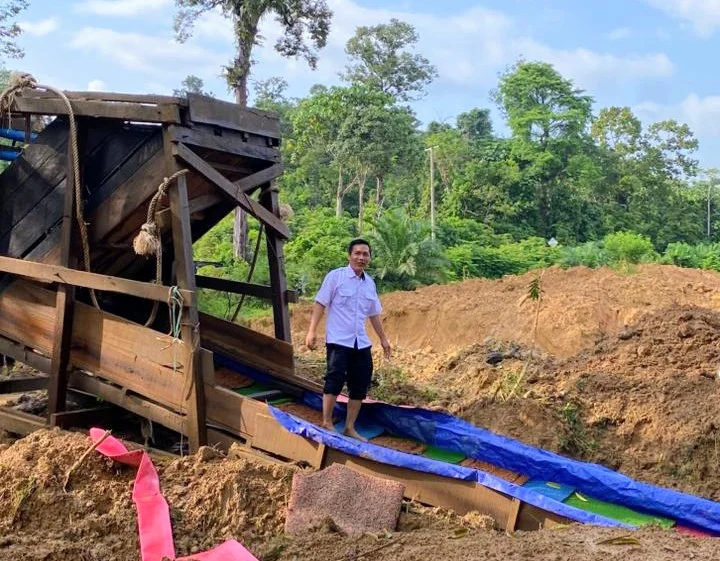
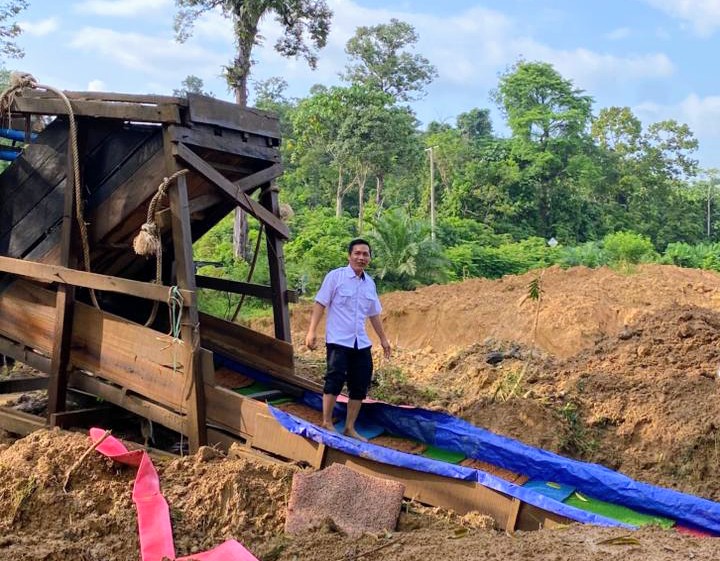
The peaceful atmosphere of SMA Negeri 8 Bungo, a senior high school located in the Rantau Pandan District of Jambi, has been replaced by the roar of heavy machinery and the looming threat of ecological disaster. For months, teachers and students have watched as illegal gold mining operations, locally known as PETI (Pertambangan Emas Tanpa Izin), crept closer to the school gates, eventually prompting a desperate act of civil intervention. On April 29, 2026, driven by a lack of response from law enforcement and the immediate threat of a landslide or flash flood, dozens of teachers abandoned their classrooms to confront the miners directly, forcing the illegal workers to flee and abandon their heavy equipment.
This confrontation marks a significant escalation in the ongoing conflict between local communities and the rampant illegal mining industry that has plagued the province of Jambi for years. The situation at SMA Negeri 8 Bungo serves as a microcosm of a much larger crisis where educational institutions and public safety are being sacrificed for illicit mineral extraction.
The Siege of SMAN 8 Bungo: A Chronology of Destruction
The crisis began to intensify toward the end of 2025. Principal Khoirul Hadi reported that heavy machinery began operating on the land immediately adjacent to the right side of the school. By the end of that year, the landscape had been transformed into a series of jagged pits and stagnant ponds. The school’s perimeter fence was destroyed during these operations, and despite the clear damage to public property, no party took responsibility or offered compensation.
By early 2026, the miners shifted their focus to the land on the left side of the school. This area was particularly critical as it served as a natural buffer zone between the school buildings and the Batang Bungo River. For decades, large duku and durian trees had stood as a biological defense against the seasonal flooding of the river. However, as the mining operations expanded, these trees were systematically felled to make way for excavation.
"The school was already prone to flooding even before the PETI activities began," Khoirul Hadi explained. "Now that the large trees—the duku and durian trees that served as our flood barriers—have been cut down, I am terrified. If a flash flood occurs, there is nothing left to stop the water. The school buildings could literally collapse."
The proximity of the mining is staggering. According to school officials, the excavation pits are less than 50 meters from the classrooms. The noise pollution alone has severely disrupted the learning environment, with the mechanical grinding of excavators often drowning out the voices of teachers during lessons.
The Failure of Institutional Protection
Before taking the drastic step of a physical raid, the school administration followed all formal channels of grievance. Khoirul Hadi reported the illegal activities to the Rantau Pandan Sector Police (Polsek) on multiple occasions. He also engaged with local leadership, including the Acting Village Head of Rantau Pandan, the Village Consultative Body (BPD), and the school committee. Together, they visited the mining sites to demand a cessation of activities.
These pleas were met with indifference. The mining continued unabated, operating in broad daylight alongside public roads where the activities were visible to any passerby, including law enforcement patrols. This perceived "blindness" of the authorities fueled the frustration that led to the April 29 uprising.
On that day, the teachers of SMAN 8 Bungo decided they could no longer wait for a state response that seemed destined never to arrive. Armed only with the moral authority of their profession, the group marched onto the mining site. The sight of dozens of educators approaching caused immediate panic among the workers. The miners fled the scene, some crossing the Batang Bungo River in haste, while two large excavators were driven away into the surrounding brush.
Ecological Data: The Staggering Scale of PETI in Jambi
The incident at SMAN 8 Bungo is not an isolated case of environmental friction but a symptom of a province-wide ecological collapse. Data provided by KKI Warsi, a prominent environmental conservation organization in Sumatra, paints a grim picture of the situation as of the end of 2025.
According to Warsi’s satellite monitoring and field audits, more than 60,000 hectares of forest and land in Jambi Province have been decimated by illegal gold mining. To put this into perspective, the area of destruction is equivalent to three times the total landmass of Jambi City. In the Bungo Regency alone, where the school is located, illegal mining covers approximately 11,119 hectares.
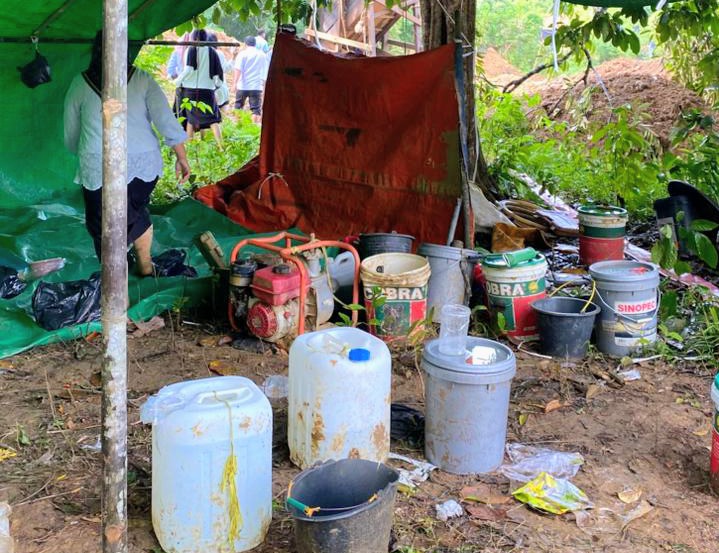
Sukmareni Rizal, the Communications Division Coordinator for KKI Warsi, emphasized that the environmental cost extends far beyond the visible scars on the land. "The rivers in these mining zones have lost their ecological function," she stated. "The water is chronically turbid, and sedimentation has reached critical levels due to constant dredging. Furthermore, there is significant evidence of chemical contamination, particularly from the use of mercury and cyanide in the gold extraction process."
The destruction of the riparian zones—the areas bordering the rivers—has also stripped the region of its natural flood mitigation. Without the root systems of native trees to hold the soil, every rainstorm carries a high risk of landslides and flash floods, putting downstream communities and infrastructure like SMAN 8 Bungo at extreme risk.
Civil Society Reaction: A "State Absence" Crisis
The fact that teachers felt compelled to act as law enforcement has drawn sharp criticism from civil rights and environmental groups. Walhi Jambi (The Indonesian Forum for the Environment) characterized the event as a "naked portrait of ecological crisis" and a failure of the Indonesian state to protect its citizens.
Oscar Anugerah, the Executive Director of Walhi Jambi, argued that the teachers’ actions should not be celebrated as a victory for "people power," but rather mourned as a sign of institutional decay. "When teachers, who should be focused on the intellectual development of the next generation, are forced to put their physical safety at risk to stop illegal activities, it is proof that the state is absent," Anugerah said.
He further questioned how such large-scale operations involving heavy machinery could operate so openly without intervention. "It is impossible for these activities to go unnoticed by the authorities. This raises the question: who is benefiting? Who is allowing this to happen? When mining threatens a space for learning, we are witnessing a crisis of justice that goes deeper than environmental degradation."
Walhi Jambi has called for a comprehensive investigation into the "intellectual actors" or financiers behind the Bungo mines. They argue that law enforcement typically targets low-level laborers—many of whom are driven by poverty—while the owners of the expensive excavators and the buyers of the illegal gold remain untouched by the law.
The Long-term Socio-Economic and Health Implications
The enrichment of the soil with toxic chemicals and the physical destruction of the land have long-term consequences that outlast the immediate economic gain of gold extraction. The use of mercury in PETI operations is a particularly grave concern. Mercury is a potent neurotoxin that bioaccumulates in the food chain, specifically in fish, which are a primary protein source for the residents of Rantau Pandan.
The health risks to the students of SMAN 8 Bungo are two-fold: the immediate physical danger of school facilities being undermined by excavation, and the long-term health risks posed by contaminated water and air. If the current trends continue, the next generation in Bungo will inherit a landscape that is both economically unproductive and biologically hazardous.
Furthermore, the social fabric of the community is being strained. Sukmareni Rizal of Warsi noted that many local residents are drawn into PETI out of economic necessity. "We must provide real alternative livelihoods," she said. "If the choice is between illegal mining and poverty, people will choose mining. The government needs to implement landscape-scale restoration projects that employ local people, transitioning them from extraction to conservation."
Conclusion: A Call for Decisive Action
The raid by the teachers of SMAN 8 Bungo is a signal that the tolerance of the public for environmental lawlessness has reached a breaking point. However, the victory on April 29 remains fragile. Without permanent police presence and the legal prosecution of the mining operators, it is likely that the heavy machinery will return once the media attention fades.
The demands from civil society are clear:
- Immediate Law Enforcement: The Jambi Regional Police must conduct an integrated audit and investigation into the PETI networks in Bungo, focusing on the owners of the heavy equipment.
- Permanent Closure: Locations near schools, hospitals, and residential areas must be declared "no-mining zones" with permanent monitoring.
- Environmental Restoration: The government must move beyond symbolic gestures and begin the massive task of replanting the riverbanks and filling the abandoned mining pits to prevent future flooding.
- Economic Alternatives: Developing sustainable agriculture or community-based forestry to provide a viable path away from the illicit gold trade.
As Sukmareni Rizal concluded, "This is no longer a routine issue of environmental management. It is a social and ecological emergency. If we do not act now, the cost of the future collapse—both of our environment and our social order—will be far greater than any gold we could ever extract." For the students of SMAN 8 Bungo, the hope is that they can return to their classrooms without the sound of excavators reminding them that their safety is being sold to the highest bidder.