
 Nila Kartika Wati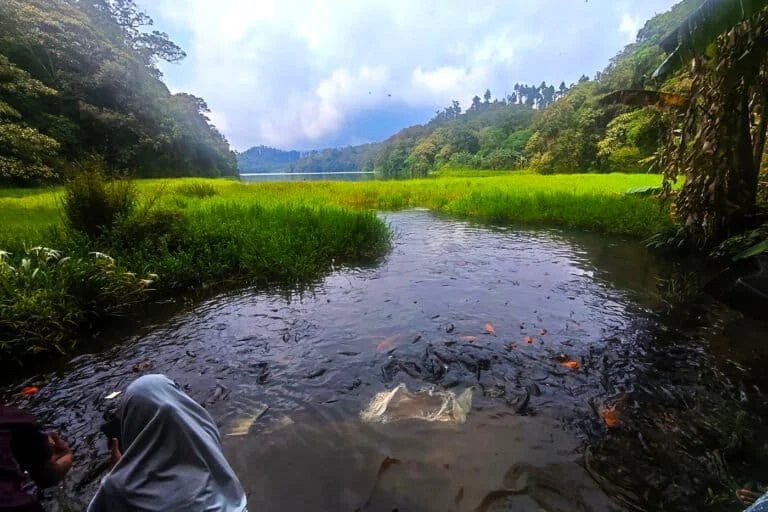
Nestled at an elevation of 1,600 meters above sea level on the western slopes of Mount Slamet, Telaga Ranjeng remains one of the most enigmatic natural landmarks in Central Java, Indonesia. Known locally as Tlogoranjeng, this serene body of water, located within the village of Pandansari in the Paguyangan District of Brebes, serves as a living laboratory where ancient cultural taboos harmonize with contemporary ecological preservation. For the local community, the lake is not merely a geographic feature or a water source; it is a sacred space protected by centuries of oral tradition, where the sanctity of life—specifically that of the fish—is held in higher regard than any potential economic gain.
The Myth of the Forbidden Catch
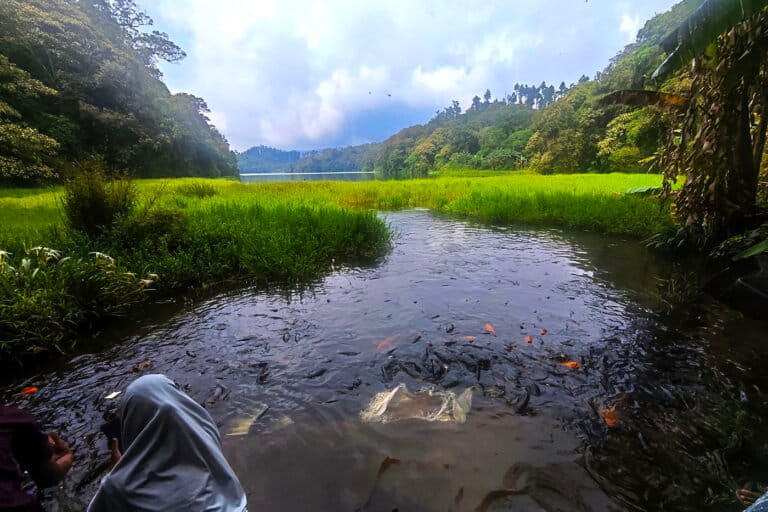
The defining characteristic of Telaga Ranjeng is the profound reverence shown to the thousands of carp (ikan mas) and catfish (lele) that inhabit its waters. Visitors are greeted by a surreal sight: as they approach the edge of the lake, massive schools of fish swarm the shallows, expectant and fearless. This behavior is a direct consequence of a strict, community-enforced prohibition against fishing. According to local lore, the fish are considered the guardians of the telaga, and any attempt to remove them from their habitat will result in misfortune.
Afan Maulana, a visitor from the neighboring Banyumas region, notes that the reputation of the lake precedes it. "Telaga Ranjeng is famous for its catfish, which are strictly off-limits. They are meant to be observed, not harvested," he explains. This sentiment is echoed by long-term residents like Sirin, who emphasizes that the community remains the primary guardian of this fragile ecosystem. The practice of "no-take" zones is not a modern government decree, but a heritage passed down through generations, effectively functioning as an informal conservation buffer.
Ecological Context and Landscape Significance
The Telaga Ranjeng area encompasses a protected nature reserve spanning approximately 53.41 hectares. This conservation area is vital not only for the aquatic life within the lake but for the broader biodiversity of the Mount Slamet slope. The lake serves as a catchment basin, collecting both rainwater and groundwater, which in turn feeds the surrounding forest vegetation.
Research conducted by Prameswari and Sudarmono, affiliated with the National Research and Innovation Agency (BRIN), highlights the critical role of the lake as a primary source of clean water for the local population. The sustainability of this water supply is intrinsically linked to the equilibrium between the lake’s water levels, the soil composition, and the surrounding flora. Scientific surveys have identified key botanical species such as Brucea javanica, Antidesma tetrandrum, and Phoebe grandis as fundamental to the structural integrity of the ecosystem. These plants stabilize the terrain and regulate the microclimate, ensuring the lake remains a reliable source of water for the villagers of Pandansari.
A Chronology of Biological Fluctuations
While the fish are a constant presence in the minds of locals, their physical visibility has historically been subject to fluctuations. Jamal, a dedicated caretaker who has monitored the lake for 15 years, provides a firsthand account of these variations. He recalls periods—most notably between 2017 and 2019—when the fish seemed to disappear entirely from the surface, causing concern among tourists and researchers alike.
"Sometimes, the catfish do not appear for a long period, but that does not mean they are extinct," Jamal clarifies. His observations suggest that the absence of fish at the surface is a natural behavioral cycle rather than a population collapse. Following the 2017–2019 lull, both the catfish and the carp returned to their customary swarming behavior. This historical pattern suggests that the lake’s ecosystem is resilient, capable of self-regulation provided that human interference—such as fishing or habitat destruction—is kept at bay.
Academic Perspectives on Cultural Conservation
The intersection of mythology and biology at Telaga Ranjeng has become a subject of academic interest. A study by researchers Nugraha and Novianto from the University of PGRI Yogyakarta posits that the "myth of the forbidden catch" serves a sophisticated function in environmental management. They argue that the belief system provides a social framework for conservation that is often more effective than formal legal enforcement.
"Local wisdom will continue to persist and evolve if the process of instilling noble values occurs within the community, from children to the elderly," the researchers note. By framing conservation as a moral and spiritual imperative, the community ensures that the ecological health of the lake is protected by the collective conscience of its inhabitants. This form of "cultural conservation" effectively mandates that the community refrain from not only fishing but also from illegal logging and polluting, thereby safeguarding the entire watershed.
Institutional Responses and Official Recognition
Government authorities, including the Natural Resources Conservation Agency (BKSDA) of Central Java, have acknowledged the unique contribution of local traditions to environmental policy. Ilmi Budi Martani, Head of the Region II Conservation Section in Pemalang, underscores the synergy between community customs and formal government mandates.
"It is a fascinating development that the local community possesses the inherent wisdom to refrain from fishing. This significantly bolsters our conservation efforts," says Martani. The BKSDA has utilized Telaga Ranjeng as a model for educational outreach and scientific research, proving that community-led initiatives are often more sustainable than top-down environmental interventions. The area now serves as a classroom where the balance between human utility and natural preservation is demonstrated in real-time.
Socio-Economic and Environmental Implications
The protection of Telaga Ranjeng has implications that extend far beyond the immediate vicinity of the village. As a critical water reservoir, the lake’s health dictates the agricultural and domestic viability of the surrounding region. The prohibition of fishing and deforestation ensures that the forest cover remains intact, preventing soil erosion and siltation of the lake.
The broader implication is that cultural practices, when properly aligned with ecological necessity, can provide a robust defense against the degradation that plagues many other natural sites in Indonesia. While tourism has grown in the region, the strict adherence to the "no-fishing" rule has prevented the commercialization of the lake’s fauna, keeping the ecosystem in a near-pristine state.
However, the challenge remains to maintain this equilibrium in the face of increasing tourist traffic. As social media and global connectivity bring more visitors to the slopes of Mount Slamet, the pressure on local resources intensifies. The task for both the community and the authorities is to ensure that the influx of visitors does not lead to the contamination of the water or the disruption of the fish’s natural behaviors.
Lessons from the Mount Slamet Slope
The case of Telaga Ranjeng provides a compelling case study for conservationists globally. It demonstrates that the most effective environmental policies are often those that are deeply rooted in the local culture. By imbuing the protection of nature with a sense of sacredness, the residents of Pandansari have ensured the longevity of their environment in a way that modern legislation often fails to do.
As Indonesia continues to grapple with the consequences of deforestation and water scarcity, the model seen at Telaga Ranjeng offers a blueprint for success. It suggests that if communities are empowered to maintain their own traditions and are given the support of government bodies, they can become the most effective stewards of their own natural heritage.
In conclusion, the fish of Telaga Ranjeng are more than just a tourist attraction; they are the living, breathing symbols of a successful partnership between humanity and nature. Whether the fish appear at the surface or remain hidden in the depths, the commitment of the Pandansari community to protect them remains a steadfast testament to the power of tradition in an ever-changing world. The lake stands as a reminder that when we protect the wild, we are, in effect, protecting the very foundations of our own survival.









