
 Nila Kartika Wati
In the unforgiving expanse of the Australian Outback, the Finke River—known to the Arrernte people as Larapinta—stands as a geological paradox and a biological sanctuary. Spanning approximately 600 kilometers from its origins in the MacDonnell Ranges to the fringes of the Simpson Desert, this waterway is widely cited as the oldest river system on Earth, with some estimates dating its path back 300 to 400 million years. However, in an era defined by accelerating climate change and habitat degradation, this ancient drainage system faces a contemporary crisis. As the river’s surface flow becomes increasingly ephemeral, appearing for only a few days a year before vanishing into the thirsty sands, the survival of its unique aquatic life depends entirely on a fragile, fragmented network of isolated waterholes.
Geological Debates: A River Older Than Time?
The reputation of the Finke River as the world’s oldest waterway is rooted in its dramatic interaction with the landscape. The river cuts directly through the quartzite ridges of the MacDonnell and Krichauff Ranges, mountains that were thrust upward during the Alice Springs Orogeny roughly 300 to 400 million years ago. Geologists have long classified the Finke as an "antecedent" stream, implying that the river was already established on the landscape before the tectonic uplift occurred, effectively "sawing" through the rising rock as the mountains slowly ascended.
Yet, this narrative is not without its skeptics. In a 2021 re-evaluation, renowned geomorphologist Victor R. Baker challenged the traditional consensus, noting a distinct lack of geological evidence confirming the river’s specific path prior to the Alice Springs Orogeny. Baker’s research suggests a more complex evolutionary history, proposing that the modern Finke valley is the result of multi-stage erosion and weathering cycles, likely shaped by the warm, humid conditions that characterized the early Cenozoic era.
This debate highlights the difficulty of dating such ancient landforms. While modern geochronological techniques—such as cosmogenic nuclide dating using isotopes like Beryllium-10 and Aluminum-26—have been employed in the region, they are primarily useful for measuring current rates of erosion. Because the half-lives of these isotopes are relatively short (under 1.5 million years), they cannot definitively confirm the river’s age at the time of its inception. Consequently, the "oldest river" title remains a compelling, albeit scientifically contested, interpretation of the landscape’s long-term evolution.
The Fragmented Oasis: A Survey of Life
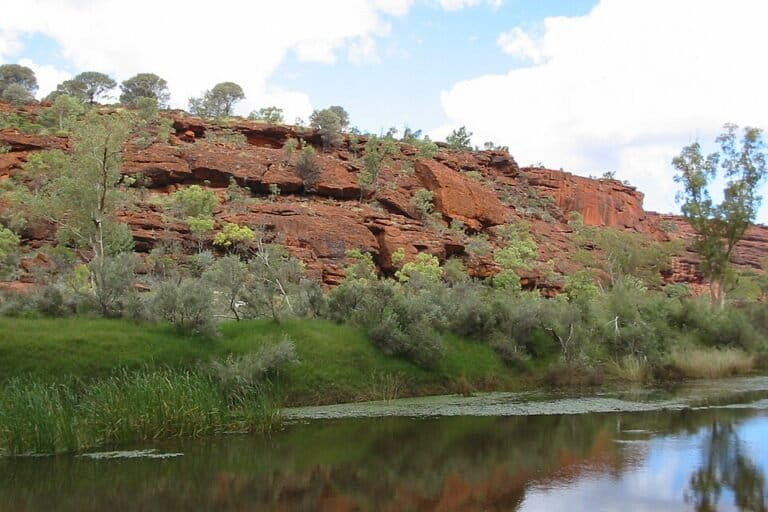
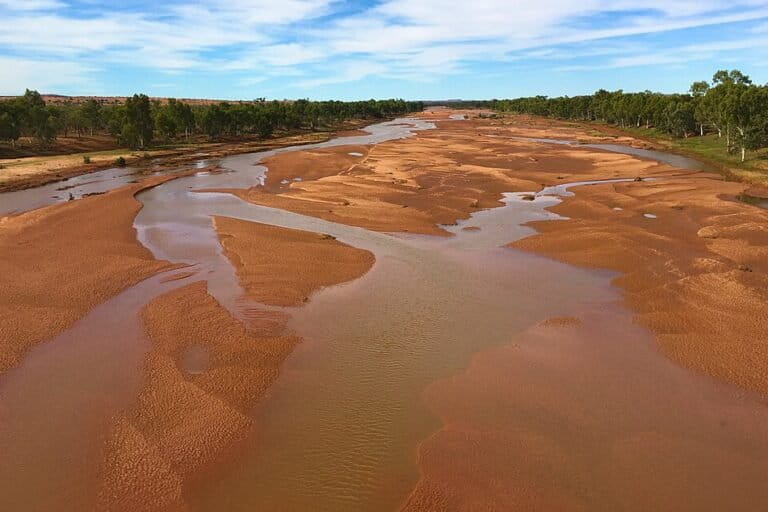
As Australia’s climate shifted toward arid conditions toward the end of the Pliocene epoch, the continuous flow of the Finke River fractured into a series of disconnected, semi-permanent waterholes. These pools have become the last bastions for a specialized suite of freshwater species. A comprehensive survey of the river system, which has been systematically monitored since 2011, reveals a surprisingly resilient ecosystem despite the extreme environmental stressors.
Recent data from the 2024 Lake Eyre Basin Rivers Assessment (LEBRA) provides a detailed snapshot of this biodiversity. While previous maps indicated the presence of only 20 major waterholes, recent aerial surveys have identified 274 distinct pools along the river’s central reaches. These findings are crucial, as they suggest that the river’s "connectivity" is more complex than once believed. Some of these pools, such as those found in the iconic Ormiston, Glen Helen, and Redbank Gorges, reach depths of up to nine meters. These deeper reservoirs are often supported by subsurface groundwater, allowing them to retain water for more than two years even in the absence of surface flow.
The 2024 monitoring effort successfully recorded 10,555 individual fish across the basin. The site known as "Big Salty" emerged as a biodiversity hotspot, hosting nine distinct species. Among these, three are endemic to the Finke system: the Finke goby (Chlamydogobius japalpa), the desert mogurnda (Mogurnda larapintae), and the Finke hardyhead (Craterocephalus centralis).
Profiles of Survival: The Endemic Trio
Each of the three endemic species has evolved specialized reproductive and survival strategies to cope with the volatile nature of the river’s waterholes.
The Finke goby, a bottom-dwelling fish measuring roughly 5.5 centimeters, is perhaps the most specialized. Distributed from the upper reaches of the MacDonnell Ranges down to approximately 300 kilometers downstream, the species demonstrates complex parental care. Between November and March, females deposit their eggs in deep rock crevices, which the males then guard and oxygenate by fanning them with their fins until they hatch.
The desert mogurnda represents the apex predator of this miniature world. Growing up to 13 centimeters in length, this species is an ambush hunter, preying on smaller fish and invertebrates within the rocky pools. Their reproductive strategy is equally intense; females can lay between 200 and 800 eggs on hard surfaces, which the males guard vigilantly for approximately a week.
The Finke hardyhead, a schooling species reaching 7.5 centimeters, occupies the open water columns and submerged vegetation. Unlike its counterparts, it displays a more opportunistic reproductive behavior, depositing sticky eggs among aquatic plants that hatch in just five to seven days. However, the taxonomic status of the hardyhead remains a subject of scientific discussion. Genomic studies conducted in 2011 failed to find significant divergence between the Finke hardyhead and the more widespread Craterocephalus eyresii, prompting further investigation into whether these populations are truly distinct or merely localized variants.
Environmental Pressures and Future Vulnerability
Despite their evolutionary adaptations, these fish are currently facing an unprecedented convergence of threats. The primary concern is the degradation of waterholes by invasive animals. Introduced species such as wild horses (brumbies) and camels frequently congregate at these limited water sources, trampling the banks and increasing sedimentation. This buildup of silt not only reduces the depth of the pools but also alters the chemical composition of the water, which is already prone to high salinity levels as evaporation rates climb.
Furthermore, the introduction of the invasive eastern mosquitofish (Gambusia holbrooki) has introduced a new predator and competitor into the ecosystem. Gambusia are notoriously aggressive and have been linked to the decline of native fish species across the globe.
The status of the endemic trio reflects these mounting pressures:
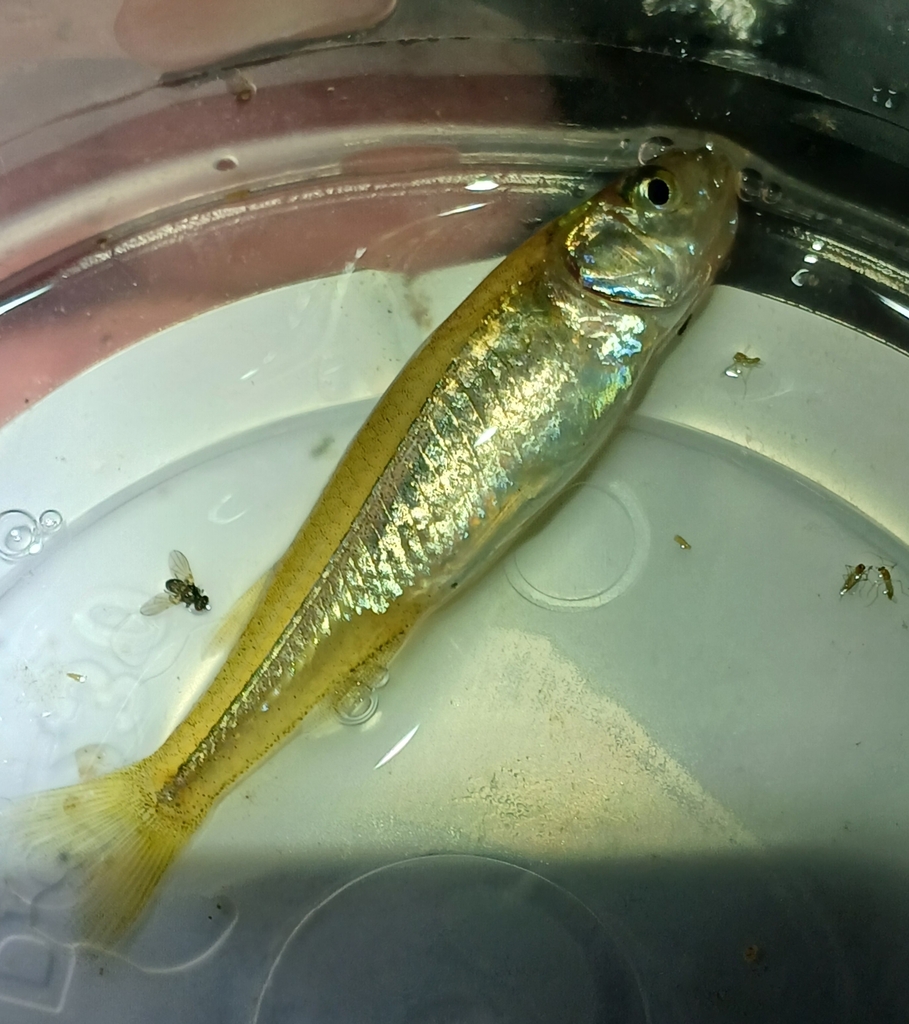
- Finke goby: Classified as "Vulnerable" under the IUCN Red List and Northern Territory regulations. Reports indicate that populations in the Palmer River—a major tributary—may already be locally extinct.
- Finke hardyhead: Listed as "Near Threatened" on the IUCN Red List, though its classification is subject to ongoing review.
- Desert mogurnda: Currently lacking formal protection status, though its habitat remains equally at risk as the other two.
Scientific and Conservation Implications
The loss of even a single waterhole in this arid environment represents a catastrophic event for the fish populations. Because these pools are essentially islands in a desert sea, fish cannot migrate to neighboring systems if their home habitat becomes uninhabitable.
"The conservation of the Finke River is not just about protecting a waterway; it is about preserving a unique evolutionary laboratory," noted a report by the Northern Territory Government. Researchers emphasize that effective management must move beyond simple observation to active intervention. Proposed strategies include fencing off critical waterholes to prevent degradation by feral livestock and monitoring the spread of Gambusia to prevent further displacement of native species.
As climate models predict a hotter and drier future for Central Australia, the survival of the Larapinta species will depend on the maintenance of these groundwater-fed refuges. The Finke River remains a poignant reminder of the tension between ancient geological time and the rapid, human-driven environmental changes of the Anthropocene. Whether these resilient species can continue to hold their ground in the desert’s last remaining pools depends on our ability to safeguard the integrity of these hidden, life-sustaining sanctuaries.









