Nila Kartika Wati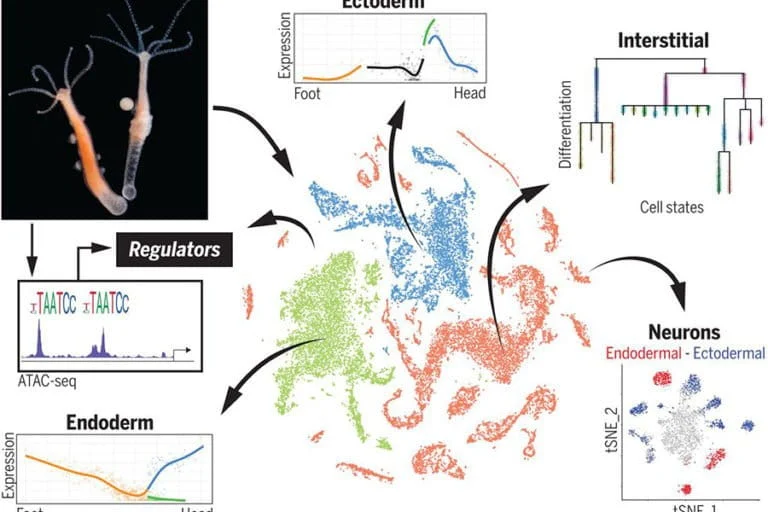
In the tranquil depths of freshwater ponds, obscured by the swaying fronds of aquatic vegetation, resides a creature that appears to defy the fundamental laws of biology. Known as the Hydra, this translucent polyp, measuring a mere centimeter in length, has become the focal point of intensive scientific scrutiny due to its apparent exemption from the aging process. Unlike the vast majority of multicellular organisms, the Hydra exhibits no signs of senescence—no degradation of physiological function, no accumulation of cellular debris, and no increase in mortality rates as time progresses. Under optimal environmental conditions, the Hydra possesses a biological capacity for indefinite survival, a phenomenon that challenges our understanding of life, death, and the evolutionary necessity of aging.
This extraordinary trait has been validated by decades of laboratory observations. While most animals follow a predictable trajectory of birth, maturation, and eventual decline, researchers have noted that Hydra populations maintained in controlled environments show no statistical increase in death rates regardless of their chronological age. This makes the Hydra a "biologically immortal" organism, a rarity in the animal kingdom that offers a unique window into the mechanics of cellular preservation.
The Mechanics of Constant Renewal: A Twenty-Day Cycle
The primary engine behind the Hydra’s eternal youth is an aggressive and highly efficient cellular regeneration strategy. According to groundbreaking research published in the journal Science, utilizing single-cell RNA sequencing to map the organism’s genetic activity, the Hydra maintains its vitality through the continuous replacement of its entire body.
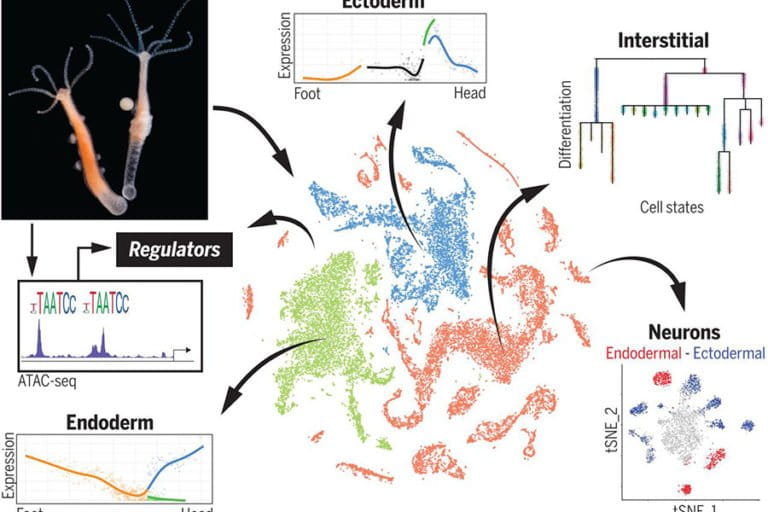
Scientists have identified three distinct, self-renewing stem cell lineages within the Hydra: the ectodermal, endodermal, and interstitial lines. These three "piles" of stem cells serve as a constant reservoir of new material. The ectodermal and endodermal cells form the outer and inner layers of the body column, respectively, while the interstitial stem cells (ISCs) are multipotent, capable of differentiating into a variety of specialized cells.
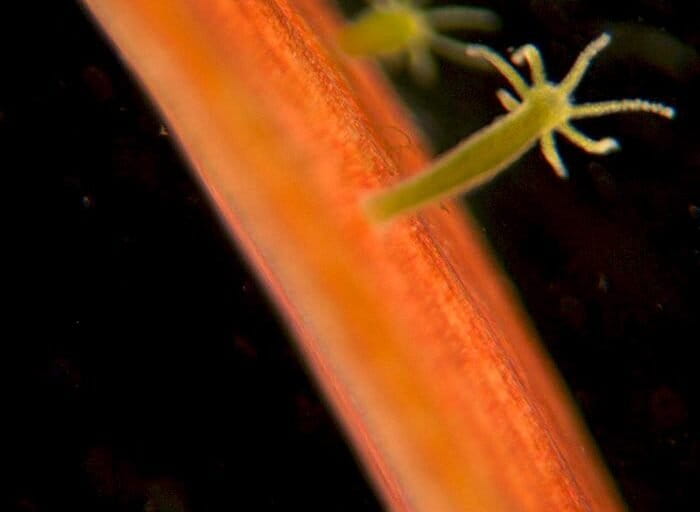
Through this tripartite system, every cell in a Hydra’s body is replaced approximately every 20 days. In a biological realization of the "Ship of Theseus" paradox, a Hydra observed today is physically an entirely different individual three weeks later, despite maintaining the same form and behavioral patterns. This constant turnover prevents the accumulation of the cellular damage, protein misfolding, and metabolic waste that typically drive the aging process in more complex organisms like mammals. By the time a cell could begin to show signs of wear, it is shed and replaced by a fresh, functional successor.
The Interstitial "Factory" and Genetic Signaling
The interstitial stem cells (ISCs) act as a biological factory, producing a wide array of specialized components including neurons, secretory gland cells, and the complex stinging cells known as nematocysts. The 2019 study led by Stefan Siebert and colleagues provided the first high-resolution map of how these cells "decide" their developmental fates.
By tracking the gene expression of 25,000 individual cells, researchers identified the precise genetic pathways that dictate the transformation of a generic stem cell into a specialized nerve or stinging cell. This process is governed by specific transcription factors—proteins that act as master switches for gene activity. Two such factors, Zic4 and Gata3, were found to be instrumental in ensuring that new cells are directed to the correct locations and assume the correct functions.
This level of coordination is critical. In most organisms, rapid cellular division without strict regulatory oversight leads to the formation of tumors or developmental abnormalities. The Hydra, however, possesses a sophisticated signaling architecture that maintains the integrity of its nervous system and body structure even as its constituent parts are in a state of perpetual flux.
The Evolutionary Link: Human Genetics and the FOXO Gene
While the Hydra may appear primitive, it shares a surprising degree of genetic heritage with the human race. Genomic mapping has revealed that approximately 60 percent of Hydra genes have direct counterparts in the human genome. Among these shared sequences is the FOXO gene, a critical regulator of cellular lifespan and stress resistance.
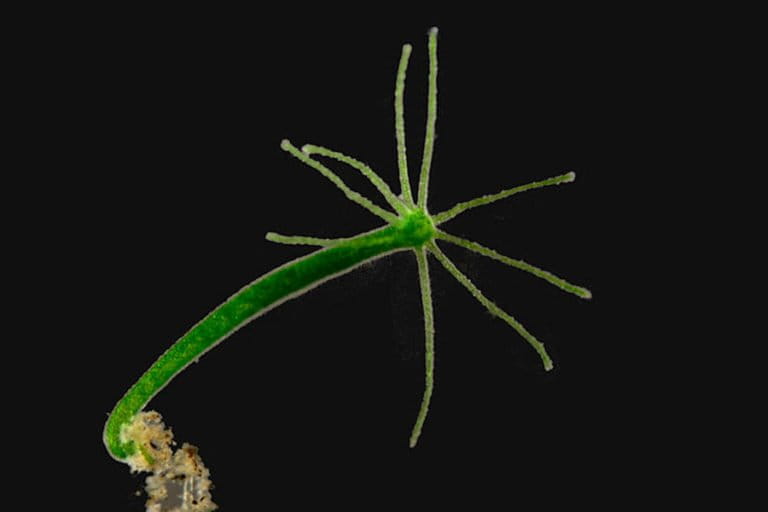
In humans, variations of the FOXO3A gene are frequently identified in "super-centenarians"—individuals who live past the age of 100 with minimal age-related illness. In the Hydra, the FOXO gene is expressed globally and remains active throughout the organism’s life. It acts as a master controller that maintains the "stemness" of the cell lineages, preventing them from losing their ability to divide and renew.
This discovery suggests that the mechanisms of longevity are not a recent evolutionary development but are rooted in ancient biological systems. The Hydra’s immortality is not the result of a "magic" gene absent in humans, but rather the result of a highly optimized version of a defense system that humans already possess. In humans, these pathways often become suppressed or damaged over time; in the Hydra, they operate at peak efficiency indefinitely.
The History of Hydra Research: From Trembley to Modern Genomics
The fascination with the Hydra is not a modern phenomenon. The organism was first brought to the attention of the scientific community in 1744 by the Swiss naturalist Abraham Trembley. Trembley’s experiments were revolutionary; he discovered that if a Hydra were cut into several pieces, each piece would regenerate into a complete, miniature version of the original organism.
Trembley’s work laid the foundation for the field of regenerative biology. For nearly three centuries, the Hydra remained a curiosity, but it was not until the advent of modern molecular tools—such as CRISPR-Cas9 gene editing and single-cell sequencing—that scientists could begin to decode the "how" behind its resilience. The transition from observing physical regeneration to mapping the molecular trajectories of stem cells has transformed the Hydra from a pond-dwelling anomaly into a cornerstone of anti-aging research.
Vulnerabilities in the Face of Immortality
Despite its biological immortality, the Hydra is far from invincible. Its status as an "immortal" creature refers specifically to its lack of internal senescence, not an immunity to external causes of death. In the wild, Hydra populations are kept in check by predators, such as small fish and water insects, as well as by environmental fluctuations.
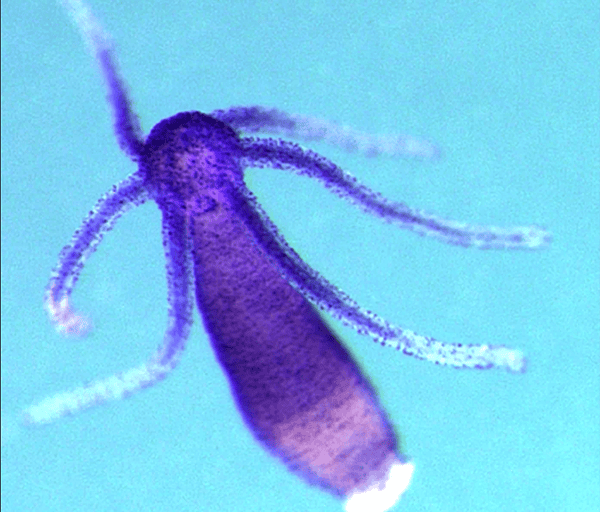
Furthermore, recent studies have shown that even this master of regeneration is susceptible to disease. Researchers have documented the occurrence of naturally occurring tumors in Hydra. Intriguingly, these cancers can be "transmissible" in a sense; during asexual reproduction through a process called budding, a parent Hydra can pass tumorous cells to its offspring. This finding is of significant interest to oncologists, as it provides a model for studying how cancer cells can evade the immune system and persist across generations in a primitive organism.
The Hydra is also an incredibly sensitive bioindicator. Its survival is tied to the purity of its habitat. Changes in water pH, the presence of heavy metals, or the introduction of synthetic pollutants can halt the regenerative process and lead to rapid population decline. Thus, while the Hydra does not age, it remains a fragile component of its ecosystem, highly vulnerable to the impacts of human-driven environmental degradation.
Implications for Human Medicine and "Healthspan"
The study of the Hydra is shifting the focus of geriatric medicine from the pursuit of "eternal life" to the more practical goal of extending the "healthspan"—the period of life spent in good health. By understanding how the Hydra coordinates its stem cell pools and maintains genetic stability, researchers hope to unlock new treatments for degenerative diseases.
In humans, the decline of stem cell function is a hallmark of aging, leading to conditions such as Alzheimer’s, osteoporosis, and muscular dystrophy. If scientists can determine how to re-activate "Hydra-like" pathways in human tissues, it may be possible to trigger localized regeneration in damaged organs or slow the systemic decline of the aging body.
"The Hydra shows us that aging is not an inescapable biological certainty," notes one line of analysis within the research community. While the complexity of the human body—with its trillions of specialized cells and intricate brain architecture—precludes the kind of total-body replacement seen in the Hydra, the organism serves as a proof of concept. It demonstrates that the biological machinery for maintenance and repair can, in theory, keep pace with the forces of decay.
Future Horizons in Regenerative Research
As genomic technology continues to advance, the next phase of Hydra research will likely involve "functional genomics"—not just mapping the genes, but manipulating them to see how the system responds. Scientists are currently investigating how the Hydra manages to maintain its nervous system’s "memory" and function despite the constant turnover of neurons. This has profound implications for neurology and the treatment of brain injuries.
The Hydra stands as a testament to the mysteries still hidden in the world’s simplest ecosystems. By looking backward at one of the planet’s most ancient multicellular lineages, science is finding the roadmap for the future of human health. The tiny polyp in the pond, though small and silent, carries a message of resilience that may one day redefine the limits of human potential. Through the lens of the Hydra, we are learning that the end of aging may not be a myth, but a puzzle of genetic switches and cellular signals waiting to be solved.