Nila Kartika Wati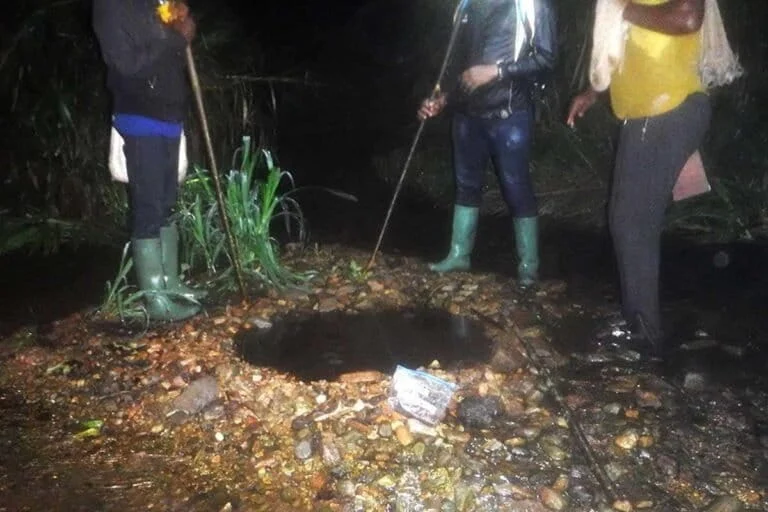
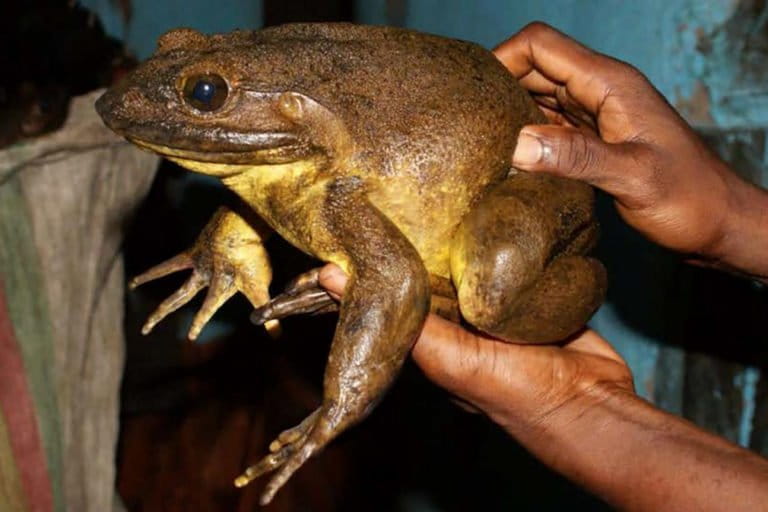
The dense, humid rainforests of West Africa, stretching across the rugged terrains of Cameroon and Equatorial Guinea, harbor one of the most extraordinary biological wonders of the natural world. Amidst the thousands of amphibian species documented by science, the Goliath frog (Conraua goliath) stands as a peerless titan. Unlike its smaller relatives that rely on vibrant colors or lethal toxins for survival, this species has carved its ecological niche through sheer physical presence and a recently discovered aptitude for complex environmental engineering. Weighing as much as a fully grown domestic cat and possessing the strength to rearrange the riverbeds it inhabits, the Goliath frog is currently the subject of intense scientific scrutiny as researchers race to understand its unique behaviors before it vanishes from the wild forever.
For decades, the Goliath frog was known primarily for its record-breaking dimensions. Reaching lengths of up to 33 centimeters (over 13 inches) from snout to vent—and significantly longer when its powerful legs are extended—the frog can weigh up to 3.25 kilograms (7.2 pounds). Its scientific classification, Conraua goliath, aptly reflects its status as the largest extant anuran on Earth. In the wild, these giants can live for approximately 15 years, while those in managed care have been known to exceed 21 years. Despite their intimidating size, they are notoriously elusive and shy creatures. Evolution has equipped them with acute hearing but, curiously, no vocal sacs. While most frogs are famous for their rhythmic croaking, the Goliath frog is limited to a sharp, whistling sound, relying more on physical presence and environmental manipulation than vocal signaling.
The Architect of the River: A Breakthrough in Behavioral Science
A landmark study published in the Journal of Natural History has fundamentally altered the scientific community’s perception of these amphibians. Researchers, led by Marvin Schäfer of the Berlin Museum of Natural History, discovered that the Goliath frog is not merely a passive inhabitant of its environment but an active "ecosystem engineer." The study, conducted along the Mpoula River in western Cameroon, revealed that these frogs engage in sophisticated nest-building behaviors that are virtually unheard of in other amphibian species.
The research team identified 22 distinct nesting sites along a 400-meter stretch of the river. Through meticulous observation and the use of infrared camera traps, they categorized the nesting behaviors into three distinct levels of complexity. The simplest nests involved the frogs clearing existing natural pools of leaf litter and debris to create a clean environment for their eggs. The second level of complexity involved the frogs digging into gravel and sand at the edge of the river to expand shallow pools. However, it was the third type of nest that truly stunned the researchers: the construction of entirely new pools from scratch.
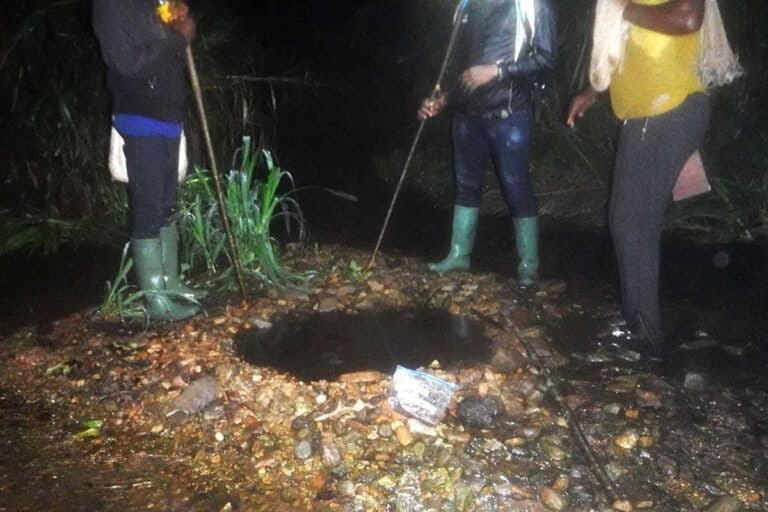
To build these "private nurseries," Goliath frogs were observed moving heavy river stones, some weighing as much as 2 kilograms—more than half of the frog’s own body weight. By excavating these stones and piling them at the periphery of a shallow area, the frogs create a semi-isolated pond protected from the torrential currents of the main river. These structures serve a dual purpose: they prevent the eggs and tadpoles from being washed downstream during heavy rains and provide a barrier against predatory fish and aquatic insects.
The Evolutionary Drivers of Gigantism
The discovery of these "architectural" skills provides a compelling answer to a long-standing biological mystery: why did the Goliath frog grow so large? In the world of evolutionary biology, gigantism usually comes with high metabolic costs and increased visibility to predators. For the Goliath frog, however, the benefits of size appear to be tied directly to its role as a builder.
Schäfer’s team posits that the selective pressure for larger body size was driven by the necessity of moving heavy objects. In the fast-flowing, rocky rivers of the Sanaga River basin, a small frog would be physically incapable of altering the landscape to protect its offspring. Only the largest and strongest individuals could successfully construct these fortified nests. Over millennia, natural selection favored those with the mass and muscle to engineer survival, leading to the emergence of the Goliath. This "labor-driven evolution" suggests that the frog’s size is an essential tool, much like the beaver’s teeth or the elephant’s trunk, designed specifically to manipulate its habitat for the benefit of the next generation.
Furthermore, the data collected from camera traps showed that the labor does not end with construction. Adult frogs were recorded standing guard over the nests throughout the night. While it is not yet definitively proven which sex performs which role, local hunters and preliminary scientific data suggest that the males may be the primary builders, while the females—which are often larger—take on the role of the sentinel. This level of parental investment is rare among amphibians and highlights the complexity of their social and reproductive lives.
A Population in Peril: The Triple Threat of Extinction
Despite its remarkable adaptations, the Goliath frog is currently classified as "Endangered" on the IUCN Red List. Recent surveys indicate that the population has plummeted by more than 50% over the last three generations. This decline is attributed to a "triple threat" of localized hunting, international trade, and the emergence of a deadly global pathogen.
The first and most immediate threat is the bushmeat trade. In southwestern Cameroon, the Goliath frog is considered a prestigious delicacy. Its meat is prized for its flavor and texture, often served at high-end weddings and traditional ceremonies. Beyond simple consumption, there is a deep-seated cultural belief in the medicinal properties of the species; tadpoles and young frogs are often harvested and fed to pregnant women and children, under the belief that the frog’s strength will be transferred to the consumer.
The second threat is economic. A single adult Goliath frog can fetch up to USD 15 in local markets, a significant sum in rural West African communities. This has fueled a cross-border trade involving Nigeria, Equatorial Guinea, and Gabon. Furthermore, the frog’s status as a biological curiosity makes it a prime target for the international exotic pet trade and private collectors. While Equatorial Guinea has implemented an export cap of 300 individuals per year, enforcement is notoriously difficult in the dense rainforest borders, and illegal poaching remains rampant.
A study published in the journal Oryx in January 2024 highlighted a particularly devastating trend: hunters specifically target the largest individuals, which are almost invariably the breeding females guarding the nests. By removing the primary protectors and the most fertile members of the population, the hunting trade is effectively sabotaging the species’ ability to replenish its numbers.
The Silent Killer: Chytridiomycosis Reaches the Sanaga Basin
While hunting and habitat loss have long been recognized as dangers, a new and more insidious threat has emerged. Research conducted in 2025 has confirmed the presence of the fungal pathogen Batrachochytrium dendrobatidis (Bd) within the Goliath frog’s primary habitats. This fungus causes chytridiomycosis, a disease that has been described as the most deadly pathogen in the history of vertebrate life, responsible for the decline or extinction of over 500 amphibian species worldwide.
The Bd fungus attacks the keratinized skin of the frog. For amphibians, the skin is not just a protective layer; it is a vital organ used for respiration, electrolyte balance, and water absorption. As the fungus spreads, it thickens the skin, preventing the frog from absorbing essential salts like sodium and potassium. This leads to an electrolyte imbalance that eventually causes the frog’s heart to stop.
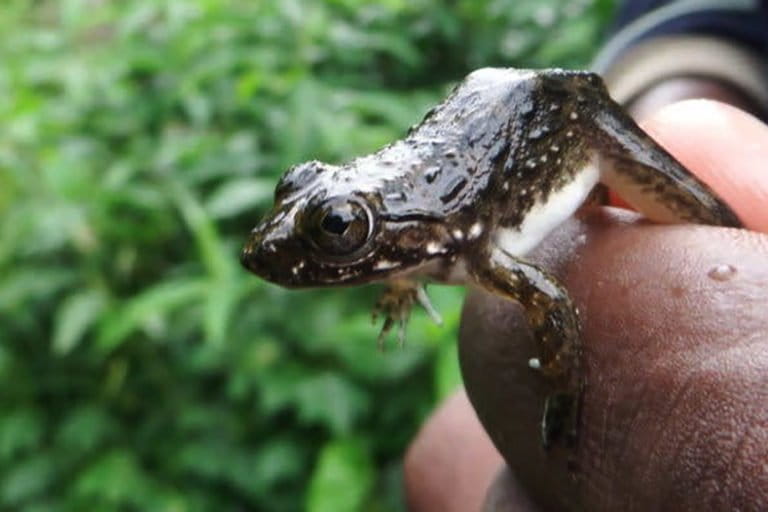
The discovery of Bd in the West African highlands is a catastrophic development. Because the Goliath frog lives in cool, moist, high-altitude river systems—the exact environment where the fungus thrives—the species is uniquely vulnerable. When combined with the stress of habitat fragmentation and the physical toll of being hunted, the introduction of chytridiomycosis could act as the final tipping point toward extinction.
Chronology of Conservation and Research
To understand the current state of the Goliath frog, one must look at the timeline of its interaction with modern science:
- 1906: The species is first scientifically described by George Albert Boulenger, who recognized it as a giant among its peers.
- Late 20th Century: Commercial hunting intensifies as regional infrastructure improves, allowing hunters better access to remote river systems.
- 2004: The IUCN officially lists the species as Endangered due to a projected 50% population decline.
- 2019: The Berlin Museum of Natural History publishes the first evidence of nest-building and stone-moving behavior, reframing the species as an environmental engineer.
- 2024: Detailed surveys in Cameroon reveal that hunting pressure is disproportionately affecting breeding females, leading to a collapse in recruitment rates.
- 2025: Pathologists confirm the presence of the Bd fungus in the core habitat of the Goliath frog, sparking an international call for emergency conservation measures.
Implications and the Path Forward
The potential loss of the Goliath frog extends far beyond the disappearance of a single species. As an apex predator within its aquatic ecosystem, the Goliath frog plays a crucial role in regulating the populations of insects, arachnids, and smaller amphibians. Furthermore, its role as an ecosystem engineer means that its presence literally shapes the physical structure of the rivers. The small pools it creates provide micro-habitats for a variety of other organisms, including fish fry and aquatic larvae that might not survive in the turbulent main current.
Conservationists argue that a multi-pronged approach is required to save the species. This includes the establishment of community-led "frog sanctuaries" where hunting is strictly prohibited, alongside educational programs to shift cultural perceptions of the frog from a food source to a national treasure. Additionally, international pressure is needed to curb the demand for wild-caught Goliath frogs in the pet trade.
The story of the Goliath frog is a testament to the wonders of evolution—a creature that grew to the size of a cat just so it could move stones to protect its young. However, it is also a sobering reminder of the fragility of the natural world. As the "architect of the river" faces the combined pressures of human appetite and microscopic disease, the window of opportunity to save this ancient giant is rapidly closing. The scientific community remains hopeful that by understanding the frog’s unique biology and its role as a builder, they can inspire the global will necessary to ensure that the whistling giants of West Africa do not fall into the silence of extinction.