Eko Sulistyo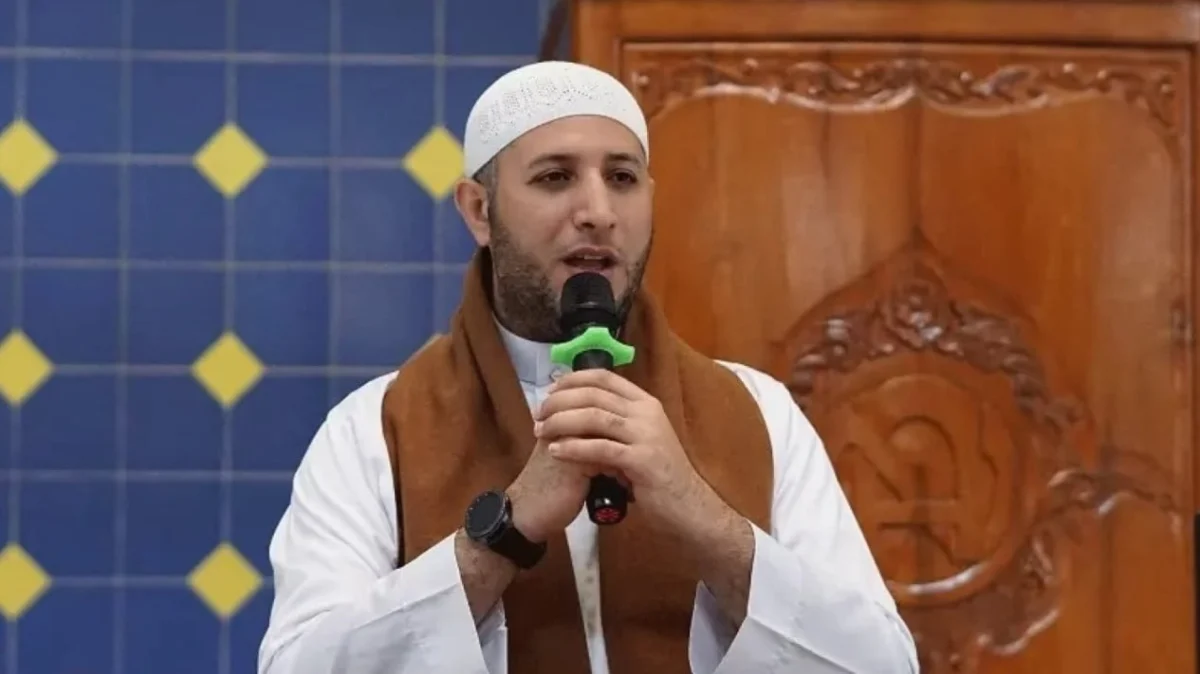
The religious landscape in Indonesia has been jolted by a series of revelations surrounding the figure known as Syekh Ahmad Al Misry, whose real identity and past life have recently come under intense public scrutiny. Long regarded as a prominent teacher and spiritual guide, the man born as Ahmed Abdel Wakeel is now the subject of a burgeoning controversy that touches upon allegations of sexual harassment, identity manipulation, and an alleged attempt to evade Indonesian law by renouncing his citizenship. The discourse, which gained significant traction in mid-May 2026, has been largely fueled by public statements from Hanny Kristianto, a well-known activist and social media personality, who has meticulously deconstructed the narrative of the man many once revered.
The Discrepancy Between Public Persona and Private History
For several years, Syekh Ahmad Al Misry occupied a prestigious space in the Indonesian Islamic community. Appearing frequently on television programs and religious gatherings, he was often portrayed as an elite scholar from the Middle East who had chosen to dedicate his life to the spiritual enrichment of the Indonesian people. However, recent reports suggest that this "exclusive" and "venerated" image may have been a carefully constructed facade that masks a far more modest origin.
According to Hanny Kristianto, who has been vocal about the case on various social media platforms, the man known to the public as Syekh Ahmad Al Misry is actually an individual named Ahmed Abdel Wakeel. Kristianto’s revelations point to a past that contradicts the high-status image the figure has projected. Far from being a high-ranking cleric of international pedigree, Kristianto claims that when Ahmed Abdel Wakeel first established himself in Indonesia, he was a person of ordinary means living in the Tebet district of South Jakarta.
Reports indicate that during his early years in the capital, he resided in his father-in-law’s house, leading a life that was indistinguishable from that of many other expatriates seeking a future in Southeast Asia’s largest economy. The transition from an ordinary resident to a "Syekh"—a title denoting high religious authority and scholarship—has prompted many of his long-time acquaintances to question the legitimacy of his credentials and the speed at which he attained such influence.
From Translator to Spiritual Leader: A Rapid Transformation
One of the most striking details brought to light by Kristianto is the professional background of Ahmed Abdel Wakeel prior to his religious fame. Before becoming a household name in the "dakwah" (proselytizing) circuit, he reportedly worked as a translator. In this capacity, he served as a linguistic bridge, likely for other visiting scholars or in business contexts, rather than as a primary source of religious edification himself.
The transformation from a facilitator of communication to a central religious figure has raised eyebrows among observers of Indonesian religious trends. In Indonesia, there is a historical and cultural tendency to accord high respect to individuals from the Middle East, particularly those who possess a deep command of the Arabic language and Islamic jurisprudence. This cultural reverence, while often well-placed, can sometimes create a vacuum of accountability, allowing charismatic individuals to ascend the social hierarchy with minimal vetting of their actual academic or spiritual lineage.
"Many who knew him in the early days are bewildered," Kristianto noted in his public address. "They ask, how did this person suddenly become a Syekh?" This question lies at the heart of the current controversy, as it suggests a potential exploitation of religious symbols and titles to gain social and financial capital.
Allegations of Sexual Misconduct and Legal Implications
While the questions surrounding his identity are significant, the most damaging aspect of the current scandal involves allegations of sexual harassment. While the specific details of the cases are currently being processed through informal and formal channels, the mere existence of these accusations has sent shockwaves through the community. In a country like Indonesia, where religious figures are held to the highest moral standards, allegations of this nature are catastrophic to one’s reputation and standing.
The legal framework in Indonesia has become increasingly stringent regarding sexual violence following the enactment of the Law on Sexual Violence Crimes (UU TPKS). If the allegations against Ahmed Abdel Wakeel are brought to court, he could face severe penalties. The sensitivity of the situation is heightened by the power imbalance inherent in the relationship between a religious teacher and his followers. In many "pesantren" (Islamic boarding schools) or "majlis ta’lim" (study groups), the word of the teacher is rarely questioned, creating an environment where misconduct can unfortunately go unreported for extended periods.
The Citizenship Controversy and Alleged Flight from Justice
Adding a layer of geopolitical complexity to the scandal is the claim that Ahmed Abdel Wakeel is attempting to renounce his Indonesian citizenship. Hanny Kristianto alleged that the embattled figure has made moves through the Indonesian Embassy (KBRI) in Cairo, Egypt, to relinquish his status as an Indonesian national.
This move is being interpreted by critics not as a personal choice of residency, but as a strategic maneuver to avoid the reach of Indonesian law enforcement. Under Indonesian law, once a person renounces their citizenship, certain legal proceedings can become more complex, especially if the individual remains outside the country. Kristianto has labeled this move as a betrayal of the nation that provided him with a home, a career, and a platform.
"This is the act of a person who does not know gratitude," Kristianto stated. "By trying to sever ties with Indonesia at a time when he is facing legal scrutiny, he is essentially confirming the suspicions against him and attempting to flee his responsibilities."
Sociological Context: The "Foreign Preacher" Phenomenon in Indonesia
To understand why this case has resonated so deeply, one must examine the broader sociological context of religious authority in Indonesia. The country has a long tradition of welcoming "ulama" (scholars) from the Hadhramaut region of Yemen and other parts of the Arab world. These figures have historically played a crucial role in the development of Indonesian Islam.
However, in the digital age, the process of becoming a religious influencer has been democratized—and perhaps diluted. Social media platforms like Instagram and YouTube allow individuals to bypass traditional gatekeepers of religious authority, such as the Indonesian Ulema Council (MUI) or major organizations like Nahdlatul Ulama and Muhammadiyah. A charismatic presence, combined with the aesthetic of Middle Eastern scholarship, can quickly garner hundreds of thousands of followers.
The case of Ahmed Abdel Wakeel serves as a cautionary tale for the public to exercise greater discernment. It highlights a vulnerability in the "market of dakwah," where the "packaging" of a religious figure can sometimes overshadow their actual substance and character.
Chronology of the Controversy
The timeline of the current crisis can be traced back several months when rumors began to circulate within specific religious circles in Jakarta regarding the conduct of a prominent teacher.
- Early 2026: Initial whispers regarding discrepancies in the biography of "Syekh Ahmad Al Misry" began to surface in online forums and private messaging groups.
- March – April 2026: Reports of alleged misconduct toward female followers began to reach activists and legal aid organizations.
- Early May 2026: Hanny Kristianto began a series of public disclosures, revealing the name "Ahmed Abdel Wakeel" and providing details about the figure’s humble beginnings in Tebet.
- May 15-17, 2026: Information regarding the attempt to renounce citizenship at the KBRI in Egypt became public, leading to a surge in media coverage and public condemnation.
- Current Status: Public pressure is mounting for a formal investigation by the Indonesian National Police (Polri) and for the Ministry of Religious Affairs to issue a statement regarding the figure’s credentials.
Implications for Religious Institutions and Accountability
The fallout from this scandal is likely to have long-term implications for how religious teachers are vetted in Indonesia. There are growing calls for a more formalized system of "sertifikasi dai" (preacher certification), a proposal that has been controversial in the past due to concerns over state interference in religion. However, proponents argue that such a system is necessary to protect the public from "predatory" figures who use religion as a shield for illicit activities.
Furthermore, this case underscores the importance of the "Me Too" movement within religious contexts. For too long, victims of abuse within spiritual institutions have remained silent due to the fear of social stigma or the belief that questioning a "holy man" is a sin. The public discourse surrounding Ahmed Abdel Wakeel suggests a shift in the Indonesian zeitgeist, where accountability is beginning to take precedence over blind reverence.
Conclusion: A Demand for Transparency
As of late May 2026, the situation remains fluid. The Indonesian public is waiting for a formal response from Ahmed Abdel Wakeel or his legal representatives. While the principle of "presumption of innocence" remains a cornerstone of the legal system, the weight of the evidence presented by whistleblowers and the suspicious nature of the citizenship renunciation have created a crisis of confidence that will be difficult to overcome.
The story of the man who lived in Tebet and became a Syekh is no longer just a story of personal transformation; it has become a national conversation about the integrity of religious leadership, the protection of the vulnerable, and the meaning of national loyalty. Regardless of the legal outcome, the "Syekh Ahmad Al Misry" brand has been irrevocably tarnished, serving as a stark reminder that in the age of transparency, the past is never truly buried, and the truth eventually finds its way to the surface.