Nila Kartika Wati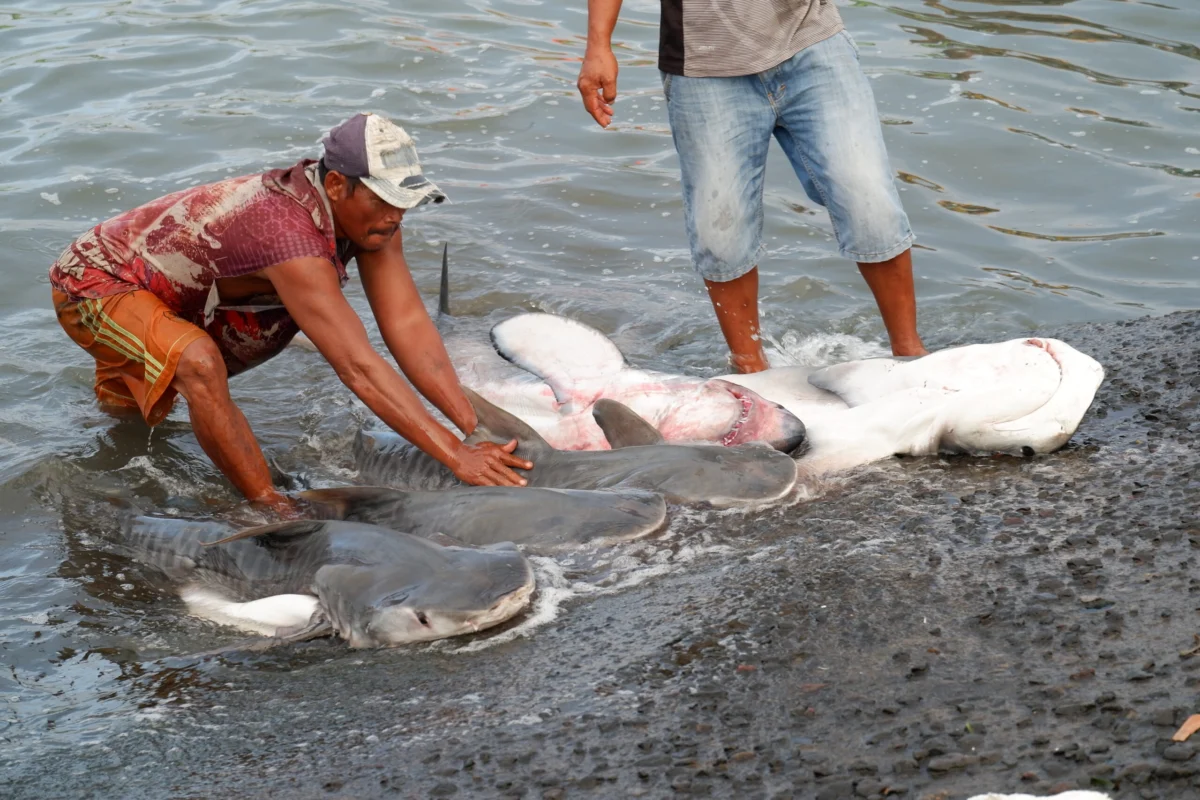
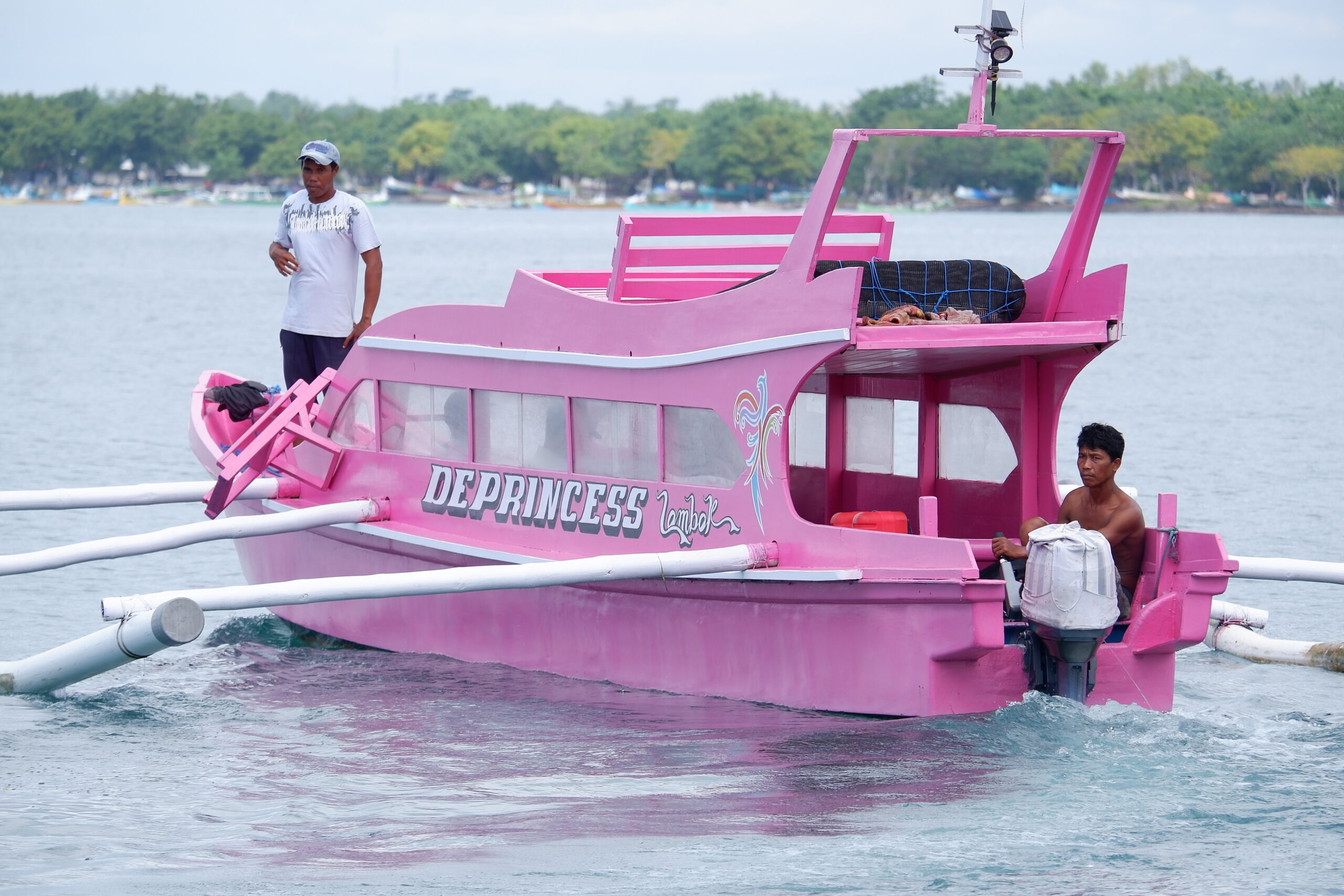
Alimuddin sits on a weathered wooden bench in a beachside hut at Tanjung Luar, East Lombok, watching the horizon. It is a quiet morning, and he is waiting for his turn to guide tourists through the emerald waters of the Alas Strait, a stark contrast to the grueling, weeks-long voyages he once undertook as a deep-sea hunter. Across the water, a pink-hulled vessel—a vessel that once might have been part of the shark-fishing fleet—slowly makes its way toward the famous Pink Beach. Alimuddin points toward the boat, noting that it belongs to a former colleague. For Alimuddin, this transition from apex predator hunter to tourism guide, a journey he began in 2016, represents more than just a career change; it signifies a survival strategy for a community long trapped in a cycle of poverty and environmental depletion.
The transformation of the coastal community at Tanjung Luar is a microcosm of a larger global struggle between traditional resource extraction and the urgent need for marine conservation. For decades, Tanjung Luar has been synonymous with the shark trade, serving as one of Indonesia’s most significant landing points for sharks and rays. However, as populations of these critical marine species plummet due to overfishing, the socio-economic reality for the fishermen themselves has become increasingly untenable.
A History of Risk and Minimal Reward
The economic disparity within the shark-fishing industry in Tanjung Luar is severe. Fishermen like Alimuddin and his peer, Agip, who left the trade in 2010, describe a system that functions more like debt bondage than a profitable enterprise. A typical shark-fishing expedition is a high-stakes gamble. Fishermen spend upwards of 20 days at sea, facing unpredictable weather, mechanical failures, and the physical toll of labor-intensive fishing.
The financial breakdown of these expeditions reveals a systemic imbalance. When a boat returns with a catch, the revenue is often manipulated by boat owners. If a haul fetches 100 million Indonesian Rupiah (IDR), the owner might report a significantly lower figure to the crew, effectively skimming off the top. From the remaining, legitimate revenue, the crew receives only a small percentage—often around 10 percent—which must then be divided among at least five crew members. When operational costs such as fuel (often marked up by the owner), ice, food, and cigarette supplies are deducted, the individual fisherman is left with a pittance.
Agip, now 49, recalls the psychological and economic strain of his former life. "My wife often forbade me from going. If I leave my family for 20 days, what will they eat?" he asks. The danger of the trade, combined with the lack of health insurance or workplace safety, meant that any illness or injury sustained at sea became the fisherman’s personal financial burden. The "bosses" of these vessels, according to the men, act as gatekeepers of debt; if a catch is poor, the costs of the trip are recorded as debt against the crew, ensuring they remain tethered to the boat for the next voyage.
The Scale of the Trade and Ecological Impact
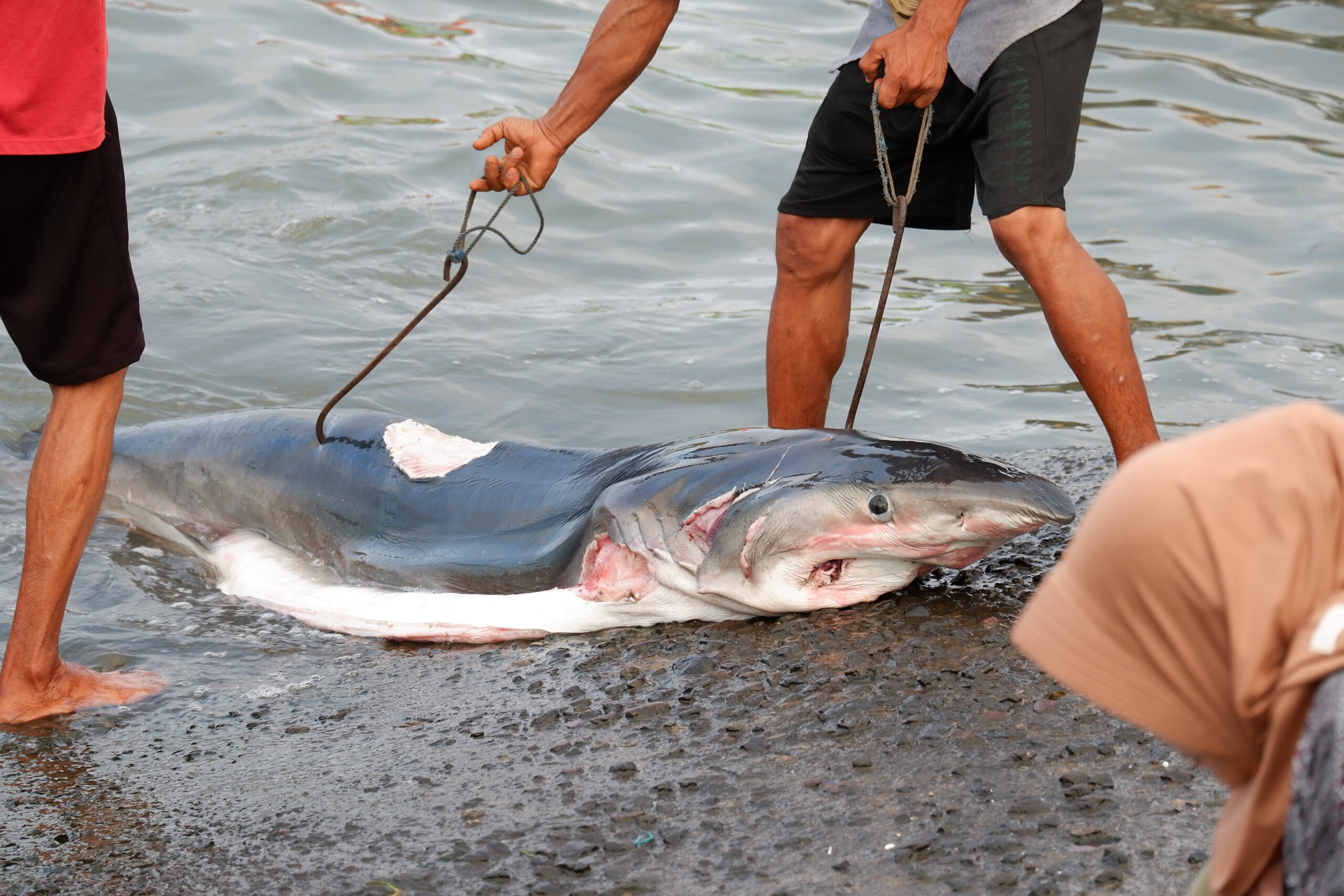
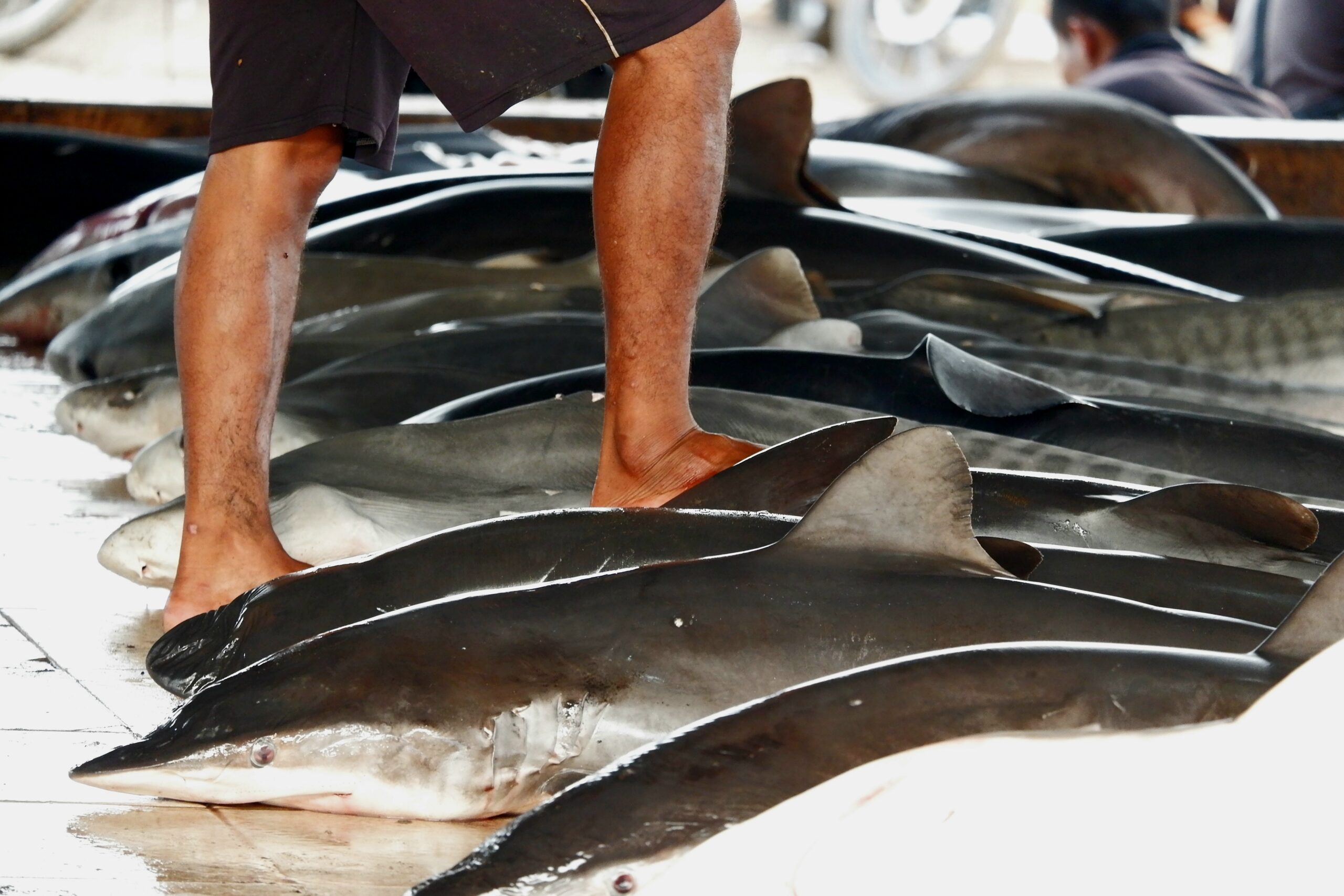
The ecological footprint of this industry is staggering. Over a two-year monitoring period, researchers from the University of Oxford, Bangor University, and IPB University documented the landing of over 13,000 sharks and rays across 57 distinct species at the Tanjung Luar port. This averages to approximately 18 sharks and rays landed every single day of the year. On a single day in May, enumerators recorded 26 individuals, many of which are listed under Appendix II of the Convention on International Trade in Endangered Species (CITES), including the silky shark (Carcharhinus falciformis), tiger shark (Galeocerdo cuvier), blue shark (Prionace glauca), scalloped hammerhead (Sphyrna lewini), and the critically endangered giant guitarfish (Rhynchobatus australiae).
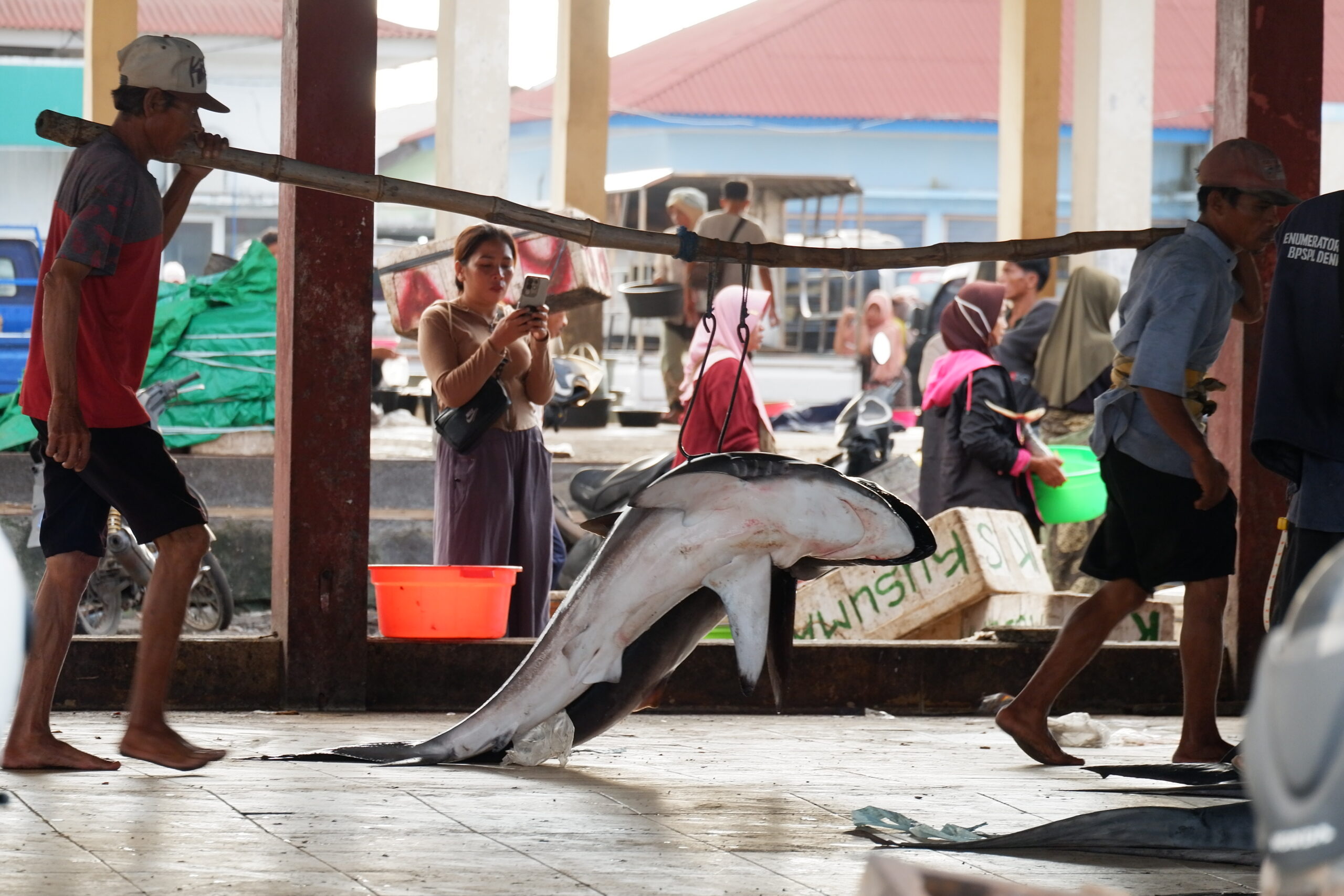
The economic value of these animals is realized through a complex supply chain. A single shark can be sold for between IDR 600,000 and IDR 1 million, with every part of the carcass—from the fins and meat to the liver oil and cartilage—finding a buyer. Dried fins remain the most lucrative component, fetching up to IDR 3 million per kilogram, while gill rakers from manta rays can command prices of IDR 4 to 8 million per kilogram on the international market. Despite these high market prices, the fishermen at the bottom of the chain receive only a fraction of the value, reinforcing the cycle of poverty that drives them to continue fishing.
Conservation Strategies: Beyond Compensation
Efforts to curb the slaughter have been multifaceted, yet progress remains slow. The Yayasan Kebersamaan untuk Lautan (KUL) has experimented with "buyout" programs, where fishermen receive compensation for releasing live sharks and rays back into the ocean. However, M. Said Ramdlan, secretary of KUL, admits that this approach has met with limited success in Tanjung Luar. Initial offers of IDR 500,000 per hammerhead shark were deemed insufficient by fishermen who faced pressure from collectors and boat owners to deliver quotas.
Even when KUL increased incentives—offering up to IDR 9 million for a guitarfish—the results remained stagnant. The problem, as identified by conservationists, is that the fishermen are not autonomous agents; they are often deeply indebted to middlemen and vessel owners who demand a constant supply of shark products for international markets.
Recognizing the limitations of individual compensation, KUL shifted its strategy toward a systemic "vessel buyout" program. By purchasing entire shark-fishing boats for IDR 300 million each and physically dismantling them, the foundation aims to permanently remove fishing capacity from the Alas Strait. Two vessels were decommissioned in 2025, which researchers estimate will prevent the death of over 4,000 sharks and rays over the next decade.
The Future: A Generational Shift
The most promising indicator for the survival of shark populations in East Lombok may not be policy-driven conservation, but rather a generational shift in values. Both Said and local enumerators observe that the current generation of shark hunters will likely be the last. There is a palpable lack of interest among the children of these fishermen to follow in their parents’ footsteps.
Surveys indicate that nearly 95 percent of these children are pursuing education or alternative career paths, with a strong preference for land-based jobs or professional entrepreneurship. The fathers themselves, having experienced the hardships of the sea, are actively encouraging their children to seek better opportunities. "They don’t want their children to gamble with their lives," says Muksin, a local enumerator who has spent nearly two decades witnessing the decline of the industry.
This societal evolution, however, requires a safety net. As the shark-fishing industry faces the dual pressures of environmental collapse and a lack of generational succession, the transition to sustainable alternatives—such as eco-tourism—must be accelerated. The success of men like Alimuddin, who now earns a steadier income with less risk by guiding tourists, provides a blueprint.
Implications for Indonesian Marine Policy
The situation in Tanjung Luar underscores a critical reality: conservation is inextricably linked to socio-economic justice. Prohibitions on shark fishing, if enforced without providing viable alternative livelihoods, risk pushing vulnerable communities into deeper poverty or illegal activity.
As the Indonesian government continues to refine its marine management policies, the lessons from East Lombok suggest that the focus must shift from merely policing landings to addressing the power structures that sustain the trade. The "giant vs. dwarf" dynamic described by the fishermen—where powerful boat owners dictate the terms of survival for the crew—must be dismantled through better labor protections and investment in local tourism infrastructure.
The decline of the shark trade in Tanjung Luar is inevitable, whether driven by the exhaustion of the resource or the departure of the labor force. The question facing policymakers and conservationists today is whether this transition can be managed in a way that preserves the ecological integrity of the Alas Strait while providing dignity and economic stability to the families who have lived by the sea for generations. As the pink boats move from carrying shark carcasses to carrying curious travelers, a new, more sustainable narrative for Lombok’s waters is slowly beginning to take shape.