Hadi Wijaya
The discourse surrounding the decision to remain childfree—a lifestyle choice where individuals or couples voluntarily choose not to have children—has moved from the fringes of social media debate into the center of Indonesian public consciousness. Family psychology practitioner Nuzulia Rahma Tristinarum, commonly known as Lia, recently provided an in-depth analysis of the underlying factors that drive this decision, noting that the motivations are often complex and rooted in both conscious and subconscious psychological processes. According to Tristinarum, these decisions are rarely made in a vacuum; they are frequently the result of life experiences that shape a person’s perception of parenthood and responsibility long before they reach reproductive age.
The phenomenon of being childfree is not merely a modern trend but a multifaceted issue involving psychological trauma, economic shifts, and evolving social values. As Indonesia navigates a changing demographic landscape, understanding these drivers becomes essential for policymakers, sociologists, and health professionals alike. Tristinarum emphasizes that the background of a person’s decision can be a specific experience that creates a unique internal perception, leading to a life-altering choice that the individual may not even fully realize is rooted in their past.
The Psychological Blueprint: The Role of Childhood Trauma
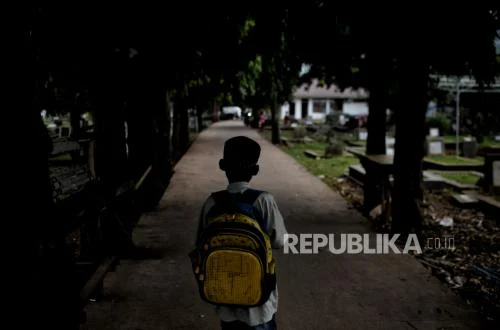
One of the most profound drivers of the childfree decision is the presence of unresolved childhood trauma. Tristinarum highlights cases where individuals grew up in environments of neglect or abuse, which fundamentally altered their view of the parent-child dynamic. In one specific psychological case study, a child was frequently left by their parents in the care of a nanny who was physically and verbally abusive. This child, growing up under the weight of being hit, yelled at, and punished for minor infractions, developed a defensive perception of family life.
The logic that develops from such an upbringing is often one of protection and avoidance. Tristinarum explains that such individuals may conclude that if a child cannot be properly cared for or if a parent cannot guarantee a safe environment, it is more responsible to abstain from parenthood altogether. For these individuals, choosing to be childfree is framed as an act of responsibility toward a hypothetical child, sparing them the suffering the parent once endured. This "inner child" trauma creates a deep-seated fear that they might replicate the mistakes of their own parents or the caregivers who failed them. The decision is thus driven by a combination of deep emotional wounds, lingering anger, and a desire to break a cycle of trauma.
The Shift in Personal Values and Environmental Influence
Beyond individual trauma, the decision to remain childfree is increasingly influenced by shifting personal values and the surrounding social environment. In the traditional Indonesian context, the adage "banyak anak, banyak rejeki" (many children, many blessings) has long dominated the cultural narrative. However, modern exposure to global discourse and different lifestyle models has introduced a counter-narrative.
Environmental influence, particularly through social media and peer groups, plays a significant role in normalizing the childfree choice. When individuals see others successfully navigating life without the constraints of traditional parenting, it validates their own inclinations. Tristinarum notes that the adoption of "childfree" as a value system is often a reaction to the observation of the struggles of those around them. If a person sees their peers overwhelmed by the demands of modern parenting, or if they value personal autonomy and career progression above all else, the childfree path becomes an attractive and viable alternative.
Economic Realities and the Sandwich Generation
Economic considerations remain a cornerstone of the childfree debate in Indonesia. Tristinarum points out that the fear of being unable to provide a high quality of life for a child is a major deterrent. This is particularly prevalent among the "Sandwich Generation"—individuals who are simultaneously responsible for supporting their aging parents and their own households. For these individuals, the financial burden is already at a breaking point. Adding a child to this equation is seen not just as a challenge, but as an impossibility that could lead to financial ruin for the entire extended family.
The lack of economic readiness is not limited to women. Tristinarum observes that men also frequently opt for a childfree lifestyle due to the heavy traditional expectation of being the sole breadwinner. The rising costs of education, healthcare, and housing in urban centers like Jakarta have made the "cost of a child" a significant data point in marital decision-making. When individuals feel they cannot meet the economic standards they deem necessary for a child’s well-being, they may choose to marry for companionship alone, explicitly excluding procreation from their marital goals to avoid the pitfalls of poverty or financial instability.
Challenging the Myths of Physical Appearance and Youthfulness
A controversial aspect of the childfree discussion is the claim that avoiding pregnancy and child-rearing is a strategy for maintaining youthfulness and physical fitness. This sentiment has been popularized by various social media influencers, sparking intense debate across Indonesian digital platforms. However, Tristinarum provides a fact-based rebuttal to this notion.
From a psychological and medical standpoint, "staying young" or maintaining a certain physical appearance is governed by a complex interplay of genetics, hormonal balance, and lifestyle choices such as diet and exercise. While the physical toll of pregnancy is real, it is scientifically inaccurate to suggest that being childfree is a guaranteed fountain of youth. Tristinarum emphasizes that many parents maintain excellent physical health and youthful appearances, while many childfree individuals may age prematurely due to stress or other health factors. Therefore, while the desire to maintain physical appearance may be a motivation for some to stay childfree, it is not a scientifically backed result exclusive to that lifestyle.
The Influence of Social Trends and Digital Echo Chambers
The "trend" factor cannot be ignored in the current Indonesian landscape. As the term "childfree" becomes more searchable and discussed, it attracts individuals who may not have previously considered it. Tristinarum suggests that some people may follow the trend because they find a sense of community among others who share similar values or past experiences. The digital era allows for the rapid dissemination of lifestyle philosophies, and for a generation that prioritizes individual identity over collective traditional duties, the childfree movement offers a modern, "progressive" identity.
Broader Implications and Demographic Analysis
The rise of the childfree movement in Indonesia occurs against a backdrop of declining total fertility rates (TFR). Data from the Indonesian Central Bureau of Statistics (BPS) indicates a steady decline in the TFR over the last several decades. While the government’s family planning programs (KB) were the primary drivers in the late 20th century, the current decline is increasingly attributed to delayed marriages and the voluntary decision to have fewer or no children.
This shift has significant long-term implications for the nation’s demographic dividend. If a substantial portion of the productive-age population chooses to remain childfree, Indonesia may eventually face the challenges currently seen in nations like Japan, South Korea, and Singapore, where an aging population outnumbers the youth, leading to labor shortages and a strained social security system.
Reactions from Society and Official Perspectives
The reaction to the childfree lifestyle in Indonesia remains polarized. Traditionalists and many religious organizations argue that the choice contradicts the fundamental purpose of marriage and the religious duty to procreate. On the other hand, human rights advocates and mental health professionals like Tristinarum argue for the importance of individual agency and the necessity of being mentally and financially prepared before bringing a new life into the world.
Government officials have expressed cautious concern. While acknowledging that the decision to have children is a private right, some officials have noted that a widespread "childfree" trend could jeopardize the "Golden Indonesia 2045" vision, which relies on a robust and productive young generation. The discourse has prompted a call for better support systems for parents, such as improved maternity and paternity leave, affordable childcare, and mental health support, to make parenthood a less daunting prospect for the modern generation.
Conclusion: A Need for Nuance and Support
The analysis provided by Nuzulia Rahma Tristinarum underscores that the decision to be childfree is rarely a simple "whim." It is often a deeply considered response to a person’s history, their economic reality, and their psychological health. Whether driven by a desire to break a cycle of trauma, a need for financial stability, or a shift in personal values, the childfree choice reflects the evolving complexities of modern life.
As society continues to debate this issue, the focus may need to shift from judgment to understanding. For those whose decision is rooted in trauma, the priority should be psychological healing. For those driven by economic fears, the solution lies in systemic financial stability. Ultimately, the childfree phenomenon serves as a mirror to the pressures and expectations of modern Indonesian society, highlighting the areas where individuals feel most vulnerable and where the traditional structures of family and support may need to be reimagined for the 21st century.