Chalifah Fatihah
As the 2026 Hajj and Umrah seasons draw nearer, pilgrims are urged to meticulously prepare for their spiritual journeys, with a particular emphasis on understanding the intricate rituals of Tawaf. This fundamental act of circumambulating the Kaaba holds profound significance in Islam and is an essential pillar of both Hajj and Umrah. Ensuring its correct performance is paramount for the validity of these sacred pilgrimages.
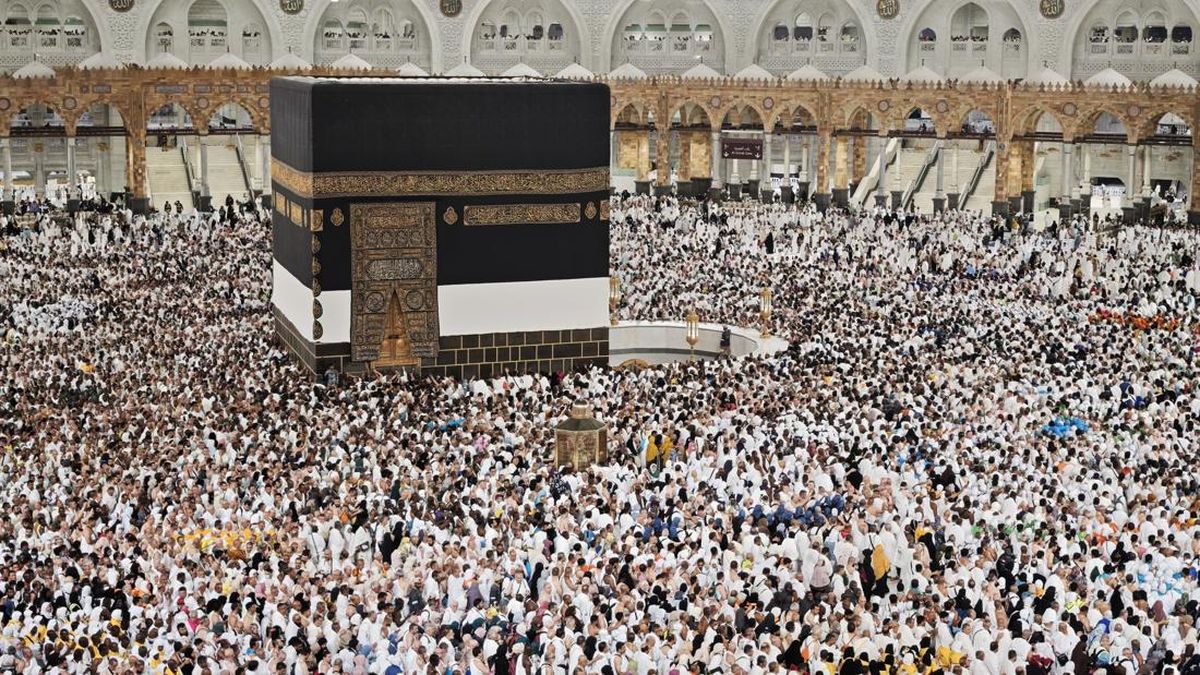
Tawaf, meaning to circle, is an act of devotion where Muslims circumambulate the Kaaba, the holiest site in Islam, located in Mecca, Saudi Arabia. This ritual symbolizes the unity of believers around a central point of worship and reflects the cosmic order, with the heavens and earth revolving around divine authority. The act of Tawaf is not merely a physical movement; it is a deeply spiritual experience that signifies submission, devotion, and seeking closeness to Allah.
There are several types of Tawaf recognized in Islamic jurisprudence, each with its specific purpose and timing. The most critical for pilgrims undertaking Hajj is the Tawaf Ifadhah, also known as Tawaf al-Ziyarah or Tawaf al-Rukn. This is one of the obligatory rites of Hajj, and its omission renders the entire Hajj invalid. Similarly, for Umrah, Tawaf is a foundational rite, and its incorrect execution can invalidate the pilgrimage. Therefore, a thorough understanding and adherence to the prescribed Sunnah, the practices and teachings of Prophet Muhammad (peace be upon him), are essential for a spiritually fulfilling and ritually sound pilgrimage.
Historical Context and Spiritual Significance
The practice of Tawaf dates back to the time of Prophet Ibrahim (Abraham) and his son Ismail (Ishmael), who, according to Islamic tradition, rebuilt the Kaaba. The Kaaba itself is believed to have been built on divine command, serving as a focal point for monotheistic worship. The ritual of Tawaf has been performed by prophets and believers throughout history, evolving into the structured practice observed today.
Spiritually, Tawaf represents a complete surrender to the Divine. The act of moving in a circular motion around the Kaaba mirrors the movement of celestial bodies and the constant remembrance of Allah. It is a time for introspection, supplication, and seeking forgiveness. Each circuit is an opportunity for pilgrims to deepen their connection with their Creator, reflecting on their lives and aspirations. The seven circuits are often linked to the seven heavens, signifying the vastness of God’s creation and the believer’s place within it.
Types of Tawaf
Pilgrims may encounter different forms of Tawaf throughout their journey:
- Tawaf Qudum (Tawaf of Arrival): Performed upon entering Mecca by those performing Hajj Tamattu’ or Qiran, or by those performing Umrah. It is a Sunnah act, offering a warm welcome to the Holy City.
- Tawaf Ifadhah (Tawaf of Circumambulation): The obligatory Tawaf for Hajj, performed after the Day of Arafah. It is a pillar of Hajj, and its completion is necessary for the pilgrimage to be valid.
- Tawaf al-Wada’ (Farewell Tawaf): The final Tawaf performed before departing from Mecca. It is a Sunnah act for Hajj pilgrims and a sign of bidding farewell to the Kaaba.
- Tawaf al-Wada’ for Umrah: While not as emphasized as the Tawaf Ifadhah for Hajj, a farewell Tawaf is generally recommended before leaving Mecca after completing Umrah.
- Tawaf Nafl (Voluntary Tawaf): Pilgrims can perform voluntary Tawaf at any time, seeking additional spiritual merit.
The article specifically highlights the importance of Tawaf Rukun, which encompasses Tawaf Ifadhah for Hajj and the primary Tawaf for Umrah, underscoring their role as essential components of these pilgrimages.
Essential Requirements for a Valid Tawaf
To ensure the validity of the Tawaf, several conditions must be met, as stipulated by Islamic teachings and scholarly consensus. These are not merely procedural guidelines but fundamental prerequisites for the ritual to be accepted:
- Purity from Hadath and Najasa: Pilgrims must be in a state of ritual purity, free from major and minor impurities (hadas). This means performing Wudu (ablution) before commencing Tawaf and ensuring one’s clothing and body are free from any visible najasa (uncleanliness).
- Covering of Aurat: As with any act of worship, pilgrims must adequately cover their aurat (private parts) according to Islamic guidelines.
- Location within Masjidil Haram: The Tawaf must be performed within the precincts of Masjidil Haram. This includes the main prayer area, as well as elevated levels or expanded sections of the mosque. Even if a pilgrim is on an upper floor, provided they are still within the established boundaries of the Haram, their Tawaf is considered valid.
- Starting and Ending at Hajar Aswad: Each of the seven circuits must commence at the Hajar Aswad (Black Stone) or a point directly parallel to it, and conclude at the same point. This establishes the starting and ending point of each revolution.
- Kaaba on the Left: During the entire circumambulation, the Kaaba must be positioned to the pilgrim’s left. The direction of movement is counter-clockwise.
- Outside the Kaaba: The Tawaf must be performed from the exterior of the Kaaba. This includes performing it outside the Hijr Ismail (Hateem), which is considered an integral part of the Kaaba itself. Circumambulating within Hijr Ismail is equivalent to circumambulating within the Kaaba, and thus invalidates the Tawaf.
- Seven Complete Circuits: The ritual requires precisely seven full circuits around the Kaaba. Incomplete circuits or exceeding the number without proper intention will render the Tawaf invalid.
- Intention (Niyyah): A sincere intention to perform Tawaf for the sake of Allah is crucial. This intention should be made before commencing the ritual.
Adherence to these conditions is vital. For instance, if a pilgrim mistakenly walks through Hijr Ismail during their Tawaf, they would need to repeat the entire circuit or even the entire Tawaf to rectify the mistake, depending on the specific ruling.
Guidance and Sunnah of Performing Tawaf
The act of Tawaf involves more than just walking around the Kaaba. It is an opportunity for remembrance, supplication, and reflection. The Sunnah of Prophet Muhammad (peace be upon him) provides detailed guidance on how to perform this sacred ritual with devotion and mindfulness.
The process begins with approaching the Hajar Aswad. It is Sunnah to kiss the Black Stone if possible, or to touch it with the hand, or to gesture towards it from a distance if crowds prevent direct contact. This marks the beginning of the first circuit.
During the Tawaf, pilgrims are encouraged to engage in remembrance of Allah, reciting verses from the Quran, and making personal supplications. While specific prayers are recommended for each of the seven circuits, the overarching theme is continuous devotion and seeking closeness to the Divine.
The Recommended Prayers During Tawaf
The Badan Pengelola Keuangan Haji (BPKH), an Indonesian government body overseeing Hajj finances, provides guidance on the recommended supplications for each round of Tawaf. These prayers are not mandatory for the validity of Tawaf but are highly recommended to enhance the spiritual experience.
-
Upon Reaching the Hajar Aswad (Beginning of each circuit):
It is recommended to recite:
"Bismillahi Allahu Akbar"
(In the name of Allah, Allah is the Greatest)
This is recited three times upon reaching the Hajar Aswad before starting each circuit. -
During the First Round:
"Subhanallah walhamdulillah walaailaaha illaallah wallaahu akbar walahaula walakuwwata illa billahil aliyyil adziim. Allahumma iimaanan bika wa tasdiiqan bikitaabika wawafaa an bi’ahdika wattibaa’an lisunnati nabiyyika muhammadin shallallahu ‘alaihi wassalam.Allahumma inni as aluka ‘afwa wal ‘afiyata wal mu’aafatad daaimata fiddini waddun yaa wal akhirati wal fauza bil jannati wannajaata minannaar."Meaning: "Glory be to Allah, and all praise is for Allah, and there is no god but Allah, and Allah is the Greatest. There is no power nor strength except with Allah, the Most High, the Most Magnificent. O Allah, I perform this Tawaf in faith in You, in belief in Your Book, in fulfillment of Your covenant, and in following the Sunnah of Your Prophet Muhammad (peace be upon him). O Allah, I ask You for pardon, well-being, and lasting health in religion, this world, and the Hereafter, and for success in Paradise and salvation from the Hellfire."
-
During the Second Round:
"Allahumma inna haadzal baita baituka wal harama haramuka wal amna amnuka wal ‘abda ‘abduka wa ana ‘abduka wabnu abdika wa haadza maqaamul ‘aaidzi bika minan naari faharrin luhuumanaa wabasyaratanaa alannaar. Allahumma habbib ilainal iimana, wazayyinhu fii qulubinaa wa karrih ilainal kufra wal fusyuuqa wal ishyana waj alnaa minarraasyidiin. Allahumma qinii azaabaka yauma tab’atsu ibadaaka. Allahummarzuqnil jannata bighairi hisaab."Meaning: "O Allah, indeed this House is Your House, this Sanctuary is Your Sanctuary, this security is Your security, and this servant is Your servant, and I am Your servant, son of Your servant. This is the station of one seeking refuge in You from the Hellfire, so forbid our flesh and our bones from the Hellfire. O Allah, make faith beloved to us and adorn our hearts with it, and make disbelief, transgression, and disobedience hateful to us, and make us among the rightly guided. O Allah, protect me from Your punishment on the Day You resurrect Your servants. O Allah, grant me Paradise without reckoning."
-
During the Third Round:
"Allaahumma innii a’uudzubika minasysyakki wasysyirki wasysyiqaaqi wannifaaqi wasuuil akhlaaqi wasuuilmandzhari wal mungqalabi fil maali wal ahli walwaladi. Allahumma innii as aluka ridhaakawal jannata wa a’uudzubikamin sakhatika wan naari. Allahumma innii a’uudzubika min fitnatil qabri wa a’uudzubika min fitnatil mahyaaya wal mamaat."Meaning: "O Allah, I seek refuge in You from doubt, polytheism, discord, hypocrisy, bad manners, and ill fortune in wealth, family, and children. O Allah, I ask You for Your pleasure and Paradise, and I seek refuge in You from Your wrath and the Hellfire. O Allah, I seek refuge in You from the torment of the grave and from the trials of life and death."

-
During the Fourth Round:
"Allahummaj’alhu hajjan mabruura wasa’yan masykuuraa wa zanban maghfuuraa wa’amalan shaalihan maqbuula watijaaratan lantabuura yaa ‘aalima maa fissuduuri akhrijnii yaa Allaahu minazzulumaati ilannuur. Allahumma innii as aluka muujibati rahmatika wa ‘azaa ima maghfirotika wassalaamata min kulli itsmin walghaniimata min kulli birrin wal fauza biljannati wannajaata minannaar.Rabbi qanni’nii bimaa razaqtanii wabaariklii fiimaa a’thaitanii wakhluf ‘alaa kulli ghaa ibatin lii minka bikhairin."Meaning: "O Allah, make it a blessed Hajj, a thankworthy effort, a forgiven sin, accepted righteous deeds, and a trade that will never fail. O Knower of what is in the breasts, O Allah, bring me out of the darkness into the light. O Allah, I ask You for the means of Your mercy and the certainty of Your forgiveness, safety from every sin, gain of all righteousness, success in Paradise, and salvation from the Hellfire. My Lord, make me content with what You have provided for me, bless me in what You have given me, and replace whatever I lose with good from You."
-
During the Fifth Round:
"Allahumma inna nas’aluka al-hudaa wat tuqaa wal ‘afaafa wal ghinaa. Allahumma a’tinaa fii dun-yaa hasanatan wa fil aakhirati hasanatan wa qinaa ‘adhaban naari."Meaning: "O Allah, we ask You for guidance, piety, chastity, and contentment. O Allah, grant us goodness in this world and goodness in the Hereafter, and protect us from the punishment of the Fire."
-
During the Sixth Round:
"Rabbanaa aatinaa fiddunyaa hasanatan wa fil aakhirati hasanatan wa qinaa ‘adhaban naari. Rabbanaa aghfir lii wa liwaalidayya wa lil mu’miniina yauma yaquumul hisaab."Meaning: "Our Lord, give us goodness in this world and goodness in the Hereafter, and protect us from the punishment of the Fire. Our Lord, forgive me, my parents, and the believers on the Day of Judgment."
-
During the Seventh Round:
"Allahumma yaa musakhkhira al-jibaali wal riyaaH wasakhkhir lii quluubul khalaaiqi kullihim an tashkhara lii minhum ahadun illa biiznik. Innaka ‘alaa kulli shai’in qadiir. Ya Allah, yaa Rabbal ‘aalamin."Meaning: "O Allah, O Subduer of mountains and winds, subdue for me the hearts of all creation, so that none of them may subdue me except by Your permission. Indeed, You have power over all things. O Allah, O Lord of the Worlds."
The final recommended recitation at the Hajar Aswad after completing the seventh round is similar to the initial one: "Bismillahi Allahu Akbar, Walillahil hamd." (In the name of Allah, Allah is the Greatest, and to Allah belongs all praise).
Implications for 2026 Pilgrims
As Saudi Arabia continues to enhance the infrastructure and services for pilgrims, the focus remains on ensuring a safe, comfortable, and spiritually enriching experience. For the 2026 Hajj and Umrah seasons, it is anticipated that technology and improved crowd management systems will further assist pilgrims. However, the core of the pilgrimage lies in the personal devotion and adherence to the rituals as prescribed by the Sunnah.
The Ministry of Hajj and Umrah in Saudi Arabia, along with religious authorities in various Muslim-majority countries, actively disseminate information and conduct pre-pilgrimage orientation programs. These programs are crucial for educating pilgrims about the practical and spiritual aspects of Hajj and Umrah, including the detailed procedures for Tawaf.
For pilgrims preparing for 2026, early engagement with these educational resources is highly recommended. Understanding the nuances of Tawaf, including the conditions for its validity and the recommended supplications, will not only ensure the ritual is performed correctly but will also deepen the pilgrim’s spiritual connection and overall experience. The journey to Mecca is a profound undertaking, and a thorough preparation, grounded in authentic Islamic teachings, is the first step towards a truly transformative spiritual pilgrimage.