Eko Sulistyo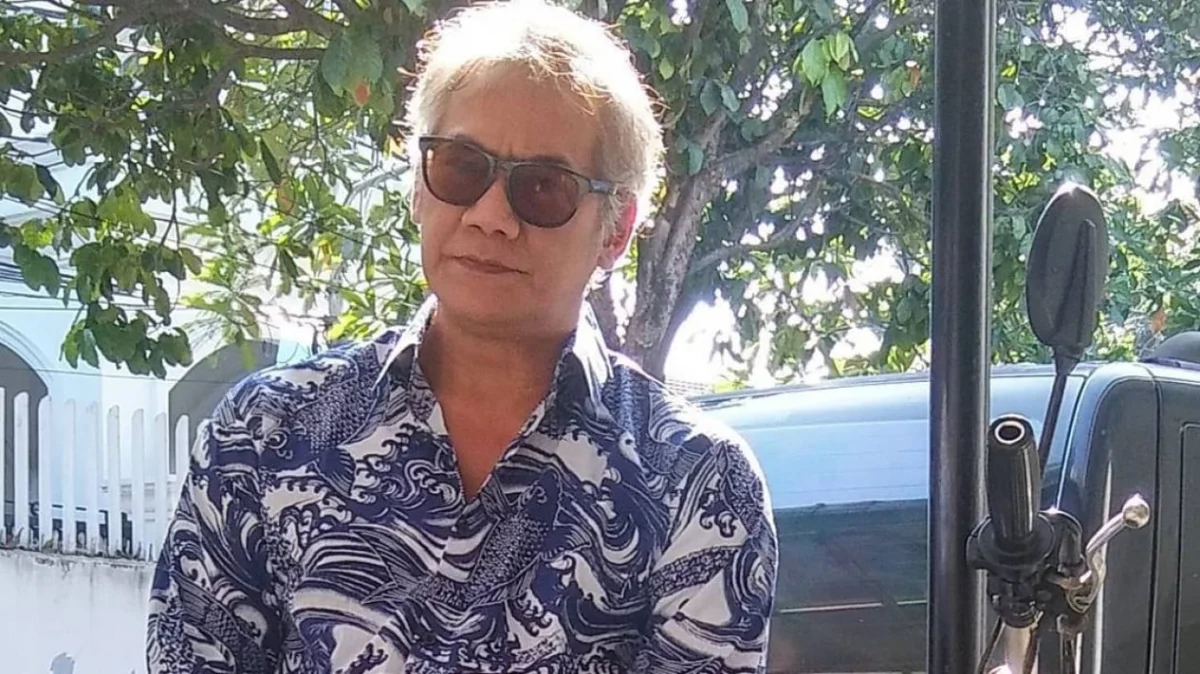
The Indonesian cinematic community is currently rallying behind one of its most venerable figures, Tio Pakusadewo, following revelations that the award-winning actor is grappling with a series of severe health complications. The news, which surfaced in early June 2026, has highlighted not only the physical toll of a multi-decade career in the spotlight but also the systemic financial vulnerabilities faced by even the most celebrated artists in the national film industry. Reports indicate that Pakusadewo has been hospitalized multiple times since the beginning of the year, leading his close associates to initiate a public fundraising campaign to cover mounting medical expenses.
The gravity of Pakusadewo’s situation was brought to public attention by fellow actress and long-time friend Dewi Irawan. Through a series of social media updates, Irawan shared the distressing reality of the actor’s current condition, revealing that he is currently undergoing intensive treatment. The outreach began after Pakusadewo sent a poignant video message to Irawan from his hospital bed, requesting her presence. In the footage, the actor, known for his rugged screen presence and commanding voice, appeared visibly weakened but maintained a semblance of his characteristic spirit as he reached out to his inner circle for support.
A Timeline of Declining Health
According to detailed accounts provided by Dewi Irawan, Tio Pakusadewo’s health has been in a state of flux for the duration of 2026. The actor’s medical history for the current year paints a picture of a grueling battle against various ailments. Between January 27, 2026, and May 31, 2026, Pakusadewo was admitted to and discharged from hospital facilities on four separate occasions. These hospitalizations were not confined to a single institution; rather, the actor has been moved between different medical centers depending on the specific nature of the complications arising at any given time.
Irawan noted that the reasons for these admissions have varied, suggesting a systemic failure of multiple physiological functions rather than a single, isolated illness. "Since January 27, 2026, until May 31, 2026, he has been in and out of the hospital four times. The hospitals were different because the illnesses were different," Irawan explained to the press and her followers. While the specific diagnoses have remained confidential to respect the actor’s privacy, the frequency of the admissions indicates a chronic and perhaps degenerative health crisis that has exhausted both the actor’s physical resilience and his financial resources.
This recent string of hospitalizations follows a history of health scares for the actor. In 2019, Pakusadewo suffered a significant stroke that required emergency surgery to address a ruptured blood vessel in his brain. While he made a notable recovery and eventually returned to the screen, medical experts suggest that such major cardiovascular events often leave lasting impacts on a patient’s overall health, particularly as they age. The current complications are viewed by many as a continuation of these long-standing struggles.
Financial Realities and the BPJS Dilemma
One of the most striking aspects of Pakusadewo’s current situation is his reliance on the state-mandated healthcare system, BPJS Kesehatan. Despite a career spanning over four decades and a filmography that includes some of Indonesia’s most critically acclaimed works, Pakusadewo does not possess private health insurance. Irawan revealed that he is currently receiving care as a "Class 3" patient—the most basic tier of the national health insurance program.
The classification of a veteran actor like Pakusadewo into Class 3 has sparked a broader conversation about the financial security of artists in Indonesia. In the BPJS system, Class 3 patients are typically placed in wards with multiple other patients and have access to a standard list of medications and procedures. While the system provides a vital safety net for millions, the limitations of basic coverage can be challenging when dealing with complex, multi-organ complications that require specialized consultants, advanced diagnostic imaging, or non-formulary medications.
"Tio’s status is a BPJS Class 3 patient, and he has no insurance," Irawan stated. "Therefore, on my own personal initiative, I have started an ‘Open Donation’ to help alleviate the burden of medical costs for my dear friend."
The decision to launch a public appeal underscores the gap between the perceived glamour of the film industry and the economic reality for its veterans. In Indonesia, the lack of a structured royalty system or a dedicated pension fund for actors means that many performers rely entirely on active project fees. When illness strikes and the ability to work ceases, the financial decline can be rapid, leaving even household names in precarious positions.
A Legacy of Excellence in Indonesian Cinema
To understand the outpouring of support for Tio Pakusadewo, one must look at his immense contribution to the cultural fabric of Indonesia. Born in 1963, Pakusadewo rose to prominence in the late 1980s and early 1990s, a period often described as a challenging era for the national film industry. He quickly established himself as a versatile actor capable of portraying complex, often gritty characters.
His performance in the 1991 film Lagu Untuk Rena earned him his first Citra Award for Best Leading Actor, the highest honor in Indonesian cinema. Over the years, he became a staple of both arthouse and mainstream films. Notable works include Identitas (2009), for which he won another Citra Award, and international hits like The Raid 2 (2014), where he played the nuanced crime boss Bangun. His role in Surat dari Praha (2016) further cemented his reputation as a performer of great emotional depth, playing an exile living in the Czech Republic.
Pakusadewo’s career has been characterized by a dedication to his craft that often saw him taking on physically and mentally demanding roles. However, his life off-screen has also been marked by turbulence, including highly publicized legal battles related to substance abuse. Throughout these challenges, his peers have often described him as a man of great heart and a mentor to younger generations of actors.
The Role of the Irawan Family and Peer Solidarity
The involvement of Dewi Irawan in Pakusadewo’s current crisis is deeply personal. The Irawan family—including the late Ria Irawan and their mother, the late Ade Irawan—has long been synonymous with both Indonesian cinema and the advocacy for patients’ rights. Ria Irawan, who passed away in 2020 after a long battle with cancer, was a vocal proponent of the BPJS system and often spoke about the dignity of patients regardless of their financial status.
In her recent posts, Dewi Irawan invoked the memory of her sister, recalling a message Ria had once given to Tio regarding the importance of "apologizing" to one’s own body. The message urged the actor to seek forgiveness from his internal organs—the heart, lungs, kidneys, and liver—for the years of strain and "injustice" they may have endured due to lifestyle choices and the rigors of his profession. This spiritual and emotional approach to healing has resonated with many of Pakusadewo’s fans, who see the current health crisis as a moment of reckoning and potential renewal for the actor.
The "Open Donation" campaign has seen an immediate response from the Indonesian creative community. Fellow actors, directors, and producers have shared the call for support, emphasizing that Pakusadewo’s contributions to the industry warrant a collective effort to ensure he receives the best possible care.
Broader Implications for the Creative Industry
The plight of Tio Pakusadewo serves as a stark reminder of the lack of social safety nets for creative workers in Indonesia. Unlike civil servants or corporate employees, actors operate as independent contractors. While high-profile stars can command significant fees, these earnings are often irregular. Without institutionalized mechanisms for health insurance and retirement savings, many aging artists find themselves vulnerable.
Industry analysts suggest that this incident might serve as a catalyst for renewed discussions regarding the welfare of Indonesian actors. There have been long-standing calls for the Indonesian Film Actors Association (PARFI) and other industry bodies to collaborate with the government to create a specialized insurance scheme or a "legacy fund" for veteran performers. Such a fund could be subsidized by a small percentage of box office receipts or production budgets, ensuring that those who have dedicated their lives to the nation’s culture are not left behind in their twilight years.
Furthermore, the situation highlights the public’s perception of the BPJS system. While the government continues to improve the quality of the national health scheme, the fact that a high-profile figure requires a donation drive while being a BPJS participant suggests that public confidence in the system’s ability to handle catastrophic or complex chronic illnesses remains tempered by practical realities.
Current Status and Future Outlook
As of early June 2026, Tio Pakusadewo remains under medical supervision. The funds raised through the open donation are intended to cover costs not reimbursed by BPJS, including specific medications, private nursing care if required, and post-hospitalization rehabilitation.
Supporters continue to flood social media with prayers and tributes, using hashtags to consolidate the fundraising efforts. For many, the hope is not just for Pakusadewo’s physical recovery, but for a dignified chapter in the life of a man who has given so much to the Indonesian screen.
The story of Tio Pakusadewo is more than a medical update; it is a narrative about the fragility of fame, the strength of friendship, and the urgent need for structural reform in how society protects its cultural icons. As the donation drive continues, the focus remains on the immediate goal: ensuring that the man who brought so many characters to life has the chance to fight for his own.