Nila Kartika Wati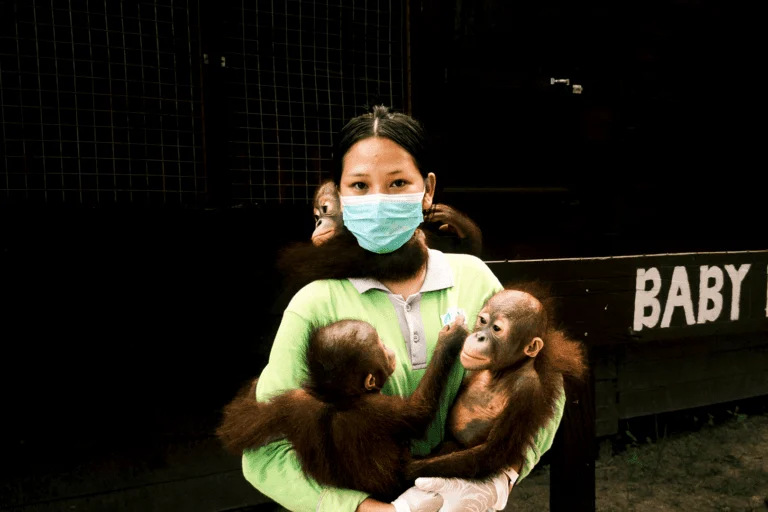
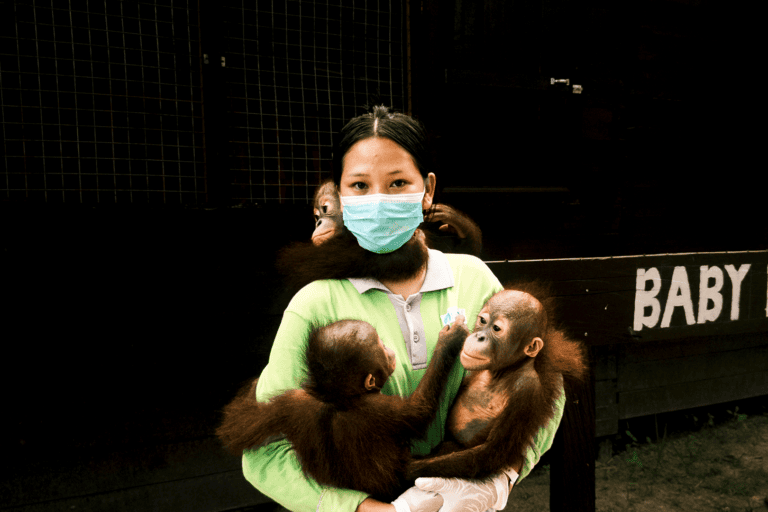
In the dense, humid landscapes of Berau, East Kalimantan, the survival of one of the world’s most iconic species rests in the hands of a dedicated few who have chosen a path of grueling labor and emotional resilience. Dela Mawar, a young woman hailing from Kampung Merasa, represents a new generation of conservationists stepping into the frontline of wildlife protection at the Long Sam Wildlife Rescue Center (Pusat Penyelamatan Satwa or PPS Long Sam). For Mawar, the forest is not merely a backdrop of biodiversity or a resource to be exploited; it is an ancestral home and a living entity that requires active guardianship. Her role as an animal keeper places her at the heart of a complex ecological struggle, where the immediate needs of orphaned orangutans meet the broader, more systemic challenges of habitat loss and environmental degradation in Indonesian Borneo.
The daily routine at PPS Long Sam is a rigorous cycle of husbandry and healthcare that begins long before the sun reaches its zenith. Mawar’s responsibilities are multifaceted, ranging from the technicalities of nutritional management to the delicate art of emotional rehabilitation. Each morning begins with the preparation of specialized pakan (feed), ensuring that the dietary requirements of various primates are met with precision. This is followed by the intensive cleaning of enclosures, a task vital for preventing the spread of zoonotic diseases in a population that is often immunologically compromised due to stress and early-life trauma. However, the core of Mawar’s work lies in her interaction with the infant orangutans. For these young primates, who would naturally spend up to eight years under the constant care of their mothers, Mawar becomes a surrogate figure. The act of bottle-feeding is not a simple chore; it is a critical intervention designed to provide the physical sustenance and the sense of security necessary for a creature that has often witnessed the violent loss of its parent.
The psychological toll on the animals is one of the most significant hurdles in the rehabilitation process. According to Mawar, the infants arriving at the center frequently exhibit symptoms of severe trauma and acute stress. In the wild, an orangutan’s bond with its mother is among the strongest in the animal kingdom. When that bond is severed by forest clearing or poaching, the resulting psychological scarring can manifest as lethargy, aggression, or a failure to thrive. Consequently, the keepers at PPS Long Sam must be prepared for a 24-hour commitment. When an infant falls ill—common ailments include digestive issues like diarrhea or respiratory infections—Mawar and her colleagues must provide round-the-clock monitoring, often sleeping near the enclosures to ensure that any change in the animal’s condition is immediately addressed.
The Environmental Context of Berau and East Kalimantan
The necessity of facilities like PPS Long Sam is a direct consequence of the rapid transformation of the East Kalimantan landscape. Berau Regency, once a stronghold of primary rainforest, has faced significant pressure from industrial expansion. Over the last two decades, the region has seen a massive influx of investment in coal mining and palm oil plantations. While these industries have driven economic growth, they have also resulted in the fragmentation of wildlife corridors. Data from various environmental monitoring agencies indicate that Kalimantan lost millions of hectares of primary forest between 2001 and 2020. This deforestation creates a "human-wildlife conflict" zone where orangutans, deprived of their natural food sources, often wander into plantations or community gardens, leading to captures, injuries, or fatalities.
Mawar’s personal history is deeply intertwined with this environmental shift. Growing up in Kampung Merasa, she recalls a time when sightings of hornbills and primates were common occurrences near the village periphery. Today, the encroaching boundaries of industrial concessions have pushed these animals further into the shrinking interior. This shift was a primary motivator for Mawar to join the conservation movement. Influenced by her family’s inherent respect for nature and inspired by two of her uncles who were already established in the field, she sought to bridge the gap between traditional knowledge and modern conservation science. Her decision to remain in her home region and work in a demanding, often low-profile role reflects a commitment to the long-term ecological health of her community rather than the pursuit of urban employment.
The Science and Strategy of Rehabilitation
The work performed at PPS Long Sam is part of a broader, multi-stage rehabilitation strategy aimed at eventual reintroduction into the wild. Rehabilitation is a decade-long process that cannot be rushed. It begins with the "nursery" stage, where Mawar is currently focused, providing medical stabilization and basic care. As the orangutans grow, they move to "Forest School," where they are taught essential survival skills that they would have otherwise learned from their mothers: how to identify edible fruits, how to build nests high in the canopy, and how to navigate the complex three-dimensional environment of the rainforest.
The ultimate goal is "release," but the criteria for a successful reintroduction are stringent. An orangutan must demonstrate total independence from humans, the ability to forage effectively, and a lack of behavioral abnormalities. Furthermore, finding a suitable release site is increasingly difficult. A release site must be a protected forest area with a low density of existing wild orangutans to avoid competition, yet it must be large enough to support a breeding population. The work of keepers like Mawar is foundational; without the initial stabilization and the building of trust during the infant stage, these animals would have no chance of progressing through the later stages of the program.
Institutional Support and Regional Implications
PPS Long Sam operates under the umbrella of conservation initiatives such as CAN Borneo, which work in tandem with the Indonesian Ministry of Environment and Forestry (KLHK) and the Natural Resources Conservation Agency (BKSDA). These partnerships are crucial for the legal and logistical framework of wildlife rescue. When an orangutan is confiscated from illegal pet trade or rescued from a conflict area, the BKSDA facilitates the transfer to centers like Long Sam.
Experts in the field emphasize that the involvement of local personnel like Dela Mawar is a critical success factor for conservation. Local keepers possess a nuanced understanding of the terrain and the local culture, which is essential for community outreach. Conservation is not just about biological management; it is about social integration. By having members of the local community leading the rescue efforts, organizations can better negotiate the tensions between land use and wildlife protection. Mawar’s presence serves as a living testimony to her peers that the preservation of the forest can provide a viable and honorable career path.
The Broader Impact on Biodiversity and Climate Goals
The plight of the Bornean orangutan (Pongo pygmaeus) is a barometer for the health of the entire ecosystem. As an "umbrella species," the protection of the orangutan’s habitat naturally ensures the protection of thousands of other species of flora and fauna, from tropical hardwoods to rare insects and birds. Furthermore, the peatlands and rainforests of East Kalimantan are significant carbon sinks. The preservation of these areas is a key component of Indonesia’s commitment to the Paris Agreement and its "FOLU Net Sink 2030" goals, which aim to make the forestry and land use sector a net carbon sink by the end of the decade.
However, the challenges remain immense. The planned development of Indonesia’s new capital city, Nusantara (IKN), in East Kalimantan, while located south of Berau, brings renewed focus on the region’s land-use policies. Conservationists argue that while development is inevitable, it must be balanced with the creation of robust "green belts" and the strengthening of existing rescue centers. The work of Dela Mawar and her colleagues provides a necessary safety net for the individual victims of this large-scale transition.
Conclusion: A Vision for a Greener Kalimantan
Dela Mawar’s dedication to the orphans of PPS Long Sam is a quiet but profound act of resistance against the tide of extinction. Her motivation is rooted in a simple, yet powerful desire: to see the forests of her childhood restored to their former vibrancy. She views her work not as a job, but as a responsibility to future generations of both humans and orangutans. "I want the next generation to be able to see the Kalimantan forest intact and see orangutans living freely in their natural habitat," she says, echoing a sentiment that drives the global conservation movement.
As the sun sets over the Berau wilderness, the sounds of the forest begin to change, but the work at the rescue center continues. For Mawar, the success of her mission will be measured years from now, when the infants she currently cradles and feeds are finally strong enough to climb into the high canopy of a protected forest, far from the reach of human interference. Until then, she remains a steady presence in the nursery, a guardian of the canopy, ensuring that even in the face of widespread habitat loss, there is still a place for the wild to heal. The story of Dela Mawar is a reminder that the future of Borneo’s biodiversity depends as much on the empathy and resilience of its people as it does on the policies of its government.