Nila Kartika Wati
The illicit trade of wildlife remains a persistent threat to Indonesia’s biodiversity, extending its reach from the dense tropical rainforests to the vibrant, fragile ecosystems beneath the waves. In a significant blow to maritime poaching networks, the West Sumatra Regional Police’s Directorate of Marine and Air Police (Ditpolairud) recently intercepted a major smuggling operation in the waters of the Mentawai Islands. On Monday, May 11, 2026, law enforcement officials seized thousands of endemic ornamental fish destined for international markets, highlighting the sophisticated and long-running nature of illegal aquatic trafficking in the region.
The operation resulted in the detention of five suspects, including a ship captain and four crew members, who were caught red-handed transporting the marine life without the requisite legal documentation. This enforcement action underscores the growing pressure on Indonesia’s marine resources and the complex logistical chains that move rare species from remote archipelagos to global hubs like Singapore and Bali.
The Interception of KM Antel GT 15
The breakthrough in the case began with a series of reports from local coastal communities who had grown suspicious of unusual maritime activities in the Mentawai archipelago. Acting on these intelligence leads, personnel from the Law Enforcement Sub-directorate (Subdit Gakkum) of Ditpolairud Polda Sumbar initiated a strategic patrol in the waters surrounding Sikakap, Mentawai. During the patrol, officers identified and intercepted a vessel, the KM Antel GT 15, which exhibited suspicious maneuvers.
Upon boarding the vessel for a routine inspection, officers discovered a massive haul of ornamental fish hidden within the ship’s hold. The fish were meticulously packed into approximately 1,000 plastic bags, each filled with seawater and enriched with oxygen to ensure the survival of the specimens during the long journey to the mainland. Initial counts suggested a total of at least 2,000 individual fish, representing a wide variety of species highly sought after by aquarium enthusiasts.
Kombes Pol. Susmelawati Rosya, Head of Public Relations for the West Sumatra Regional Police, confirmed the details of the seizure during an official briefing. She noted that when the nakhoda (captain) was questioned, he was unable to produce any valid permits, capture licenses, or transport documents required by Indonesian maritime law. The vessel’s official paperwork indicated it was licensed solely for tuna fishing, a common "legal front" used by poachers to bypass initial scrutiny while engaging in the more lucrative trade of rare ornamental species.
A Decade of Illicit Operations
Further investigation and interrogation of the suspects revealed a troubling history of environmental exploitation. According to police records, the syndicate had been operating with relative impunity since 2016. For a decade, these individuals had been siphoning marine wealth from the Mentawai Islands, exploiting the region’s remote nature and high levels of endemism.
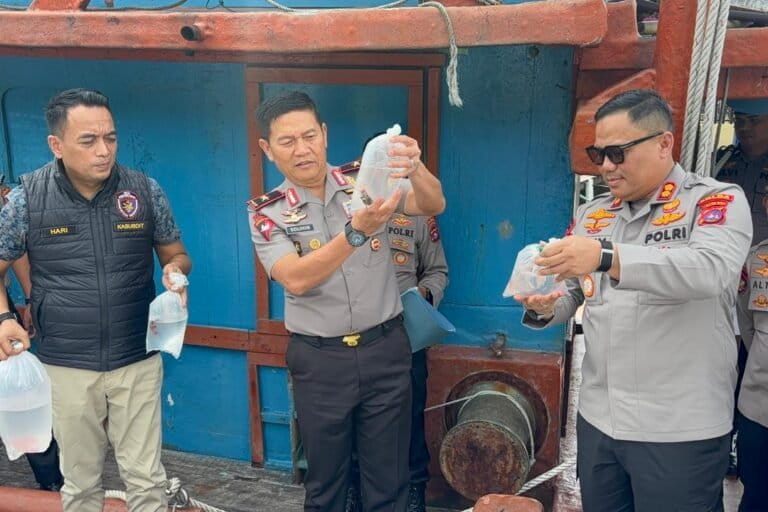
The logistical route established by the group was well-organized. The fish were captured in the Mentawai waters and transported to the Bungus area in Padang, the provincial capital of West Sumatra. At this transit point, the fish were sold to collectors for approximately Rp25,000 (roughly $1.60 USD) per head. While this price may seem modest at the source, the value multiplies exponentially as the fish move through the supply chain. From Padang, the specimens were shipped to Bali—a primary domestic hub for the ornamental fish trade—before being exported to international markets, with Singapore cited as a major destination.
The species seized in this operation included a diverse array of colorful and ecologically significant fish, such as:
- Nemo (Clownfish): Iconic reef dwellers known for their symbiotic relationship with anemones.
- Naso (Unicornfish): Vital herbivores that help control algae growth on reefs.
- Angel Dori and Angel Asli: Highly prized angelfish species known for their vibrant patterns.
- Other varieties: Including Hiro Pasir, Balong, Bobi, Keranjang Bali, Kafa Vavula, and Tompel.
Destructive Methods and Safety Risks
Beyond the illegality of the harvest itself, the methods employed by the suspects have drawn sharp criticism from environmentalists and authorities alike. Interrogations revealed that the crew utilized compressor-aided diving to capture the fish. This practice involves divers staying underwater for extended periods while breathing air pumped through a hose from a surface-level industrial compressor, often originally designed for tires rather than human respiration.
This method is considered "destructive fishing" for two primary reasons. First, it is extremely dangerous for the fishermen, who often lack formal training in dive physiology. The use of unregulated compressors frequently leads to carbon monoxide poisoning, air embolism, and "the bends" (decompression sickness), which can result in permanent paralysis or death. Second, compressor divers often use chemicals like potassium cyanide to stun fish, making them easier to catch. Even if chemicals are not used, the process of chasing fish into crevices often results in the physical destruction of coral heads, which take decades to grow.
Ecological Implications for the Mentawai Archipelago
The Mentawai Islands are part of a critical marine corridor in the Indian Ocean, boasting unique ecosystems that are increasingly under threat. Rahmat Hidayat, Head of the Pekanbaru Marine Resource Management Center (Loka Pengelolaan Kelautan), clarified that while the species seized in this specific raid are not currently listed as "fully protected" under the Ministry of Marine Affairs and Fisheries Decree (Kepmen KP) No. 66 of 2025, their mass extraction remains a grave ecological concern.
"The large-scale harvesting of ornamental fish disrupts the delicate balance of the reef," Hidayat explained. "Many of these species, particularly herbivores like the Naso, play a fundamental role in maintaining the health of coral reefs by grazing on algae. If their populations are decimated, algae can overgrow and suffocate the coral, leading to a total collapse of the local ecosystem."
The Mentawai region contains several designated Marine Protected Areas (MPAs), including the Selat Bunga Laut Aquatic Tourism Park and the coral reef zones of Siberut, Sipora, and Pagai. These areas are designed to safeguard endemic species, sea turtle habitats, and the sustainable fisheries that local communities rely on for food security and tourism. Hidayat noted that it is currently being investigated whether the KM Antel GT 15 poached these fish from within these conservation zones, which would carry even heavier legal penalties.

Legal Consequences and Regulatory Framework
The five suspects currently remain in custody as the West Sumatra Police prepare their case for prosecution. They face multiple charges under the Indonesian Fisheries Law (UU No. 31/2004) and the Job Creation Law (UU Cipta Kerja), which includes specific provisions for the protection of marine and coastal resources.
The use of the Job Creation Law in this context is significant, as it streamlined regulations but also stiffened penalties for those operating without the "Business Identification Number" (NIB) and specific environmental permits required for maritime extraction. If convicted, the suspects could face significant prison sentences and heavy fines, intended to serve as a deterrent to other syndicates operating in the region.
Advocacy and Future Oversight
Imam Trihatmadja, Program Director of Destructive Fishing Watch (DFW) Indonesia, lauded the Ditpolairud Polda Sumbar for their vigilance but warned that enforcement must be continuous. "The apprehension of this vessel is a victory, but we must address the root causes of why destructive fishing persists," Trihatmadja stated. "The use of compressors and the targeting of ornamental fish are clear indicators that our reefs are being treated as a bottomless resource rather than a protected heritage."
The DFW and other NGOs are calling for increased satellite monitoring and community-based surveillance to protect remote waters. Because the Mentawai Islands are geographically isolated, they are particularly vulnerable to poachers who believe they can operate outside the view of the law.
Conclusion: A Call for Sustainable Management
The seizure of 2,000 fish in the Mentawai Islands serves as a stark reminder of the global demand for "living decorations" and the cost borne by local ecosystems. While the ornamental fish trade provides a livelihood for many, the transition to sustainable, permit-based, and non-destructive harvesting is essential for the long-term survival of Indonesia’s seas.
As the legal proceedings against the five suspects move forward, the focus of the West Sumatra authorities remains on rehabilitating the seized fish where possible and strengthening the "Sea Shield" around the Mentawai Islands. For the fragile coral reefs of Siberut and Pagai, the removal of even a few thousand fish can have a ripple effect that touches everything from the smallest polyp to the local tourism industry that depends on pristine underwater vistas. The fight against illegal fishing is not just about enforcing the law; it is about ensuring that the "Emerald of the Equator" continues to thrive beneath the waves for generations to come.