Nila Kartika Wati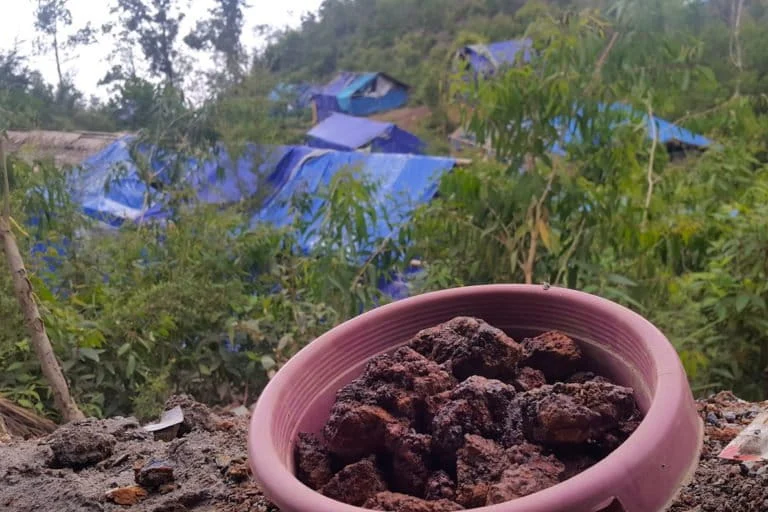
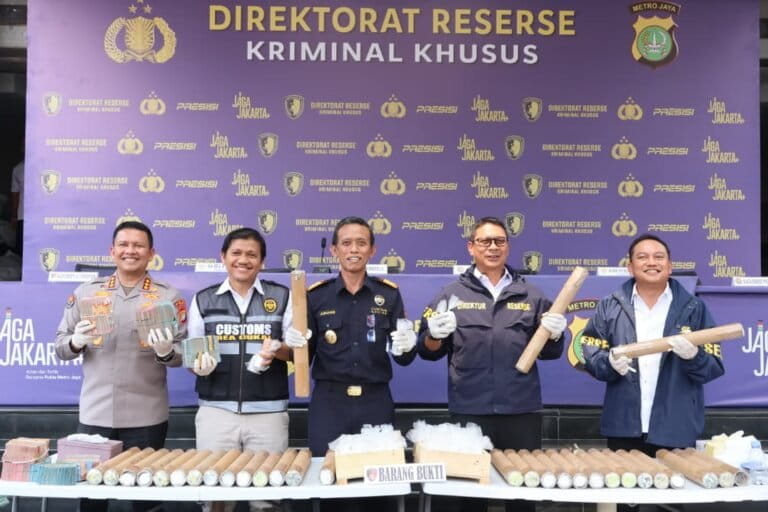
In a major crackdown on the illegal trade of hazardous chemicals, the Jakarta Metropolitan Regional Police (Polda Metro Jaya) in collaboration with the Tanjung Priok Customs and Excise Office successfully intercepted a massive shipment of 760 bottles of illegal mercury intended for the Philippines. The operation, which took place in late April, exposed a sophisticated smuggling network that had been operating under the radar for years, utilizing deceptive logistics practices to bypass international shipping regulations. The seizure highlights the persistent challenges Indonesia faces in controlling the flow of mercury, a toxic heavy metal that poses severe risks to human health and the global environment.
The discovery was made at the Tanjung Priok Customs and Excise Office (KPU) in North Jakarta. According to Commissioner Victor Dean Mackbon, Director of Special Crimes at Polda Metro Jaya, the breakthrough occurred during a routine but rigorous inspection of export documents. Investigators from Unit II of the Sub-Directorate for Specific Crimes (Ditreskrimsus) noticed significant discrepancies between the declared cargo and the physical contents of a shipping container destined for a recipient identified as Takasi Kin Hardware Trading in Manila, Philippines.
The Modus Operandi: Deception Through Textile Camouflage
The smugglers employed a "concealment and misdeclaration" strategy to move the hazardous material across borders. According to official reports, the perpetrators filed customs documents claiming the container held a mix of textiles, clothing, and carpets. This tactic was designed to exploit the high volume of textile exports from Indonesia, which often undergo different risk-profiling assessments compared to chemical shipments.
Upon a physical search of the container, authorities discovered 760 bottles of a dense, silver liquid. Each bottle was labeled "Mercury Gold 1 kg." To further evade detection by X-ray scanners or visual inspections, the suspects had meticulously hidden the bottles inside cardboard sleeves, which were then tucked deep within 145 rolls of carpets. This level of preparation suggests a professional understanding of port logistics and inspection protocols.
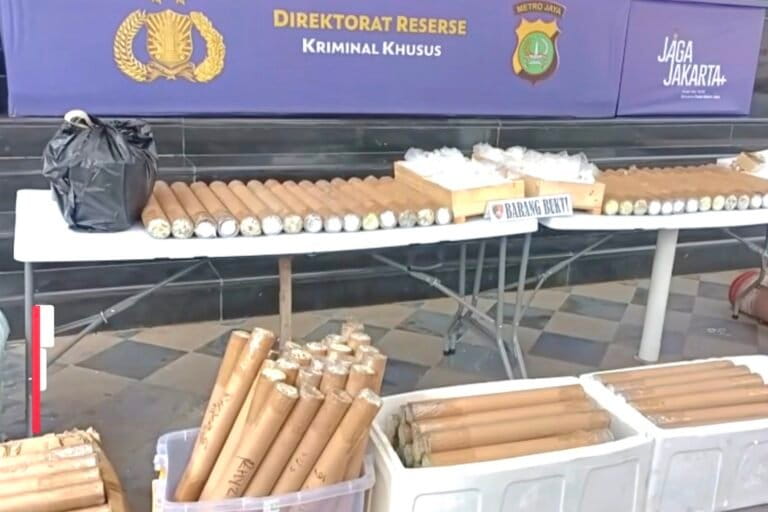
"The mercury was sent to the Philippines using manipulated customs documents so that the cargo appeared to be textiles, clothing, and carpets," Commissioner Mackbon explained during a press briefing. He noted that the use of carpets as a physical shield was a deliberate attempt to mask the weight and density of the mercury bottles, which are significantly heavier than standard textile products.
The Criminal Network: Origins and Profit Margins
The subsequent investigation led to the identification of several key players in the smuggling ring. The primary suspect, identified by the initials MAL, was found to be the owner of the 760 bottles. MAL reportedly acted as the middleman and logistics coordinator for a buyer in the Philippines identified as AB, a resident of Mani Forest in Davao.
MAL did not act alone. The mercury was sourced from another suspect, identified as H, who functioned as the primary supplier. Under interrogation, the suspects admitted that their illicit export business had been operational since 2021. This multi-year timeline indicates a significant failure in previous oversight mechanisms and suggests that hundreds, if not thousands, of kilograms of mercury may have already reached foreign shores through this specific channel.
The financial incentives driving this trade are substantial. MAL reportedly purchased the mercury from H for Rp 2.4 million per kilogram, while H’s initial acquisition cost was approximately Rp 2.1 million. MAL would then sell the product to the Filipino buyer at a market rate that yielded a profit of roughly Rp 300,000 per kilogram. With a turnover reaching Rp 2.7 million per kilogram, the illicit operation generated massive revenues. Based on the frequency of shipments—estimated at two to four times per month depending on demand—authorities estimate that the state has suffered economic losses and environmental risks valued at approximately Rp 30 billion over the last three years.
Regulatory Framework and Legal Consequences
Adhang Noegroho Adhi, Head of the Tanjung Priok Customs and Excise Office, emphasized that mercury is classified as a highly dangerous substance. Under Indonesian law, the transportation and export of mercury are strictly regulated and require specific, limited permits from relevant ministries or government agencies. The suspects in this case possessed no such permits and were not affiliated with any authorized Special Mining Business License (IUPK) holders.
The suspects are currently facing severe legal repercussions. They have been charged under Article 106 in conjunction with Article 21, Paragraph (1) of Law Number 7/2014 concerning Trade. This law specifically prohibits the trade of restricted or dangerous goods without proper authorization, carrying a maximum penalty of four years in prison or a fine of up to Rp 10 billion. Additionally, the investigators are applying Article 161 of Law Number 3/2020 (the Mineral and Coal Mining Law), which addresses the illegal transport and sale of mineral products.
Expert Analysis: Identifying Systemic Gaps in Oversight
While the police have made significant arrests, environmental and legal experts argue that the crackdown must go deeper. Dyah Paramita, a Senior Researcher at the Center for Regional Policy and Governance (CRPG), noted that law enforcement often focuses on the "field actors" while overlooking the role of logistics companies.
"The investigation should not stop at the suspects," Paramita stated. "We need to look into the role of the Freight Forwarding Companies (EMKL). How many times have these companies shipped similar goods to the Philippines? It is highly probable that they were aware of the contents, or at least failed in their duty to verify the cargo before loading it into the warehouse."
Paramita also highlighted a critical disconnect in Indonesia’s regulatory system. While Government Regulation (PP) Number 74/2001 governs the registration and notification of Hazardous and Toxic Substances (B3), it is not effectively integrated with the customs procedures used for exports. This lack of integration creates a "blind spot" where dangerous chemicals can be exported without triggering the necessary notifications to the receiving country.
Furthermore, Article 41 of PP 74/2001 contains a controversial provision that allows for the export of substances banned in Indonesia if the receiving country requests them and follows specific export provisions. This "transit loophole" makes Indonesia vulnerable to becoming a hub for the global mercury trade, especially to countries with weaker chemical oversight.
The Global Context: The Minamata Convention and Gold Mining
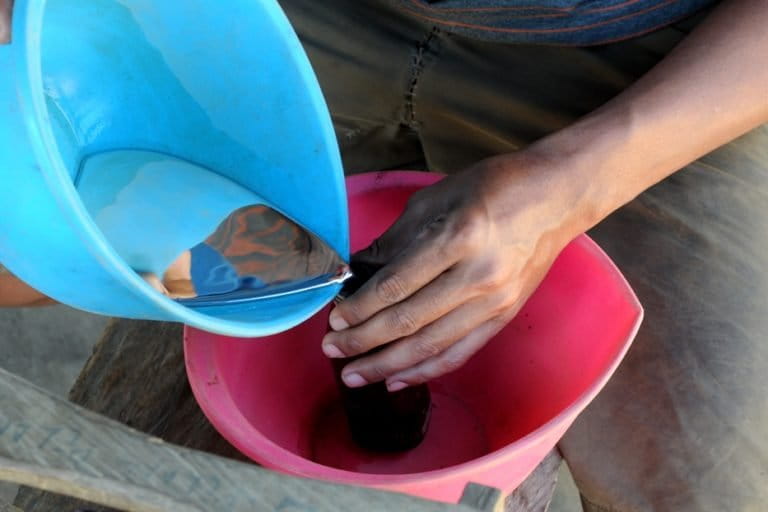
The surge in mercury smuggling is inextricably linked to the global gold market. Yuyun Ismawati Drwiega, founder of the Nexus3 Foundation, pointed out that as global gold prices rise, artisanal and small-scale gold mining (ASGM) activities increase. Mercury remains the preferred tool for these miners because it is cheap, portable, and provides a quick—albeit inefficient and deadly—way to extract gold through amalgamation.
"Many miners choose mercury because it is the easiest method, despite the devastating impacts on health and the environment," Ismawati said. She criticized the Indonesian government’s lack of progress in implementing the "Bali Declaration," a 2022 commitment made during the COP4 Minamata Convention to combat the illegal trade of mercury.
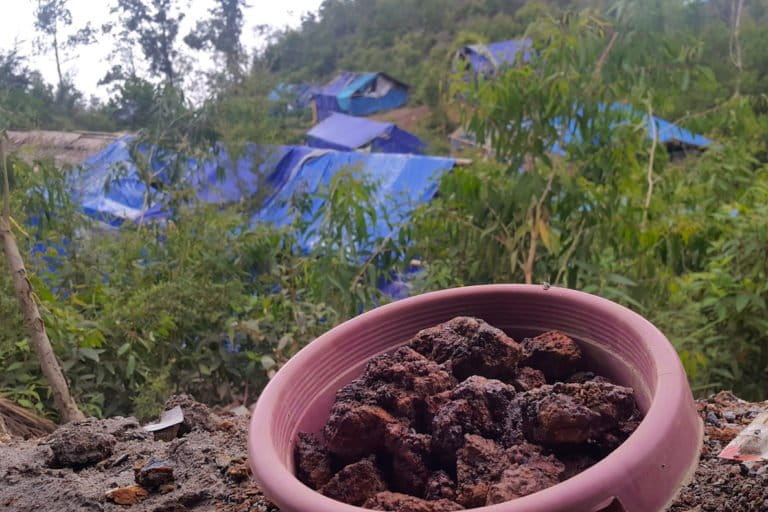
Indonesia ratified the Minamata Convention on Mercury through Law Number 11/2017 and subsequently issued Presidential Regulation (Perpres) Number 21/2019 regarding the National Action Plan for the Reduction and Elimination of Mercury (RAN-PPM). However, experts argue that implementation remains stagnant. The "phase-out" of mercury, which involves banning production and replacing it with safer alternatives, exists on paper but is rarely enforced in the remote regions where illegal cinnabar mining—the source of mercury—thrives.
The Environmental and Health "Silent Killer"
The implications of 760 kilograms of mercury reaching the Philippines go far beyond economic loss. Mercury is a potent neurotoxin that does not degrade in the environment. Instead, it undergoes bioaccumulation, moving up the food chain from water-borne bacteria to fish, and eventually to humans.
In mining communities, mercury vapor is inhaled during the "burning" process of gold amalgams, leading to chronic respiratory and neurological issues. When it enters water systems, it transforms into methylmercury, which causes developmental delays in children and severe neurological damage in adults—a condition famously known as Minamata disease. By failing to stop the source of mercury, the illegal trade perpetuates a cycle of environmental destruction and public health crises that can span generations.
Challenges in Evidence Management and Storage
One of the often-overlooked hurdles in prosecuting mercury cases is the physical management of the seized substance. Unlike other contraband, liquid mercury is extremely difficult to store safely. It is highly volatile and can leak easily, contaminating police evidence rooms and endangering officers.
Yuyun Ismawati noted that while the Attorney General’s Office has issued guidelines for handling seized mercury, Indonesia still lacks specialized high-security storage facilities for toxic chemicals. "We need dedicated mercury storage that includes stabilization processes so the substance can never be used again," she urged. Without proper disposal or long-term stabilization, there is always a risk that seized mercury could find its way back into the black market through corruption or administrative negligence.
Conclusion: A Call for Integrated Enforcement
The success of Polda Metro Jaya and Tanjung Priok Customs in stopping this 760-bottle shipment is a commendable step, but it also serves as a stark reminder of the work ahead. The case reveals that the illegal mercury trade is not a series of isolated incidents but a well-oiled transnational machine fueled by high gold prices and regulatory loopholes.
To truly dismantle these networks, Indonesia must move beyond sporadic busts. A more holistic approach is required, including:
- Digital Integration: Linking the B3 notification system (PP 74/2001) directly with the Indonesia National Single Window (INSW) to ensure any chemical shipment triggers an automatic red flag.
- Corporate Accountability: Holding shipping and logistics firms legally responsible for the verification of hazardous cargo.
- Upstream Enforcement: Targeting illegal cinnabar mines in regions like Maluku and Java, which provide the raw material for mercury production.
- International Cooperation: Strengthening ties with the Philippines and other ASEAN neighbors to share intelligence on buyers and transit routes.
As long as the "gold fever" persists and the regulatory gaps remain open, the silver liquid will continue to flow, leaving a trail of environmental devastation and economic loss in its wake. The Tanjung Priok bust is a victory, but the war against mercury smuggling in Southeast Asia is far from over.