Nila Kartika Wati
The enigma of how migratory birds manage to traverse thousands of kilometers across trackless oceans without succumbing to exhaustion has long occupied the corridors of ornithological research. For centuries, scientists have speculated whether these masters of the sky possess a biological "autopilot" that allows them to rest without ever touching the ground. A landmark study led by the Max Planck Institute for Ornithology has finally provided empirical evidence to settle this debate, revealing that the Great Frigatebird (Fregata minor) is capable of sleeping mid-flight, utilizing a complex array of neurological adaptations that allow it to remain airborne for weeks at a time while surviving on a mere fraction of the sleep it requires on land.
The Galapagos Expedition: Unlocking the Secrets of the Great Frigatebird
The research, spearheaded by Dr. Niels Rattenborg, utilized a pioneering approach to monitor the brain activity of birds in their natural habitat. The team traveled to the Galápagos Islands, a volcanic archipelago situated approximately 1,000 kilometers off the coast of Ecuador. This location was selected for its stable breeding populations and the unique ecological demands placed upon the resident frigatebirds, which must venture far out into the Pacific Ocean to forage.
To capture the data, researchers outfitted 14 female Great Frigatebirds with sophisticated, miniature electroencephalogram (EEG) recorders. These devices, designed to measure brain waves across both hemispheres, were paired with GPS loggers to track the birds’ position, altitude, and flight patterns. This methodology allowed the team to correlate specific flight behaviors—such as soaring on thermal currents—with distinct neurological states. The results, published in the journal Nature Communications, provided the first direct evidence of avian sleep in flight, shattering previous assumptions about the necessity of terrestrial rest.
The Mechanics of Aerial Rest: Unihemispheric and REM Sleep
The study’s findings reveal that frigatebirds employ three distinct modes of rest to survive their grueling oceanic journeys. The most prevalent mechanism is Unihemispheric Slow-Wave Sleep (USWS). In this state, one-half of the brain enters a deep sleep while the other half remains fully alert. This adaptation is functionally similar to a pilot keeping one eye on the instrument panel while the rest of the body relaxes. By keeping one hemisphere active, the bird ensures that the eye connected to that hemisphere remains open, allowing it to monitor its environment for predators, obstacles, or changes in air currents.
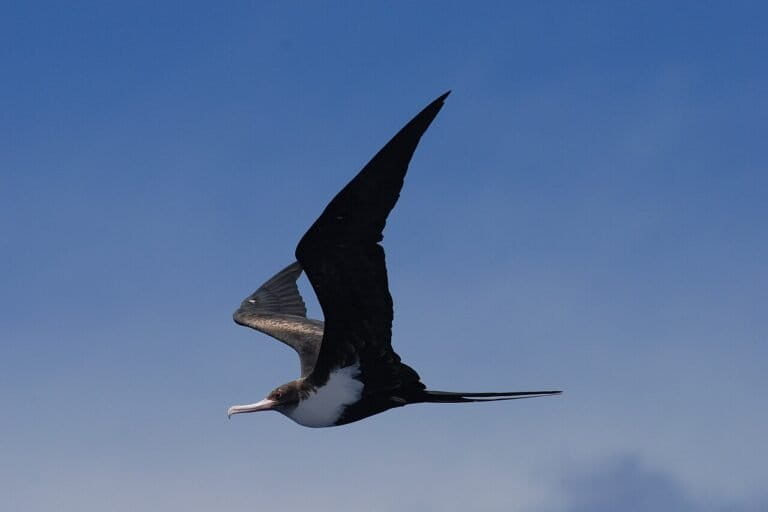
Interestingly, the data showed that USWS typically occurs when the birds are soaring in circular patterns on rising air currents. The active eye is usually directed toward the inside of the turn, suggesting that the bird is "watching" its flight path even while half-asleep.
Beyond USWS, the researchers were surprised to find that frigatebirds also engage in bihemispheric slow-wave sleep, where both halves of the brain sleep simultaneously. While this occurs far less frequently and for shorter durations than on land, it proves that birds do not require an active brain hemisphere to maintain stable flight under certain conditions.
The most unexpected discovery, however, was the presence of Rapid Eye Movement (REM) sleep. In mammals, REM sleep is characterized by total muscle atonia, or temporary paralysis, which would be fatal for a creature thousands of feet in the air. In frigatebirds, REM episodes were found to last only a few seconds. During these bursts, the birds’ heads would momentarily dip—a phenomenon familiar to anyone who has seen a drowsy passenger on a train—yet their flight trajectory remained undisturbed. Unlike humans, birds retain enough muscle tone during REM to keep their wings locked in a gliding position, allowing them to process memories and cognitive data without falling from the sky.
A Stark Contrast: Sleep Debt and Survival
The quantitative data provided by the EEG loggers highlights the extreme nature of these adaptations. On land, a Great Frigatebird typically sleeps for approximately 12 hours a day in long, consolidated blocks. However, once they take to the skies, their sleep patterns undergo a radical transformation. The study found that while flying, these birds sleep for an average of only 42 minutes per day.
This sleep is highly fragmented, occurring in short bursts that average only 10 seconds in duration. This means that a frigatebird survives on just 7.4% of its normal land-based sleep while performing high-stakes navigation and foraging. "The fact that they can function with such a massive sleep debt is a testament to the evolutionary pressures of their environment," Dr. Rattenborg noted in his analysis. Despite this extreme deprivation, the birds showed no signs of cognitive impairment or flight instability, suggesting that their brains have evolved a unique resilience to the effects of sleep loss that would be debilitating to most other vertebrates.
The Anatomical Necessity of Flight
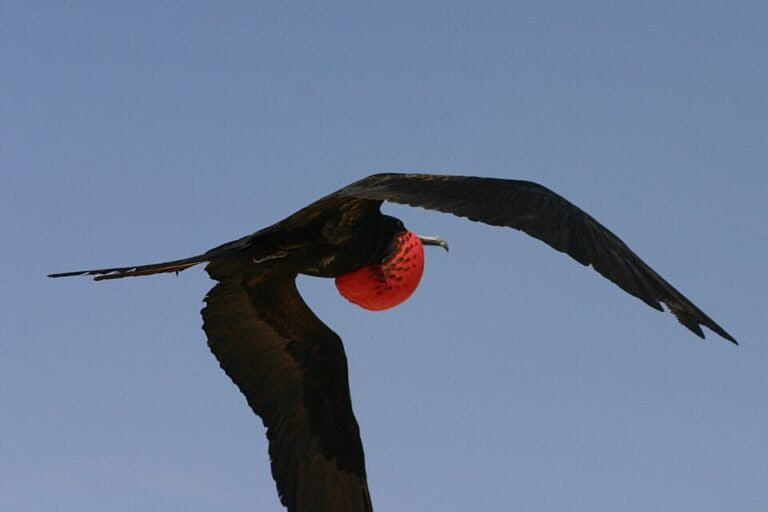
To understand why the frigatebird has evolved such an extreme lifestyle, one must look at its physical limitations. Unlike other seabirds such as the albatross or the booby, the Great Frigatebird possesses feathers that are not waterproof. They lack the specialized preen glands that produce the oils necessary to keep plumage dry during surface contact with the ocean. Furthermore, their legs are short and their feet are not webbed, making it nearly impossible for them to take off from the water’s surface if they were to land.
If a frigatebird were to land on the ocean, its feathers would quickly become waterlogged, leading to hypothermia or drowning. Consequently, the frigatebird is an "obligate flyer" when away from land. They are forced to stay aloft for weeks, sometimes months, only returning to solid ground for the breeding season. This anatomical constraint turned the sky into their only safe haven, necessitating the development of a sleep system that functions in three dimensions.
Comparative Biology: A Broader Avian Context
The frigatebird is not the only species to exhibit such remarkable endurance. The study’s implications are bolstered by recent research into other avian species. For instance, the Chinstrap Penguin (Pygoscelis antarcticus) has been found to engage in "microsleeps" up to 10,000 times a day, with each episode lasting only four seconds. This allows them to accumulate over 11 hours of sleep while remaining vigilant against predators in a crowded colony.
Similarly, the Common Swift (Apus apus) is known to stay airborne for up to ten months without ever touching the ground. While the EEG technology used on frigatebirds is currently too heavy for the 40-gram swift, scientists hypothesize that they use similar USWS and REM strategies to survive their nearly year-long flights. These comparisons suggest that the ability to fragment sleep into tiny, functional units is a widespread evolutionary tool among birds facing extreme environmental demands.
Scientific Implications and Future Horizons
The discovery of aerial sleep in frigatebirds has significant implications for neuroscience and our understanding of sleep’s fundamental purpose. If a bird can maintain complex motor functions and navigation with less than an hour of sleep per day, it challenges the traditional view that long, uninterrupted sleep cycles are the only way to achieve cognitive restoration.

Experts in human sleep science are looking at these findings to understand how certain organisms can bypass the "sleep pressure" that leads to errors and accidents in humans. While humans cannot replicate the unihemispheric sleep of a bird, understanding the chemical and electrical signals that allow a frigatebird’s brain to remain "awake" in one hemisphere could lead to breakthroughs in treating sleep disorders or managing the effects of shift work and long-duration missions in aviation and space exploration.
Furthermore, the study highlights the importance of protecting the habitats of these extraordinary creatures. The Galápagos Islands serve as a critical laboratory for understanding the limits of biological endurance. As climate change alters wind patterns and food availability in the Pacific, the energy-efficient sleep of the frigatebird may be pushed to its absolute limit.
Conclusion: The Ultimate Mastery of the Air
The Great Frigatebird stands as a marvel of evolutionary engineering. By combining the physical grace of a master glider with the neurological sophistication of a multi-mode sleep system, it has conquered an environment that is hostile to almost all other forms of life. The ability to dream while soaring over a midnight ocean, with one eye open and half a brain alert, represents one of the most profound adaptations in the natural world. As research continues, the frigatebird remains a symbol of the untapped mysteries of the avian mind and a reminder that even in the most demanding conditions, life finds a way to rest, recover, and persevere.