Nila Kartika Wati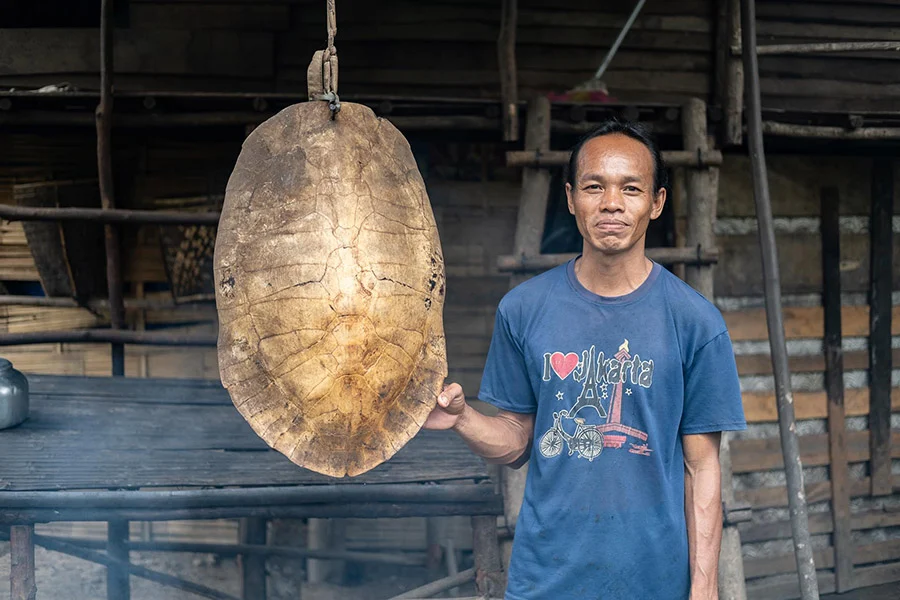
The designation of the Candi Bumiayu temple complex as a National Cultural Heritage site in 2024 marks a pivotal moment for Indonesia’s preservation of its classical era, specifically the influence of the Kedatuan Sriwijaya in the hinterlands of South Sumatra. Located in the Penukal Abab Lematang Ilir (PALI) Regency, this archaeological site serves as more than just a collection of ancient brick structures; it is a profound biological archive. Through its intricate reliefs and statues, Candi Bumiayu preserves a snapshot of the flora and fauna that once thrived within the Lematang and Penukal wetland ecosystems between the 9th and 12th centuries. However, as modern land-use changes—primarily the expansion of industrial oil palm plantations—reshape the landscape, the "living" heritage depicted on these stone walls is rapidly disappearing from the wild.
Historical Context and Archaeological Significance
Candi Bumiayu is unique as the only significant temple complex discovered in South Sumatra, a province more commonly associated with the maritime power of the Sriwijaya Empire centered in Palembang. Archaeologists estimate that the Bumiayu site was active during the same period as the Muaro Jambi complex in Jambi and the Muara Takus complex in Riau. While Sriwijaya is often characterized as a Buddhist thalassocracy, Candi Bumiayu reveals a complex religious synthesis. It is primarily a Hindu site dedicated to Shivaism, yet it exhibits clear Buddhist influences, reflecting the religious fluidity and tolerance of the era.
The complex is situated along the banks of the Lematang River, a major tributary of the Musi River, which served as a vital ancient highway for trade and communication. The surrounding environment is a vast wetland system comprising peat swamps, lakes, and seasonal floodplains. During the rainy season, higher ground—locally known as talang—appears as isolated islands amidst the rising waters. This specific geography dictated the lifestyle of the ancient inhabitants and provided a rich habitat for a diverse array of species, many of which were immortalized by ancient artisans.
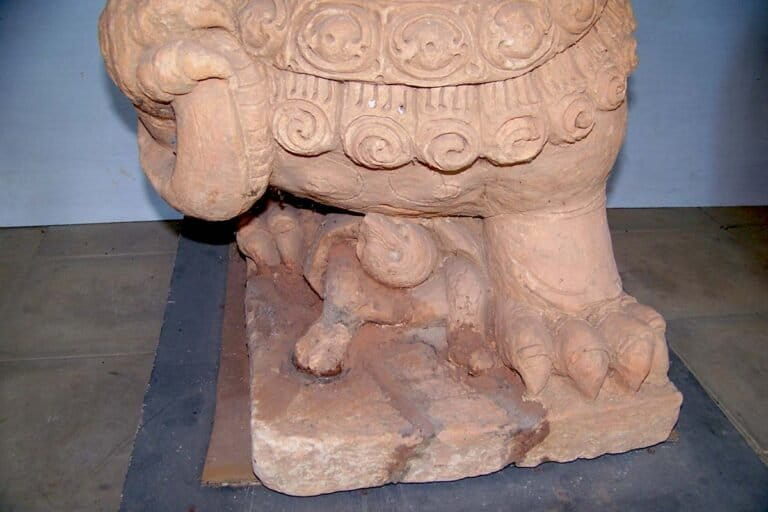
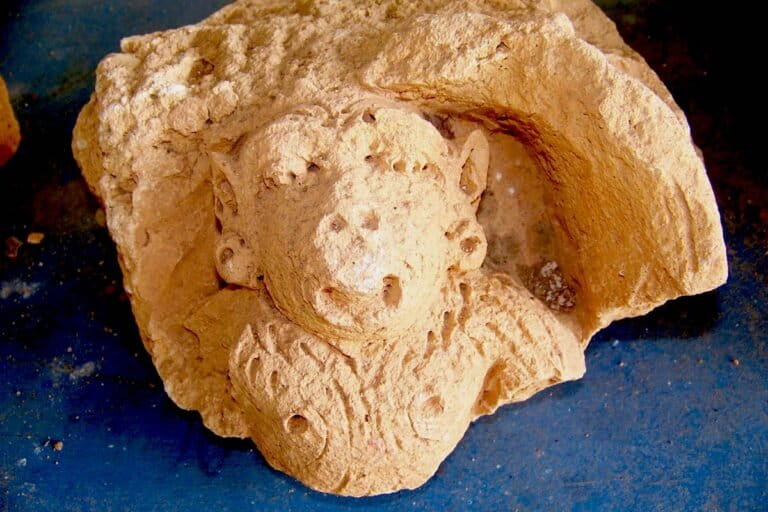
Currently, 13 temple structures have been identified within the complex, though only five have undergone significant restoration: Candi Siwa Mahadewa, Candi Awalokiteswara, Candi Dewi Bhairawi, Mandapa Bumiayu, and Candi 4 Makara. These structures are built primarily of red brick, a characteristic of Sumatran temple architecture, and are adorned with terra cotta reliefs and stone statues that provide a window into the medieval environment of the region.
The Biological Record in Reliefs and Statues
Sondang M. Siregar, an archaeologist from the National Research and Innovation Agency’s (BRIN) Center for Environmental, Maritime, and Sustainable Culture Research, emphasizes that the artifacts at Candi Bumiayu are a primary source for understanding the historical biodiversity of South Sumatra. "The flora and fauna depicted in these reliefs are not merely decorative," Siregar explains. "They represent symbols of purity, loyalty, and divine strength, but they were also clearly modeled after the creatures the people of that era saw every day in their wetlands."
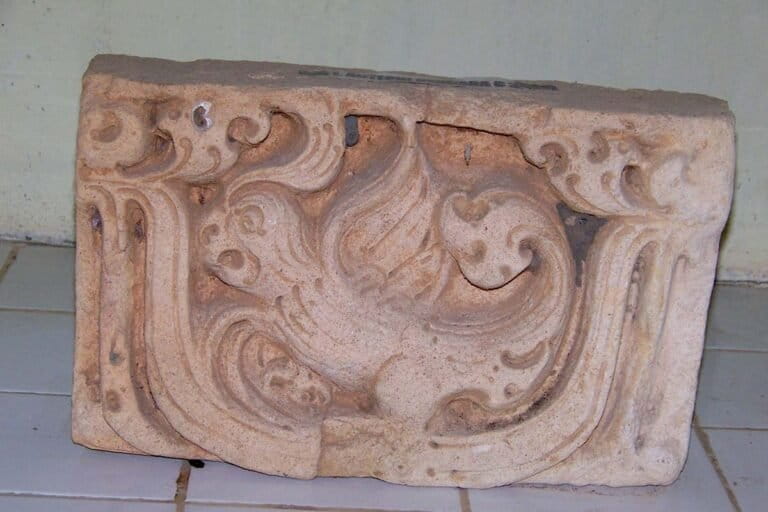
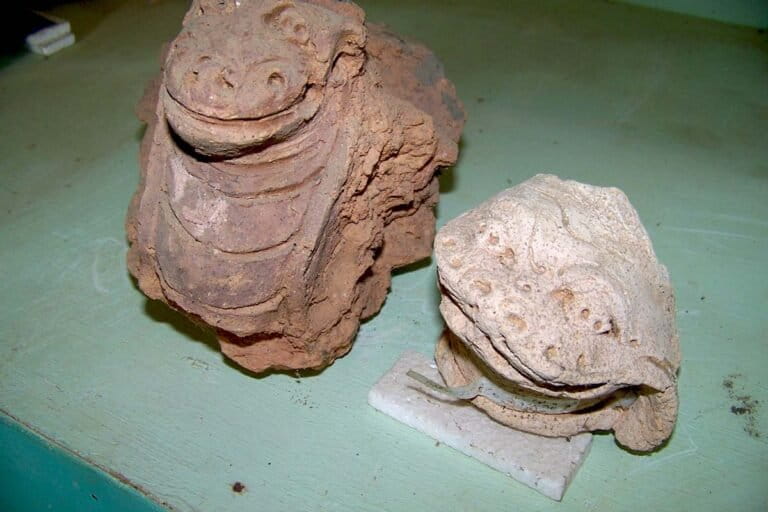
The faunal record at Bumiayu is extensive. Reliefs and statues depict various avian species, including parrots (burung nuri), egrets (kuntul), and myna birds (beo). Larger predators and reptiles are also represented, such as wetland crocodiles, snakes, and several species of turtles. Domesticated and wild mammals, including cattle and monkeys, appear frequently, indicating a landscape where human settlement and wild nature were deeply intertwined.
The floral depictions are equally rich. The most prominent is the lotus (Nymphaea and Nelumbo), which holds deep spiritual significance in both Hindu and Buddhist traditions as a symbol of enlightenment and purity. Beyond the spiritual, the reliefs document the presence of the Arecaceae (palm) family, including sugar palms (aren), nibung, nipah, serdang, and coconut trees. Interestingly, while most flora depicted were local, some, such as the Kalpataru tree, are considered mythological or imported concepts from India, serving as symbolic "trees of life" that did not necessarily exist in the local Sumatran soil.
A Vanishing Ecosystem: From Biodiversity to Monoculture
The tragedy of Candi Bumiayu lies in the contrast between its stone records and the current reality of the PALI landscape. Field observations and interviews with local residents indicate that many of the species carved into the temple walls are now rare or locally extinct.
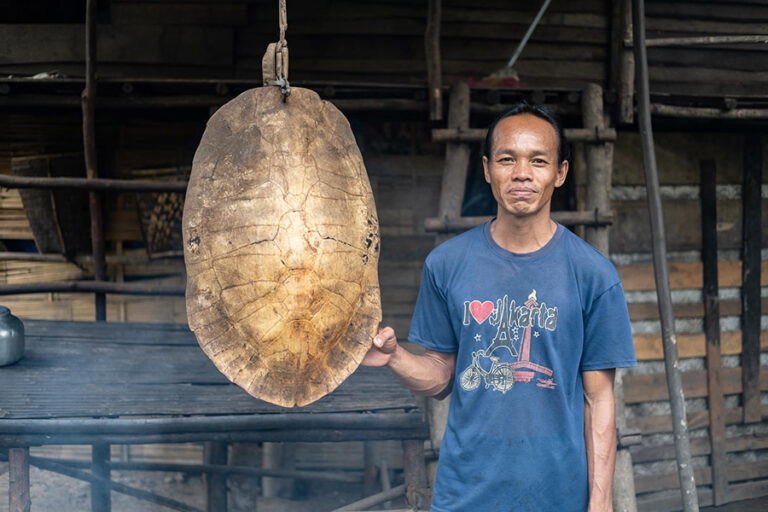
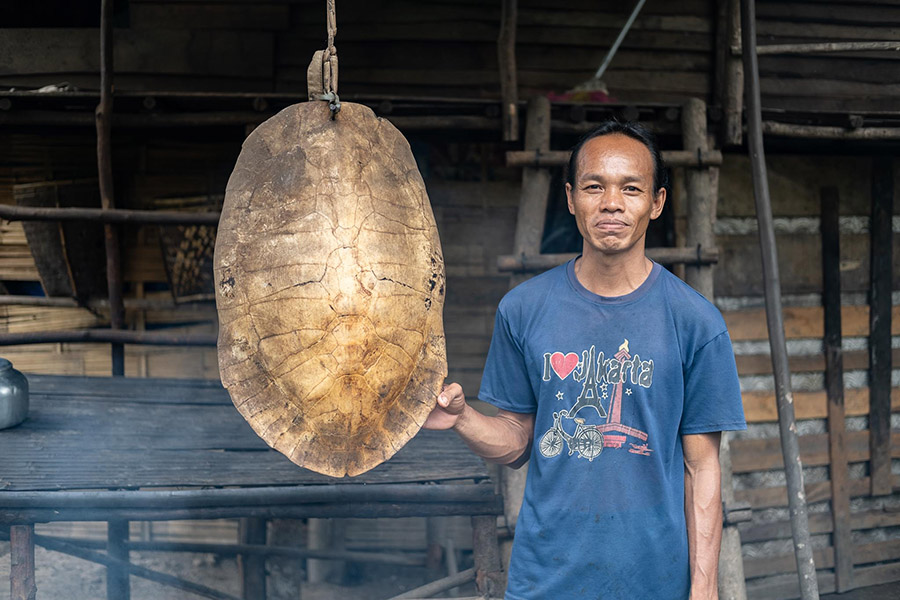
The Malayan Giant Turtle (Orlitia borneensis), known locally as Byuku, was once a staple of these wetlands. Today, it is listed under CITES Appendix II and is increasingly difficult to find. Kasmin, a resident of Tempirai Village, still keeps the massive shells of Byuku caught in previous decades—grim mementos of a species pushed to the brink by habitat destruction and illegal trade. Similarly, the wetland crocodiles that once patrolled the Lematang tributaries have largely retreated. Ibrahim, another local resident, notes that while crocodiles might still be spotted near the confluence of the Penukal and Musi rivers, they have vanished from the interior swamps and smaller streams.
The primary driver of this ecological shift is the transformation of the landscape. Historically, the local communities lived in harmony with the wetlands, building houses on stilts and planting rubber trees on the higher talang ground. This allowed the peat swamps and floodplains to remain relatively intact. However, since the early 2000s, the introduction of industrial oil palm plantations has fundamentally altered the hydrology of the region.
According to data from the Central Bureau of Statistics (BPS), oil palm plantations in PALI Regency now cover approximately 70,268 hectares, far surpassing the 37,275 hectares dedicated to rubber. In a regency with a total land area of only 184,000 hectares—the smallest in South Sumatra—this represents a massive conversion of land. Unlike rubber, oil palm cultivation in wetlands requires extensive drainage through canals, which dries out the peat, destroys the habitats of aquatic species, and increases the risk of peat fires.
Cultural Preservation through Oral Tradition
As the physical species disappear, the memory of South Sumatra’s biodiversity is being kept alive through Sastra Tutur, or oral literature. Amrullah Marsup, a cultural expert from Penukal, has documented these legends to ensure they are not lost along with the forests.
One of the most significant tales is the Legend of Danau Burung (Lake of Birds). This oral history describes a great war between thousands of birds and a group of humans intent on destroying the forest. The legend meticulously lists the species involved: the Changeable Hawk-Eagle (Nisaetus cirrhatus) as the leader, followed by crested goshawks, swallows, parrots, whistling ducks, and egrets. The tale even mentions the mythical presence of the Bird of Paradise (Paradisaeidae) coming to the aid of the local birds.
"These stories are not just fairy tales; they are ecological records," says Marsup. "They tell us which birds were dominant and how the community perceived the forest as a sacred space that defended itself." Other stories, such as the "Andai-Andai Perayun," describe a pact of non-aggression between humans and crocodiles, reflecting an ancient social contract that allowed for peaceful coexistence in the shared riverine environment.
Analysis of Implications and the Path Forward
The 2024 designation of Candi Bumiayu as a National Cultural Heritage site provides a legal framework for its physical protection, but experts argue that conservation must extend beyond the temple walls. The "integrity" of a cultural site like Bumiayu is inextricably linked to its environmental context. If the lotuses disappear from the nearby Danau Lebar and the Byuku turtles go extinct, the reliefs on the temple lose their living reference points, becoming abstract symbols rather than reflections of a once-vibrant reality.
The situation in PALI highlights a broader national challenge: the tension between economic development through monoculture and the preservation of both cultural and biological heritage. The expansion of oil palm has provided economic growth for some, but at the cost of the "natural museum" that surrounds Candi Bumiayu.
To truly honor the legacy of the Sriwijaya era at Bumiayu, a multi-disciplinary approach is required. This includes:
- Ecological Restoration: Protecting the remaining wetlands and lakes, such as Danau Lebar and Danau Burung, to ensure that the species depicted in the reliefs have a chance to survive.
- Sustainable Tourism: Developing the Candi Bumiayu site as an eco-cultural destination that emphasizes the link between history and nature.
- Educational Integration: Using the Sastra Tutur and archaeological findings in local school curricula to foster a sense of pride and stewardship among the younger generation.
Candi Bumiayu stands as a silent witness to the grandeur of Indonesia’s past and a warning for its future. It reminds us that the greatness of a civilization like Sriwijaya was built not just on gold and trade, but on a deep, spiritual connection to a rich and thriving natural world. As the nation celebrates the site’s new status, the challenge remains to ensure that the "Lake of Birds" remains more than just a legend.