Nila Kartika Wati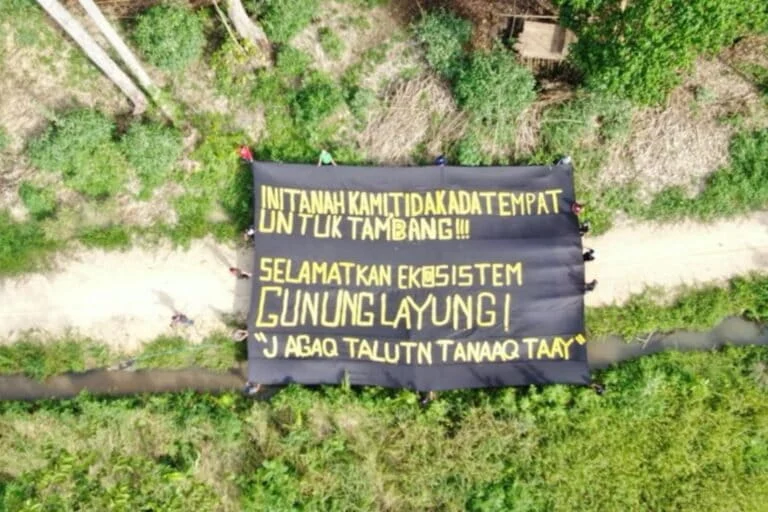
The morning sun had barely pierced the canopy of the Geleo Asa village in Kutai Barat, East Kalimantan, when Albed, a local rubber farmer, prepared for his daily routine. Armed with a tapping knife and a stack of collection buckets, he set out on his motorcycle for his 1.6-hectare plantation, located roughly five kilometers from his home. For years, this path served as a vital artery for the community, providing access to ancestral lands, fishing spots along the river, and the rubber trees that sustain local livelihoods. However, a sudden confrontation in mid-2024 transformed this routine journey into a symbol of a much larger struggle between indigenous land rights and the rapid expansion of Indonesia’s coal industry.
Albed’s path was obstructed by a security detail consisting of 12 individuals, including members of the Indonesian National Armed Forces (TNI), the National Police (Polri), and private security personnel representing PT Pari Coal. The company, a subsidiary of the energy giant PT Adaro Energy Indonesia (now rebranded as PT Alamtri Resources Indonesia), had begun clearing land for a massive coal jetty and hauling road. Albed was informed that the road he had used for decades was now a restricted corporate zone. Despite his protests that the land was his primary source of income, the blockade remained firm. Months later, the farmer remains unable to access his plantation, leaving his family’s primary source of revenue—averaging between IDR 2 million and IDR 4 million per month—entirely severed.
The Infrastructure of Extraction: PT Pari Coal’s Expansion
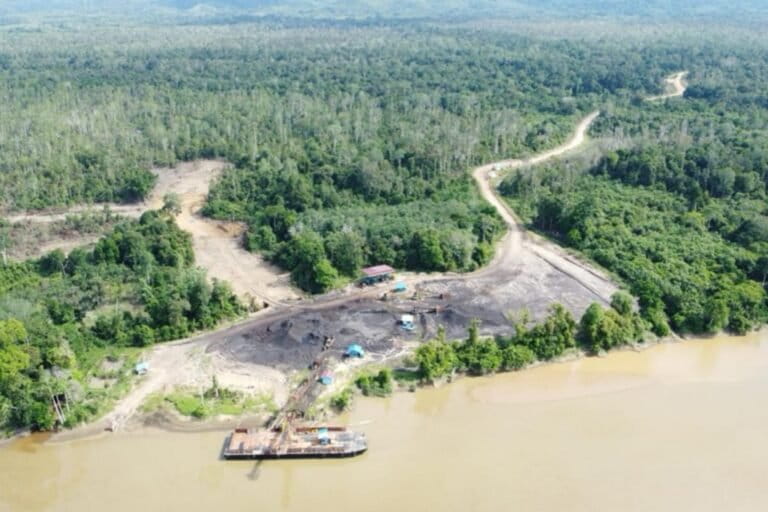
The conflict in Geleo Asa is centered around the development of a strategic logistics hub for PT Pari Coal. According to data from the Ministry of Environment and Forestry’s Amdalnet system, the company holds a coal mining production operation permit valid from January 2024 through April 2054. The project is designed for a massive output of approximately 3.5 million metric tons of coal per year. To facilitate this, the company is constructing a 100-kilometer hauling road stretching from its mining sites in Mahakam Ulu Regency to the villages of Geleo Asa and Muara Benangaq.
The centerpiece of this logistics network is the jetty facility on the Waliwai River. A jetty serves as a specialized port for loading coal onto massive barges, which then navigate the river systems of Kalimantan to reach international shipping lanes. For the residents of Geleo Asa, however, the jetty is not a sign of progress but a barrier. The Waliwai River has traditionally been a primary fishing ground for local Dayak communities, and the construction of the port threatens to disrupt the aquatic ecosystem and restrict the movement of traditional fishermen.
A Chronology of Tension and Displacement
The escalation of tensions in Kutai Barat follows a predictable yet tragic timeline common in Indonesia’s resource-rich provinces. The initial entry of PT Pari Coal in early 2024 was marked by land clearing and the arrival of heavy machinery. By mid-2024, the presence of state security forces became a permanent fixture in the area, ostensibly to protect "National Strategic Interests" or corporate assets.
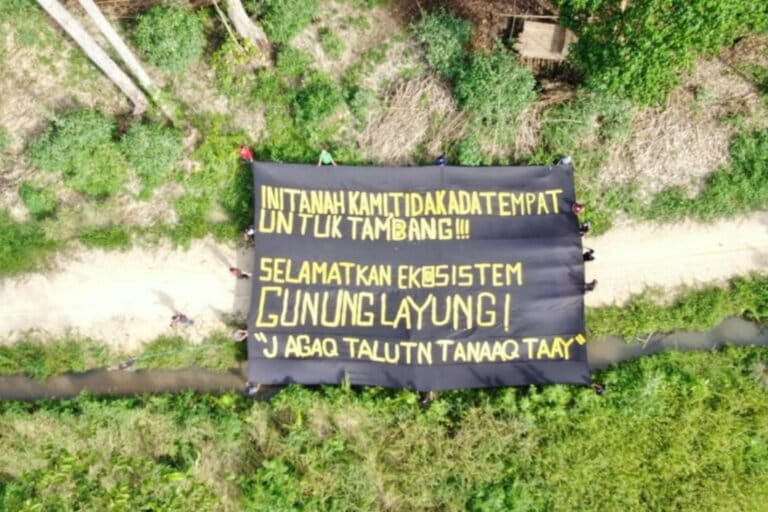
For the community of Dayak Geleo Asa, the arrival of the company represents an existential threat to Gunung Layung, a forested mountain area that serves as the region’s primary watershed. A 2025 report by the Mining Advocacy Network (Jatam), titled Limbung di Gunung Layung, highlights that the mountain provides the water necessary for irrigation, drinking, and the survival of the region’s famous "Durian Melak" orchards. The report details how the construction of hauling roads and a port facility covering nearly 1,800 hectares is systematically shrinking the living space of the indigenous population.
Windy Pranata, a researcher for Jatam East Kalimantan, notes that the use of security forces to block farmers from their own land is a violation of basic human rights, including the right to freedom of movement and the right to maintain a livelihood. "When a citizen cannot access their garden because of armed guards, it creates a climate of fear that stifles local democracy," Pranata stated.
The ESG Paradox: Paper Scores vs. Field Realities
The conflict at PT Pari Coal presents a stark contrast to the corporate image projected by its parent company, Adaro Energy Indonesia. In the 2024 Katadata ESG Index (KESGI), Adaro ranked first among ten major coal mining companies, boasting an overall Environmental, Social, and Governance (ESG) score of 62.1. The company scored particularly high in governance (72.7), while its environmental and social scores hovered around 59.9 and 56.7, respectively.
ESG metrics are intended to provide investors with a framework for evaluating a company’s sustainability and ethical impact. However, activists and researchers argue that these scores often fail to capture the granular reality of local conflicts. Windy Pranata argues that ESG assessments are frequently "paper-based," relying on corporate sustainability reports, administrative documents, and CSR (Corporate Social Responsibility) programs rather than independent field verification.
"A company can receive a high ESG score because it has a carbon reduction target or a scholarship program, while simultaneously its subsidiaries are involved in land disputes and the intimidation of indigenous farmers," Pranata explained. He suggests that without direct input from affected communities, ESG labels risk becoming a tool for "greenwashing"—a way to maintain a positive reputation on the stock exchange while continuing destructive practices on the ground.
Financial Underpinnings and the Responsibility of Lenders
The expansion of coal infrastructure in East Kalimantan is not merely a local corporate initiative; it is fueled by a network of national and international financial institutions. Adaro’s operations have historically been supported by a syndicate of banks, including Bank Mandiri, Bank Permata, Sumitomo Mitsui Banking Corporation (SMBC), and DBS Bank.
Linda Rosalina, Executive Director of Transformasi untuk Keadilan (TuK) Indonesia, emphasizes that these financial institutions bear a significant responsibility for the impacts of their lending. Under the Indonesia Sustainable Finance Taxonomy (TKBI), social aspects are a critical criterion for sustainable business activities. Rosalina argues that if a project involves unresolved conflicts with indigenous peoples or violations of human rights, it should not be classified as a sustainable investment.
"Banks must conduct rigorous due diligence that goes beyond administrative checklists," Rosalina said. "They need to ensure that the principle of Free, Prior, and Informed Consent (FPIC) is respected. When conditions on the ground show that farmers are being displaced and water sources are threatened, the lenders should review, and if necessary, halt their funding."
Ecological Stakes and the "Ghost Village" Precedent
The environmental concerns surrounding the Pari Coal project are bolstered by the history of coal mining in other parts of Kalimantan. In South Kalimantan, Adaro’s operations have been linked to the deforestation of over 8,000 hectares and the displacement of entire communities. The case of Desa Wonorejo in Balangan Regency serves as a grim warning; once a thriving transmigration village, it has become a "ghost village" after being swallowed by mining expansions, leaving former residents to struggle for relocation and compensation.
In Geleo Asa, the primary concern is the ecological integrity of Gunung Layung and the surrounding river systems. The removal of forest cover for hauling roads increases the risk of erosion and siltation in the rivers, which can destroy fish habitats and lead to more frequent flooding in downstream villages. Furthermore, the loss of rubber and durian trees represents a permanent loss of biodiversity and local economic resilience.
The Challenge of a Just Transition
The ongoing conflict highlights the complexities of Indonesia’s energy landscape. While the government and corporations discuss "energy transition" and "decarbonization" in international forums, the domestic reality remains heavily reliant on coal extraction. Jessica Hanafi, a life cycle expert, notes that a true ESG framework must consider the entire supply chain and the social cost of the industry.
"We cannot talk about sustainability while ignoring the workers and the communities living near the mines," Hanafi said during a recent workshop in Jakarta. "As we move toward a transition, we must ensure that mining regions do not become dead zones once the resources are depleted."
Victoria Fanggidae, Executive Director of The Prakarsa, added that the gap between corporate commitment and field reality is the biggest hurdle for ESG in Indonesia. She argues that civil society must play a more active role in verifying corporate claims. "If the impact of ESG is not felt by the people on the ground, then it is nothing more than a narrative," she concluded.
Conclusion: A Call for Accountability
The case of Albed and the Geleo Asa community is a microcosm of the broader struggle for land and justice in Indonesia’s mining frontiers. As PT Pari Coal continues its development, the pressure on local ecosystems and livelihoods is expected to intensify. The resolution of this conflict will depend on whether ESG becomes a genuine mechanism for accountability or remains a superficial marketing tool. For Albed, the stakes are simple: the right to walk the path to his garden, the right to harvest his rubber trees, and the right to ensure a future for his children in the land of their ancestors. Without a shift in how corporate interests and state security interact with local populations, the "golden age" of mining may continue to be built on the displacement of the very people it claims to benefit.