Nila Kartika Wati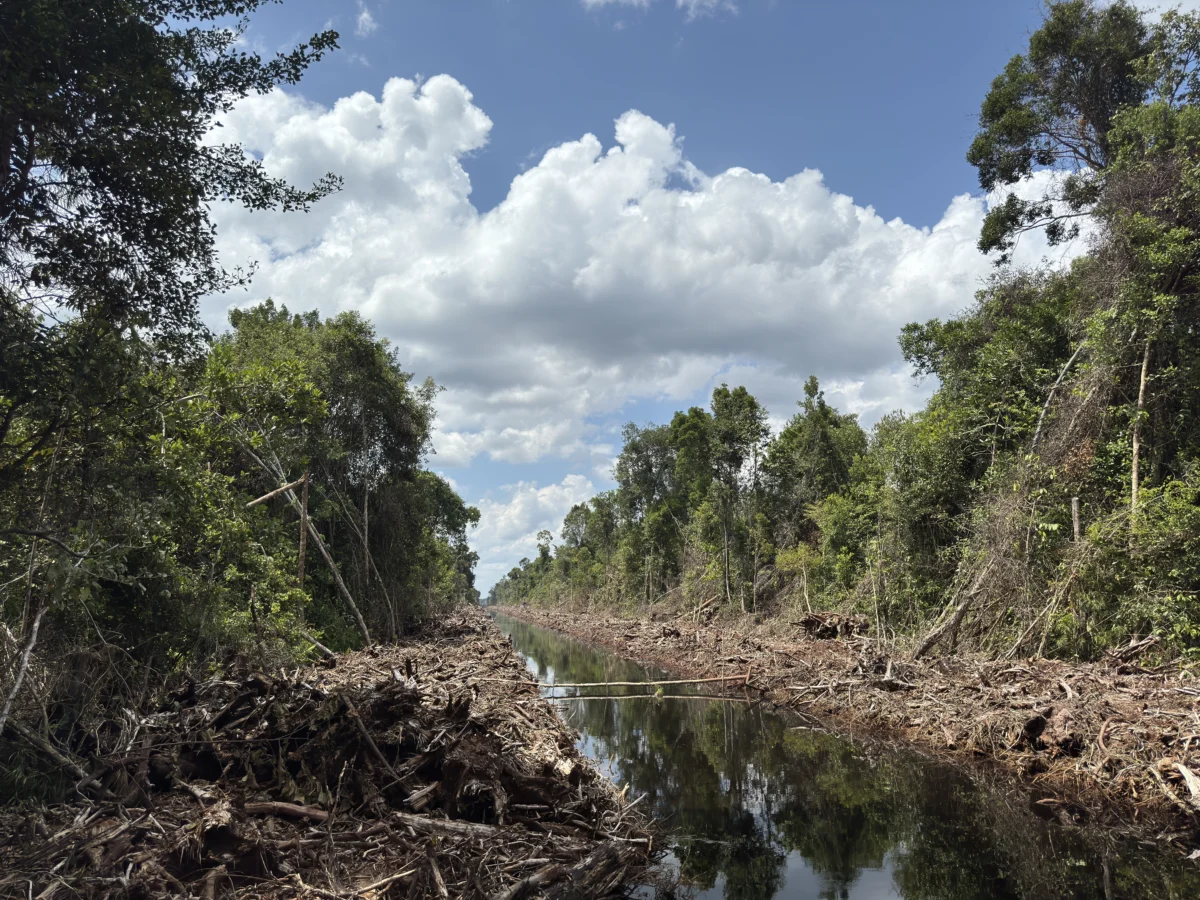
The ecological integrity of Indonesia’s peatland ecosystems has reached a critical tipping point, characterized by a massive and structured reduction in territory driven by decades of industrial monoculture expansion and large-scale land extraction. This cycle of destruction, which spans several presidential administrations, has led to profound environmental degradation, leaving these vital carbon sinks vulnerable to fire, flooding, and permanent loss of function. According to Wahyu Perdana, the Manager of Advocacy, Campaign, and Communication at Pantau Gambut, the systematic deforestation and drainage of these wetlands are not recent phenomena but are rooted in perspectives held since the New Order era. The prevailing irony, Perdana notes, is that the government—both directly and indirectly—has long viewed peatlands as unproductive wastelands devoid of significant ecosystem functions, a mindset that continues to dictate land-use policy today.
A History of Mismanagement: From the New Order to the Present
The failure to manage Indonesia’s peatlands effectively can be traced back to the ambitious but disastrous Mega Rice Project (Proyek Lahan Gambut or PLG) initiated by President Soeharto in 1995. This project aimed to convert one million hectares of peat swamp in Central Kalimantan into rice paddies to ensure national food self-sufficiency. However, by ignoring the unique scientific characteristics of peat—which requires constant saturation to remain stable—the project resulted in an international ecological disaster. Instead of producing rice, the drained peat became highly flammable, leading to some of the most severe forest fires in Southeast Asian history and releasing astronomical amounts of carbon dioxide into the atmosphere.
Despite the collapse of the New Order, subsequent administrations have repeatedly fallen into the same policy traps. Under President Susilo Bambang Yudhoyono in 2010, the Merauke Integrated Food and Energy Estate (MIFEE) was launched in South Papua, again targeting vast landscapes for large-scale agricultural development. This trend has continued through the administration of President Joko Widodo and into the current tenure of President Prabowo Subianto, who has expanded the "food estate" program to even broader scales. These programs often prioritize industrial-scale food production over the preservation of the delicate hydrological balance required by peatlands, effectively repeating the scientific oversights of the 1990s.
Quantifying the Loss: Data and Concessions
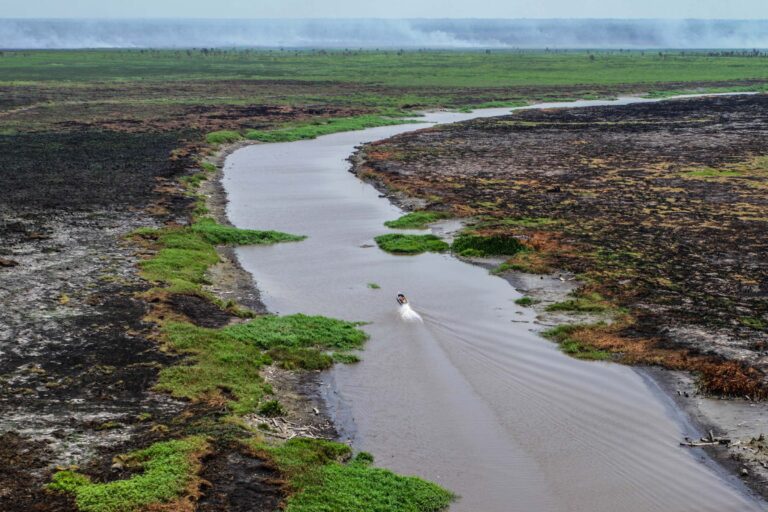
The scale of peatland conversion is documented in recent analyses by Pantau Gambut. Out of Indonesia’s estimated 13.43 million hectares of peatland, approximately 5.2 million hectares have been converted into forestry and plantation concessions. Furthermore, 8.23 million hectares of Peat Hydrological Units (Kesatuan Hidrologis Gambut or KHG) are currently classified as non-licensed business areas, which remain under constant pressure for expansion. Since 2011 alone, the total area of peatland ecosystems has decreased by 1.5 million hectares.
When examining the broader landscape, the total KHG area in Indonesia spans 16 million hectares. Research indicates a high level of vulnerability across these regions: 25% of KHG areas are categorized as having high flood vulnerability, 18% have moderate vulnerability, and 57% are considered low risk. However, as drainage continues, these risk profiles are shifting toward greater instability. As of July 2025, Pantau Gambut recorded that 8.3 million hectares of KHG are controlled by 936 concessions, including Right to Cultivate (HGU) permits for oil palm, Forest Product Utilization Business Permits (PBPH), and various ecosystem restoration or reclamation projects.
The Hydrological Function and the Danger of Canalization
Peatlands are fundamentally different from highland or mineral soil ecosystems. In their natural, wet state, peat can store up to 13 times its own weight in water. This extraordinary retention capacity allows KHG areas to act as giant natural reservoirs, regulating water flow to prevent downstream flooding during the rainy season and providing a vital water source to prevent extreme drought during the dry season. This "wetness" is the primary defense against forest and land fires (karhutla).
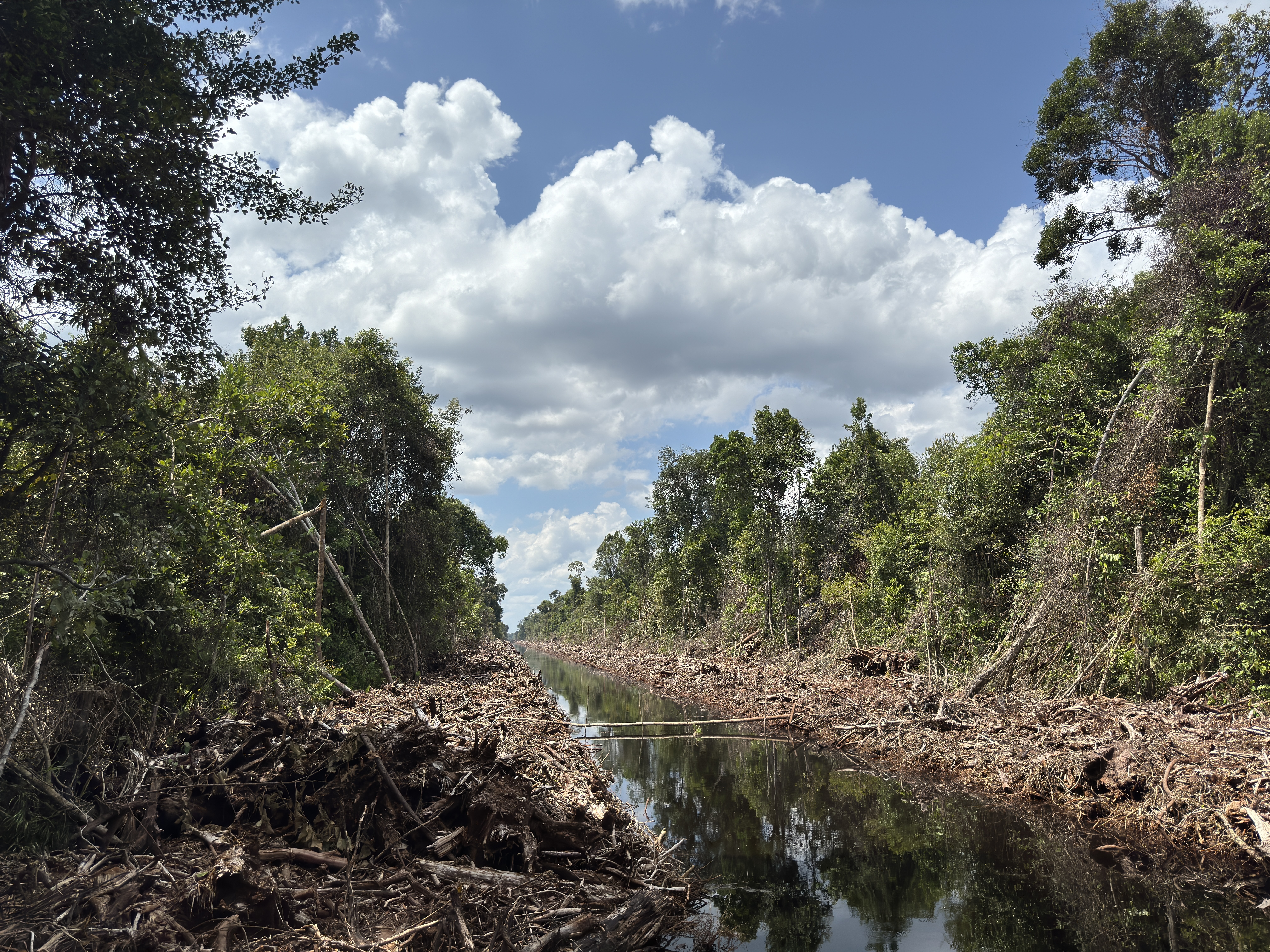
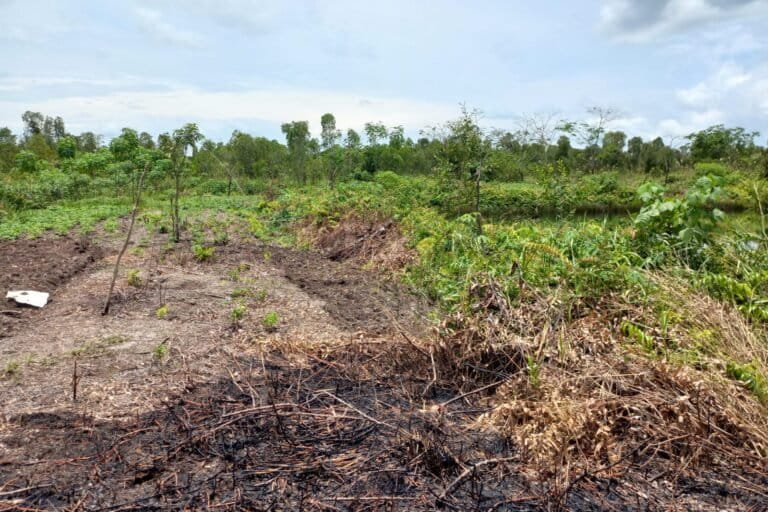
The greatest threat to this function is canalization. To make peatlands suitable for monoculture crops like oil palm or acacia, companies dig massive networks of canals to drain the water. Pantau Gambut’s findings reveal a staggering 281,253 kilometers of artificial canals now crisscross Indonesia’s peatlands. To put this in perspective, the total length of these canals is equivalent to traveling back and forth across the Trans-Java Toll Road 120 times. The majority of these canals are located within concessions: Sumatra hosts 174,208 kilometers, Kalimantan 105,878 kilometers, and Papua 1,166 kilometers.
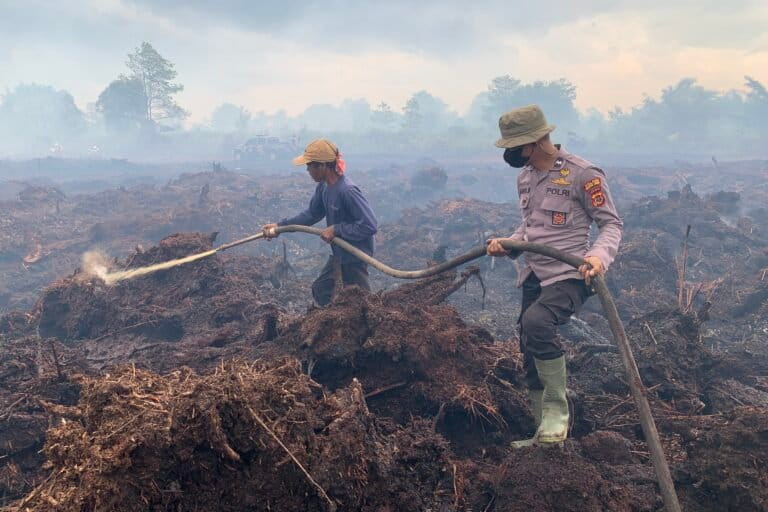
When these canals drain the peat, the organic matter that has been trapped for thousands of years is exposed to oxygen and begins to decompose, or worse, becomes a tinderbox for fires. Once the vegetation cover is removed and the peat dries out, the carbon is released into the atmosphere, accelerating global climate change. Perdana emphasizes that the state often fails to recognize these areas as critical carbon stores, frequently dismissing them as mere "swamps."
The Science of Irreversibility and "Hydrophobic" Peat
Azwar Ma’as, a soil science expert from Gadjah Mada University (UGM), warns that once a peatland ecosystem is severely damaged, it cannot truly be "restored" to its original state. Peat is an essential ecosystem formed over millennia through the accumulation of organic matter in waterlogged conditions where decomposition is slower than accumulation. When heterogeneous natural forests are replaced by monoculture plantations, this ancient cycle is permanently broken.
Current utilization practices are, at best, merely extending the "remaining life" of the peat before it inevitably vanishes. Ma’as points out that government regulations, such as PP 57/2016 which mandates that the groundwater level must not fall below 40 centimeters, are often misunderstood in practice. While the rule aims to keep the peat moist, the lack of vegetation cover means that any water rising to the surface through capillary action is immediately evaporated by the sun. Once peat dries out, it undergoes a physical change, becoming "hydrophobic." In this state, the peat actually repels water; even heavy rainfall or artificial wetting cannot be absorbed, leaving the land permanently dry and prone to deep-seated underground fires that are nearly impossible to extinguish.
Socio-Economic Implications and Cultural Shock
The degradation of peatlands is not only an environmental crisis but also a socio-economic one for indigenous and local communities. In South Papua, indigenous groups have traditionally relied on a food system based on natural sago growing in peat swamps. When these landscapes are forcibly converted into modern irrigated rice fields requiring chemical fertilizers, local communities experience "cultural shock" and a loss of food sovereignty.
Uli Arta Siagian, the National Executive Campaign Coordinator for WALHI, notes that the destruction of the hulu (upstream) portion of a Peat Hydrological Unit inevitably destroys the hilir (downstream) portion, as they are part of a single, unified system. This connectivity means that industrial activities in one part of the KHG can trigger flooding or water scarcity for communities living miles away. Furthermore, the concentration of hotspots (titik panas) remains high in protected areas. Between January and April 2026, out of 26,484 hotspots detected within KHG areas, 17,299 were located within the Peat Ecosystem Protection Function (FLEG) zones, indicating that even "protected" areas are failing to provide safety.
Regulatory Weaknesses and the Impact of the Job Creation Law
The legal framework for peatland protection remains fragile. Currently, the primary protections are housed in government regulations (PP) rather than more robust Parliamentary Acts (UU). While Law No. 32 of 2009 on Environmental Protection and Management (PPLH) exists, its implementation is often hindered by overlapping regulations and a shift in government priorities toward investment.
The enactment of the Job Creation Law (Omnibus Law) has further marginalized environmental concerns. Siagian argues that the law prioritizes the ease of investment and operational efficiency for corporations over ecological safeguards. Law enforcement has shifted its focus from criminal sanctions or the revocation of licenses to mere administrative fines. This is evident in the mechanisms used by the Task Force for the Improvement of Palm Oil Governance and Forestry Area Management (Satgas PKH), which often allow companies to "regularize" their presence in forest and peat zones through fines rather than requiring them to vacate the land.
Furthermore, the recent restructuring of the government—splitting the Ministry of Environment and Forestry (KLHK) into two separate entities and the absorption of the Peatland and Mangrove Restoration Agency (BRGM)—has created uncertainty regarding the future of restoration efforts. Without a centralized, powerful body dedicated to peatland preservation, experts fear that restoration programs will become fragmented and ineffective.
Recommendations for a Sustainable Path Forward
To prevent the total collapse of Indonesia’s peatlands, experts urge a fundamental shift in policy. Azwar Ma’as recommends a total moratorium on new permits within peatland ecosystems. For existing concessions in Industrial Forest Plantations (HTI), he suggests a change in harvesting methods. Peat is naturally nutrient-poor, and current practices of removing all biomass (leaves, branches, and bark) during harvest deplete the soil further. Instead, these organic materials should be left on the ground to provide at least some minimal replenishment to the ecosystem.
The ultimate goal, according to advocates, must be to keep the peat wet. This requires more than just blocking canals; it requires a holistic approach that respects the hydrological unity of the landscape and the rights of the people who live there. As Indonesia faces the increasing threat of extreme weather phenomena like the "El Niño Godzilla," the failure to protect peatlands will not only result in local disasters but will also undermine international efforts to curb global warming. The current trajectory suggests that unless the state changes its perspective from seeing peat as "useless land" to seeing it as a "national climate asset," the remaining 20% of healthy peatland may soon disappear, leaving behind a legacy of fire, flood, and ecological debt.