Nila Kartika Wati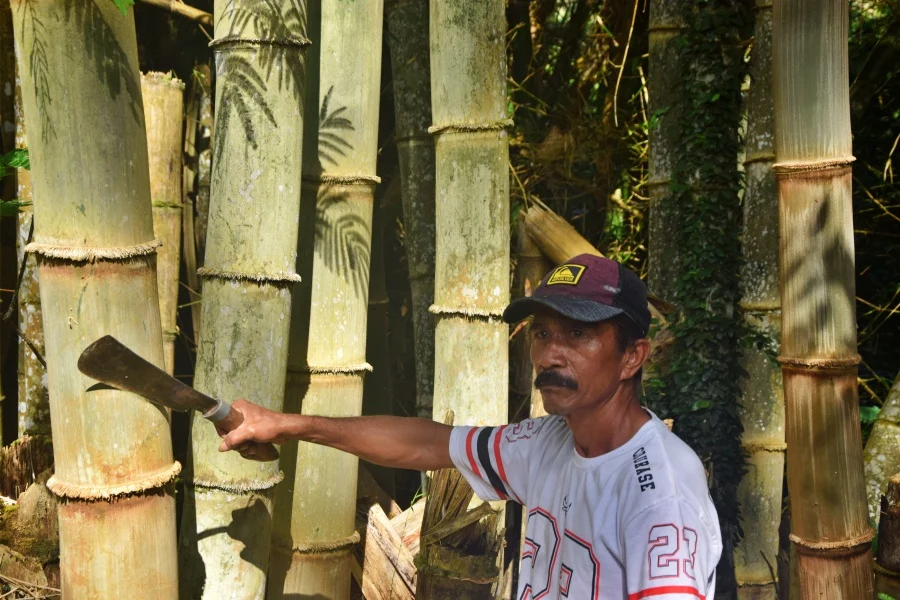
In the village of Watu Galang, located within the Mbeliling District of West Manggarai, Flores, a green transformation is taking place that is reshaping the economic landscape of rural Indonesia. Valentinus Hendrik, a local resident, speaks with palpable enthusiasm about a commodity that was once merely a backyard fixture: bamboo. For Hendrik and his fellow villagers, bamboo has transitioned from a traditional building material into the most profitable commodity in the region, with some individuals earning as much as Rp40 million (approximately $2,500 USD) from a single harvest season. This economic windfall has prompted a surge in interest among villagers, many of whom are now actively managing and selling bamboo groves located on their ancestral lands.
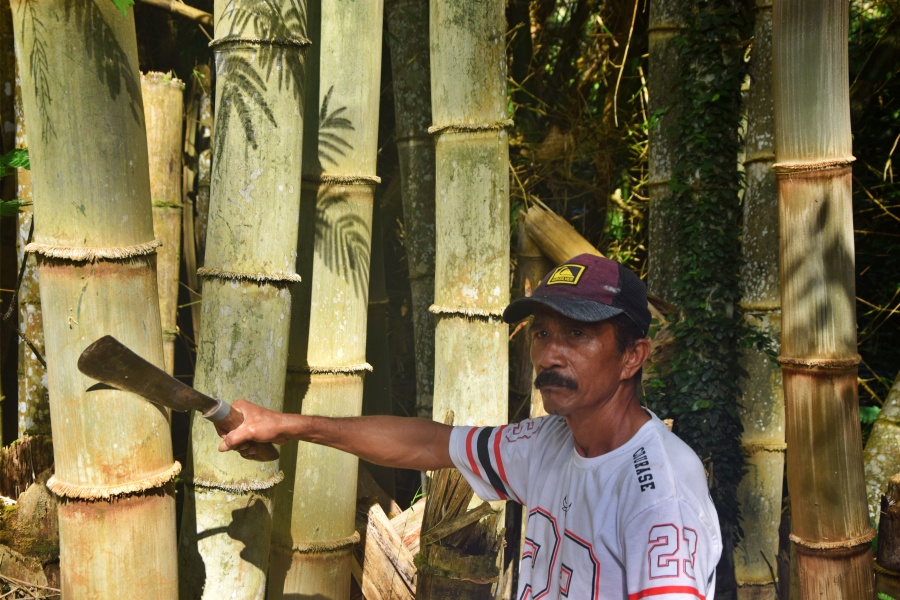
The history of bamboo in Watu Galang is deeply rooted in ecological preservation rather than commercial gain. According to Hendrik, the village has long been recognized as a prolific producer of bamboo, primarily due to the foresight of previous generations. These ancestors planted bamboo not for profit, but as a multi-functional environmental tool. The dense root systems of bamboo were utilized to secure water sources, prevent soil erosion on the steep slopes of Flores, create natural terracing for agriculture, and serve as durable boundaries between family land plots. While villagers occasionally harvested stalks to repair their homes or build temporary structures, the vast majority of the groves remained untouched for decades, maturing into a massive, untapped resource.
The Biological Foundation: Petung and Peri Bamboo
The bamboo groves of West Manggarai are dominated by two primary species: Petung (Dendrocalamus asper) and Peri (Gigantochloa apus). These species were strategically chosen by ancestors for their specific physical properties. Petung, often referred to as "Giant Bamboo," is one of the strongest and largest bamboo species in the world, capable of reaching diameters of over 20 centimeters and heights of 30 meters. Its thick walls and high density make it an ideal substitute for structural timber. Peri bamboo, on the other hand, is prized for its flexibility and resistance to pests, making it the preferred choice for weaving, flooring, and lighter construction.
"The most common types we have are Petung and Peri," Hendrik explained during an interview in May 2026. "In addition to being planted near water springs to protect the water table, these groves define the borders between our forests and our gardens." This dual-purpose utility—environmental conservation and land demarcation—has ensured that the bamboo supply in Watu Galang is both abundant and high in quality, providing a solid foundation for the burgeoning industrial demand.
Industrial Integration and the Role of YBLL
The bridge between these rural groves and the global market is the Environmental Bamboo Foundation, known locally as Yayasan Bambu Lingkungan Lestari (YBLL). This organization has become the primary off-taker for the village’s bamboo, facilitating the transport of raw culms to processing facilities in Labuan Bajo. The pricing structure established by YBLL provides a transparent and stable income for farmers. Currently, a bamboo pole with a length of 2.6 meters and a diameter of 8 centimeters is valued at Rp8,000, while larger poles with a 12-centimeter diameter fetch Rp10,000.
Hendrik, who serves as the Chairman of the Wela Nara Bamboo Harvesting Group, plays a critical role in coordinating the logistics of the harvest. Working closely with YBLL, he determines which locations are ready for harvesting to ensure the long-term health of the groves. The logistics are massive; a single truck can transport approximately 260 poles. While YBLL covers the cost of transportation to the factory, the local owners are responsible for the operational costs of the harvest and the manual labor required to move the bamboo to the roadside.
The scale of the operation is significant. Between October and early March 2026, the Wela Nara group sold 140 truckloads of bamboo. "I personally earned Rp40 million, and my colleagues in the group earned similar amounts," Hendrik noted. This level of income is transformative for a rural community in East Nusa Tenggara (NTT), a province that has historically faced economic challenges. The efficiency of the harvest is also notable; a single healthy bamboo clump can yield up to 40 harvestable poles, and a single Petung stalk can be processed into six standardized segments for industrial use.
Advanced Manufacturing at the Mosedia House of Production
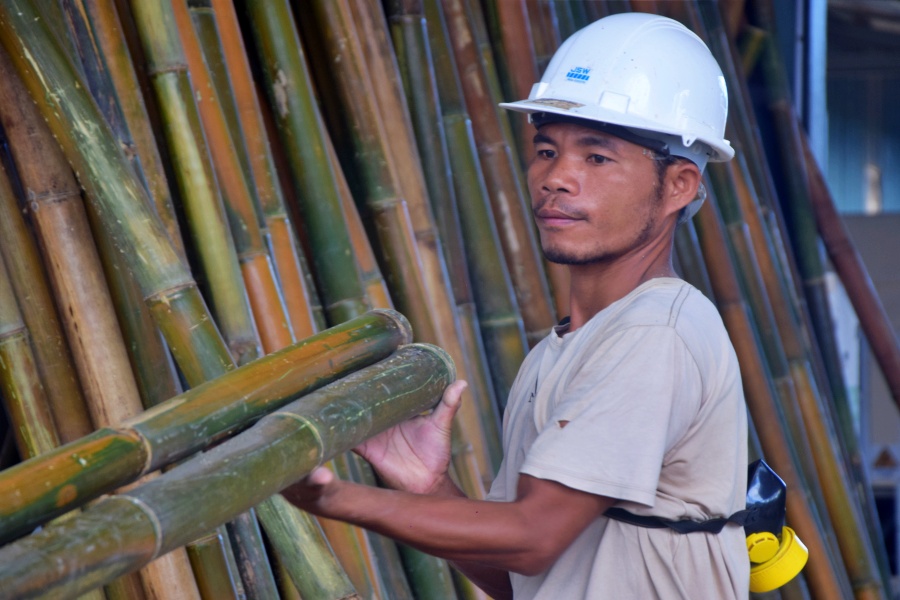
The raw materials from Watu Galang find their destination at the Mosedia Joint Production House (RPB) in Labuan Bajo. Here, the traditional image of bamboo as a "poor man’s timber" is being systematically dismantled. Achmad Hufron, the Factory Manager at RPB Mosedia, oversees a workforce of 44 employees, the majority of whom are locals trained in advanced wood-processing techniques.
The transformation from a raw pole to a high-end industrial product is a rigorous process. Upon arrival, the bamboo is sorted based on diameter and wall thickness. The poles are then cut to a standard length of 2.5 meters and fed into a splitter machine, which converts the cylindrical poles into flat slats. These slats are then passed through an initial planing machine to remove nodes and skin, followed by a critical preservation process.
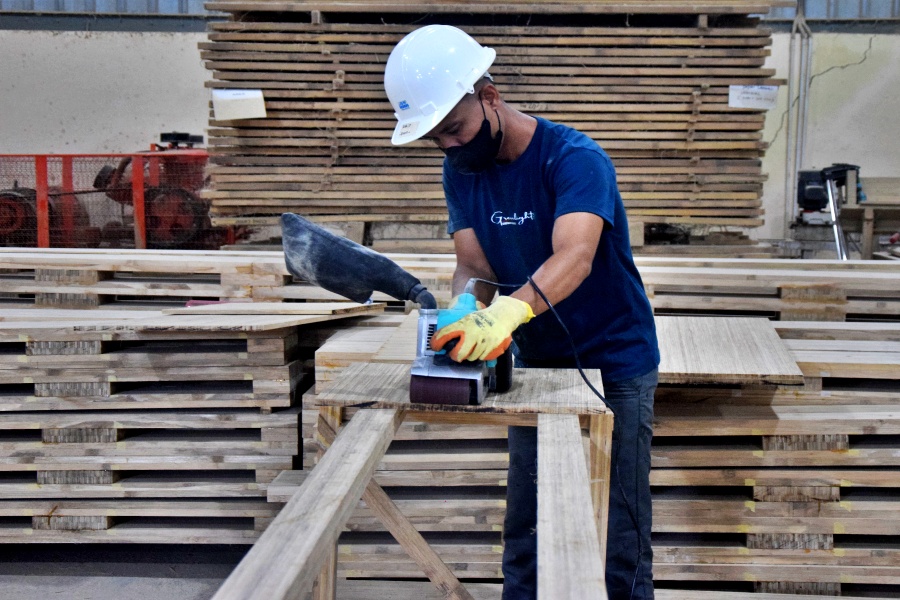
Currently, the factory utilizes a manual sun-drying method for preservation, which takes between five to seven days, followed by another five to seven days in a kiln dry oven. Hufron recognizes this as a bottleneck in the production cycle. "This is the timeframe I want to shorten," Hufron stated. "We are in the process of bringing in a boiler system to generate steam, which will significantly accelerate the drying and curing process."
Once dried, the slats undergo a final planing to achieve a smooth finish before being glued and pressed into laminated boards. These boards, currently produced at a thickness of 3mm, are the building blocks for modern furniture and architectural elements. Hufron is currently scaling up the technology to produce boards with a thickness of 25mm, a width of 280mm, and a length of 2,440mm—dimensions that allow bamboo to compete directly with high-grade plywood and solid wood planks.
Global Market Trends and Domestic Demand
The shift toward bamboo is driven by a global surge in demand for sustainable materials. According to data from Grand View Research, the global market for eco-friendly furniture is projected to grow from $43.26 billion in 2022 to $83.76 billion by 2030, representing a compound annual growth rate (CAGR) of 8.6%. Furthermore, Market.us projects that the broader global market for bamboo-based products will reach $118.3 billion by 2034.
This global trend is reflected in the order books at RPB Mosedia. The factory has received diverse requests, ranging from domestic infrastructure projects to international exports. Indonesia’s state-owned energy giant, Pertamina, has placed orders for bamboo materials to construct dormitories, and the Regent (Bupati) of West Manggarai has commissioned bamboo furniture for official use. Perhaps most tellingly, the factory has begun receiving inquiries and orders from as far away as Poland, indicating that Flores bamboo is meeting international quality standards.
"The demand is increasing to the point where we are starting to feel overwhelmed," Hufron admitted. "This is why we are focusing on increasing our capacity, not just with the boiler system, but also by seeking more consistent power supplies to run our heavy machinery."
Sustainability, Energy, and the "Mama Bambu" Initiative
The expansion of the bamboo industry in Flores is being managed with a keen eye on environmental sustainability. Monika Tanuhandaru, Chairperson of YBLL, has outlined a vision where the bamboo industry becomes a circular economy. One of the most ambitious plans involves the construction of a biomass power plant that will utilize bamboo waste—shavings, sawdust, and offcuts—to generate electricity. This renewable energy source will eventually power the factory’s operations, reducing its carbon footprint and operational costs.
At the grassroots level, YBLL’s "Mama Bambu" (Bamboo Mothers) program has become a cornerstone of the movement. The program currently mentors 1,600 women across 65 villages, teaching them how to manage nurseries and care for bamboo seedlings. Over the past five years, YBLL’s outreach has extended to 720 villages across NTT, East Java, Bali, and West Kalimantan, with plans to expand into Sumatra, Maluku, and Aceh.
In Watu Galang alone, 5,000 bamboo seedlings have already been planted to ensure that the current harvest does not deplete the resource. While the initial target was to cover 2.5 hectares of new planting, the community has exceeded expectations by planting seven hectares. Ferdinandus Mboli, the Head of Watu Galang Village, expressed his gratitude for the partnership with YBLL but remains vigilant about conservation. "I constantly remind the villagers that harvesting must not occur in protected forest areas or near vital water springs," Mboli emphasized.
Technical Superiority and Future Outlook
The preference for bamboo over traditional wood is not merely an environmental choice but a technical one. Laminated bamboo products offer a unique aesthetic with distinct grain patterns that are highly sought after in modern interior design. More importantly, bamboo possesses a higher tensile strength than many steel alloys and a higher compressive strength than many mixtures of concrete.
"Bamboo has a stronger character," Hufron explained. "Even in extreme weather conditions, our processed bamboo products can last over 10 years, and they offer incredible flexibility in application. Our team is currently researching ways to further enhance the material’s durability through advanced resin treatments."
As the industry matures, the focus is shifting toward fair trade and labor rights. Valentinus Hendrik and his harvesting group are currently negotiating a price increase of Rp2,000 per pole to cover the rising costs of labor. This highlights a healthy maturation of the local economy, where farmers are becoming savvy stakeholders in a global supply chain.
The story of bamboo in Flores is a testament to how traditional ecological knowledge, when paired with modern manufacturing and global market access, can create a sustainable path out of poverty. From the protective groves of Watu Galang to the high-tech factory in Labuan Bajo and eventually to homes in Poland, bamboo is proving to be the "green gold" of the 21st century, offering a blueprint for sustainable development in Indonesia and beyond.