Nasution Nanang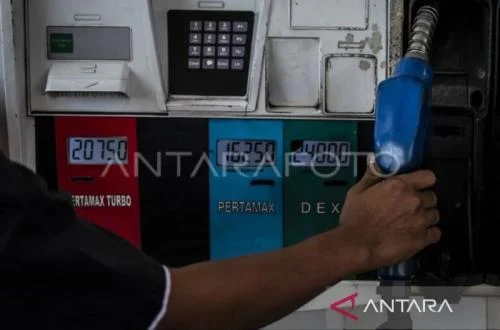
JAKARTA — The Indonesian government is meticulously observing the far-reaching implications of a newly brokered peace agreement between the United States and Iran, particularly concerning its potential effects on the pricing of non-subsidized fuel within the archipelago. Coordinating Minister for Economic Affairs, Airlangga Hartarto, has indicated that a comprehensive evaluation is imminent, highlighting the intricate interplay between global geopolitical stability and domestic economic realities. This diplomatic breakthrough, which has already sent ripples through international crude oil markets, presents both opportunities and challenges for Indonesia, a significant net importer of petroleum products.
The Crucial Role of the Strait of Hormuz
A cornerstone of the government’s assessment, as articulated by Minister Hartarto from the Presidential Palace Complex in Jakarta on Thursday, June 18, is the anticipated reopening and sustained security of the Strait of Hormuz. This narrow waterway, connecting the Persian Gulf to the Arabian Sea, is arguably the world’s most critical oil transit chokepoint. "With the reopening of the Strait of Hormuz, we will see further price adjustments," Hartarto affirmed, underscoring its pivotal role in global energy supply chains. For decades, the Strait of Hormuz has been a flashpoint for geopolitical tensions, with threats to shipping lanes frequently causing spikes in crude oil prices due to supply uncertainty. Its unobstructed flow is paramount for the stability of global energy markets, directly influencing the cost of crude for importing nations like Indonesia. The minister, however, cautioned against immediate or automatic adjustments to domestic fuel prices, emphasizing the need for the government to meticulously observe the concrete implementation of the peace agreement on the ground before enacting any policy changes. This prudent approach reflects the inherent volatility of international relations and commodity markets.
A Historic Diplomatic Breakthrough
The agreement itself marks a profound shift in one of the world’s most enduring and volatile geopolitical rivalries. In a significant diplomatic breakthrough on Thursday, June 18, Iranian President Masoud Pezeshkian and former U.S. President Donald Trump digitally and remotely signed a Memorandum of Understanding (MoU). This landmark accord aims to de-escalate and ultimately end the protracted conflict that has entangled the United States, Israel, and the Islamic Republic of Iran, a conflict spanning decades and characterized by sanctions, proxy wars, and intermittent military confrontations. While the specifics of the MoU remain under close scrutiny, its overarching objective is to foster a new era of stability in the Middle East, a region whose geopolitical landscape profoundly impacts global energy prices and international trade routes. The signing of such an agreement, particularly involving figures historically at odds, signals a potentially transformative moment for regional and global security.
Immediate Market Reactions: A Drop in Crude Prices
The ink barely dry on the digital MoU, global crude oil prices responded swiftly and decisively. Reports confirmed that international benchmarks had plummeted below the US$80 per barrel mark following the announcement. This immediate market reaction is a direct consequence of reduced geopolitical risk premium. Historically, tensions in the Middle East, particularly those involving major oil producers and transit routes, have added a significant "risk premium" to oil prices, reflecting fears of supply disruptions. The prospect of a durable peace between the U.S. and Iran, and the implied guarantee of secure passage through the Strait of Hormuz, instantly alleviated these concerns, leading to a significant downward correction in prices. For oil-importing nations, this price drop translates directly into lower procurement costs, offering a much-needed reprieve from inflationary pressures.
Background and Chronology of US-Iran Tensions
To fully appreciate the significance of this peace deal, it is essential to contextualize the long and often acrimonious relationship between the United States and Iran. The roots of the conflict trace back to the 1979 Iranian Revolution, which saw the overthrow of the U.S.-backed Shah and the establishment of an Islamic Republic hostile to American influence. Decades of strained relations followed, punctuated by significant events:
- 1979-1981: Iran hostage crisis, a pivotal moment that severed diplomatic ties.
- 1980s: Iran-Iraq War, where the U.S. indirectly supported Iraq, deepening Iranian animosity.
- 1990s-2000s: Growing international concern over Iran’s nuclear program, leading to various sanctions regimes.
- 2015: The Joint Comprehensive Plan of Action (JCPOA), a multilateral agreement curbing Iran’s nuclear activities in exchange for sanctions relief, was hailed as a diplomatic triumph.
- 2018: The Trump administration unilaterally withdrew from the JCPOA, re-imposing stringent sanctions and escalating tensions. This period saw increased military posturing, attacks on oil tankers in the Persian Gulf, drone incidents, and heightened rhetoric.
- 2020: The assassination of Iranian General Qassem Soleimani by the U.S. further pushed the two nations to the brink of direct conflict.
- Post-2021 (Biden Administration): Efforts to revive the JCPOA largely stalled amidst ongoing disagreements and regional proxy conflicts, particularly in Yemen, Syria, and Iraq.
Against this backdrop, the digital signing of an MoU between a sitting Iranian President (Pezeshkian, who recently assumed office) and a former U.S. President (Trump) on June 18 represents an extraordinary and largely unexpected diplomatic pivot. While the format (digital, remote) is unconventional, the substance implies a profound shift away from decades of antagonism, aimed at stabilizing a region critical to global energy security. The commitment to "end conflict involving US, Israel, and Islamic Republic of Iran" suggests a comprehensive approach to regional peace, addressing not just bilateral US-Iran issues but also broader Israeli-Iranian proxy confrontations.
Indonesia’s Economic Outlook and Official Responses
Minister of Investment and Downstreaming, Rosan Roeslani, who also serves as the CEO of Danantara Investment Management Agency, warmly welcomed the peace agreement. His sentiments echoed a broader optimism within Indonesia’s economic circles regarding the potential for enhanced stability. "We must be optimistic that our economy will perform well and advance in the future, especially with the agreement between President Trump and the Iranian government," Roeslani stated. His comments underscore the direct link between global geopolitical stability and investor confidence in emerging markets like Indonesia. A more stable Middle East reduces global uncertainties, making Indonesia a more attractive destination for foreign direct investment.
For Indonesia, a country that imports a significant portion of its crude oil and refined petroleum products, lower global oil prices offer substantial economic relief.
- Inflation Control: Fuel prices are a major component of Indonesia’s consumer price index (CPI). A reduction in crude oil costs directly translates to lower production and transportation costs across various sectors, helping to curb inflation and protect the purchasing power of Indonesian households.
- Fiscal Space: While Indonesia has reduced fuel subsidies in recent years, fluctuations in global oil prices still impact the state budget, particularly for subsidized fuels. Lower global prices can ease the burden on state finances, freeing up resources for development programs, infrastructure, and social welfare initiatives.
- Current Account Balance: As a net oil importer, Indonesia’s trade balance is sensitive to oil price movements. Lower import bills for crude oil and petroleum products can significantly improve the current account deficit, strengthening the nation’s external financial position.
- Business Operating Costs: Reduced fuel costs benefit industries across the board, from manufacturing and agriculture to logistics and transportation, potentially leading to lower production costs, increased competitiveness, and ultimately, economic growth.
The Mechanics of Domestic Fuel Price Adjustment in Indonesia
Indonesia’s domestic fuel pricing mechanism, especially for non-subsidized variants like Pertamax series, Dex series, and certain non-PSO (Public Service Obligation) diesel, is primarily linked to global crude oil prices, the rupiah’s exchange rate against the U.S. dollar, and operational costs of state-owned oil company Pertamina. The government, through the Ministry of Energy and Mineral Resources, typically reviews and adjusts these prices periodically, often on a monthly or quarterly basis. However, such adjustments are not always immediate or fully reflective of global price movements due to several factors:
- Market Stabilization: The government often seeks to stabilize prices to avoid consumer shock and maintain economic predictability, absorbing some fluctuations rather than passing them on entirely.
- Inventory Levels: Fuel companies hold inventories purchased at varying prices, meaning current pump prices reflect an average cost rather than immediate spot prices.
- Distribution and Logistics Costs: These domestic costs, along with taxes and levies, form a significant part of the final pump price and are not directly affected by global crude prices.
- Exchange Rate Volatility: A weakening rupiah can offset the benefits of lower global crude prices, as oil is transacted in U.S. dollars.
Minister Airlangga’s emphasis on "observing implementation" before "automatic adjustment" highlights this complex reality. The government aims to ensure that any price adjustment is sustainable and beneficial to the national economy in the long term, rather than reacting impulsively to short-term market shifts. Pertamina, as the dominant player in the domestic fuel market, would also need to assess its procurement strategies, refining margins, and distribution costs in light of the new geopolitical landscape.
Broader Implications for Regional and Global Stability
Beyond immediate economic benefits, a lasting peace between the U.S. and Iran holds profound geopolitical implications for Indonesia and Southeast Asia.
- Reduced Global Uncertainty: Prolonged conflicts in the Middle East create global instability, impacting trade routes, supply chains, and investor confidence worldwide. A resolution would contribute to a more predictable international environment.
- Maritime Security: The Strait of Hormuz is not just for oil. It is a vital artery for global shipping. Its security ensures the smooth flow of goods, including those destined for or originating from Southeast Asian economies.
- Diplomatic Capital: Indonesia, as a non-aligned nation and a prominent voice in the G20 and ASEAN, often advocates for peace and stability. A successful peace process between major global powers could inspire similar diplomatic efforts in other conflict zones, indirectly enhancing Indonesia’s diplomatic standing.
- Energy Transition: While lower oil prices might temporarily ease the pressure for energy transition, the long-term stability could also allow nations to focus more strategically on sustainable energy policies without the constant distraction of energy supply shocks.
Challenges and Cautions Moving Forward
Despite the palpable optimism, the path forward is fraught with challenges and uncertainties. Peace agreements, particularly those involving long-standing adversaries, are often complex and require sustained commitment from all parties.
- Implementation Verification: The actual impact hinges on the concrete implementation of the MoU’s provisions, including de-escalation of regional proxy conflicts, verification of nuclear commitments (if any are part of the deal), and the lifting of sanctions.
- Internal Dynamics: Both the U.S. and Iran have internal political dynamics that could complicate the agreement’s longevity. Future elections or shifts in political sentiment could challenge its durability.
- Other Geopolitical Factors: While the U.S.-Iran peace is significant, other geopolitical events (e.g., conflicts in other regions, major power rivalries) could still introduce volatility to global markets.
- OPEC+ Decisions: The Organization of the Petroleum Exporting Countries and its allies (OPEC+) constantly adjust production quotas, which can also influence global oil prices, irrespective of geopolitical stability.
In conclusion, the peace agreement between the United States and Iran represents a potentially transformative moment for global stability and energy markets. For Indonesia, it opens a window of opportunity to manage domestic inflation, strengthen its fiscal position, and foster a more robust investment climate. The government’s cautious yet optimistic approach, led by Minister Hartarto and echoed by Minister Roeslani, underscores a clear understanding that while the potential benefits are significant, careful observation and strategic policy implementation will be crucial to harness these advantages for the long-term prosperity of the Indonesian nation. The world watches keenly as this diplomatic breakthrough unfolds, hoping for a new chapter of stability in a region long synonymous with volatility.