Nila Kartika Wati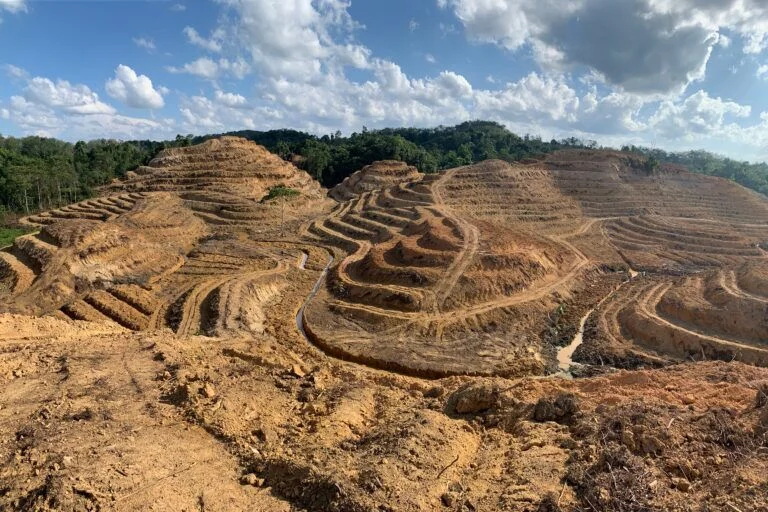
The Indonesian House of Representatives (DPR) is currently accelerating the finalization of the Agrarian Reform Bill (RUURA), aiming for a legislative "hammer drop" before National Farmers’ Day on September 24, 2026. This bill represents the culmination of a 34-year advocacy movement by civil society organizations seeking to address the deep-seated structural inequalities in land ownership that have plagued Indonesia since the post-colonial era. However, the rapid legislative pace has sparked significant alarm among legal experts and human rights defenders, who fear that the current draft may bypass essential public consultation and solidify authoritarian control over land management.
Legislative Chronology and Concerns Over Speed
The legislative process for the RUURA has been exceptionally swift. The bill was included in the National Legislation Program (Prolegnas) on August 27, 2026. By September 1, the drafting process was already in full motion. Within less than a week, on September 7, the drafting was declared complete, and the bill was brought to a plenary session on September 8 for formal adoption as a DPR initiative.
Muhamad Isnur, Chairman of the Indonesian Legal Aid Foundation (YLBHI), has been a vocal critic of this "express" legislative style. Isnur draws parallels between the RUURA process and previous controversial laws, such as the revisions to the Corruption Eradication Commission (KPK) Law, the Constitutional Court Law, and the omnibus Job Creation Law. He argues that rushing such a critical piece of legislation risks overlooking substantive flaws, which historically only become apparent after the laws have been enacted and public pressure mounts. According to Isnur, the complexity of agrarian conflict requires extensive time for stakeholders—particularly those in remote regions—to analyze the draft and provide input, as these issues are not confined to the capital.

Nomenclatural Debates and Conceptual Ambiguity
Legal scholars have also questioned the phrasing of the bill. Herlambang Perdana Wiratraman, a Constitutional Law lecturer at Universitas Gadjah Mada (UGM), argues that the inclusion of the word "pengaturan" (regulation) in the bill’s title is redundant and potentially bias-laden. He suggests that, as a legislative instrument, the law is inherently regulatory, and adding the word implies a desire to "tame" the radical intent of agrarian reform. Rina Mardiana, a professor of Agrarian Sociology at IPB University, concurs, noting that the 1960 Basic Agrarian Law (UUPA) already encompasses a broad spectrum of land, water, and space rights. By prefixing the term with "pengaturan," the current draft risks narrowing the scope of what should be a transformative mandate for social justice.
Furthermore, critics have pointed to the definition of "agrarian reform" in Article 1, Paragraph (2), which describes it as an "effort of the state" rather than a mandatory constitutional obligation under Article 33, Paragraph (3) of the 1945 Constitution. Experts warn that characterizing agrarian reform as a mere "effort" turns a fundamental state duty into an optional activity that can be prioritized or ignored at the state’s discretion.
Structural Inequality and the Reality of Land Ownership
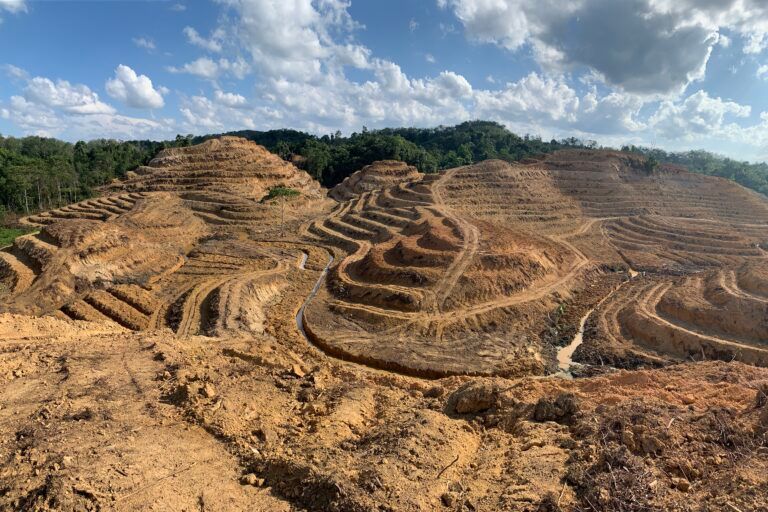
The urgency of the bill is underscored by alarming statistics regarding land concentration. Data from the 2023 Agricultural Census shows that smallholder farmers—those owning less than 0.5 hectares—have increased to 16.89 million households, up from 14.25 million in 2013. Conversely, the Directorate General of Plantations reported that national palm oil estates covered 16.83 million hectares by 2024, with the vast majority controlled by private corporations.
Critics like Agung Wibowo of the HuMa Association note that the bill’s definition of "objects of agrarian reform" focuses primarily on existing land held by the public rather than the redistribution of large, illegally held, or abandoned lands. There is a glaring absence of provisions targeting the seizure of land that exceeds statutory maximum limits. Additionally, the draft introduces a 20-year occupancy requirement for land in dispute, a threshold deemed excessively high and inconsistent with recent Constitutional Court rulings, such as Decision No. 181/PUU-XXII/2024, which recognizes a five-year threshold for claims.
The Role and Power of the National Agrarian Reform Agency (BRAN)
A central pillar of the proposed bill is the establishment of the National Agrarian Reform Agency (BRAN). While the creation of such a body is welcomed, YLBHI and other groups have expressed deep reservations regarding its lack of independence. The bill stipulates that BRAN leadership is appointed and dismissed by the President, leading to concerns that the agency will become a political instrument subject to executive whim rather than an impartial mediator.
Moreover, the bill grants BRAN the authority to issue "final and binding" decisions on land conflicts. Legal experts argue that this creates a potential conflict of interest, as BRAN is part of the executive branch and should not exercise quasi-judicial powers that fall under the authority of the judiciary. Edy Kurniawan of YLBHI suggests that if BRAN’s decisions are to be final, there must be a robust mechanism for judicial review through an agrarian court system, ensuring that parties aggrieved by administrative decisions have a path to seek legal recourse.
Potential for Criminalization and Military Involvement
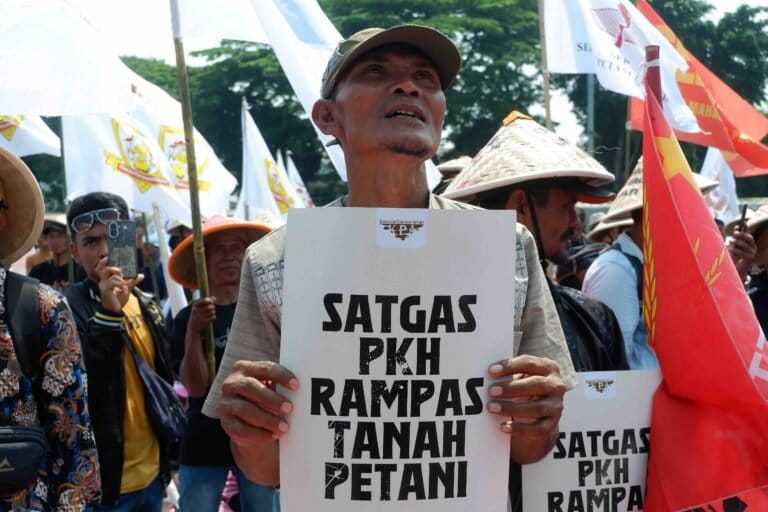
Perhaps the most contentious aspect of the draft involves the inclusion of criminal provisions. Article 57 and Article 59 impose prison sentences on individuals who transfer land or remain on land deemed to be "state assets" without formal documentation. Critics argue that these provisions ignore the historical reality that many farmers lack formal land titles due to state negligence or exclusionary policies.
Furthermore, the bill allows BRAN to seek assistance from the Indonesian National Armed Forces (TNI) and the National Police to execute its decisions. This has triggered strong warnings from activists who fear that involving the military in land disputes will inevitably lead to violence, intimidation, and the securitization of what are essentially social and administrative conflicts. Historically, the involvement of security forces in agrarian disputes has been a primary driver of human rights abuses in Indonesia.

The Government’s Stance and Civil Society Perspectives
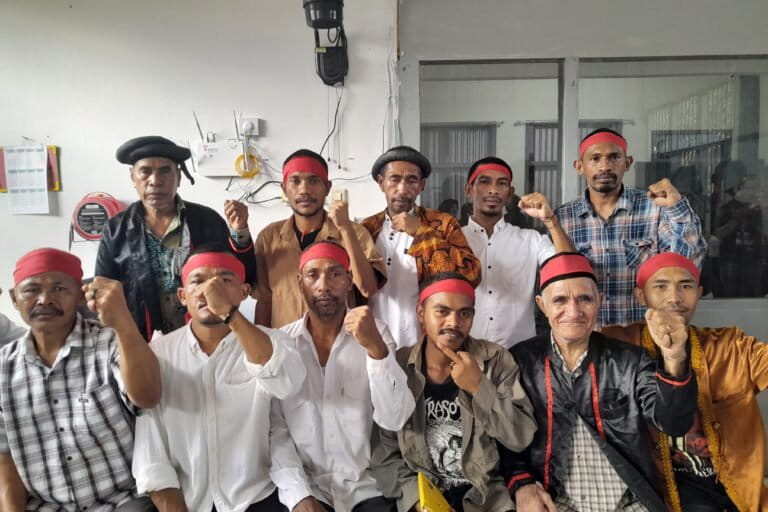
Despite the criticisms, the Consortium for Agrarian Reform (KPA) has maintained a cautious optimism. Secretary-General Dewi Kartika highlighted that reaching this stage of the legislative process is a historic milestone, as previous attempts to codify agrarian reform have faced decades of stagnation. She views the bill as a potentially vital "fortress" for the marginalized, provided it is purged of corporate interests during the final deliberations.
President Prabowo Subianto has actively engaged with the process, having already issued a letter appointing government representatives from various ministries—including the Ministry of Agrarian Affairs/Spatial Planning, the Ministry of Agriculture, and the Ministry of Forestry—to finalize the bill with the DPR. This indicates strong executive backing for the current draft.
Looking Ahead: The Need for an Agrarian Fortress
As the September 24 deadline approaches, the tension between the necessity for a legal framework and the fear of an authoritarian, exclusionary law remains high. The statistics are clear: in the period between 2015 and 2025, over 3,575 agrarian conflicts were recorded, affecting 1.9 million families across 8.33 million hectares of land. The outcome of the RUURA will determine whether Indonesia chooses to address these structural roots of poverty and conflict or continues to reinforce a system that favors large-scale industrial land usage at the expense of the peasantry.
For the bill to truly serve the public interest, it must move beyond legalizing existing occupations and commit to genuine redistribution. It must also ensure that the newly formed BRAN operates with transparency and accountability, and that criminalization clauses are removed to prevent the law from becoming a new tool for land-based repression. The coming days will be critical, as civil society organizations prepare to lobby for last-minute amendments to ensure that the long-awaited Agrarian Reform Law fulfills its promise of social justice for the Indonesian people.