
 Nila Kartika Wati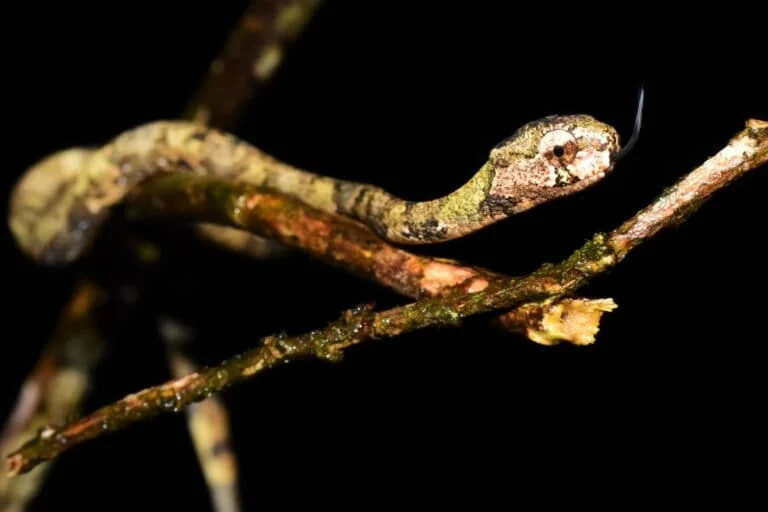
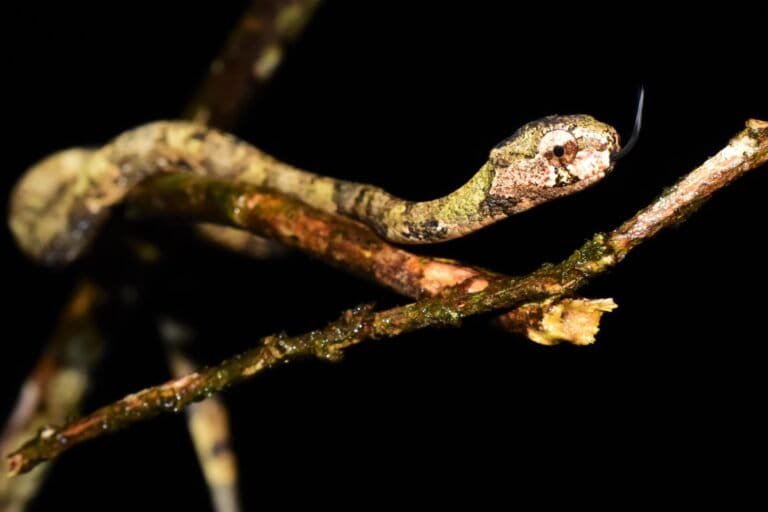
Amidst the dense, rain-slicked undergrowth of the southern slopes of Mount Slamet in Central Java, the line between flora and fauna often blurs. For Leonardus Adi Saktyari, a biodiversity researcher with Mandala Katalika, a routine nocturnal survey recently yielded a remarkable encounter. As the heavy rain subsided, leaving the forest floor saturated and glistening, Saktyari identified what initially appeared to be a discarded, decaying twig. Upon closer inspection, however, the object revealed itself to be a Blunt-Headed Slug Snake (Aplopeltura boa). Measuring approximately 40 centimeters, the slender, non-aggressive serpent remained perfectly still, demonstrating the extraordinary evolutionary adaptations that have allowed its species to thrive—and remain hidden—in the Indonesian archipelago’s complex ecosystems.
The discovery serves as a poignant reminder of the intricate biological tapestry that exists beneath the canopy of Java’s mountainous regions. While the snake’s presence is not a new scientific record, the encounter highlights the ongoing challenges of biodiversity conservation and the critical importance of microhabitats in an era of environmental instability.
The Evolutionary Marvel of Aplopeltura boa
The Blunt-Headed Slug Snake is a master of mimicry. Its body coloration, characterized by intricate, mottled patterns of brown and grey, provides near-perfect concealment against the leaf litter and rotting vegetation that define its primary habitat. Ganjar Cahyadi, a curator at the Bandung Institute of Technology’s (ITB) Museum of Zoology, emphasizes that this camouflage is not merely a passive trait but a highly evolved survival strategy.
Beyond its visual deception, the species possesses a specialized physiological toolkit designed for a narrow, highly specific dietary niche. As its name implies, the snake feeds almost exclusively on gastropods. Its jaw structure has evolved to facilitate a unique feeding mechanism: the snake does not simply consume the snail, but rather, it extracts the soft tissue from the shell with surgical precision, effectively "sucking" the mollusk out. This extreme dietary specialization makes the snake an "obligate specialist," meaning its survival is inextricably linked to the availability of healthy snail populations and, by extension, the humidity and soil quality required to support them.
Chronology of the Discovery and Field Observations
The observation on Mount Slamet did not occur in a vacuum; it was part of a broader, ongoing effort by researchers to map the biodiversity of the region’s southern slope. Following the rain-swept night, the research team documented the specimen’s behavior and physical condition.
The timeline of the expedition underscores the patience required for such fieldwork. The team had been monitoring the site for several days, noting that the presence of the snake coincided with the post-precipitation activity of forest floor invertebrates. The observation provided a vital data point: the snake was found in a highly undisturbed section of the leaf litter, reinforcing the theory that the species is a biological indicator for stable, moist, and high-quality forest floors.
Debunking Geographical Misconceptions
Historically, there has been a lingering misconception within both amateur herpetological circles and some public discourse that the Blunt-Headed Slug Snake is strictly a montane species, confined to the cool, misty heights of volcanoes like Mount Slamet. However, contemporary data and museum records suggest otherwise.
Ganjar Cahyadi clarifies that while the snake is certainly comfortable in mountainous terrain, its range is significantly more diverse. Records indicate that Aplopeltura boa can be found in lowland rainforests and even in peat swamp environments. The versatility of the species suggests that its limiting factor is not altitude per se, but rather the presence of high-humidity microhabitats that support its gastropod prey. This broader distribution pattern is crucial for conservationists, as it implies that the snake’s vulnerability is tied to the degradation of these specific moisture-rich microenvironments across various elevations.
The Health of the Forest: A Single Indicator?
While the sighting of the snake is a positive sign for the local ecosystem, researchers remain cautious about using a single species as a proxy for the overall health of Mount Slamet’s forests. The "indicator species" concept—where the presence of one animal reflects the condition of the entire environment—is a complex metric in ecology.
Cahyadi notes that relying on one individual to determine the ecological integrity of a forest is scientifically risky. "If we only look at one species, it is quite difficult to draw a general conclusion about forest health," he explains. A more robust assessment would require a comprehensive survey of the entire community, including the availability of prey species, the presence of predators, and the structural integrity of the canopy and soil. Nevertheless, the presence of a specialist predator like the Blunt-Headed Slug Snake does suggest that at least some components of the food web remain intact in that specific sector.
Anthropogenic Pressures and Conservation Challenges
The path to survival for Aplopeltura boa is fraught with both natural and human-induced obstacles. Leonardus Adi Saktyari notes that the very habitat required by the snake—the moist, decaying leaf litter—is sensitive to environmental shifts. During the survey, the team observed signs of localized landslides, which can drastically alter the microhabitat of the forest floor, burying or destroying the damp layers essential for the snakes and their prey.
Human activity presents a more direct and compounding threat. Despite its lack of venom and its timid nature, the species is increasingly targeted by the illegal pet trade. Its unique, "jerapah" (giraffe-like) appearance and docile temperament make it an attractive target for collectors. This creates a dual pressure: the degradation of its home through deforestation and climate-induced soil changes, and the direct removal of individuals from the wild.
Broader Implications for Biodiversity Management
The encounter with the Blunt-Headed Slug Snake highlights a broader truth in conservation biology: we cannot protect what we do not fully understand. The reliance of the snake on specific microhabitats means that blanket conservation policies—such as those that focus only on large-scale reforestation—may not be enough. Effective management must also focus on "micro-management," ensuring that the floor of the forest remains undisturbed by excessive trampling, chemical runoff, or drainage projects that could desiccate the environment.
Furthermore, the data collected from Mount Slamet contributes to a growing body of knowledge regarding the adaptability of Southeast Asian reptiles. As climate change continues to shift precipitation patterns, species like the Blunt-Headed Slug Snake may find their range compressed. If the "moisture-rich" pockets of forest they rely on become too dry, their populations could face rapid decline, even in protected areas.
Conclusion: The Silent Sentinel of the Undergrowth
The Blunt-Headed Slug Snake remains a quiet, often overlooked resident of the Indonesian forest. Its existence is a testament to millions of years of evolutionary refinement, from its camouflaged scales to its specialized feeding mechanics. The recent findings on Mount Slamet serve as a call to action for researchers and policymakers alike.
The snake is not just a curious specimen for a zoology museum; it is a sentinel. Its presence tells us that, in that particular corner of the world, the forest is still providing the essential resources for a highly specialized lifeform. However, its continued existence is tethered to the health of the very ground beneath our feet. As urbanization and habitat loss continue to press against the boundaries of Indonesia’s mountain forests, protecting the "twig-like" inhabitant of the leaf litter requires more than just good intentions—it requires the preservation of the delicate, hidden systems that keep the forest alive. Moving forward, continued monitoring and strict enforcement against illegal wildlife trafficking will be paramount to ensuring that this unique master of disguise remains a part of the Indonesian wild for generations to come.









