
 Nila Kartika Wati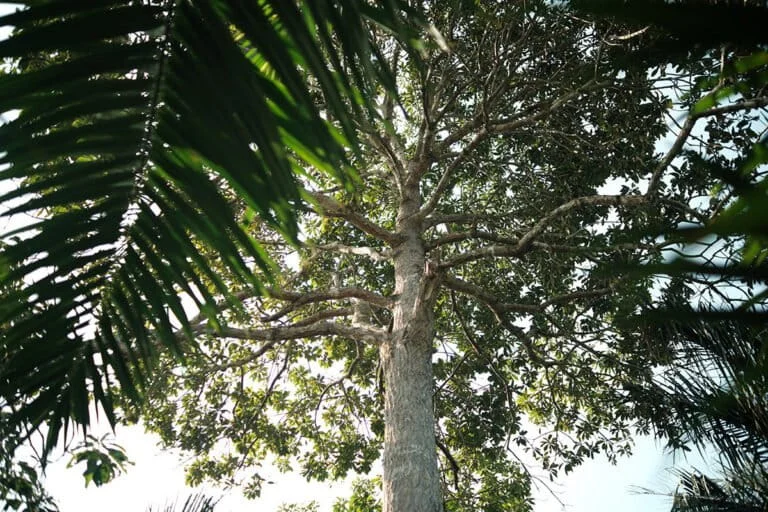
The devastating drought of 2015 served as a brutal wake-up call for the residents of Zed Village in the Mendo Barat District of Bangka, Kepulauan Bangka Belitung. As water tables plummeted and once-lush landscapes were scorched by fire, the local community faced a stark reality: their transition toward intensive oil palm monoculture had compromised the ecological resilience of their land. In the wake of this environmental collapse, a quiet revolution began—a grassroots effort to restore "Kelekak," the traditional Melayu agroforestry system that had sustained local families for generations.
The Ecological Decline of a Traditional Landscape
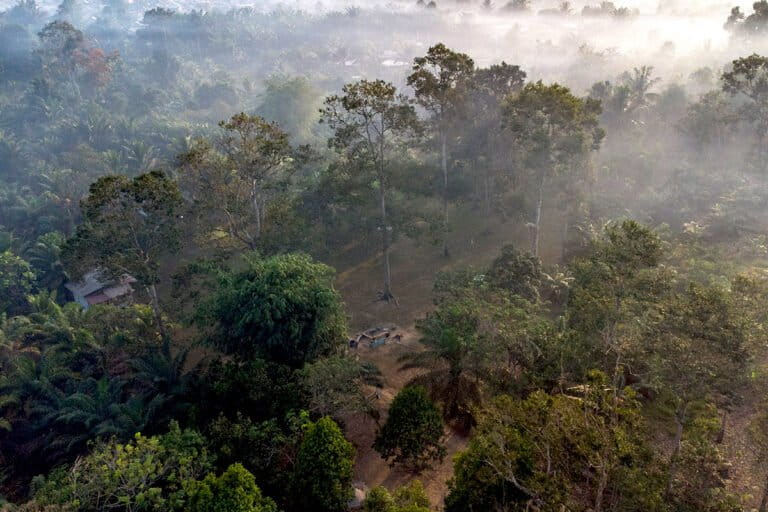
For centuries, the Kelekak served as the backbone of rural life in Bangka. These inherited forest gardens, typically surrounding pepper and rubber plantations, were managed by clans or families and fostered a diverse ecosystem of fruit trees—including durian, rambutan, manggis, and various indigenous species like nyatoh and pelawan. Unlike industrial plantations, the Kelekak functioned as a self-sustaining agroforestry system, regulating soil moisture and providing a buffer against the erratic weather patterns of the tropics.
However, the rapid expansion of palm oil plantations and the encroachment of unregulated tin mining over the past two decades fundamentally altered the landscape. As rubber prices stagnated and pepper farming became increasingly prone to failure due to shifting climate conditions, farmers turned to oil palm as a perceived economic safety net. This shift came at a high cost. Oil palm, a water-intensive crop, replaced the diverse Kelekak, leading to the drainage of local wetlands and the loss of natural water catchment areas. By 2015, the consequences were undeniable: wells, rivers, and swamps had dried up, leaving the community vulnerable to catastrophic wildfires.
A Journey of Restoration: From Palm to Forest
Asmadi, a 60-year-old farmer, and his son Andre, 30, were among those who witnessed the land’s degradation firsthand. After the 2015 drought, the duo began a multi-year project to systematically remove five-year-old oil palm trees from their one-hectare plot. Their objective was not merely agricultural; it was a mission to reclaim their heritage.
"My father wanted to restore the land to its original state as a Kelekak," Andre explained in late August 2026. Their process involved replanting indigenous species, including nyatoh, pelawan, aren, puren, and various fruit trees that had been lost when the land was initially cleared for palm oil.
This initiative caught the attention of local youth, leading to the formalization of the "Kelekak Bangka" community in 2025. What began as a family project evolved into a regional movement, drawing in university students and environmentalists from Pangkalpinang and Mentok. Today, the collective manages these reclaimed forests not just as food sources, but as critical sanctuaries for local wildlife.
Data and Environmental Implications
According to the Department of Agriculture and Food Security (DPKP) of the Bangka Belitung Islands, by 2024, the region hosted approximately 355,056 hectares of oil palm plantations. While some are managed by large corporations, a significant portion—including the 2,000 hectares in Zed Village—is owned by smallholder farmers.
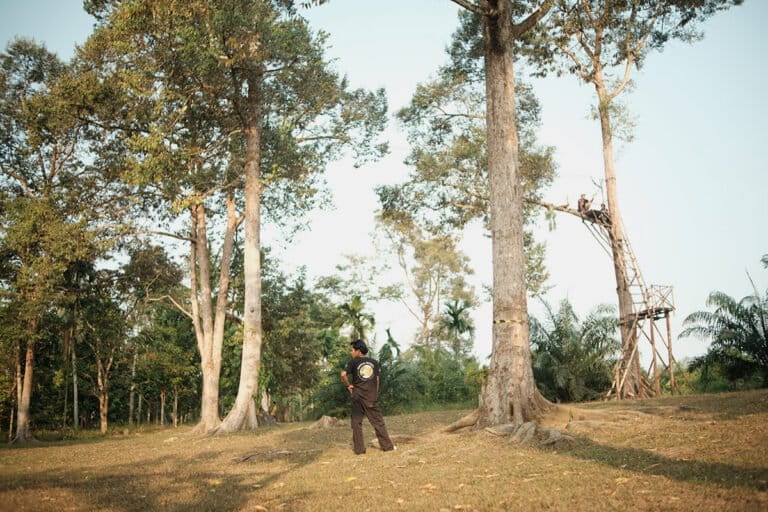
The reliance on these plantations has created a "water poverty" cycle. Unlike oil palm monocultures, which require significant water and fertilizer, the Kelekak acts as a sponge, retaining groundwater and keeping local microclimates stable. During the drought of 2026, the contrast was evident: while surrounding industrial farms suffered, the areas managed by the Kelekak Bangka community retained water from the nearby Lon River. Even as water levels dipped, the forest gardens remained hydrated, and crucially, no trees were lost to fire.
Wildlife Sanctuary and Conservation
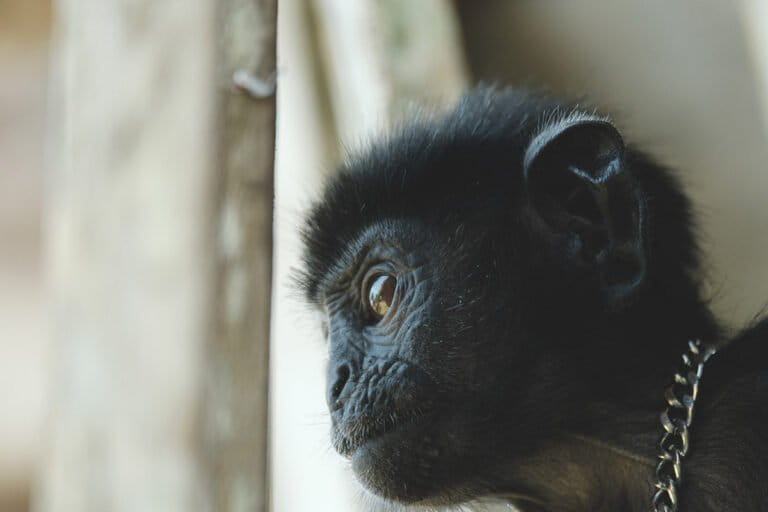
The impact of this restoration goes beyond water management. The reclaimed Kelekak has become a vital habitat for endemic and endangered species. Among the success stories is the story of "King," an eight-month-old grey langur (Trachypithecus cristatus). King was orphaned after his parents were shot by a local resident who viewed the primates as agricultural pests. Rescued and rehabilitated by the Andre family, King now resides in the Kelekak, serving as a symbol of the community’s shift toward coexistence with wildlife.
Current biodiversity surveys within the family’s Kelekak and adjacent rubber plots have identified:
- Mentilin (Bangka Tarsier): 6 individuals
- Sunda Flying Lemur (Mengkubung): 12 individuals
- Bangka Slow Loris (Kukang Bangka): 2 individuals
- Grey Langur: 6 individuals
- Various bird species: Including the Slaty-legged Crake and several Kingfisher varieties.
This resurgence of wildlife provides a compelling argument for the economic and ecological viability of traditional forest gardens over industrial monocultures.
Broader Impact and Official Perspectives
Fitri Ramdhani, a sociologist from the University of Bangka Belitung, argues that the movement to save the Kelekak is essential for the future food security of the region. "The Kelekak is not just an ancestral relic; it is a sophisticated adaptation to the local environment," Ramdhani noted in September 2026. She emphasizes that the persistent water crises in Bangka Belitung, exacerbated by El Nino-driven climate change, underscore the urgent need to preserve these traditional land-use systems.
The community is now scaling its efforts. Andre and his colleagues are providing technical and organizational support to other villages, including Labuh Air Pandan, Tiang Tara, Kemuja, and Sempan. Their goal is to create a network of protected Kelekak across the island.
"We are helping them identify the existing flora and fauna and facilitating the creation of village-level committees to manage these lands," Andre stated.
Economic Sustainability and Challenges
Maintaining these forest gardens requires resources. To fund their operations, the Kelekak Bangka community has adopted a diverse income model. They rely on voluntary donations from visitors and income generated from ecotourism activities, such as guiding expeditions to Mount Maras and smaller surrounding islands. By linking the preservation of the Kelekak to tourism and education, the community has managed to create a circular economy that rewards the protection of nature rather than its exploitation.
However, challenges remain. The economic pressure to maximize short-term profits through oil palm or mining is intense, especially as global commodity prices fluctuate. The transition back to agroforestry requires long-term patience, as fruit trees take years to reach maturity. Despite this, the psychological shift among the youth in the region is palpable.
Looking Toward the Future
The story of Zed Village serves as a microcosm for a larger debate on sustainable development in Indonesia. As climate change accelerates, the vulnerability of monoculture-heavy regions is becoming increasingly clear. The resilience of the Kelekak provides a blueprint for "nature-based solutions" that are rooted in indigenous knowledge.
The success of the Komunitas Kelekak Bangka demonstrates that small-scale, community-led initiatives can have significant, measurable impacts on local ecosystems. By treating the forest as an investment in the future—rather than a resource to be exhausted—these communities are not only securing their water supply and food sovereignty but are also protecting the unique biodiversity of the Bangka region for future generations.
As the movement grows, the collaboration between community members, academic researchers, and local policymakers will be vital. The goal is clear: to ensure that the Kelekak remains a "living library" of the Melayu culture, a shield against the climate crisis, and a home for the wildlife that defines the natural identity of the Bangka Belitung Islands. For the residents of Zed Village, the return of the Kelekak is more than just a return to the past—it is a necessary evolution for a sustainable future.









