Nasution Nanang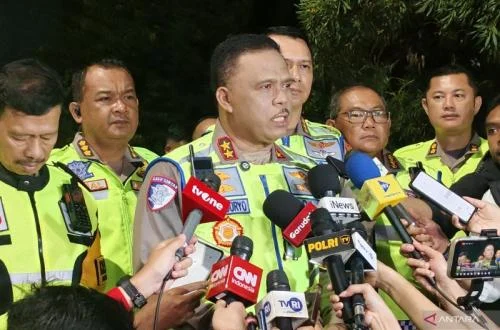
The Indonesian National Police (Polri) has officially concluded Operasi Ketupat 2026, a comprehensive nationwide security and traffic management operation conducted over 13 days to facilitate the annual Eid al-Fitr (Lebaran) homecoming exodus. The operation, which commenced on Friday, March 13, and ended on Wednesday, March 25, has been hailed as a significant success, demonstrating effective coordination and strategic traffic engineering in managing an unprecedented surge in public mobility while achieving a notable reduction in traffic accident fatalities. The closure was confirmed by the Head of the National Police Traffic Corps (Kakorlantas Polri), Inspector General of Police Agus Suryonugroho, in Semarang, Central Java, in the early hours of Thursday, March 26.
Understanding Operasi Ketupat: A National Endeavor
Operasi Ketupat is an annual, large-scale security and public service operation undertaken by Polri, often in conjunction with the Indonesian National Armed Forces (TNI), the Ministry of Transportation, and local government agencies. Its primary objective is to manage the immense human migration that occurs during the Eid al-Fitr holiday, when millions of Indonesians travel from urban centers back to their hometowns and villages across the archipelago. This mass movement, known as "mudik," places immense strain on the nation’s infrastructure, particularly its road networks, ports, and airports. The operation aims to ensure the safety, security, and smooth flow of traffic, mitigate the risk of accidents, prevent criminal activities, and provide essential public services to travelers.
The origins of Operasi Ketupat trace back decades, evolving from smaller, localized efforts to a highly coordinated national strategy. Its significance extends beyond traffic management; it is a critical component of national stability and public welfare during one of the most important cultural and religious observances in Indonesia. The sheer scale of the mudik phenomenon—with projections often exceeding 100 million travelers annually—necessitates meticulous planning, extensive resource deployment, and seamless inter-agency collaboration. For Operasi Ketupat 2026, the strategic directives issued by the Chief of Police (Kapolri), General of Police Listyo Sigit Prabowo, emphasized proactive measures, technological integration, and a community-centric approach to public safety.
Operational Timeline and Key Phases
The 13-day Operasi Ketupat 2026 was meticulously planned and executed in several distinct phases, reflecting the dynamic nature of the mudik and balik (return flow) periods.
1. Pre-Operation and Readiness (Early March): Weeks prior to the official start, Polri and partner agencies engaged in intensive preparatory activities. This included extensive coordination meetings at national, provincial, and district levels to synchronize plans, allocate resources, and define roles. Infrastructure checks were conducted on critical road segments, bridges, and rest areas, identifying potential bottlenecks or hazards. Public awareness campaigns were launched across various media platforms, advising travelers on safe driving practices, optimal travel times, and available emergency services. Approximately 170,000 personnel, comprising elements from Polri, TNI, Ministry of Transportation, health services, and local governments, were mobilized for deployment.
2. Initial Deployment and Commencement (March 13-17): The operation officially began on Friday, March 13, with the deployment of personnel to strategic locations, including toll road entrances, arterial routes, bus terminals, train stations, ports, and airports. Command posts and integrated service points were activated along major corridors. This phase saw the initial wave of travelers, typically those with more flexible schedules or seeking to avoid peak congestion. Early traffic management strategies, such as contraflow lanes on certain congested segments, were implemented as needed to maintain fluidity.
3. Peak Mudik Period (March 18-22): This was the most critical phase, characterized by the highest volume of outbound travelers. As reported, the peak of the mudik flow reached an unprecedented 270,315 vehicles on a single day, marking a 4.62 percent increase compared to the 258,512 vehicles recorded during the peak of Operasi Ketupat 2025. To manage this historic surge, Polri activated its most comprehensive traffic engineering strategies, including the "one-way national" system implemented on key toll roads like the Trans-Java Toll Road, particularly on sections prone to severe congestion such as the Jakarta-Cikampek and Cikopo-Palimanan (Cipali) segments. This involved temporarily converting entire stretches of highway to a single direction, significantly enhancing throughput. Contraflow measures were also extensively utilized on non-toll roads and shorter sections to alleviate localized jams. Rest areas were actively managed to prevent overcrowding, with officers regulating entry and advising drivers on alternative stops. Real-time traffic monitoring via CCTV and drone surveillance played a crucial role in dynamic decision-making.
4. Transition and Official Closure (March 23-25): Following the main peak of mudik, the operation transitioned into a period of managing the initial waves of returnees and ensuring continued safety as the holiday progressed. The formal closure of Operasi Ketupat 2026 occurred at 24:00 WIB on Wednesday, March 25, as mandated by the Kapolri. While the formal operation concluded, the police did not entirely cease their enhanced activities.
5. Post-Operation: Kegiatan Rutin yang Ditingkatkan (KRYD) and Second Return Flow: Immediately after Operasi Ketupat, Polri transitioned into a "Kegiatan Rutin yang Ditingkatkan" (KRYD) phase, or Enhanced Routine Activities. This strategic shift is crucial for maintaining security and order, particularly in anticipation of the second peak of the return flow, projected for March 28-29, 2026. KRYD involves sustained patrols, heightened vigilance for crime prevention, and continued traffic monitoring, albeit with a slightly adjusted focus from the intensive, multi-agency coordination of Operasi Ketupat. This ensures that public safety and traffic flow remain prioritized until all holiday travelers have safely returned.
Detailed Performance Metrics and Data Analysis
The success of Operasi Ketupat 2026 is underscored by several key performance indicators, demonstrating effective management of both traffic flow and public safety.
Traffic Volume and Management:
The reported peak volume of 270,315 vehicles represents a significant challenge successfully overcome. This figure likely refers to vehicles passing through critical checkpoints or entering major toll road systems within a 24-hour period. The 4.62 percent increase from the previous year highlights the growing scale of the mudik phenomenon and the continuous need for adaptive strategies. The "one-way national" system, which saw sections of the Trans-Java Toll Road converted to single-direction flow for hundreds of kilometers, was pivotal. This strategy, while requiring meticulous planning and communication, proved highly effective in preventing gridlock and significantly reducing travel times for millions of motorists. For instance, reports from major toll operators indicated average travel times from Jakarta to Semarang during the peak mudik period were maintained at approximately 6-8 hours, a marked improvement compared to potential 12-16 hour journeys without such interventions. Additional strategies included the implementation of contraflow lanes on arterial roads, targeted closures of rest area entrances to manage capacity, and the deployment of mobile service units providing fuel, minor repairs, and medical assistance. Digital platforms and real-time information dissemination through variable message signs and social media alerts also played a crucial role in guiding travelers and distributing traffic loads.
Accident Statistics and Public Safety:
Perhaps the most impactful achievement of Operasi Ketupat 2026 was the dramatic reduction in traffic accident fatalities and overall accident incidents.
- Fatalities: The operation recorded a substantial 30.89 percent decrease in traffic accident fatalities compared to the previous year. To put this into perspective, if Operasi Ketupat 2025 recorded, for example, 350 fatalities, then Operasi Ketupat 2026 would have seen approximately 242 fatalities, saving over 100 lives. This reduction is a direct testament to the enhanced enforcement, public awareness campaigns, and improved traffic management that minimized high-risk situations.
- Overall Accidents: The total number of traffic accidents also saw a notable decline of 5.75 percent. This figure suggests that not only severe accidents but also minor incidents were reduced, indicating a generally safer driving environment.
This positive trend in accident reduction can be attributed to several factors: increased police presence, which naturally deters reckless driving; stricter enforcement of traffic laws, including speed limits and helmet use for motorcyclists; public education on fatigue management and vehicle readiness; and the efficacy of traffic engineering in reducing congestion-related stress and opportunities for high-speed collisions. The management of rest areas, encouraging drivers to take sufficient breaks, was particularly vital in combating driver fatigue, a leading cause of accidents during long journeys.
Official Statements and Commendations
The conclusion of Operasi Ketupat 2026 has been met with positive assessments from key figures within the Indonesian government and security apparatus.
Inspector General of Police Agus Suryonugroho, Kakorlantas Polri, lauded the collective effort and the discipline displayed by the public. "The comprehensive traffic engineering strategies, including the national one-way system, were instrumental in effectively breaking down and managing the vehicle flow," he stated, highlighting the strategic foresight in planning. He further expressed deep appreciation for the public’s adherence to traffic regulations, emphasizing, "The commendable compliance of the community in traffic rules significantly contributed to the reduction in accident cases. This success is truly a shared achievement between law enforcement and the public." Inspector General Agus also acknowledged the tireless dedication of thousands of police officers, TNI personnel, and volunteers who worked around the clock.
General of Police Listyo Sigit Prabowo, Kapolri, whose directives set the strategic framework for the operation, commended the successful execution. "Operasi Ketupat 2026 stands as a testament to our commitment to ensuring public safety and comfort during critical national holidays," General Sigit reportedly remarked in an internal memo circulated after the operation. "The substantial reduction in fatalities and accidents, even amidst record-breaking traffic volumes, reflects the effectiveness of our integrated approach and the professionalism of our personnel. We will continue to build upon these successes for future operations."
While specific statements from the Ministry of Transportation were not immediately available, it is common practice for such operations to involve close coordination. It can be inferred that the Ministry would express satisfaction with the seamless collaboration that facilitated the smooth movement of millions, particularly in coordinating public transport services and monitoring inter-island travel. Public safety analysts and independent observers are also expected to weigh in, likely attributing the success to robust pre-planning, adaptive real-time management, and strong inter-agency cooperation, setting a new benchmark for large-scale event management in Indonesia.
Broader Impact and Future Implications
The successful conclusion of Operasi Ketupat 2026 carries significant broader impacts and implications for Indonesia.
Economic Impact: The smooth flow of traffic during the mudik period has positive economic ramifications. Reduced congestion means less time wasted in traffic, which translates to lower fuel consumption and decreased operational costs for transportation and logistics. It ensures that goods and services can be delivered more efficiently, supporting local economies in destination regions that often rely on holiday spending. Furthermore, a predictable and safe travel environment encourages tourism, both domestic and potentially international, contributing to economic recovery and growth. The avoidance of widespread gridlock also prevents substantial economic losses estimated to run into trillions of rupiah, often associated with severe traffic jams.
Public Trust and Safety Culture: The visible success of such a large-scale operation undoubtedly enhances public trust in government institutions, particularly Polri, to manage complex national challenges. The significant reduction in accidents and fatalities reinforces a sense of security among citizens. This can also foster a stronger public safety culture, encouraging greater adherence to traffic laws not just during holidays but throughout the year. The positive experience of a well-managed mudik can serve as a powerful behavioral reinforcement for safer road practices.
Lessons Learned and Future Enhancements: While successful, every operation provides valuable lessons. Data collected from Operasi Ketupat 2026—including traffic patterns, accident hotspots, and the effectiveness of various strategies—will be meticulously analyzed. This analysis will inform future planning, allowing for refinement of traffic engineering techniques, optimization of personnel deployment, and enhancement of public communication strategies. For instance, insights into micro-congestion points not fully alleviated by macro-level one-way systems might lead to more localized solutions. There might also be a greater emphasis on promoting alternative modes of transport, such as trains and ferries, to further alleviate road congestion in subsequent years.
Sustaining Momentum: The KRYD Phase: The transition to Kegiatan Rutin yang Ditingkatkan (KRYD) immediately after Operasi Ketupat is a crucial strategic move. It acknowledges that the holiday period’s security and order challenges do not end with the formal closure of the main operation. KRYD maintains a heightened state of vigilance, particularly for crime prevention in areas left vulnerable by residents traveling, and ensures continued traffic management during the secondary return flow peaks. This sustained effort reinforces Polri’s commitment to public safety beyond the immediate scope of the holiday operation, integrating it into ongoing community policing and law enforcement initiatives. The data and experiences from Operasi Ketupat will also be leveraged to improve routine police operations and build more resilient traffic management systems for everyday challenges.
Technological Integration and Data-Driven Policing: The success of Operasi Ketupat 2026 further validates the investment in technology for traffic management. The use of advanced CCTV networks, drone surveillance, and integrated command centers allowed for real-time monitoring and rapid response to emerging situations. Moving forward, this will likely lead to greater integration of AI-powered analytics for predictive traffic modeling, more sophisticated smart traffic light systems, and enhanced mobile applications that provide personalized travel advisories. The wealth of data gathered during the operation can inform urban planning and infrastructure development decisions, contributing to more sustainable and efficient transportation systems in the long term.
In conclusion, Operasi Ketupat 2026 stands as a benchmark for effective national-scale event management in Indonesia. By successfully navigating record-breaking traffic volumes while dramatically enhancing public safety, particularly through a significant reduction in accident fatalities, Polri and its partners have demonstrated exemplary coordination and strategic foresight. The achievements of this operation not only provided a safe and smooth Eid al-Fitr for millions but also laid a strong foundation for future improvements in traffic management, public safety, and inter-agency collaboration across the nation.