
 Lina Irawan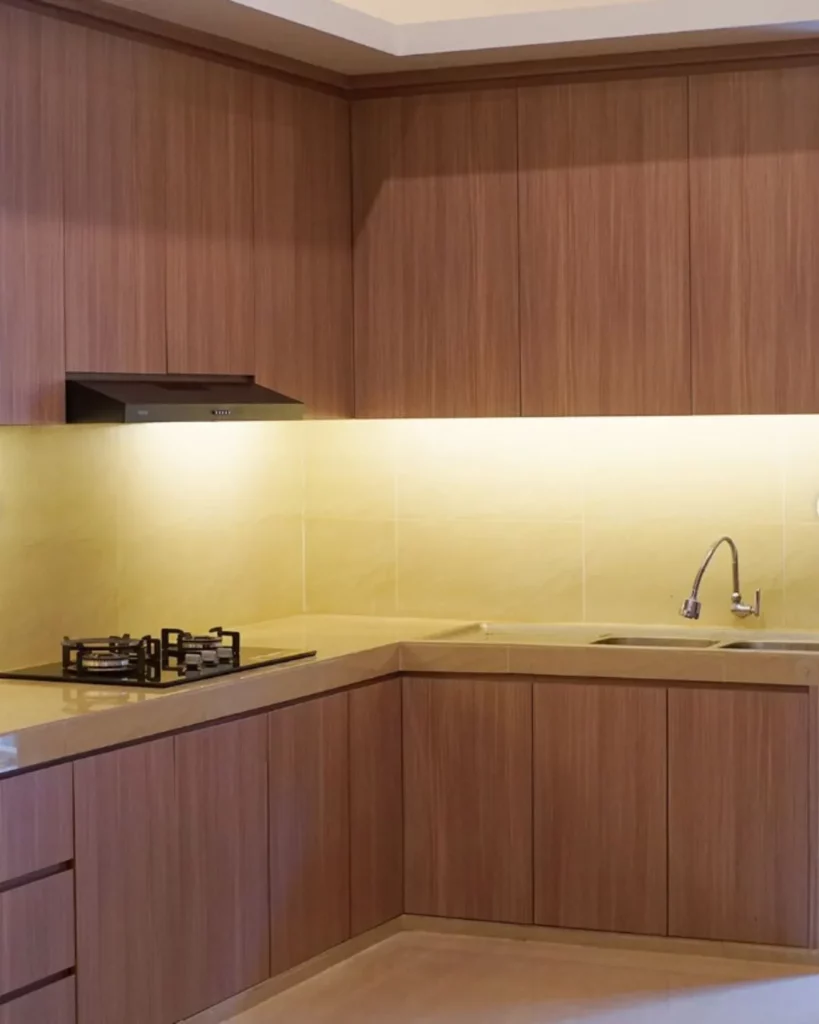
The precise specification for optimal task lighting illuminating a kitchen workbench is an LED strip with a power output of 500-700 lumens per meter and a natural white color temperature of 4000K. This lighting fixture should be installed on the underside of wall cabinets, positioned approximately 5 cm from the front edge, and encased within an aluminum profile with a milky diffuser to prevent glare and ensure comfortable illumination. At InteriorDesign.ID, we consistently emphasize that kitchen lighting extends far beyond mere aesthetic enhancement or luxurious cabinet display. Its primary function is paramount to safety, particularly in an environment where sharp knives are routinely used, and hot liquids or oils are frequently handled.
The Critical Role of Kitchen Task Lighting
Many homeowners overlook the specialized requirements of kitchen lighting, often relying solely on a single overhead ceiling fixture. This common oversight leads to a classic problem: shadows. When preparing food in the evening, the primary light source from the ceiling is typically positioned behind the user. This anatomical placement inevitably casts the user’s own body shadow directly onto the workbench, obscuring crucial areas where precision and clear visibility are essential. Working with sharp utensils or handling hot substances in shadowed conditions significantly elevates the risk of accidents, ranging from minor cuts to severe burns.
The definitive solution to this pervasive issue is the integration of supplementary light sources positioned between the user’s eyes and the work surface. This is precisely where under-cabinet lighting, or task lighting, becomes indispensable. These fixtures are strategically placed to cast direct, unobstructed light onto the cutting board, stovetop, or sink, eliminating shadows and ensuring consistent illumination across the entire work area. This targeted lighting not only enhances safety but also improves efficiency and reduces visual strain during prolonged cooking or preparation tasks. The concept is rooted in ergonomic design, ensuring that the visual environment supports the intricate motor skills required for culinary activities. Without adequate task lighting, even the most beautifully designed kitchen remains functionally compromised.
Understanding Lighting Metrics: Lumens, Watts, and Lux
When evaluating light sources, particularly for task-oriented areas, it is crucial to move beyond outdated metrics like wattage. Wattage merely quantifies the electrical power consumed by a bulb, not the amount of light it emits. For accurately assessing the brightness or light output, the correct and universally accepted standard is lumens. A higher lumen count indicates a brighter light source, irrespective of its power consumption.
Furthermore, for practical application in specific areas like a kitchen workbench, the concept of lux is highly relevant. Lux measures illuminance, defined as lumens per square meter, indicating the intensity of light falling on a surface. While lumens tell you how much light a bulb produces, lux tells you how bright a surface actually appears. For a kitchen task area, which demands high visibility for intricate and potentially hazardous work, an illuminance level of approximately 500 Lux or more is recommended by lighting design professionals. This contrasts sharply with the lower lux levels suitable for ambient lighting in living rooms or the subdued illumination in bedrooms.
For LED strip lighting, an output of 500 to 700 lumens per meter is specifically engineered to deliver the necessary brightness for kitchen tasks. This level of illumination is capable of penetrating the typical 60 cm distance from the underside of a wall cabinet to the countertop surface, ensuring the work area is thoroughly bathed in light. It is critical to avoid inexpensive, low-output LED strips, often marketed for decorative ceiling applications, which typically provide only around 200 lumens per meter. Such dim lighting is wholly inadequate for kitchen tasks and will quickly lead to eye fatigue, poor visibility, and increased accident risk, especially during detailed work like deboning fish or finely chopping vegetables.

Energy Efficiency and Wattage Considerations
While lumens dictate brightness, wattage remains an important factor for calculating electrical load and ensuring compatibility with power supplies or transformers. Modern LED strip technology is remarkably energy-efficient. To achieve a bright output of 700 lumens per meter, high-density LED strips typically consume only 9-12 Watts per meter. This efficiency represents a significant improvement over traditional lighting technologies. For instance, if a kitchen requires 3 meters of LED strip lighting, the total power consumption would be a mere 27-36 Watts. This low power draw means that task lighting can be left on for extended periods, even overnight as a guiding light, without causing a substantial increase in electricity bills. The shift to LED technology has not only enhanced lighting quality but also contributed significantly to energy conservation and reduced operational costs for homeowners. This aligns with broader sustainability goals in modern home design.
Optimizing Light Quality: Color Temperature (CCT) and Color Rendering Index (CRI)
Beyond mere brightness, the quality of light—specifically its color temperature and its ability to render colors accurately—plays a pivotal role in the functionality and comfort of a kitchen environment.
Color Temperature (CCT): The Importance of Natural White (4000K)
Color temperature, measured in Kelvin (K), describes the perceived warmth or coolness of a light source. While a warm white light (typically 2700K-3000K) might create a cozy, "homey" or aesthetically pleasing ambiance in certain areas of the home, it is generally unsuitable for a kitchen workbench. The yellowish tint of warm white light can deceptively alter the appearance of food, making it challenging to accurately assess critical details such as the doneness of meat or poultry, distinguish between fresh and spoiled ingredients, or even spot leftover food stains on white dishes.
The safest and most effective standard for kitchen task lighting is Natural White at 4000K. This color temperature closely mimics natural daylight, providing a neutral and crisp illumination that renders objects clearly and accurately without being overly harsh or causing glare. Unlike the cool white or daylight temperatures (5000K-6500K), which often have a strong bluish cast reminiscent of hospital lighting and can cause eye strain or make a kitchen feel sterile, 4000K strikes an ideal balance. It enhances visibility, promotes alertness, and ensures that food colors are perceived authentically, which is crucial for both cooking accuracy and food safety.
Color Rendering Index (CRI): Ensuring True Colors (CRI > 90)
The Color Rendering Index (CRI) is a quantitative measure of a light source’s ability to reveal the true colors of objects compared to a natural light source like sunlight, which has a CRI of 100. The scale ranges from 0 to 100, with higher values indicating better color accuracy. Many inexpensive LED lights available on the market have a CRI score of 70-80. While acceptable for general illumination, this lower CRI can significantly distort colors. For instance, fresh vegetables might appear dull and pale, and meats might look grayish or unappetizing.

For a kitchen, where the visual assessment of food is integral to both preparation and enjoyment, a high CRI is indispensable. Lighting experts strongly recommend seeking LED products that explicitly state "CRI > 90" on their packaging. This superior color accuracy is vital for tasks such as evaluating the ripeness of fruits, checking the consistency and color of dough, or ensuring the precise browning of ingredients. For those who frequently photograph their culinary creations, a high CRI ensures that the food’s natural vibrancy is captured faithfully, enhancing presentation and appeal.
Choosing the Right Fixture: LED Strips and Alternatives
The evolution of lighting technology has rendered traditional long fluorescent (TL) tubes largely obsolete for modern kitchen task lighting. Today, the primary choices revolve around advanced LED solutions, each with distinct advantages for specific applications.
LED Strip Lighting: Uniform Illumination
LED strip lights, characterized by their flexible, ribbon-like form factor embedded with a series of small LED chips, are the preferred choice for illuminating kitchen workbenches. Their inherent design allows for continuous, uniform light emission from one end to the other, effectively eliminating any dark spots or "blind spots" that can occur with discrete light sources. This consistent wash of light is crucial for detailed tasks performed across an extended counter surface.
When selecting LED strips, particular attention should be paid to their density. Lower density strips, such as those with 60 LEDs per meter, often produce a dotted or "polka-dot" effect when viewed directly or reflected off shiny surfaces, which can be visually distracting and reduce the perceived uniformity of light. To achieve truly seamless and even illumination, it is recommended to opt for high-density LED strips containing 120 LEDs per meter or, even better, COB (Chip-on-Board) LED strips. COB technology integrates multiple LED chips directly onto a single substrate, resulting in a continuous, unbroken line of light that is virtually dot-free, offering superior visual comfort and aesthetic appeal.
Puck Lights: Accent and Display
Puck lights, small, round, disc-shaped fixtures, emit a more focused beam of light, akin to a mini spotlight. While they can be visually appealing for certain applications, they are generally less suitable for continuous kitchen task lighting over a long workbench. Their fan-shaped light distribution inevitably creates shadowed areas between individual pucks, leading to uneven illumination and compromising the primary goal of comprehensive task lighting.
Puck lights are better suited for accent lighting or illuminating specific display items. For instance, they excel when installed inside glass-fronted wall cabinets to highlight a collection of decorative dinnerware or glassware, adding an elegant touch rather than serving a functional task purpose. Their focused beam can draw attention to specific objects, creating visual interest within the kitchen design scheme.

Installation Essentials: Housing, Placement, and Wiring
The longevity, performance, and aesthetic integration of under-cabinet LED lighting depend heavily on proper installation, particularly concerning its housing, precise placement, and concealed wiring.
Aluminum Profile: The Essential Heatsink and Diffuser
A common mistake is to directly adhere LED strips to the wooden underside of kitchen cabinets using their self-adhesive backing. This practice is detrimental to the lifespan of the LEDs. LED chips generate heat during operation, and wood, being an insulator, traps this heat. This accumulation of high temperatures (overheating) will rapidly degrade the LED chips, causing them to dim prematurely or fail completely within a few months.
The indispensable solution is to house the LED strip within a specialized aluminum profile (or channel). This metal extrusion serves a dual critical function:
- Heatsink: Aluminum is an excellent thermal conductor. The profile efficiently absorbs the heat generated by the LED chips and dissipates it into the surrounding air, keeping the LEDs operating at a stable, cooler temperature. This thermal management is crucial for achieving the advertised lifespan of LED strips, often rated for 50,000 hours or more, ensuring consistent brightness over decades of use.
- Diffuser: Aluminum profiles are always accompanied by an acrylic cover. It is vital to select a cover with a milky white (translucent) finish, rather than a clear, transparent one. The milky diffuser serves to evenly spread the light, breaking up the harsh, direct glare from individual LED chips. This creates a softer, more uniform light output that is far more comfortable for the eyes. Furthermore, for kitchens featuring reflective countertops such as polished marble or granite, the diffuser prevents the distinct "dots" of the individual LED chips from being reflected onto the surface, which can be visually distracting and unsightly. It transforms a series of point sources into a continuous line of smooth light.
Optimal Placement: Maximizing Light Distribution
Another frequent installation error involves positioning the light fixture too far back, flush against the backsplash or rear wall of the cabinet. When placed in this manner, a significant portion of the light beam is directed onto the backsplash itself, rather than illuminating the critical central area of the workbench where most tasks are performed.
The correct approach is to advance the installation of the aluminum profile closer to the front edge of the wall cabinet. A distance of approximately 5-7 cm from the cabinet’s front lip (or the leading edge of the cabinet door) is generally ideal. This forward placement ensures that the light beam projects directly downward and slightly forward, fully covering the cutting area and other task zones on the countertop, without shining directly into the user’s eyes.
For situations where the electrical wiring is already fixed at the rear corner of the cabinet, a viable alternative is to utilize an angled aluminum profile (V-shape or 45-degree profile). This design allows the LED strip to be mounted at an angle, directing the light diagonally forward onto the work surface, effectively compensating for the rearward wiring position.

Wiring and Transformer (Power Supply): Concealment and Accessibility
Kitchens are inherently dynamic environments, often exposed to moisture, steam, and grease. Exposed electrical components are not only unsightly but also pose significant safety risks, including short circuits and potential fire hazards.
Concealed Wiring: From the initial planning stages, before walls are painted or cabinets installed, it is imperative to request that the contractor incorporate protective conduits or channels within the walls. This allows for electrical wiring to be neatly run and concealed, emerging cleanly from behind the cabinet framework without any visible external cables or makeshift tape-covered wires, which can melt due to heat from cooking appliances. Professional, concealed wiring ensures both safety and a polished aesthetic.
Transformer (Power Supply) Placement: LED strips typically operate on low voltage (12V or 24V DC) and therefore cannot be directly connected to standard household 220V AC electricity. A transformer (also known as a power supply or driver) is required to convert the household AC current to the appropriate low-voltage DC current. These transformers are typically compact but require adequate air circulation to prevent overheating and premature failure.
The optimal location for concealing the transformer is above the wall cabinets, within the soffit space or in an easily accessible compartment. It is crucial to instruct the installer to run the necessary wiring up to this location before the cabinets are permanently affixed to the wall. Furthermore, ensure that the transformer remains accessible for future maintenance or replacement. Transformers are often the most vulnerable component in an LED lighting system, especially in areas with unstable power grids or frequent power surges. Easy access ensures that a faulty transformer can be quickly swapped out without dismantling the entire cabinet system. When selecting a transformer, always choose one with a wattage capacity that is at least 20% higher than the total combined wattage of the LED strips it will power. For example, if your LED strips collectively draw 40 Watts, a transformer with a minimum capacity of 50 Watts should be used. This buffer prevents the transformer from operating at its maximum limit, reducing stress and extending its lifespan.
Advanced Control and Safety Features
Modern kitchen lighting extends beyond simple on/off functionality, incorporating advanced controls and safety measures to enhance convenience and hygiene.
IP Rating: Protection Against Water and Dust
Given the inherent moisture, steam, and potential for splashes in a kitchen, the Ingress Protection (IP) rating of LED strips is a critical specification. The IP rating system consists of two digits: the first indicates protection against solids (dust), and the second indicates protection against liquids (water).

- IP20: This rating signifies no special protection against water and minimal protection against dust, leaving the LED chips exposed. These are unsuitable for kitchen environments as moisture can easily corrode copper connections and cause failure.
- IP44: This is the minimum recommended rating for general kitchen task lighting. It indicates protection against solid objects larger than 1mm and against splashes of water from any direction.
- IP65: For areas directly above sinks or cooktops where direct water spray or heavy steam is likely, an IP65 rating is highly advisable. This rating signifies complete protection against dust ingress and protection against low-pressure water jets from any direction. The silicone or epoxy coating on IP65 strips provides a robust barrier against environmental hazards, ensuring reliability and safety.
Switching Mechanisms: Convenience and Hygiene
The placement and type of light switch significantly impact the workflow and hygiene of a kitchen.
- Traditional Wall Switches: If opting for a standard physical wall switch, it should be strategically located near frequently used power outlets (e.g., for blenders or mixers) on the backsplash. An ideal height is typically 15-20 cm above the countertop, ensuring it is within easy reach during food preparation while also being positioned away from direct water splashes from the sink.
- Hand Sweep Sensor (Infrared/IR): A modern and highly hygienic solution is the infrared (IR) hand sweep sensor switch. A small, discreet module is embedded beneath the wall cabinet. When hands are wet or soiled from handling raw ingredients, a simple wave of the hand beneath the sensor activates or deactivates the lights, eliminating the need to touch a physical switch and preventing cross-contamination or dirty fingerprints on walls.
- Dimmer Functionality: Many advanced sensor switches and smart lighting systems incorporate dimmer capabilities. By holding a hand beneath the sensor for a few seconds, the light intensity can be gradually adjusted. This feature is particularly useful for kitchens that are open-plan or integrated with living/dining areas, allowing the task lighting to be dimmed to a softer, more ambient glow for dining or evening relaxation.
Beyond Task Lighting: Enhancing Kitchen Functionality
While dedicated task lighting is fundamental, thoughtful integration of other lighting solutions can further elevate kitchen functionality and convenience. For instance, installing battery-operated, motion-sensor LED strips inside lower cabinets or pantry drawers can dramatically improve visibility. These strips, often magnetic for easy installation, illuminate automatically when a drawer is opened or a door is pulled, revealing the contents without the need for additional wiring. This simple addition makes finding pots, pans, or ingredients effortless and efficient.
In essence, the installation of under-cabinet lighting is a critical design element that demands serious consideration. Prioritizing LED strips with 500-700 lumens per meter and a 4000K natural white color temperature, encased in protective aluminum profiles with diffusers, and supported by meticulously planned, concealed electrical wiring, will culminate in a kitchen space that is not only brightly and beautifully lit but also exceptionally safe, efficient, and enjoyable for decades to come.
Frequently Asked Questions (FAQ) Regarding Kitchen Task Lighting
Q: Can LED strips be directly adhered to the underside of wooden cabinets without an aluminum profile?
A: No, this practice is strongly discouraged. Wood acts as an insulator, trapping the heat generated by the LED chips. This leads to rapid overheating, causing the LEDs to degrade quickly, dim prematurely, and fail within a few months of use. An aluminum profile is essential as a heatsink to dissipate heat and ensure the longevity of the LED strip.
Q: Cool white light (6000K) appears brighter. Is it suitable for kitchen task lighting?
A: While 6000K cool white light may seem brighter, its strong blue spectrum can be harsh and clinical, similar to hospital lighting. Reflections off glossy countertops can cause significant glare and eye strain, potentially leading to headaches during prolonged use. For optimal visual comfort and accurate color perception in a kitchen, a natural white light at 4000K is the recommended standard.
Q: My LED cabinet lights frequently burn out despite being new. What could be the cause?
A: Frequent failure of LED chips typically points to an unstable or improperly sized transformer (power supply), rather than the LED strip itself. To prevent this, ensure the transformer’s wattage capacity exceeds the total load of your LED strips by at least 20%. For example, if your lighting system draws 40 Watts, use a transformer with a minimum capacity of 50 Watts. This buffer allows the transformer to operate more efficiently and reliably, preventing overheating and premature failure. Also, ensure the transformer is installed in a well-ventilated, accessible location.








